
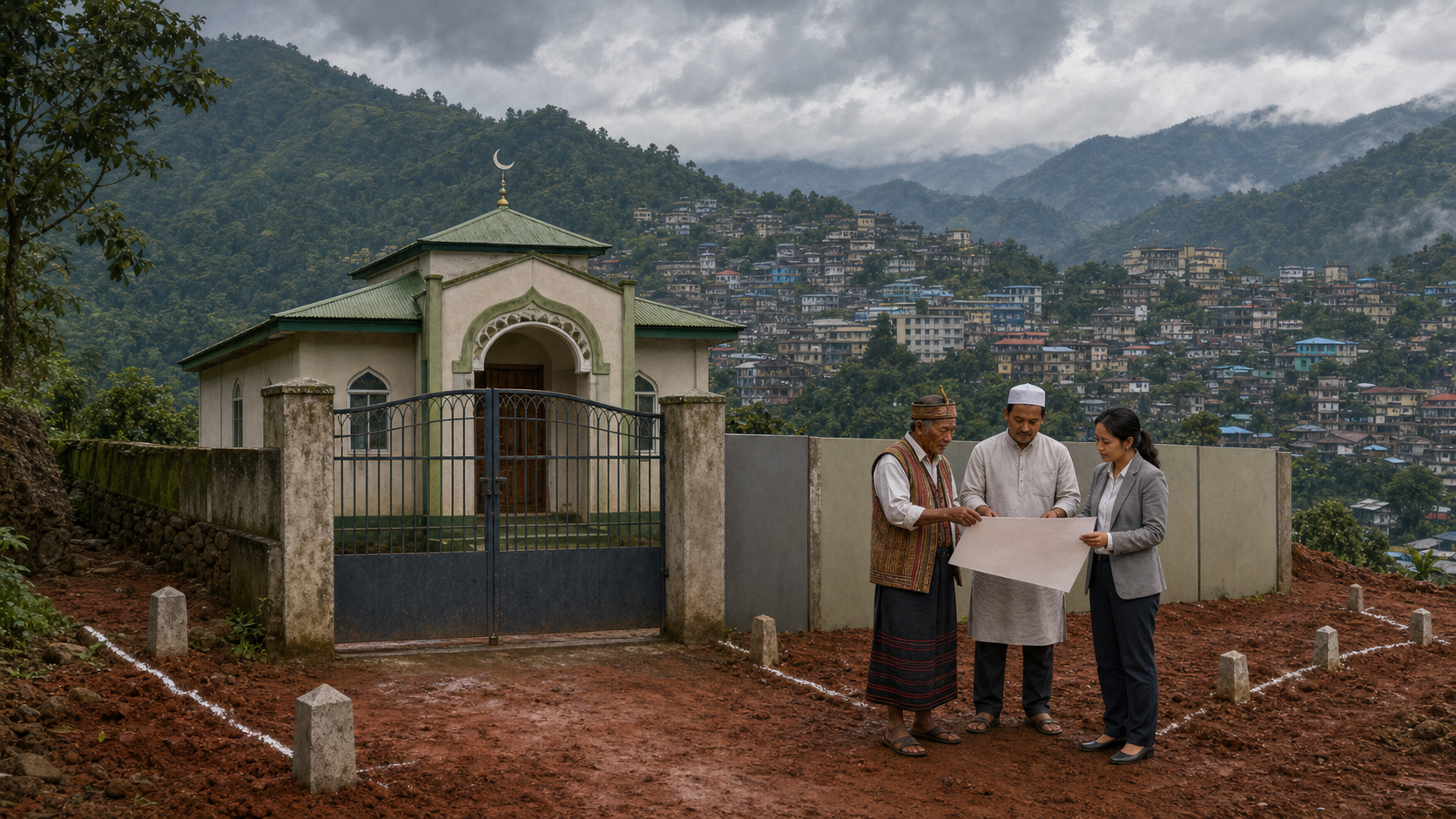
If you are trying to decide whether the sealing of mosque sites in Itanagar was a defence of indigenous land or an attack on religious freedom, do not begin with that binary. Begin with three concrete questions: who controls the land, what construction and land-use permissions existed, and whether the administration followed the same procedure it would use against any other unauthorised structure.
On 6 June 2026, the Itanagar Capital Region administration sealed 15 sites described as unauthorised mosques, citing failures to comply with land-use and building-control norms. That establishes an administrative action, not every conclusion now being attached to it. Sealing is not the same as demolition, confiscation, or a final judicial ruling, and the precise defect at each site must come from its individual order.
Worship is a protected freedom, not a substitute for land title
Articles 25 to 28 of the Constitution place religious freedom within India’s constitutional order. Article 25 protects freedom of conscience and the right to profess, practise, and propagate religion, subject to public order, morality, and health. That protection matters fully in Arunachal Pradesh. Muslim residents do not lose it because indigenous land rights are strong, just as indigenous communities do not lose control over protected land because a proposed occupant invokes religion.
The distinction you need is between a religious activity and the secular conditions surrounding its physical site. Belief and worship are constitutionally protected. Occupation of a particular parcel, construction of a building, obstruction of a right-of-way, structural safety, fire access, traffic effects, and environmental compliance can still be regulated. A mosque, temple, church, monastery, or gurudwara does not acquire valid title or planning approval merely because worship takes place inside it.
The same point works in the other direction. A planning violation does not make a faith illegitimate, nor does it justify hostility toward its followers. If a structure lacks approval, the remedy must address the structure and the parcel. It must not become collective punishment or a pretext for treating lawful worshippers as intruders.
This is why the term “illegal mosque” can mislead when used carelessly. It compresses several possible questions into one inflammatory label. A site might face a dispute over title, an incompatible land use, missing construction permission, a safety defect, or more than one of these. Until the site-specific orders are examined, you cannot responsibly assume that all 15 cases involve the same violation.
Why Arunachal’s land protections change the stakes
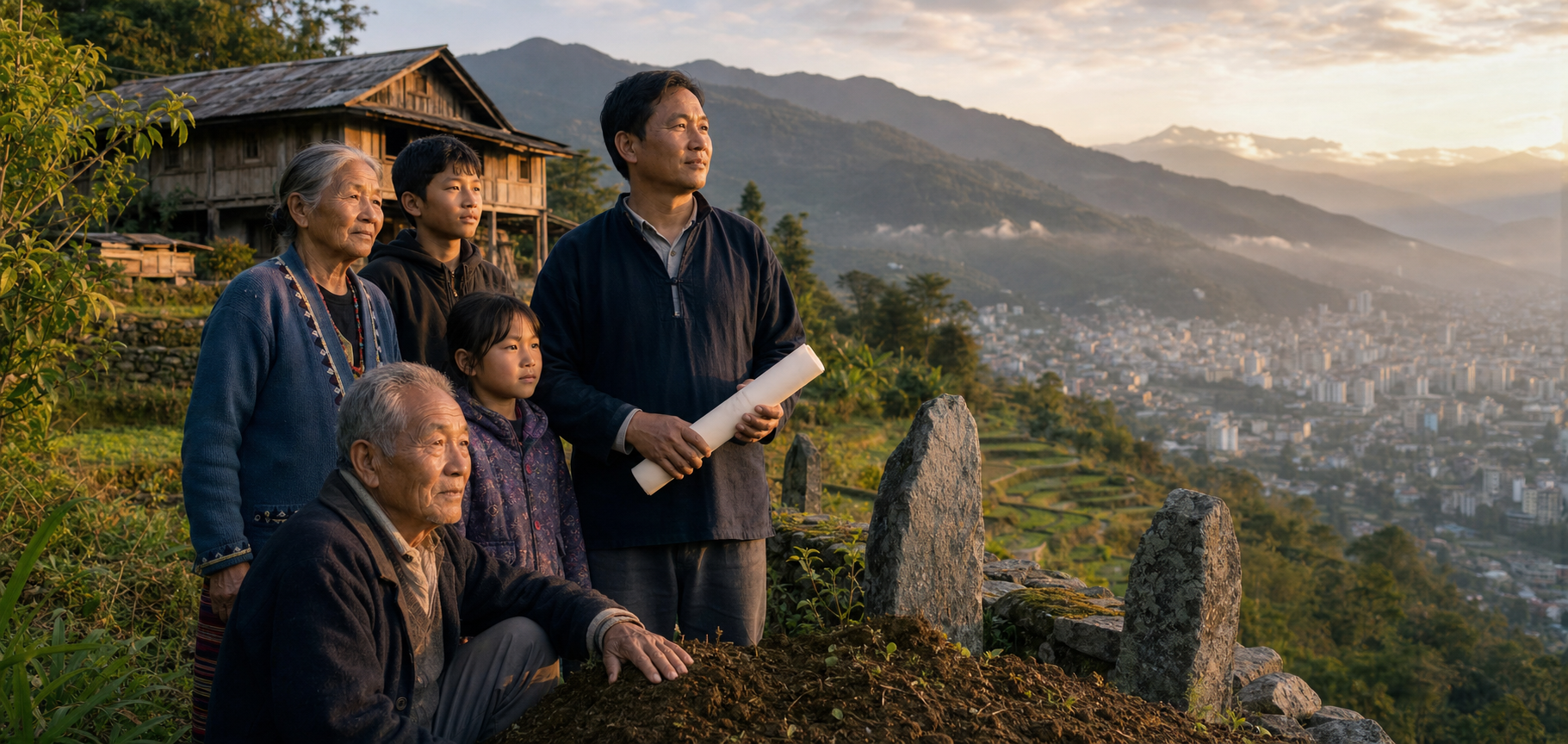
Land in Arunachal Pradesh is not merely an urban commodity waiting for the highest bidder. Communities including the Nyishi, Adi, Apatani, Galo, Tagin, and Monpa maintain distinct customary institutions and relationships with land. Those systems carry family memory, community authority, livelihood, ecological stewardship, and cultural continuity. Treating them as administrative obstacles would misunderstand what is being protected.
The Inner Line Permit regime under the Bengal Eastern Frontier Regulation, 1873, regulates entry and settlement. An ILP, however, answers a different question from land title or building approval. Permission to enter or remain in a protected state is not permission to occupy any chosen parcel, and it does not replace zoning, construction, safety, or environmental clearances.
This distinction has become more important as growth around Itanagar, Naharlagun, Nirjuli, and Banderdewa puts pressure on land. Informal construction can move faster than record-keeping. Long use may create social expectations, but duration alone does not settle title, zoning, or safety compliance. Conversely, a missing digital entry does not by itself prove that a customary claim is fictitious. Authorities have to identify the applicable customary and statutory records rather than force every case into a simplistic deed-versus-encroachment narrative.
For indigenous organisations, the strongest case is therefore parcel-specific. Identify the land, the customary or public interest attached to it, the records or community authority supporting that interest, and the concrete harm caused by unauthorised occupation. A general campaign against a religious community weakens that case by replacing evidence with identity.
Five tests separate lawful enforcement from selective action

You do not have to choose a political camp before judging the sealing. Apply the same five tests to every site and every denomination.
Key takeaways
- Demand a site-specific legal basis. Each order should identify the parcel, the alleged violation, the rule invoked, the competent authority, and the action required. “Unauthorised” is a conclusion; a defensible order shows how the administration reached it.
- Check notice and hearing records. A credible file normally shows inspection, notice, time to respond, consideration of the response, and a reasoned decision. If urgency justified an abbreviated step, the order should explain that urgency and provide a prompt route to challenge the action.
- Measure parity with evidence. Ask how unauthorised temples, churches, monasteries, gurudwaras, mosques, commercial buildings, and other civic structures are being handled. Equality does not require identical outcomes on different parcels, but it does require common criteria and a rational explanation for differences.
- Test proportionality. Sealing may be an interim compliance measure rather than a final outcome. Where a defect is legally curable, authorities should state whether correction or regularisation is possible. Where public land, an ecological buffer, infrastructure, or an incurable title problem prevents regularisation, the order should say so plainly. Regularisation is a policy route for eligible cases, not an automatic entitlement.
- Look for an accessible remedy. The affected party should know the deadline, documents required, decision-maker, and review route. Depending on the case, recourse may include a representation to local authorities and, with appropriate legal advice, proceedings before the Gauhati High Court’s Itanagar Bench on due process, proportionality, or equal treatment.
These tests also expose three claims that currently go beyond what the basic event establishes. The sealing alone does not prove that all 15 sites occupied indigenous land on identical terms. It does not prove that permanent removal has already been lawfully decided. It also does not prove either perfect neutrality or anti-Muslim discrimination. Those conclusions require the individual orders, notice histories, land records, and comparative enforcement data.
A public inventory would make that comparison possible. It should cover unauthorised religious and non-religious structures across the capital region and show, for each case, the category of violation, notice date, hearing status, interim action, and final outcome. Without that denominator, photographs of 15 sealed sites can fuel opposing narratives but cannot demonstrate parity.
What affected parties, residents, and officials should do now
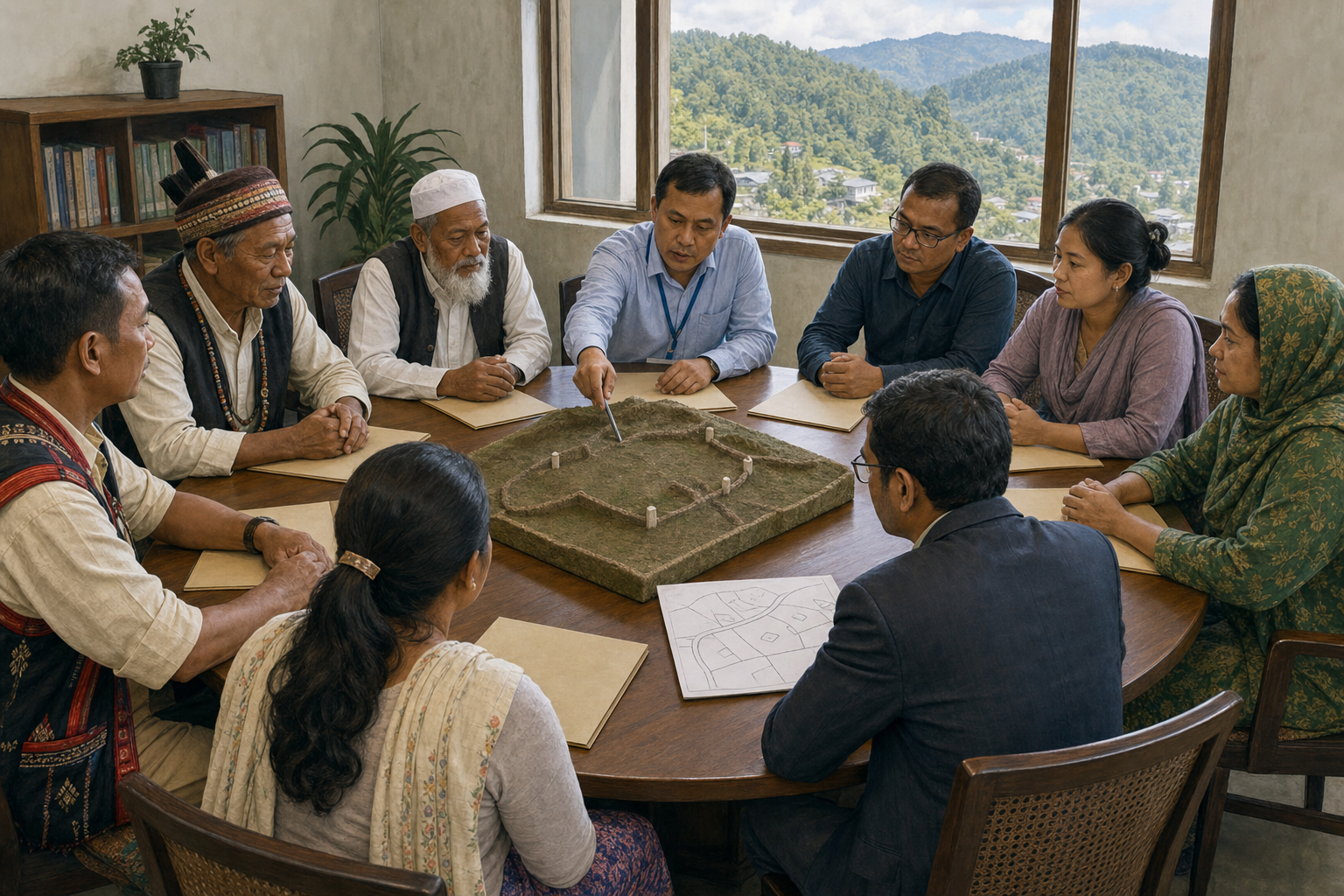
If you manage an affected worship site
- Preserve the position on the ground. Photograph the notice and seal, record when they were found, and keep copies of every communication. Do not remove a seal or resume use on the strength of general political assurances. An official restriction creates individual legal exposure, so obtain case-specific advice before taking physical action.
- Build one indexed document file. Gather the site map, deed, allotment or other claimed basis of occupation, relevant customary consent, approved plans, construction permissions, inspection records, notices, replies, and prior correspondence. Keep claims of ownership separate from proof of building approval; one does not automatically establish the other.
- Request the complete grounds in writing. Ask for the order number, plot identification, inspection report, exact provisions invoked, response deadline, competent officer, and available review procedure. If records describe the site inaccurately, identify each error and attach evidence rather than relying on a general denial.
- Answer each defect separately. A title dispute, zoning conflict, structural issue, and environmental violation require different evidence and different remedies. Do not let a broad debate about religious freedom substitute for the document that resolves the actual compliance question.
- Choose a remedy only after identifying the defect. The realistic route may be correction, an application for regularisation where legally available, negotiated relocation, an administrative representation, or court proceedings. A local advocate familiar with Arunachal land administration should assess deadlines and consequences; this is not a matter to handle through social-media advice.
If you represent an indigenous organisation or neighbourhood
Put evidence into the administrative record. Identify the parcel, customary claim, public use, water body, green corridor, access route, or safety concern at issue. Request a hearing and a written response. If you believe enforcement has been delayed, ask for a dated status update rather than confronting worshippers or entering a disputed site.
Also insist on denomination-neutral data. Indigenous land protection is more credible when the same scrutiny reaches unauthorised commercial projects and structures associated with every faith. Selective attention can leave the largest land pressures untouched while turning a planning problem into communal conflict.
If you are assessing the administration’s response
Look for systems that prevent the next dispute, not only seals on the current sites. Useful measures include digitised land records that preserve the status of customary claims, geo-tagged public assets, a common approval checklist, and a case tracker showing notices and outcomes. Religious trusts should be able to learn what is required before construction begins.
A one-time regularisation window could be considered for structures that satisfy published title, safety, planning, and environmental criteria. It should not convert protected or public land into private possession by default. Where relocation is unavoidable, any land-swap or rehabilitation proposal should be transparent, lawful, and discussed with affected indigenous communities as well as the worshippers who would move.
Communication should be operational rather than ceremonial. Multilingual notices, scheduled briefings, a document-submission portal or help desk, and published decision timelines would let people correct missing records before a dispute becomes communal. Every final decision should explain why evidence was accepted or rejected.
A dharmic response protects inheritance without collective blame
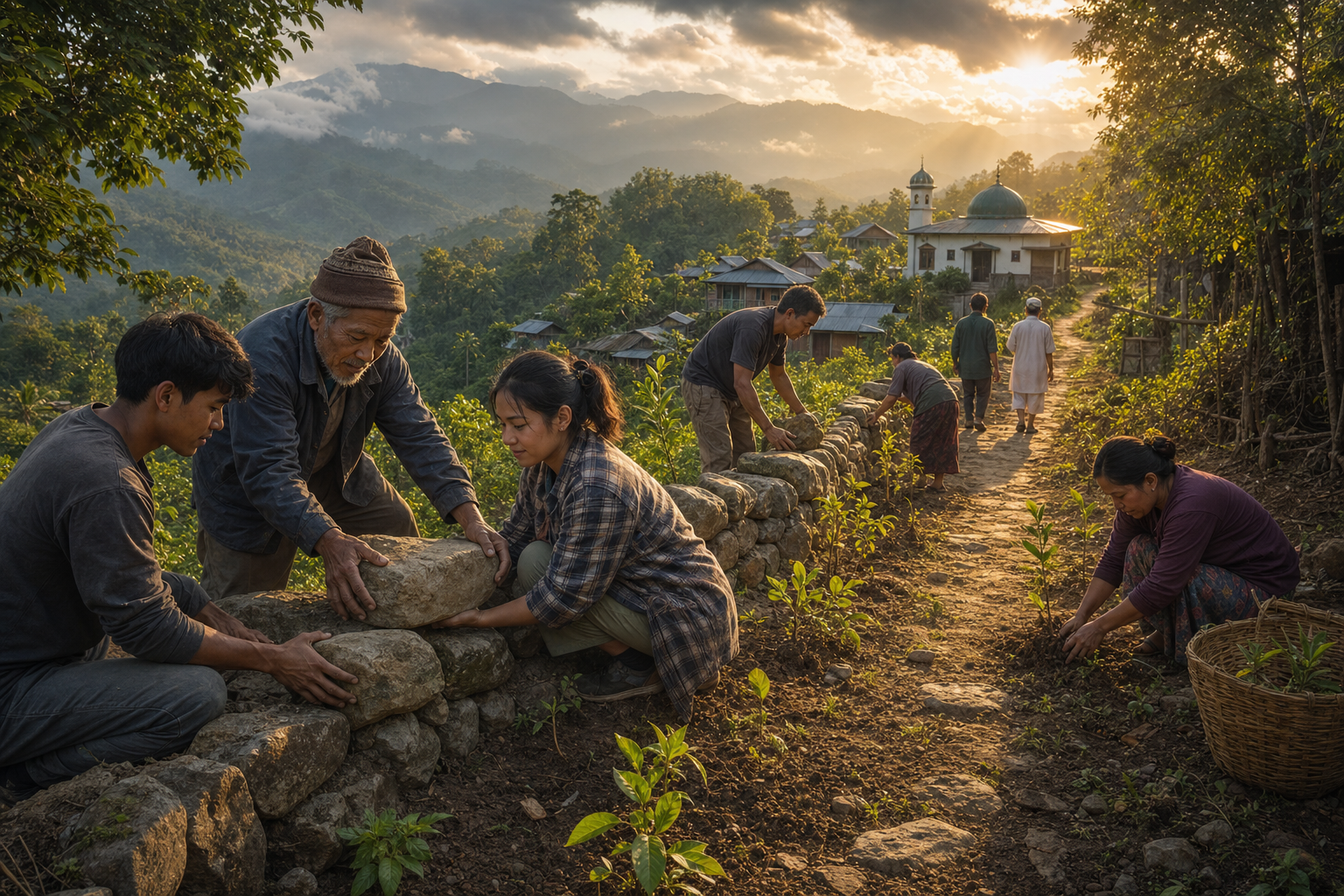
A pro-dharma position has a clear reason to defend Arunachal’s indigenous inheritance. Customary land, sacred landscapes, ecological limits, and the continuity of local communities should not be sacrificed to unplanned expansion. But dharma cannot mean selective legality. If land rules bind only an unpopular community, they cease to be a principled defence of the commons.
Satya begins with exact language. Say “sealed” when a site was sealed, not “demolished.” Say that the administration described the sites as unauthorised, then ask for the orders establishing why. Before sharing a photograph or video, check its location, date, and connection to a named site. Recycled images and captions without documents do not become reliable because they support our preferred conclusion.
Ahimsa rules out intimidation, vandalism, collective suspicion, and attempts to settle title through crowds. It does not require passivity toward encroachment. It requires using records, hearings, lawful enforcement, and review rather than inflicting harm on people who were not parties to a land decision.
Seva makes the principle practical. Community bodies can help trustees organise maps and approvals, translate notices, participate in safety audits, and mediate relocation discussions where relocation is legally necessary. Sarva-dharma-samabhava means equal dignity for paths of worship; it does not mean immunity from neutral land and safety rules.
Your next useful step is simple. Before endorsing or condemning any one of the 15 sealings, ask for its order, parcel status, notice history, and the comparable treatment of other unauthorised structures. If one of those pieces is missing, say “not yet established” and keep pressing for it. That discipline protects indigenous land more effectively than a slogan and protects religious freedom more reliably than an assumption.
References
