
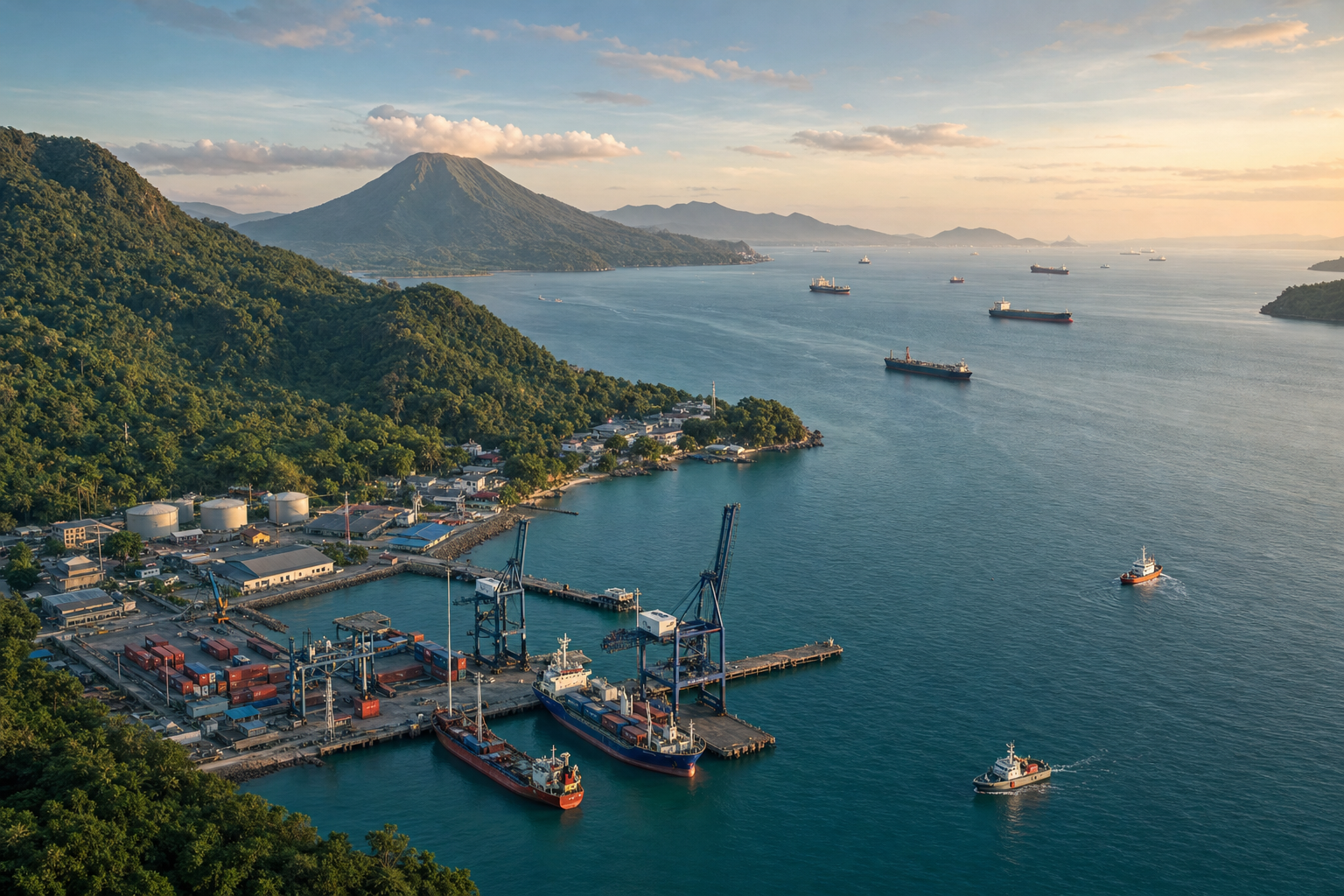
If you are asking whether Sabang gives Bharat a new naval base or the power to close the Strait of Malacca, the short answer is no. India and Indonesia agreed to jointly develop Sabang Port during Prime Minister Narendra Modi’s visit, but port cooperation is not the same as basing rights, a military alliance, or a commitment to blockade anyone.
The agreement is still strategically important. Sabang’s geography can give both countries more commercial reach, logistical flexibility, and leverage near one of the Indo-Pacific’s most consequential maritime passages. To understand what has changed, you need to separate three things that headlines often collapse into one: location, usable capability, and political intent.
Key takeaways
- Sabang matters because it lies on Weh Island, close to India’s Andaman and Nicobar Islands and near the route connecting the Bay of Bengal, the Andaman Sea, and the Strait of Malacca.
- The declared purpose is commercial development. Strategic value follows from the port’s location; it does not automatically convert the project into a naval base.
- India and Indonesia have overlapping concerns about China, but they do not face identical disputes and should not be treated as formal allies.
- A blockade is a possible conflict scenario discussed by strategists, not an announced policy or an established consequence of the agreement.
- Watch for access rules, physical port capacity, maritime coordination, political commitments, and real commercial traffic before judging how operational the partnership has become.
The map explains Sabang’s importance

Sabang is located on Weh Island, the Indonesian island closest to India’s Andaman and Nicobar Islands. Those islands sit along the maritime space through which vessels move between the Bay of Bengal and the Andaman Sea. From there, the Strait of Malacca connects shipping toward the South China Sea and the wider Pacific.
That makes Sabang valuable without requiring any dramatic military announcement. A functioning port in this location could support shipping, maintenance, replenishment, connectivity, and closer economic engagement between western Indonesia and eastern India. The same facilities may acquire strategic relevance in a crisis because geography does not distinguish between a commercial vessel and a naval one. Governments do.
For Bharat, Sabang also complements the Andaman and Nicobar Islands rather than replacing them. Indian territory provides a permanent national position in the Bay of Bengal and Andaman Sea. Cooperation with Indonesia could add relationships, access, and operational choices on the other side of this maritime corridor. That is a more precise advantage than the sweeping claim that India now “controls Malacca.”
Geographic position creates opportunity, not control. A port cannot monitor a sea lane without suitable sensors and information networks. It cannot sustain ships without fuel, repair capacity, storage, secure communications, and dependable access arrangements. Nor can either partner assume that facilities will be available during a confrontation unless political leaders have agreed on the conditions in advance.
Port cooperation is not a blockade commitment
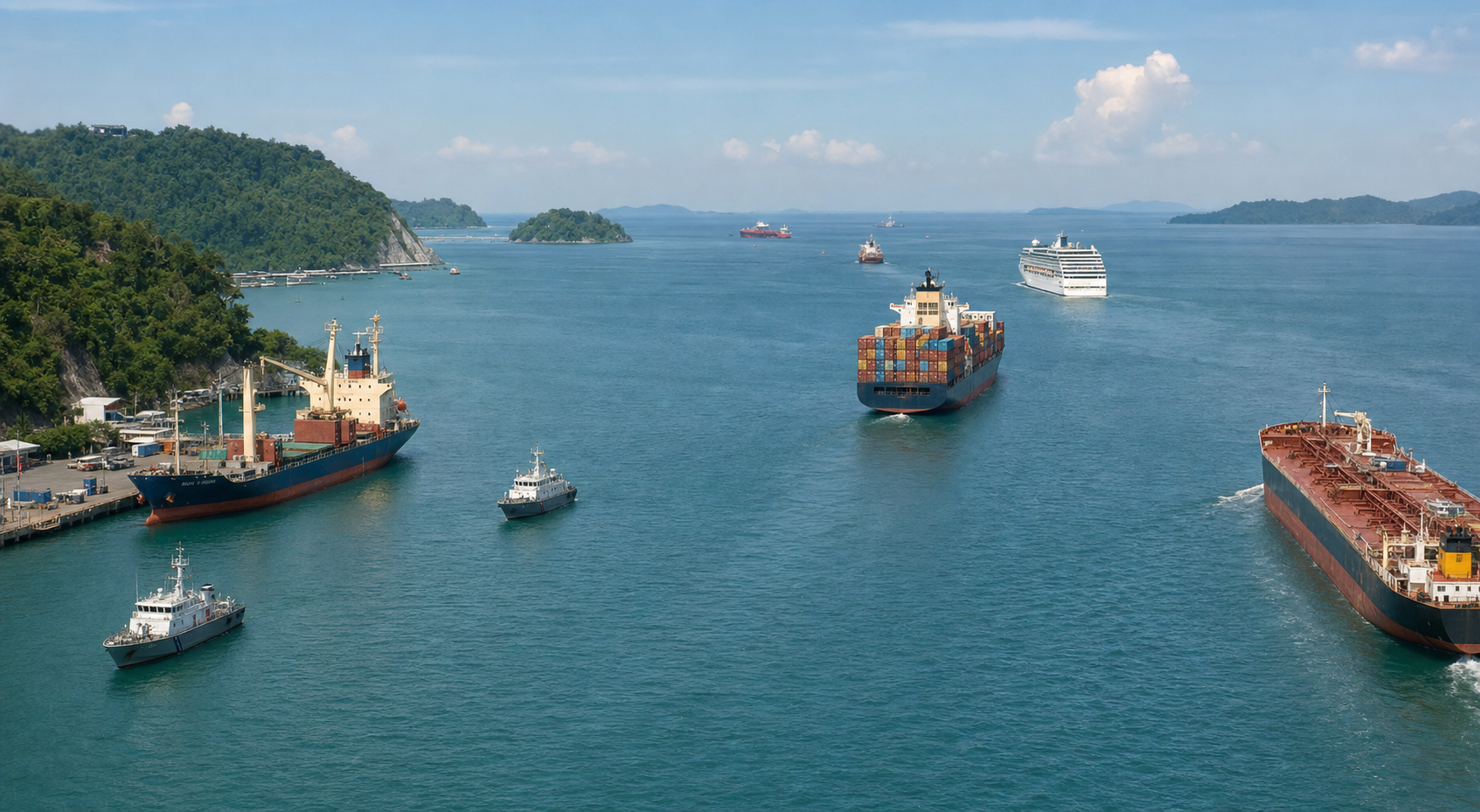
The most consequential interpretation of Sabang is that India and Indonesia could, during a severe conflict, coordinate action near an approach to the Strait of Malacca. Because a large share of commerce between the Indian and Pacific Oceans passes through this connected maritime system, interference there could impose serious costs on an adversary.
But you should treat that as a deterrence scenario, not as the agreement’s immediate outcome. Closing a maritime route would require far more than proximity. It would demand surveillance, ships and aircraft, command arrangements, rules for identifying and intercepting vessels, sustained logistics, and a political decision to accept retaliation and escalation.
That last condition is decisive. Any attempt to blockade Chinese shipping could produce a rapid and dangerous escalation, including strikes and counter-strikes. A capability intended to deter conflict can therefore become destabilising if political leaders mistake geographic advantage for an inexpensive way to apply pressure.
The sober reading is that Sabang may add another option to the strategic calculations of all three countries. China must consider the vulnerability of maritime approaches in a wider confrontation. India and Indonesia gain potential leverage, but they must also account for the costs of exercising it. Deterrence lies in that altered calculation, not in announcing a blockade that neither country has publicly undertaken to impose.
This distinction also protects the commercial project. If every improvement at Sabang is described as preparation for war, ordinary investment can become hostage to geopolitical theatre. Commercial viability, local benefit, and regular shipping activity would make the port more useful in peacetime and more resilient as a strategic asset. An underused facility carrying a grand label would achieve much less.
What Bharat and Indonesia each stand to gain
Bharat gains options without seeking a distant dependency
Bharat’s immediate advantage is a deeper relationship with the country positioned across the southern end of the Andaman maritime space. Commercial cooperation can build the routines that ambitious strategy often lacks: regular official contact, knowledge of local port procedures, trusted institutional relationships, and experience solving practical problems together.
The wider strategic context is an overlap of concerns. India faces a territorial dispute with China, while Chinese claims in the South China Sea unsettle Indonesia. Their pressures are related but not interchangeable. India should therefore seek dependable cooperation in specific fields rather than assume that shared concern will produce automatic support in every crisis.
This approach fits Bharat’s preference for strategic autonomy. A useful partnership does not require permanent subordination to a larger alliance system. Sabang can strengthen India’s capacity to act with a regional partner while leaving each government responsible for its own decisions.
Indonesia gains development while preserving room to manoeuvre
Indonesia can use cooperation with India to develop Sabang’s commercial potential, improve connections with the Bay of Bengal, and diversify its external relationships. It also gains a capable partner that has an independent reason to support stability in the surrounding waters.
That does not mean Jakarta has entered an anti-China alliance. Indonesia has its own interests, geography, economic relationships, and strong attachment to sovereign decision-making. Cooperation is likely to remain credible only if it respects that independence. Treating Indonesia as a passive piece on someone else’s chessboard would misunderstand both the attraction and the limit of the partnership.
The same principle applies to the United States. India-Indonesia cooperation may complement a broader security architecture supported by Washington, but the overlap does not erase Indian or Indonesian agency. Their interests can align with those of the United States without making either country dependent on it. For Bharat, that is not a semantic distinction; it is the foundation of durable cooperation.
Five signals that will show whether cooperation is becoming real
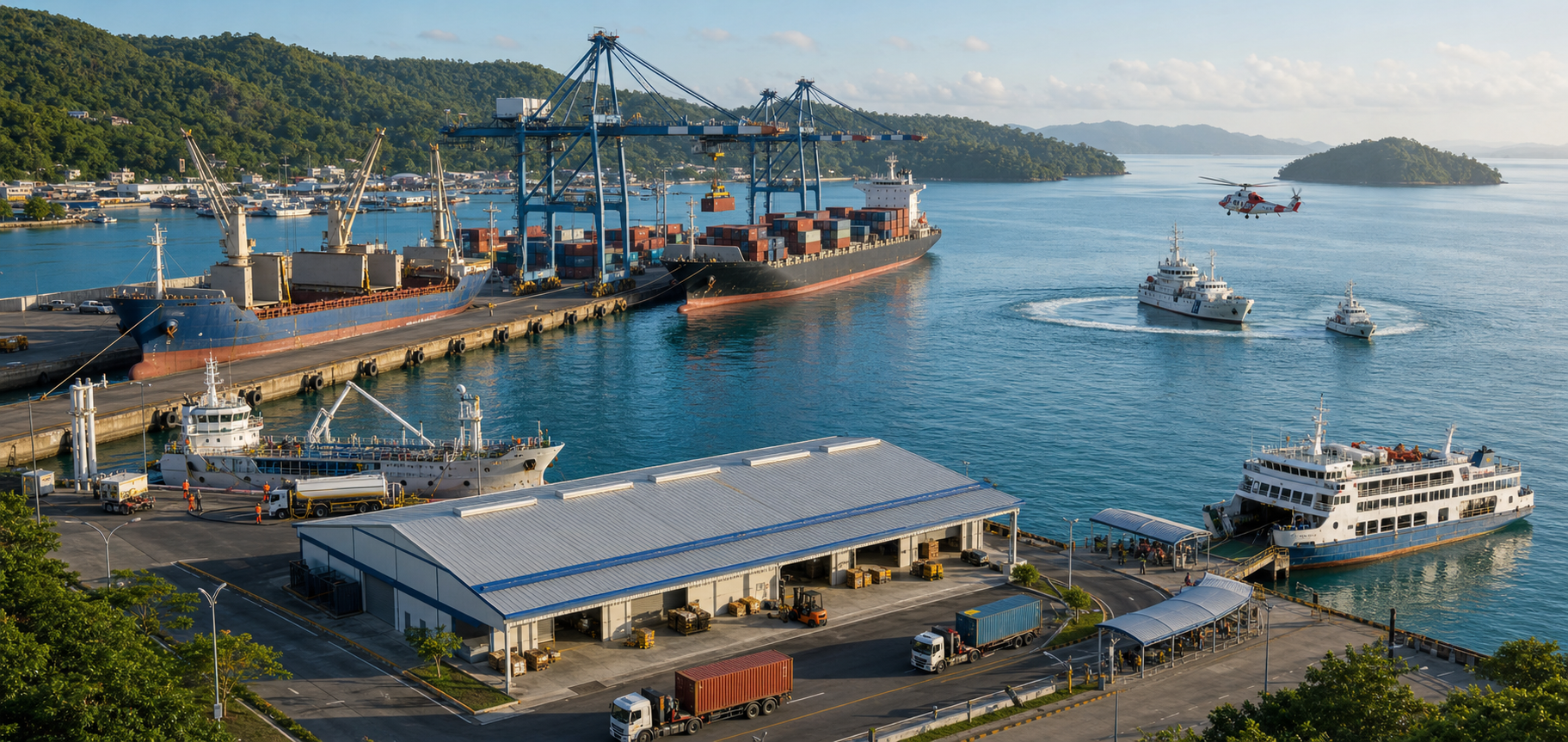
The agreement’s strategic weight should be judged by implementation, not by the most dramatic interpretation attached to it. When you assess future announcements, use these five tests.
- Access rules: Look for clear arrangements governing port calls, refuelling, maintenance, repair, logistics, and any naval use. Joint development alone does not tell you who may use which facilities, under what conditions, or during what kind of emergency.
- Physical capacity: Watch for concrete information about berths, navigational depth, fuel, storage, repair services, cargo handling, and connections beyond the harbour. A strategically placed port with limited capacity remains a geographically interesting but operationally narrow asset.
- Maritime coordination: Exercises, compatible communications, information-sharing mechanisms, and agreed procedures would matter more than rhetorical declarations. Ships and agencies that have never practised together cannot improvise complex coordination safely in a crisis.
- Political convergence: Shared unease about China does not guarantee identical responses. Pay attention to whether New Delhi and Jakarta develop reciprocal expectations for consultations, access, or assistance when either country faces pressure.
- Commercial use: Regular cargo, shipping services, investment, and local economic activity would show that Sabang is becoming a working port rather than a symbolic geopolitical project. Peacetime utility is part of strategic durability, not a distraction from it.
If a future claim about Sabang cannot answer these questions, treat it as a statement about potential rather than present capability. That rule will help you avoid both extremes: dismissing the cooperation because it is described as commercial, or assuming that a new anti-China naval front already exists.
Bharat should now pursue the unglamorous work that turns location into leverage: commercially useful infrastructure, dependable access, routine coordination, and a relationship strong enough to withstand disagreement. Watch those milestones. They will reveal far more about Sabang’s future than the language of either triumph or alarm.
References
