
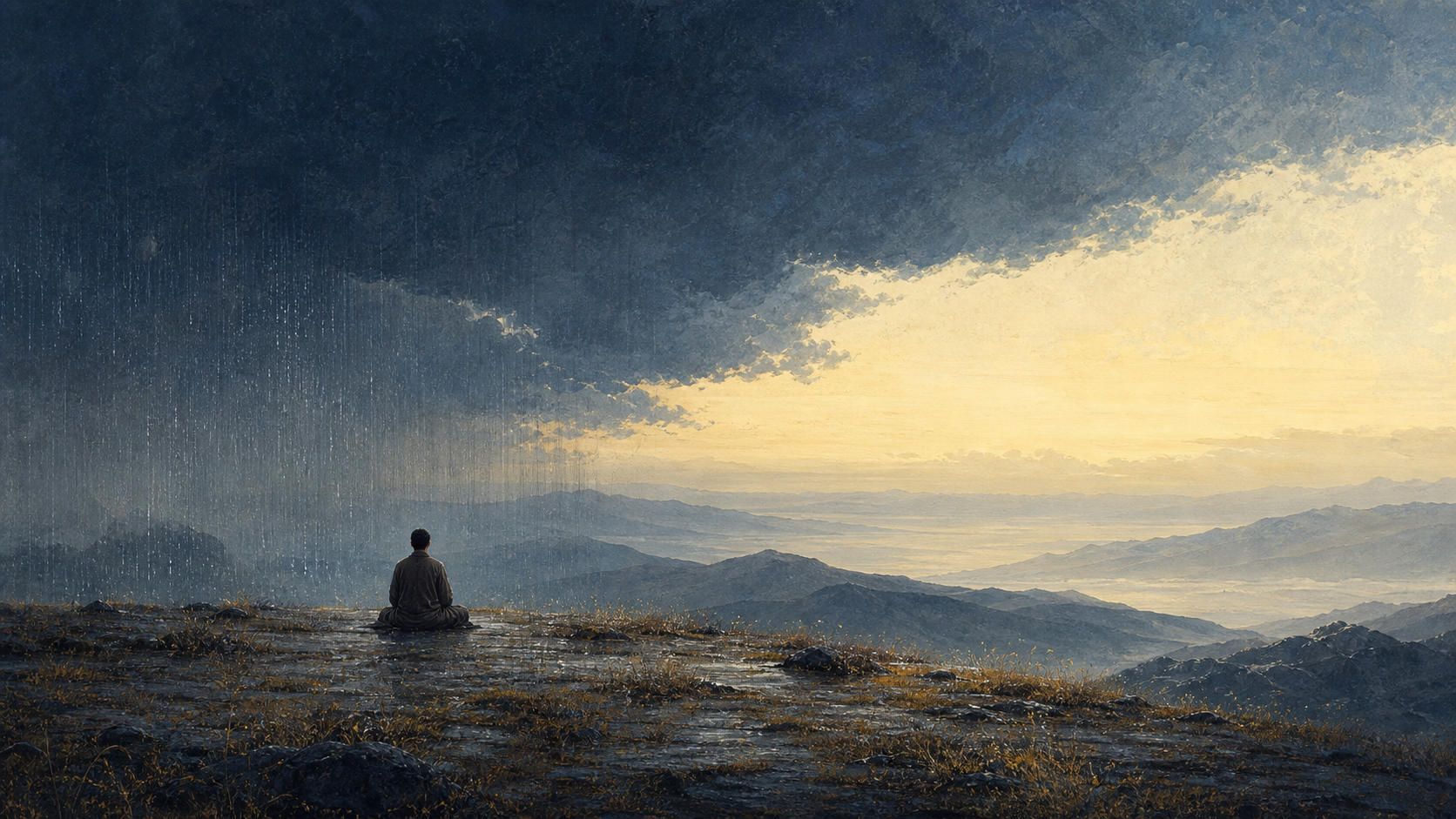
If meditation has brought unusual stillness, clarity, or joy, you may wonder whether you have touched Dharma Megha Samadhi. Patanjali gives you a stricter test. The decisive question is not how extraordinary the experience felt, but whether even spiritual knowledge, accomplishment, and recognition have ceased to attract the mind.
That distinction protects you from turning a teaching about freedom into another badge of identity. Dharma Megha is not a spectacular episode to reproduce. It is the threshold before kaivalya, reached when discriminative insight is mature and attachment has nowhere left to hide.
What makes Dharma Megha different from another deep samadhi
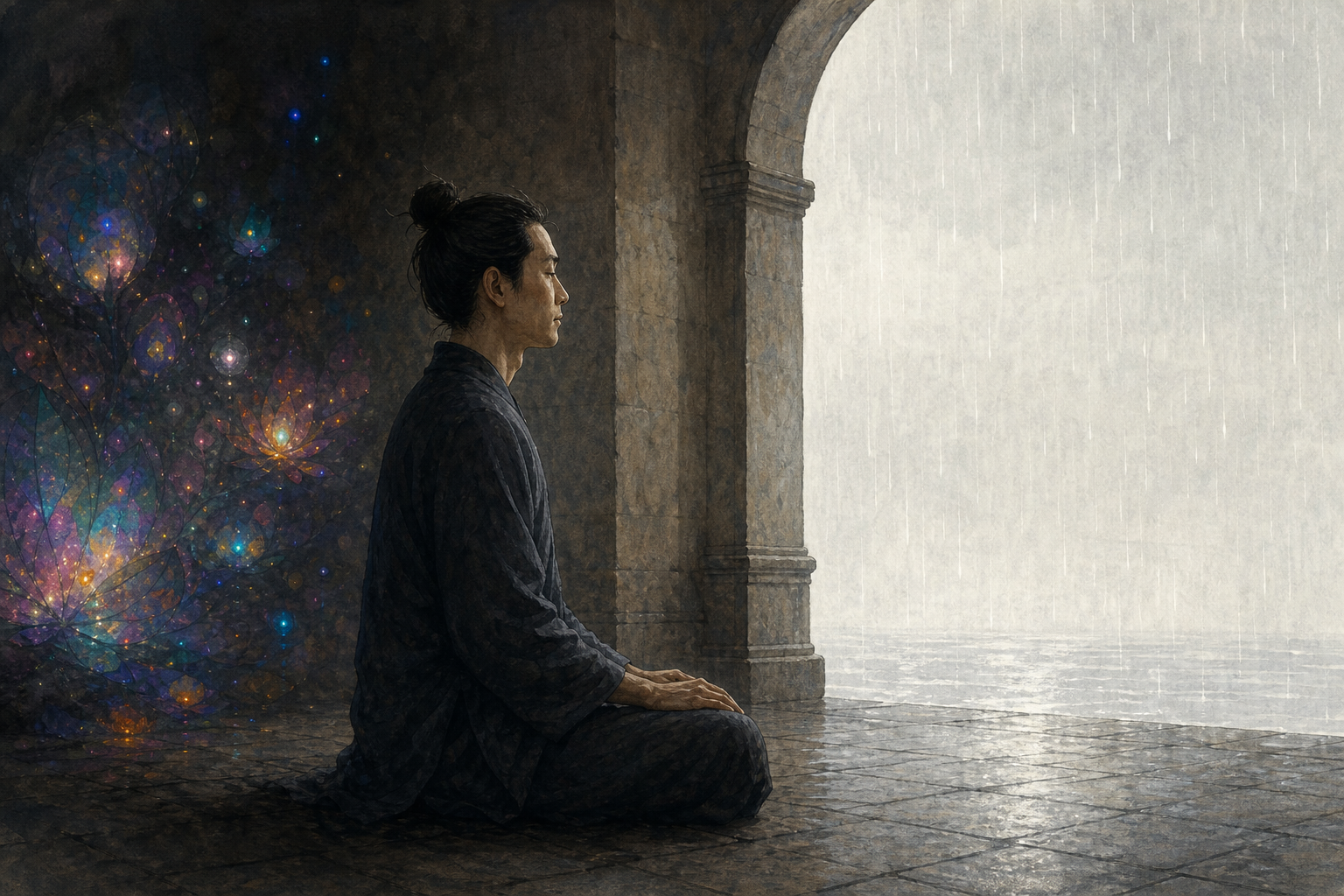
The usual rendering of dharma-megha is cloud of dharma. Here, dharma does not mean membership in a religion. It carries the wider senses of rightness, sustaining order, intrinsic law, and virtue. Megha, or cloud, suggests an abundant and impartial outpouring. The image is of clarity and right conduct becoming as natural as rain, not of a practitioner acquiring a new possession.
Yoga Sutra 4.29 states the condition precisely:
prasaṅkhyāne ‘py akusīdasya sarvathā viveka-khyāteḥ dharma-meghaḥ samādhiḥ
Yoga Sutra 4.29
The practitioner is already established in viveka-khyāti, the sustained discrimination between Purusha, the seer, and the changing activity of Prakriti. Prasaṅkhyāna points to exalted discriminative knowing. Yet the crucial word is akusīdasya: the yogin does not become invested in that knowledge, settle into it as an identity, or seek profit from it. Dharma Megha arises when insight is present without an owner demanding status from it.
This is why cognitive brilliance alone cannot establish Dharma Megha. Neither can a vision, prolonged absorption, unusual bliss, or an apparent power. Vyasa, Vacaspati Misra, Vijnanabhiksu, and Bhoja keep the emphasis on the same conjunction: uninterrupted discrimination and dispassion toward even the highest attainments. The state is defined as much by what no longer seduces the yogin as by what the yogin knows.
Key takeaways
- Dharma Megha appears only after discriminative insight has become steady, not at the beginning of meditation.
- Its decisive condition is nonattachment even to refined knowledge, samadhi, powers, and spiritual reputation.
- Its credible signs are freedom from afflictive reactivity and increasingly spontaneous ethical conduct, not the intensity of a private experience.
- Yoga Sutra 4.30 immediately connects it with the cessation of kleshas and binding karma.
- Dharma Megha is the final threshold toward kaivalya; the two terms should not be treated as interchangeable labels.
Read the cloud through the sequence from 4.29 to 4.32
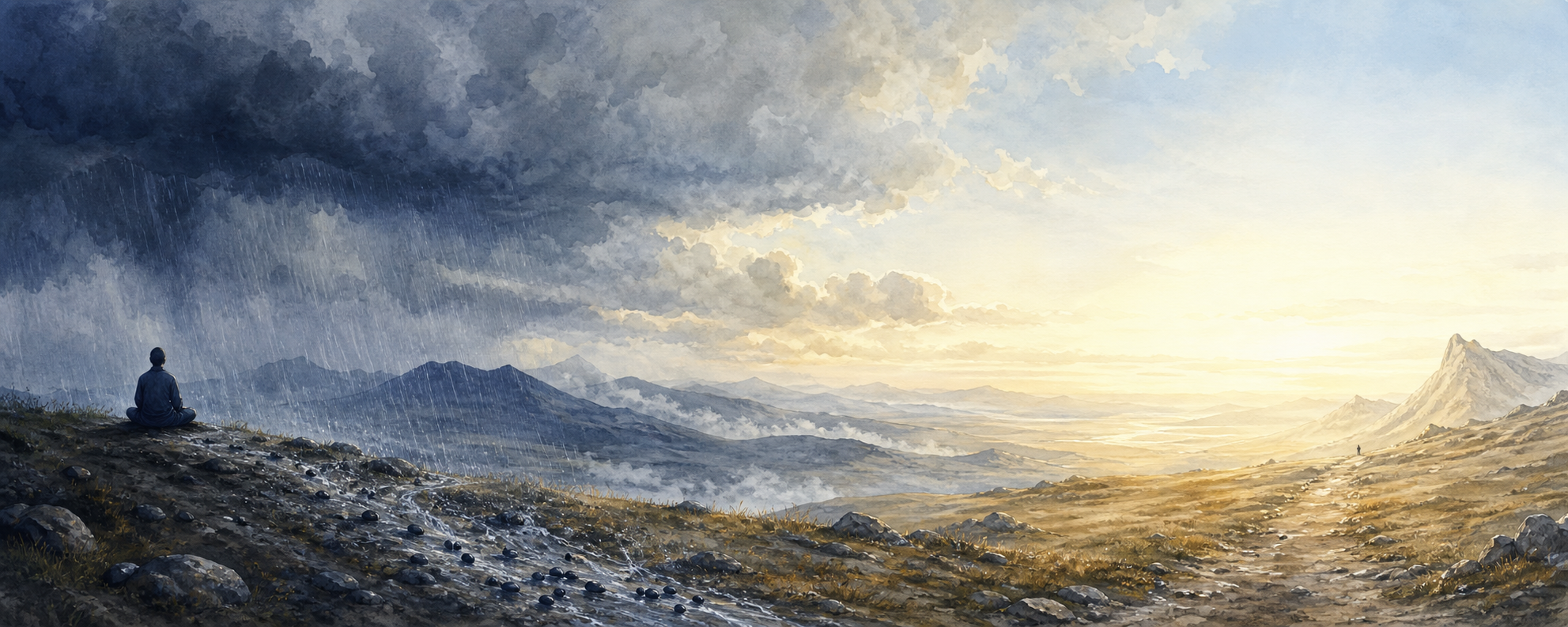
The cloud metaphor can become vague when it is separated from its textual sequence. The four movements from Yoga Sutras 4.29 through 4.32 show exactly what is changing:
- 4.29: even insight is relinquished. Viveka-khyāti is uninterrupted, yet the practitioner does not cling to discriminative knowledge. Dharma Megha Samadhi arises from this complete nonattachment.
- 4.30: klesha and karma cease to bind. The underlying afflictions and karmic accumulations that perpetuate reactive experience no longer find a basis from which to operate.
- 4.31: knowledge is no longer covered. With obscuring impurities removed, knowledge is described as unbounded, while what remains to be known becomes negligible by comparison.
- 4.32: the sequence of the gunas reaches completion. For the one whose purposes have been fulfilled, the transformations of sattva, rajas, and tamas no longer have further work to perform.
Klesha-karma-nivṛtti should not be mistaken for bodily inactivity or an inability to perform ordinary duties. The point is the end of afflictive and karmic compulsion. Action may occur, but the old machinery of misidentification, grasping, and reactive momentum no longer produces bondage in the same way.
The role of sattva also needs care. Sattva is progressively purified until the mind becomes an almost transparent reflector of Purusha. That transparency is still a condition of Prakriti, however refined it may be. Final freedom therefore does not consist of decorating the clearest possible mind and calling it the Self. Even transparent sattva has completed a function and must cease to be mistaken for the seer.
Kaivalya is the horizon of this sequence: complete freedom in which Purusha is no longer mixed up with the modifications of Prakriti. It is not simply a longer meditation session or an exceptional event preserved in memory. Memory itself belongs to the field that is seen. Kaivalya concerns stable non-identification with that entire field.
Build the conditions without turning liberation into a project
You cannot approach Dharma Megha as a stand-alone technique. It presupposes the maturation of Patanjali’s entire eight-limbed discipline. The useful question is therefore not, How do I induce this state? It is, Where does identification, reactivity, or spiritual ambition still govern my practice?
A serious practitioner can make that examination concrete:
- Test yama and niyama in ordinary friction. Ahimsa, satya, and aparigraha matter most when you are contradicted, praised, inconvenienced, or offered an advantage. If non-harming, truthfulness, and non-grasping collapse under pressure, a luminous sitting should not be reclassified as final realization. The ethical foundation still needs work.
- Use asana and pranayama to support steadiness. Bodily and breath disciplines prepare a stable instrument. Their value here is not display or extremity, but a body-mind that can remain collected without continually demanding attention.
- Recognize pratyahara as freedom from reflexive capture. Withdrawal of the senses does not mean hostility toward the world. Notice whether every sound, image, appetite, or discomfort automatically recruits your attention. The capacity not to feed each stimulus prepares the mind for sustained inward discipline.
- Let dharana, dhyana, and samadhi mature into samyama. Concentration, meditation, and absorption must become a continuous movement rather than three disconnected achievements. Measure progress by continuity and clarity, not by collecting impressive objects of meditation.
- Carry viveka-khyāti beyond the meditation seat. Within Patanjali’s framework, thoughts, emotions, perceptions, and even refined knowledge belong to the known field of Prakriti. Notice whether that distinction remains available during changing circumstances, not only during protected silence.
- Examine the wish to own a successful practice. After a clear meditation, look directly at the urge to repeat it, explain it, announce it, teach from it, or make it part of your identity. That urge is not evidence of failure. It shows you where vairagya must become subtler.
- Balance disciplined effort with Ishvara-pranidhana. Dedication to Ishvara prevents practice from closing around personal accomplishment. Offer the result instead of building a self-image from it. At this stage, surrender is not passivity; it is protection against appropriation by the very egoic movement practice is meant to clarify.
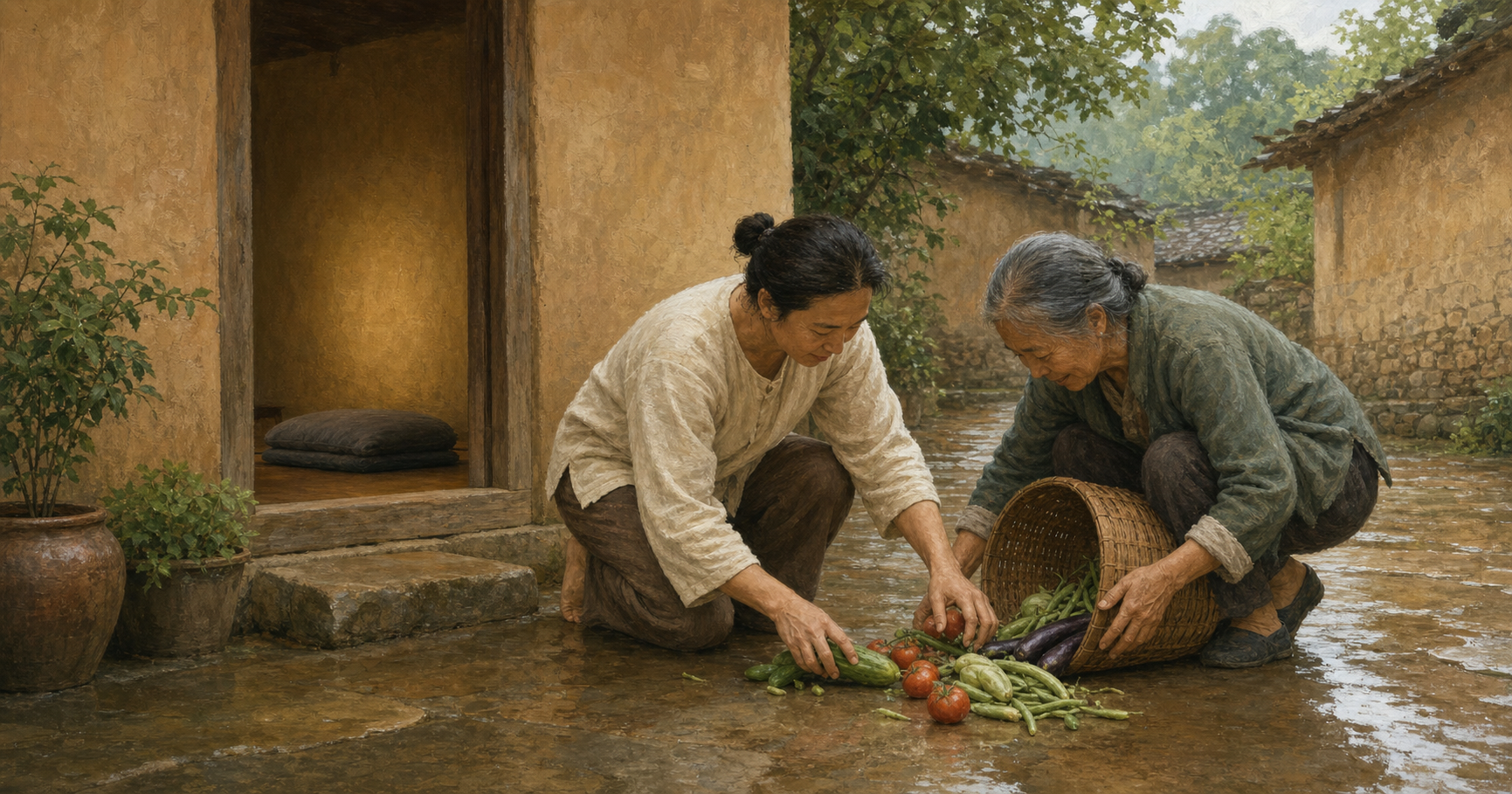
Over time, the yamas and niyamas cease to feel like rules imposed on a resistant personality. Ethical clarity becomes more immediate because the motives that oppose it have weakened. This effortless quality is important, but it cannot be manufactured by acting serene. Conduct becomes natural as its contrary causes lose their hold.
Test experiences by their aftereffects, not their spectacle
Samadhi is often imagined as a trance, and Dharma Megha is sometimes casually equated with nirvikalpa samadhi. That shortcut obscures Patanjali’s structure. The popular savikalpa-nirvikalpa vocabulary comes largely from Vedantic and later yogic usage and does not map exactly onto Patanjali’s categories of samadhi with and without seed. Locate Dharma Megha through Book IV and its consequences rather than forcing it into a neighboring system’s label.
| Experience or claim | Why it is not sufficient | What to examine instead |
|---|---|---|
| Intense bliss, light, a vision, or prolonged absorption | An extraordinary state can still become an object of craving and identity. | Does the wish to repeat, possess, or advertise it weaken without disappointment? |
| A period with no noticeable thoughts | Temporary mental quiet does not by itself establish continuous discrimination between the seer and the seen. | Does clear non-identification remain present when thoughts, emotions, and responsibilities return? |
| Unusual knowledge or a siddhi | At this stage, fascination with powers and knowledge is precisely one of the attachments that must end. | Can the attainment be left unused and unclaimed without a sense of personal diminishment? |
| Emotional flatness or withdrawal | Numbness and avoidance can resemble equanimity from the outside, but they do not establish liberation. | Are non-harming, truthfulness, responsiveness, and appropriate responsibility becoming more natural? |
| Calm under retreat conditions | Protected conditions remove many triggers and therefore reveal only part of the mind’s conditioning. | What happens when praise and blame, success and failure, or gain and loss touch your self-image? |
The most relevant markers are quieter: less spiritual ambition, cooling interest in siddhis, reduced attraction to acclaim, and an equipoise that does not depend on favorable circumstances. Ethical action becomes less negotiated. Conceptual overlays thin, while discernment remains clear. None of these is a do-it-yourself certificate, but together they tell you far more than the drama of an isolated meditation.
Claims of final attainment deserve particular restraint. Dharma Megha is characterized by dispassion even toward exalted knowing, so a strong hunger to be recognized as realized weighs against the claim. That does not allow you to diagnose another person’s inner state from a single behavior. It does give you a sound rule for choosing guidance: give more weight to stable conduct, non-grasping, and clarity than to self-description or displays of power.
A shared Dharmic image does not erase distinct paths
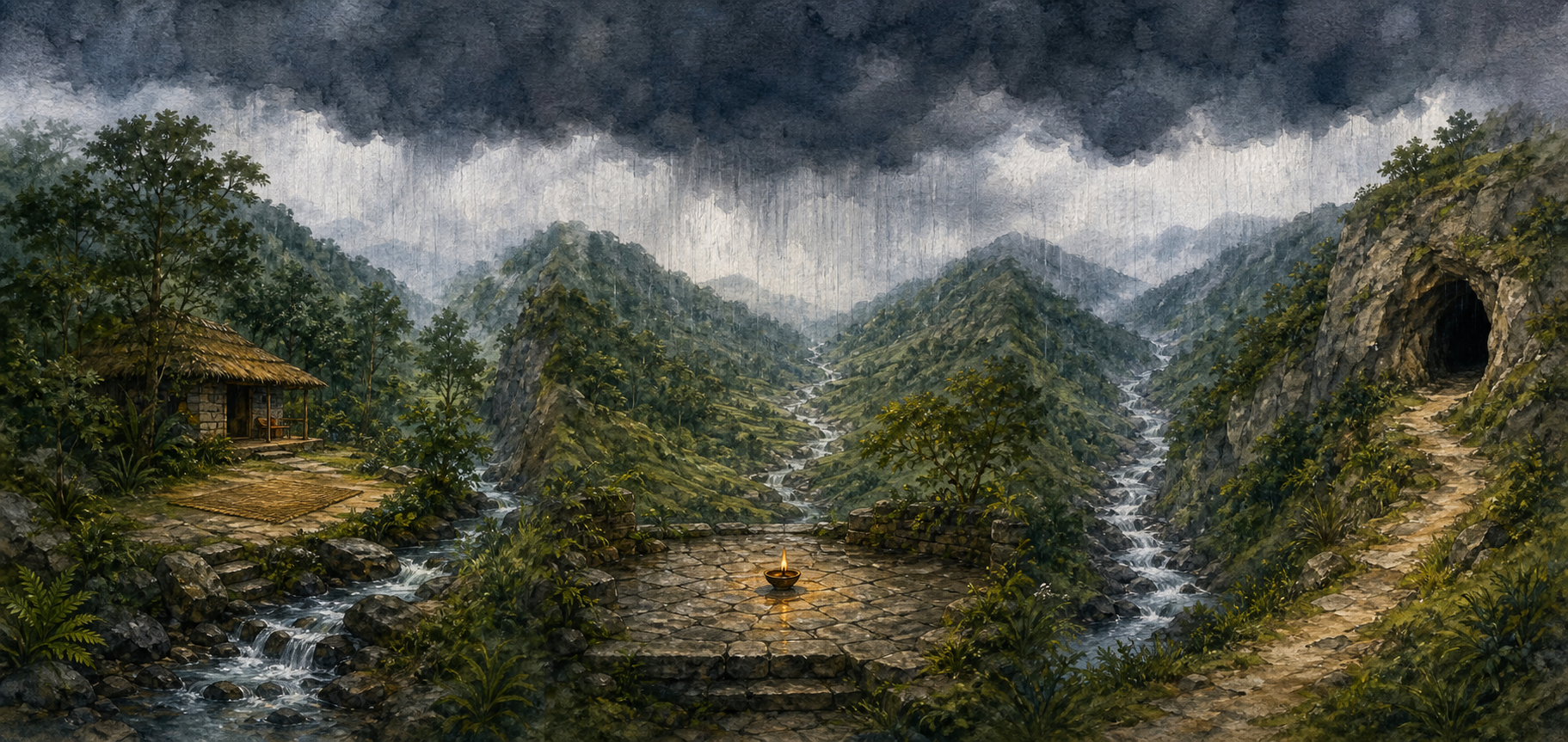
The rain-cloud image reaches beyond Patanjali’s Yoga without making every Dharmic path identical. In Mahayana Buddhism, Dharma-megha names the tenth bhumi, where wisdom and compassion are pictured as an abundant outpouring and karmic obstructions have been comprehensively cleared. Jain teaching places kevala-jnana after the destruction of the knowledge-obscuring ghatiya karmas. Sikh teaching describes sahaj avastha as natural equipoise and uses the rain of Naam as an image for the pacification of the mind.
These are resonances, not interchangeable technical definitions. Patanjali speaks through Purusha, Prakriti, the gunas, viveka-khyāti, and kaivalya. Buddhist, Jain, and Sikh traditions preserve their own accounts of reality, bondage, practice, and liberation. Flattening those distinctions produces a superficial unity; refusing to notice any kinship misses a civilizational conversation about ending the causes of suffering and allowing wisdom, compassion, and right conduct to become unforced.
When you compare these paths, ask four disciplined questions: What produces bondage? What removes its causes? What is said to remain when obscuration ends? How does freedom alter conduct toward other beings? Those questions reveal genuine common ground while keeping each lineage’s metaphysics intact.
After your next serious sitting, record three things: what you wanted from the experience, how you behaved in the first difficult interaction afterward, and whether praise or blame made you grasp or defend. That record cannot certify Dharma Megha Samadhi. It can show you exactly where abhyasa, viveka, and vairagya must go next.
References
