

If you have seen claims that police uncovered an interstate Christian conversion network in Lucknow, the useful question is not whether the headline confirms your existing view. You need to know what conduct is alleged, what evidence could establish it, and what remains unproved.
A responsible Dharmic response can be firm about coercion and inducement without treating an arrest as a conviction. That distinction protects vulnerable families, preserves the credibility of genuine complaints, and keeps community action within the law.
Seven arrests grew out of a village complaint
Uttar Pradesh Police arrested seven people in connection with alleged conversion activity centred on the Mohanlalganj area of Lucknow. Those arrested include Pastor Daniel, his wife Subala, and five associates.
The interstate description comes from the alleged network’s personnel and reach. Daniel is a native of Tamil Nadu, and police say a church organisation sent the couple to Lucknow in 1998. Investigators allege that he was assigned religious outreach responsibilities connected with the Varanasi region. They are examining possible activity in Varanasi, Sultanpur, and other Uttar Pradesh districts.
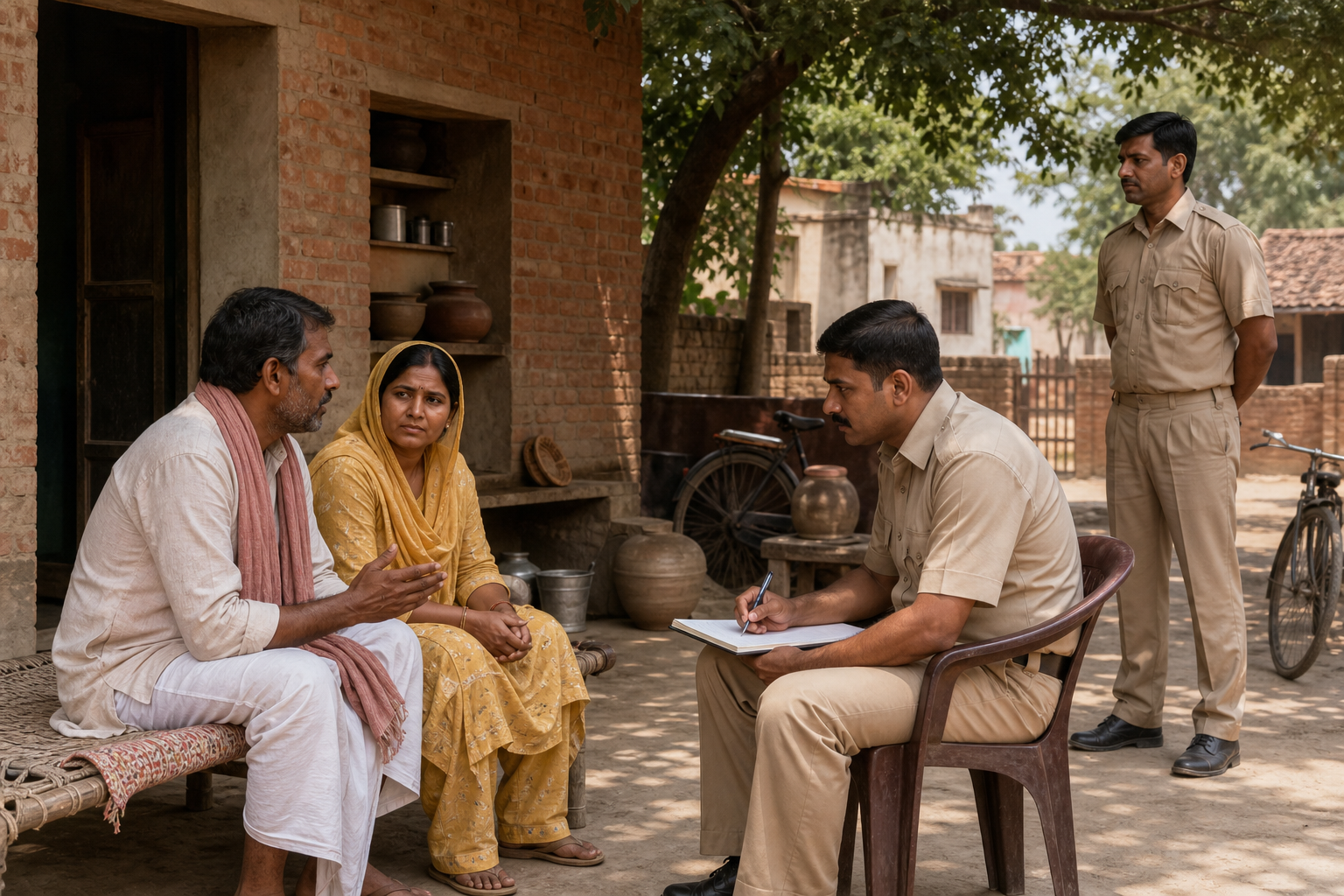
The immediate trigger was more local. A resident of Bharsawa village opposed the alleged activity and complained that he was threatened after refusing to convert. When the accused later arrived in a Bolero vehicle, villagers detained them and handed them to the police. Those facts explain how the investigation began, but the complainant’s account still has to be corroborated through testimony, communications, documents, and other admissible evidence.
Police also allege that the operation worked with annual conversion targets and received financial support related to the number of conversions secured. That is a serious claim because it would turn religious outreach into an organised, measurable programme. At this stage, however, it remains an investigative allegation rather than a judicial finding.
The alleged method matters more than the religious label
For understanding this case, the central line is consent. A voluntary change of belief is not the same thing as a change obtained through deception, material leverage, intimidation, or pressure. Inviting someone to a prayer meeting and distributing religious literature are also not, by themselves, proof of wrongdoing.
The police case concerns more specific conduct. Investigators allege that economically vulnerable villagers were offered miraculous relief from chronic illness, financial assistance, marriage arrangements, and help with childbirth, after which they were brought to prayer meetings and pressured to convert. The alleged threat against a person who refused is especially important because it bears directly on whether consent was free.
You can test any similar allegation by separating four kinds of conduct. An open invitation allows a person to decline without consequence. Conditional aid makes essential help depend on religious compliance. A statement of personal faith differs from a concrete promise that prayer will cure an illness. Ordinary pastoral goals differ from a paid system in which money, targets, and individual conversions are linked. The investigation must establish where the accused conduct actually falls.
This precision matters to a pro-Dharma position. If we make Christian identity, a pastor’s title, or possession of a religious booklet the offence, we weaken the case against actual coercion. Dharma is better defended by identifying the alleged act: who offered what, to whom, on what condition, and what happened when the person said no.
Claims of miraculous healing deserve separate caution. Prayer may have personal spiritual meaning, but it should not be represented as a substitute for qualified medical care. If a religious worker of any tradition tells a patient to rely on a promised cure, the safe response is to continue appropriate treatment and consult a medical professional.
The diary and financial trail must establish a real connection
Searches reportedly produced religious literature, conversion booklets, bank statements, a Bolero vehicle, and a diary. Police describe the diary as important because it allegedly records families receiving financial assistance, people targeted for conversion, and benefits offered through medical or welfare activity.
Possession is not the same as proof of purpose. Religious books can show affiliation without showing coercion. A bank statement can show a transfer without explaining why it was made. A list of families could record unconditional charity, prospective congregants, or targeted inducements. The decisive issue is the link among the records, the alleged promises, the recipients, and a requested change of religion.
Several questions will therefore determine how strong the case becomes:
- Who wrote and maintained the diary, and can its entries be dated and authenticated?
- Do the named families confirm that benefits were offered on condition of conversion, or do they describe ordinary welfare assistance?
- Do messages, calls, meeting records, or instructions corroborate the alleged annual targets?
- Can bank transfers be matched to particular workers, beneficiaries, meetings, or conversion-related instructions?
- Is the complainant’s account of threats supported by witnesses, recordings, messages, or consistent prior reports?
- Do records from Varanasi, Sultanpur, or elsewhere demonstrate coordinated interstate activity rather than isolated contact?
The funding inquiry requires the same discipline. Foreign contributions to eligible organisations in Bharat are regulated under the Foreign Contribution (Regulation) Act, commonly called the FCRA. Investigators are examining the bank records to determine whether money came through lawful, disclosed channels or through an unlawful route. The existence of a church connection does not itself establish that funds were foreign, and foreign origin alone does not establish a violation. Authorities must trace the origin, recipient, regulatory status, use, and connection to the alleged conduct.
No available fact establishes the result of that financial examination. Until transactions are traced and tested, claims of illegal foreign funding should be described as a question under investigation, not as a proven conclusion.
A responsible community response protects people and evidence
If comparable activity appears in your village or neighbourhood, your first task is not to produce a viral accusation. It is to protect anyone facing pressure and create a clear factual record that police and legal professionals can examine.
- Move away from immediate danger. If someone is threatening or surrounding a person, seek a safe place and contact local police or emergency services. Avoid physical confrontation or restraint; it can injure people, create legal exposure, and compromise the inquiry.
- Write a contemporaneous account. Record the date, time, place, people present, vehicle details, phone numbers, and the exact benefit or threat alleged. Do this while memory is fresh.
- Preserve originals. Keep unedited messages, audio, leaflets, payment records, photographs, and call details. Do not crop away context, annotate the only copy, or circulate sensitive material before authorities can preserve it properly.
- Separate observation from hearsay. State what you personally saw or heard. Put information received from someone else in a separate part of the complaint and identify that person, with consent, so investigators can obtain a direct statement.
- Describe conduct rather than identity. A useful complaint says that aid was allegedly conditioned on conversion, a cure was promised, or a threat followed refusal. A vague claim that Christians visited the area does not establish unlawful conduct.
- Protect health and privacy. Do not publish a patient’s illness, a family’s financial hardship, children’s identities, bank details, or home address. Give relevant information privately to police and a qualified local lawyer.
The village detention in the Lucknow case should not become a template for vigilantism. Community members can observe, assist a complainant, preserve evidence, and call the authorities without assuming the powers of investigators or courts. Public anger may feel decisive, but it can frighten witnesses, invite retaliation, and give accused organisers an argument that the process was prejudiced.
Dharmic institutions also have a constructive role before a crisis begins. A temple committee, gurudwara, Jain sangh, Buddhist vihara, or local seva group can maintain a known contact person for families facing medical, food, education, or marriage-related distress. Assistance should be transparent and independent of religious conformity. When help is accessible without hidden conditions, vulnerable people are less exposed to anyone who tries to turn hardship into leverage.
Key takeaways
- Seven people have been arrested, but the case remains at the allegation and investigation stage; guilt has not been established by the fact of arrest.
- The material issue is alleged inducement, pressure, threats, conversion targets, and organised financing, not prayer meetings or Christian literature by themselves.
- The diary and bank records become probative only if investigators connect them to particular promises, recipients, instructions, and requested conversions.
- Possible FCRA violations require proof of the money’s origin, route, recipient, regulatory status, and use. Suspicion of foreign funding is not a completed financial case.
- If you encounter similar conduct, preserve exact evidence, protect vulnerable people, report specific acts, avoid vigilantism, and obtain qualified legal help.
The next useful act is simple: write down facts before commentary, support the person who says no, and let evidence determine the accusation’s reach. A Dharmic defence grounded in seva, consent, truth, and lawful accountability will endure longer than any inflammatory headline.


References
