
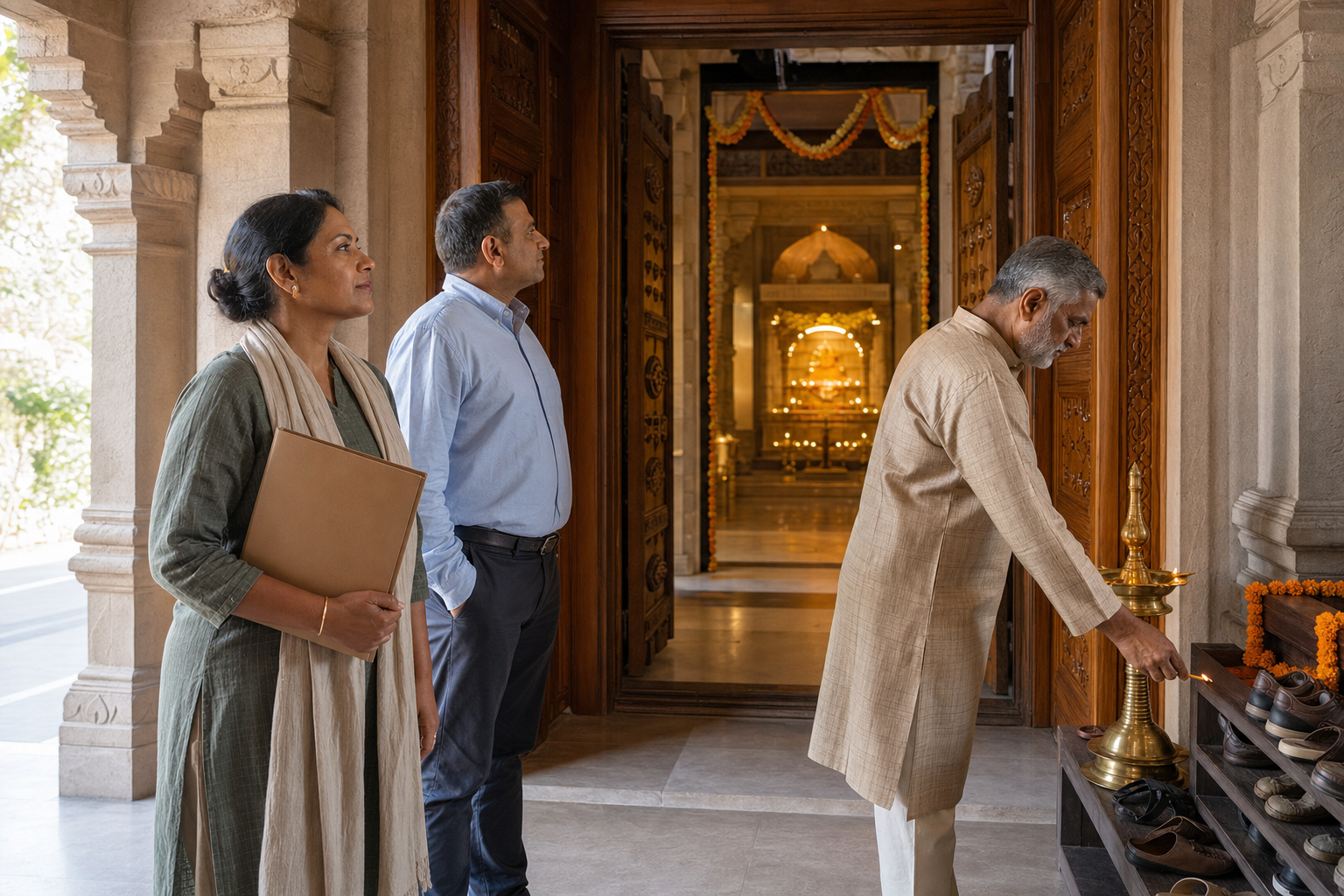
Perhaps your committee is debating a dress-code board. Perhaps the harder question is whether the mandir will still control its premises at the next lease renewal. These look like separate problems. They are the same duty at different scales.
A temple remains a temple only when trustees protect two things at once: the maryada that governs sacred space and the institutional continuity that lets the community worship, teach, serve, and transmit tradition. If you protect only etiquette, the building can still be lost. If you protect only real estate, the sacred purpose can thin into generic venue management. You need a governance system that protects both without confusing firmness with hostility.
Key takeaways
- Write every visitor rule from documented local custom. Record where it applies, why it exists, who must follow it, and what accommodation is possible.
- Place guidance before the visitor must make a decision. Use plain language, relevant local languages, pictograms, and a discreet way to request help.
- Train volunteers to inform, enable, and only then refer. A sacred rule enforced through public embarrassment damages the atmosphere it was meant to protect.
- Maintain evidence of the temple’s sacred functions, occupancy, attendance, seva, education, and community use before a lease, sale, or planning dispute begins.
- If the temple’s rights are threatened, challenge the decision and its process with documents, professional advice, and precise remedies. Do not turn a dispute with an authority into hostility toward another community.
Make maryada visible, specific, and fair
Maryada is not a list of a committee member’s personal preferences. It is the temple’s sacred discipline expressed through observable conduct. That distinction matters. A requirement grounded in worship, established custom, or an applicable Agamic practice should not be mixed with an administrator’s taste about fashion, language, or social status.
Before making a sign, create a maryada register. This can be a short working document rather than an elaborate manual, but each rule needs enough detail to prevent improvisation at the gate.
Begin with a maryada register
- Name the custom. State the expected conduct without vague labels such as appropriate or decent.
- Map the sacred zone. Mark whether it applies at the outer gate, footwear area, mandapa, queue, garbhagriha entrance, dining area, or throughout the premises.
- Record its purpose. Connect it to ritual purity, modesty, silence, safety, orderly darshan, or another identifiable sacred need.
- Identify its authority. Record the governing instrument, established local custom, priestly or Agamic guidance, and the trustee resolution approving it.
- Define comparable treatment. State which visitors are subject to the rule and ensure volunteers do not apply it selectively.
- Plan accommodation. Decide in advance how to handle children, elders, disability, medical needs, or a visitor who did not know the custom.
- Assign an owner and review date. One trustee or designated committee should maintain the register and review it before major utsavs or operational changes.
Religious institutions in India have meaningful scope to manage religious affairs, while their governance remains subject to public order, morality, health, applicable trust law, and their own governing documents. In practice, a rule is easier to explain and administer when it is clearly connected to recognised custom and applied without discrimination. That general principle does not replace legal review of a temple’s particular trust deed or regulatory position.
Equality does not mean that every Dharmic space must adopt identical rules. A gurdwara may require head covering, many Jain derasars restrict leather, and temples differ in who may approach particular ritual zones. Equality means that a temple publishes its own authentic rule and applies it consistently to comparable visitors. Do not borrow a convention from another tradition or temple merely because it is familiar.
Turn the register into visitor-facing language
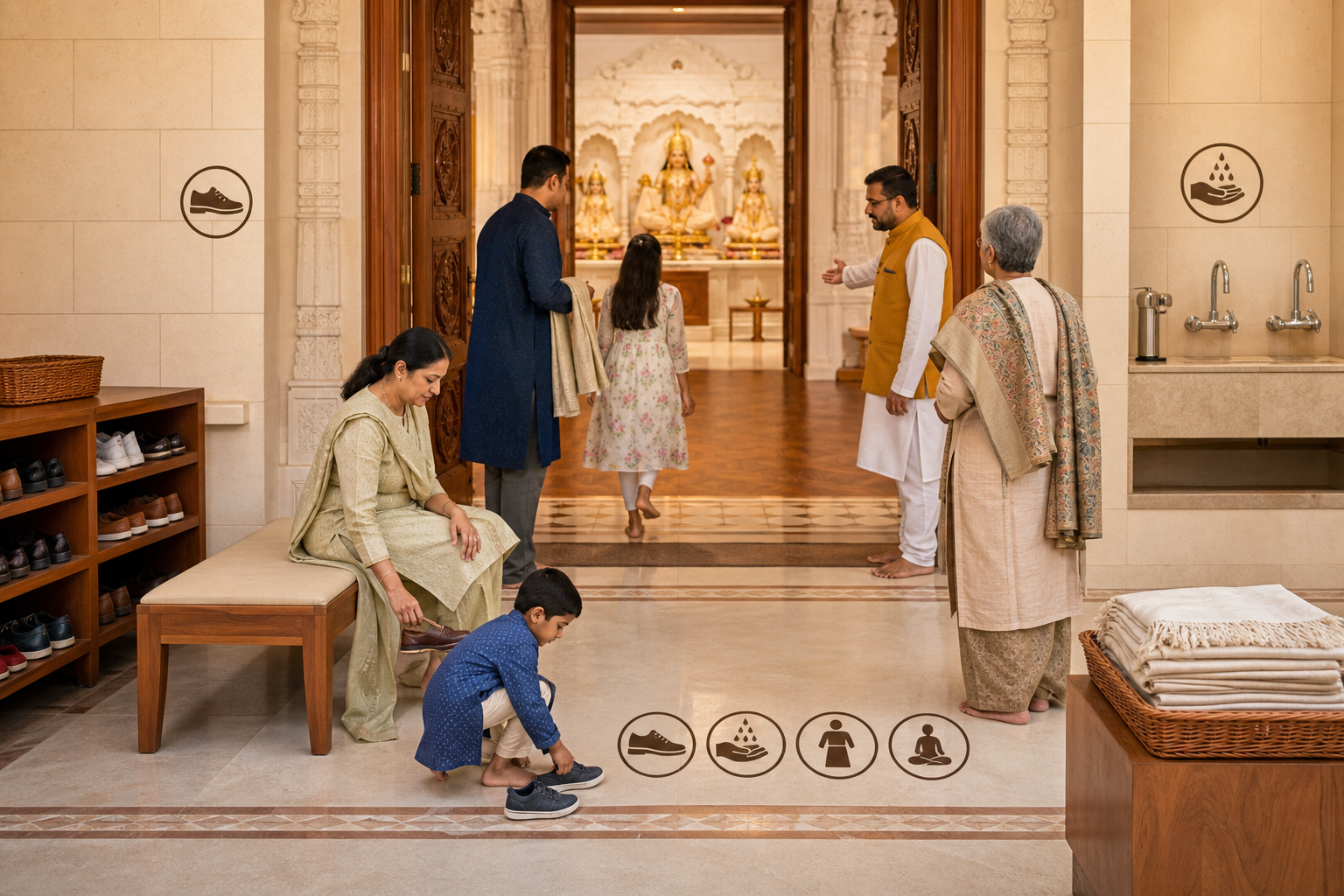
A visitor does not need the committee’s full reasoning at the entrance. The sign should answer four questions quickly: What must I do? Where does the rule begin? What help is available? Who can answer a question?
Where these requirements match the temple’s actual maryada, a board could use language such as:
- Please wear modest clothing that covers the shoulders and knees.
- Leave footwear in the designated area before proceeding.
- Maintain silence near the garbhagriha.
- Use cameras only in areas where photography is permitted.
- If age, disability, a medical need, or care of a child affects compliance, please ask the seva desk for assistance.
- Shawls or other suitable coverings are available at the entrance.
Do not illustrate prohibited clothing with photographs of people’s bodies or use labels that imply impurity, indecency, or bad character. The visitor needs an instruction, not a public judgement. Positive framing also makes it clear that the purpose is participation in the temple’s sanctity rather than exclusion from it.
Place the first notice where a visitor can still act: on the website or darshan information page, near parking and public-transport approaches, and at the outer gate. Repeat only the essential instruction before the queue or restricted zone. In Maharashtra, Marathi, Hindi, and English may be useful; elsewhere, choose languages from actual visitor patterns rather than copying that set automatically. High-contrast type, non-glare material, weather resistance, and pictograms help the guidance survive both the climate and a crowded entrance.
Build humane enforcement into the rule
A sign is not an enforcement system. The real test comes when a first-time visitor reaches the threshold without having understood it, an elder cannot follow the usual route, or one volunteer interprets a rule more harshly than another. If the committee has not decided how to handle those moments, the most forceful person on duty will make temple policy in public.
Use a three-stage response: inform, enable, and refer.
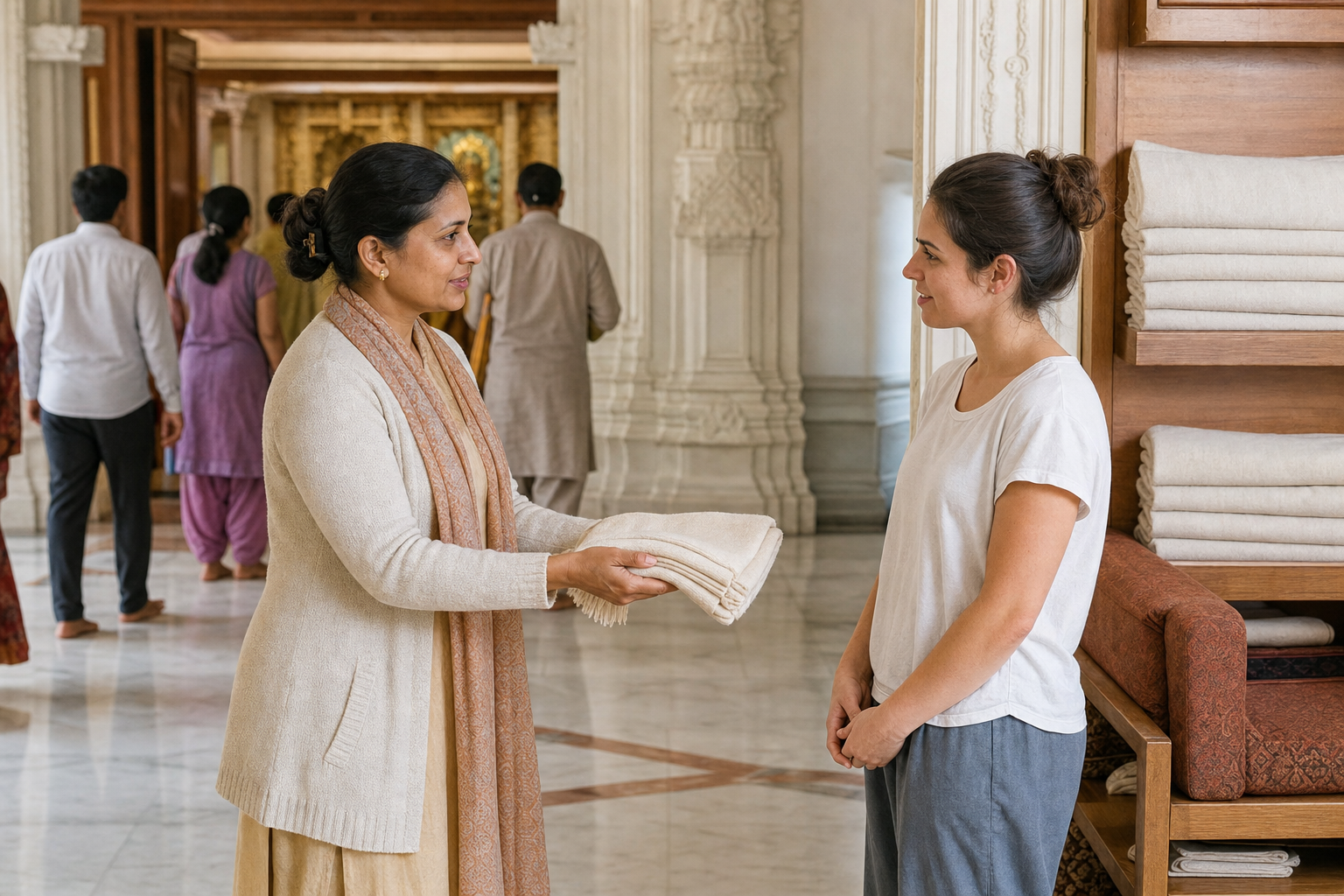
- Inform privately and plainly. One volunteer explains the local practice without raising their voice or attracting a group. A useful script is: Namaste. This area follows a clothing custom that covers the shoulders and knees. We can provide a shawl here so you can continue for darshan.
- Enable compliance. Offer the shawl, footwear storage, an accessible route, a safe place for a restricted item, or another arrangement already approved by the committee.
- Refer genuine disagreement. If the visitor declines or asks for an exception the volunteer cannot grant, direct the matter to a named senior volunteer, trustee, or help desk. Do not stage a theological or legal debate in the queue.
Give volunteers a one-page briefing that lists the exact rules, permitted accommodations, people authorised to decide an exception, and conduct that requires a safety response. Make clear that several volunteers should not surround one visitor. Consistency protects devotees and volunteers alike: the visitor receives a predictable answer, while the volunteer is not forced to invent authority.
Accessibility belongs inside maryada management, not in a footnote. Place at least one notice where a wheelchair user and a child can see it. Pair words with clear symbols, but do not rely on symbols alone for a custom that may be unfamiliar. Keep cover-ups clean, easy to obtain, and easy to return. If a route or ritual boundary cannot be altered, explain the limit and identify the closest meaningful form of participation the temple can offer.
Pilot new guidance on ordinary days before a major festival. Ask volunteers to record the location of confusion, the rule involved, whether the first explanation resolved it, and whether the queue was disrupted. Avoid unnecessary personal details. Repeated questions about one sentence usually point to defective wording or placement, not a sudden decline in devotion.
Before Navaratri, Mahashivaratri, a local jatra, or another high-attendance period, review what the ordinary-day pilot revealed. Temporary boards can reinforce the most frequently missed instruction. A QR code may lead to a one-page Plan Your Darshan page covering timings, queues, facilities, accessibility, and local etiquette, but it should supplement visible signs rather than replace them. A visitor standing at the threshold may not have a phone, mobile data, or time to scan.
Do not measure success by how many people were refused entry. Better indicators are fewer surprises at the threshold, fewer escalations, smoother queues, and more visitors able to comply after one courteous explanation. Sanctity is served when the rule changes conduct before conflict begins.
Protect the institution as well as the ritual space
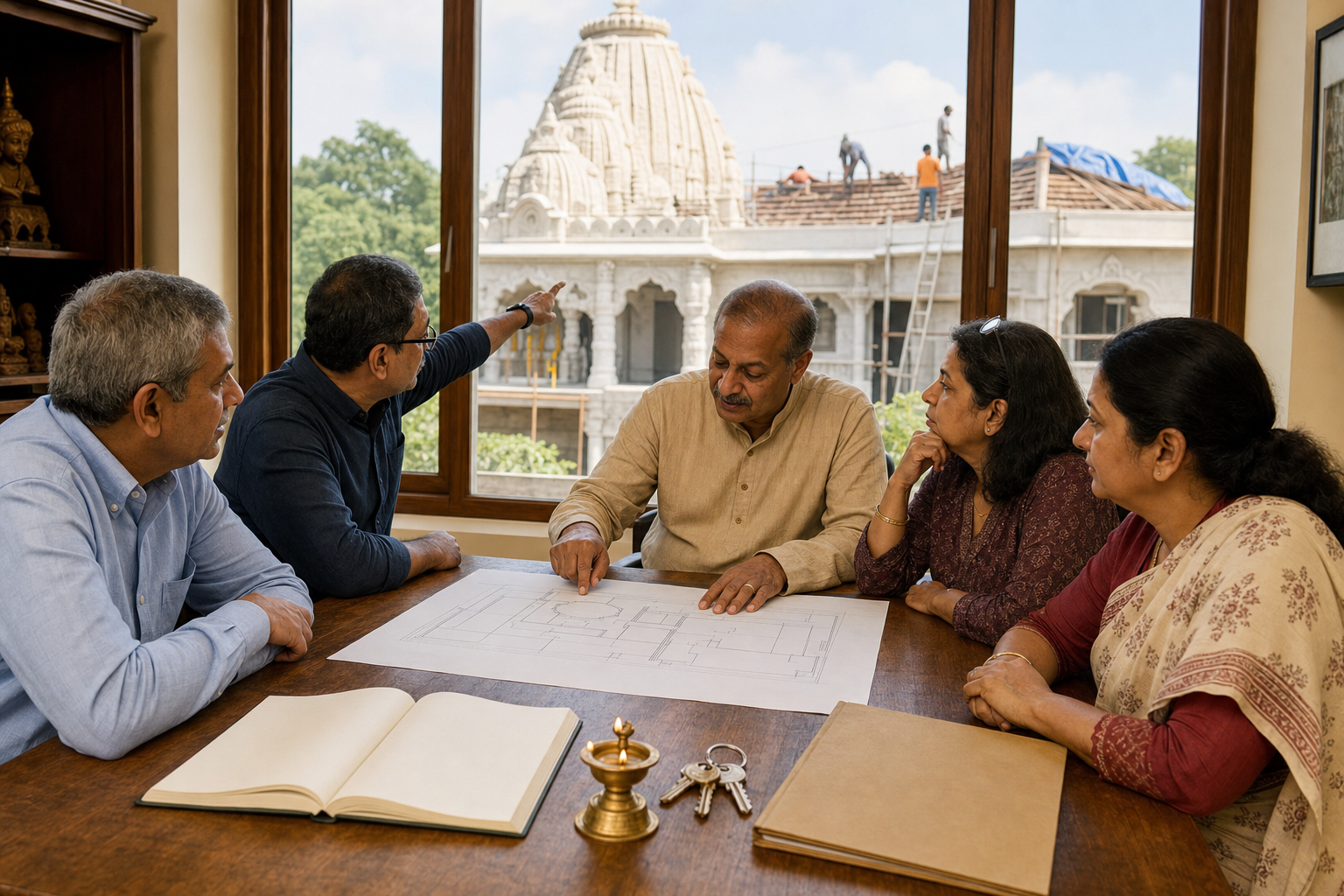
Community rights are not a magic phrase that overrides a deed, lease, trust instrument, or lawful public decision. They are a practical cluster of interests: continuity of worship, fair participation in decisions, protection from avoidable displacement, respect for established expectations, and the ability to pass a living tradition to the next generation.
Those interests are difficult to defend if the committee first assembles its evidence after a sale notice arrives. Memory is not a property record, and a general claim that the temple is important is not the same as proof of what happens there.
The Bharat Hindu Samaj Mandir in Peterborough illustrates the scale of activity that can sit behind the word temple. The community had occupied its complex since 1986 and reported more than 17,000 regular worshippers and visitors annually. Its weekday use included lunch clubs, language and arts education, outreach, and other social activity. These are not decorative additions to worship. They show how a mandir can function as a place of ritual, cultural transmission, companionship, and public service at the same time.
Maintain a five-folder continuity record
- Authority and governance. Keep the trust deed or constitution, registrations, current trustee list, delegated authorities, meeting minutes, conflict-of-interest records, and the process for approving major property decisions.
- Property and occupancy. Keep the title or lease, licences, side agreements, rent and insurance records, repair obligations, plans, correspondence with the owner, Heads of Terms, renewal dates, break provisions, and notices. Preserve signed originals and dated copies.
- Sacred continuity. Record regular puja, festival calendars, consecrated or restricted areas, storage needs for murtis and ritual objects, priestly requirements, and practices that cannot simply be transferred to a generic hall.
- Community value. Maintain attendance figures with a stated counting method, programme calendars, anonymised participation data, volunteer hours, education and seva activity, accessibility provision, partnerships, and evidence of service beyond the immediate congregation.
- Risk and remedy. Track approaching decisions, responsible trustees, professional advisers, potential continuity risks, communication authority, relocation constraints, and safeguards that could reduce harm if ownership or tenancy changes.
Keep the counting honest. Distinguish unique registered participants from visits, and regular attendance from a festival crowd. A modest number supported by a visible method is more credible than a large number no one can reproduce. Handle personal information carefully and obtain jurisdiction-specific advice where privacy or safeguarding duties apply.
Review tenure at least once each year and before any contractual notice, break, renewal, bid, or public consultation deadline. Ask a qualified local property or charity lawyer to identify the controlling dates and consequences. A missed deadline, surrendered right, or casually signed variation may be difficult or impossible to reverse; do not rely on an informal assurance when the governing document says something else.
The same discipline should apply to public relationships. If a council or authority owns the site, know its published asset-disposal, equality, social-value, and community-asset policies before a crisis. Keep written confirmation of every representation on which the temple relies. A friendly meeting is useful, but dated correspondence and approved minutes are what later establish the sequence.
When rights are threatened, respond with evidence and restraint
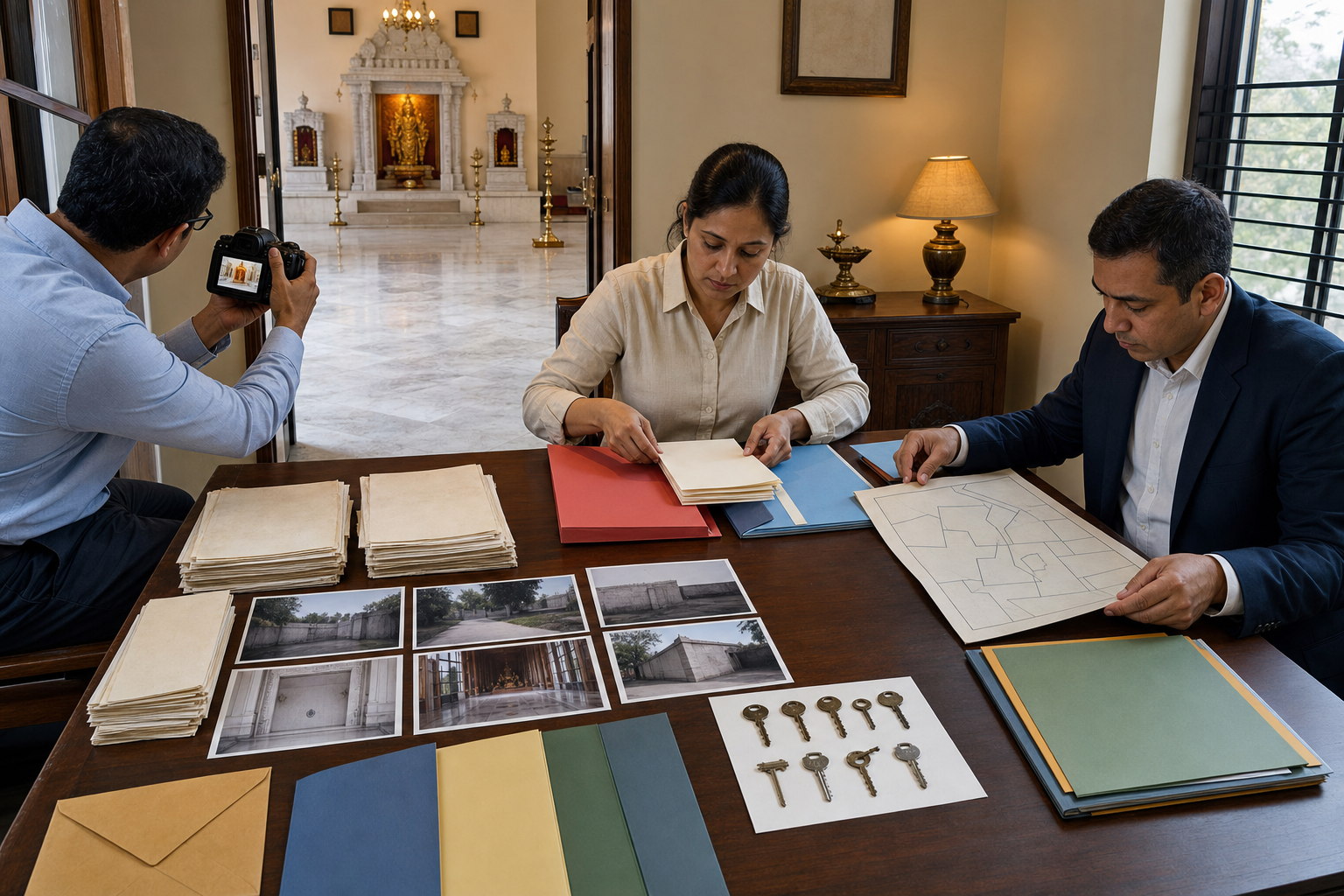
A threat to a temple can create pressure for immediate public outrage. The first requirement is more disciplined: find out exactly what decision has been made, by whom, under which power or contract, on what date, and what can still be paused or challenged.
In Peterborough, the council’s property process included an April 2025 opportunity for Bharat Hindu Samaj to purchase the complex for £1.3 million, followed by a September final-offer process weighted 70% financial, 20% social value, and 10% deliverability and future benefit. The council selected another faith organisation as preferred purchaser in December. After scrutiny concerns and a further council decision, an interim High Court order on 27 February 2026 paused the disposal while the lawfulness of the decision could be considered.
An interim injunction is a pause, not a final judgement that the claimant owns the property or must win the case. Its immediate value is that it can prevent an irreversible step while arguable legal issues are tested. That distinction should shape public communication: say what has been preserved, but do not announce a final victory that the court has not granted.
The council’s scrutiny process had raised concerns that decision-makers lacked complete information, that the Equality Impact Assessment appeared to have been prepared without direct consultation with the Hindu community, and that displacement should not occur before a secure and suitable alternative was identified. In England, section 149 of the Equality Act 2010 requires a public authority to give due regard to eliminating discrimination, advancing equality of opportunity, and fostering good relations. The duty does not guarantee a particular purchaser; it requires real, timely, and evidence-based consideration rather than a formal box-ticking exercise.
Clear representations, agreed Heads of Terms, and documented reliance may also raise a legitimate-expectation argument. They still do not guarantee that a community will acquire an asset. They can, however, make the fairness of a sudden departure from the earlier course legally relevant. Property, charity, trust, equality, and public-law rules differ by jurisdiction, and challenge deadlines can be short. Obtain advice from a qualified lawyer in the relevant jurisdiction as soon as a concrete notice or decision appears.
Use a decision-response checklist
- Stabilise the position. Before surrendering possession, signing revised terms, moving sacred objects, or consenting to a sale-related step, identify the legal effect and whether professional advice is needed.
- Build a single chronology. List every offer, meeting, representation, approval, consultation, notice, bid, and decision with its date and supporting document.
- Request the decision basis. Ask for the authority, criteria, scoring method, written reasons, equality assessment, consultation record, relevant policies, and information placed before decision-makers.
- Answer the stated criteria. If a process assigns separate weights to finance, social value, and deliverability, submit organised evidence under those same headings. A moving appeal that does not address the scoring framework may still receive a poor score.
- Specify the harm. Explain which worship, education, elder support, cultural transmission, accessibility, or seva functions would be interrupted, why they cannot be moved immediately, and which groups would be affected.
- Propose workable safeguards. Ask about a standstill, renewed negotiation, community asset transfer where available, a long lease, non-displacement protection, or a time-bound transition rather than demanding only one all-or-nothing outcome.
- Control public communication. Appoint an authorised spokesperson, correct factual errors promptly, and separate criticism of the decision-maker’s process from hostility toward another bidder or faith community.
That final discipline is not weakness. It keeps attention on the conduct that can actually be scrutinised: consultation, evidence, equality, contractual promises, scoring, reasons, and continuity of worship. Bharat Hindu Samaj expressed the distinction plainly during the Peterborough dispute:
Our fight isn’t with the mosque; our fight is with the council.
Bharat Hindu Samaj
If ownership changes despite the challenge, do not leave coexistence to goodwill alone. Ask counsel to draft enforceable terms covering uninterrupted worship, access hours, control of sacred areas, storage, repairs, utilities, festival requirements, signage, community programming, dispute escalation, and protection against arbitrary termination. Neutral building-management arrangements, audited community-use commitments, independent mediation, and a realistic transition mechanism can reduce future conflict. A vague promise to respect existing use is not equivalent to a covenant or lease clause that defines the obligation and its remedy.
At your next trustee meeting, put two one-page sheets on the table. On the first, list each sacred rule, its zone, purpose, accommodation, and enforcement owner. On the second, list the temple’s tenure, next decision dates, continuity evidence, professional reviewer, and fallback safeguards. Put every blank into the minutes and assign a person and review date. That is how reverence becomes stewardship, and how stewardship gives a community the capacity to remain.
References
- Hindu Jagruti Samiti – Maharashtra Temples Adopt Dress Code Boards to Uphold Sanctity and Respectful Darshan
- Hindu Human Rights – High Court Halts Peterborough Temple Sale: What It Means for Fairness and Community Cohesion
