

If you missed Bhakti Retreat 2026, you may be looking for a neat summary of its teachings. That would create false certainty. What can be established is more limited: Day 4 featured darshana with HH SB Keshava Maharaja, while Day 5 featured a seminar with Krishna Kshetra Swami.
Those labels identify two different ways of receiving spiritual association. They don’t disclose a complete teaching outline. If you want to engage these sessions faithfully, your first responsibility is to distinguish what you actually see and hear from what you expected, inferred, or remembered from somewhere else.
Begin with the form each session actually names
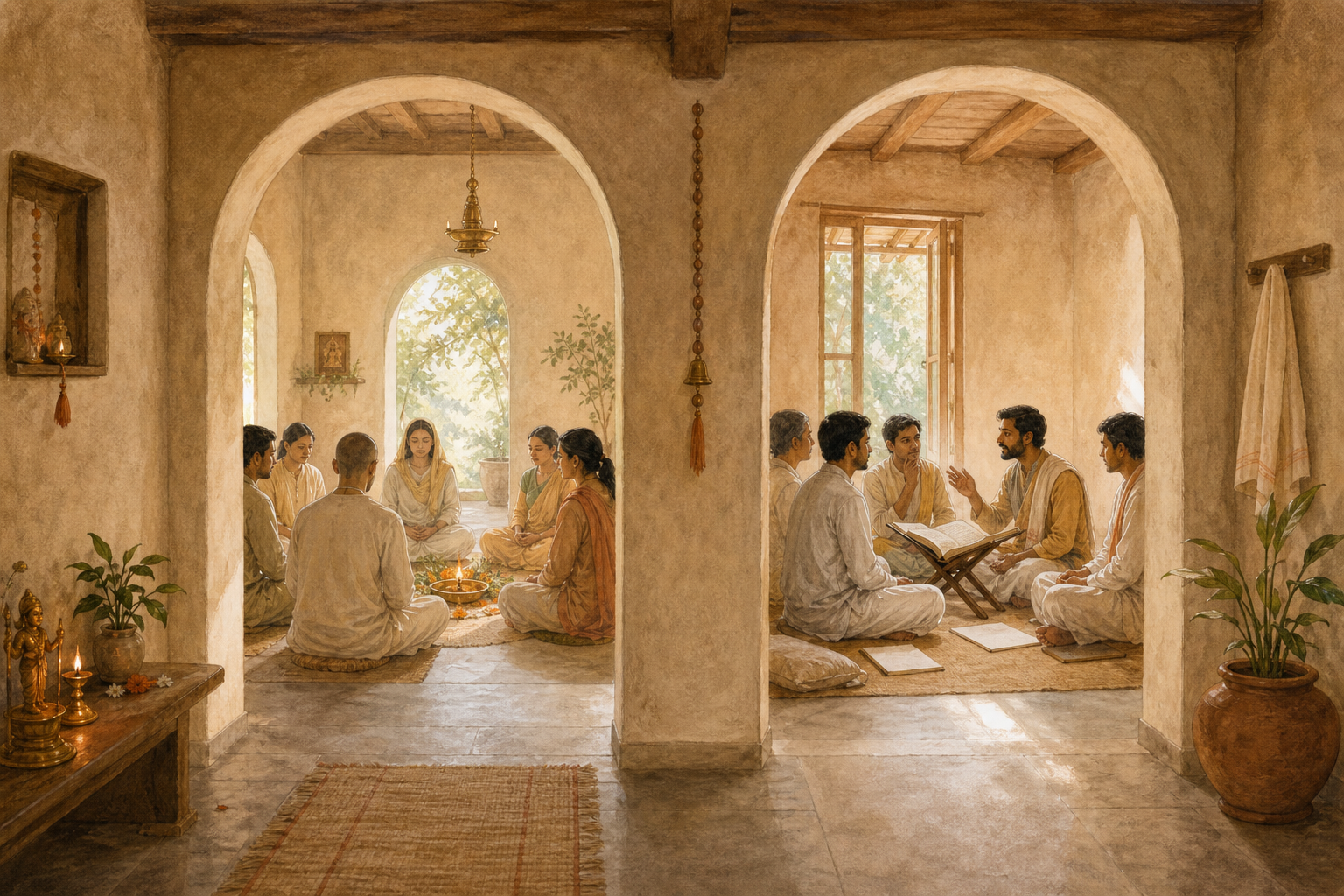
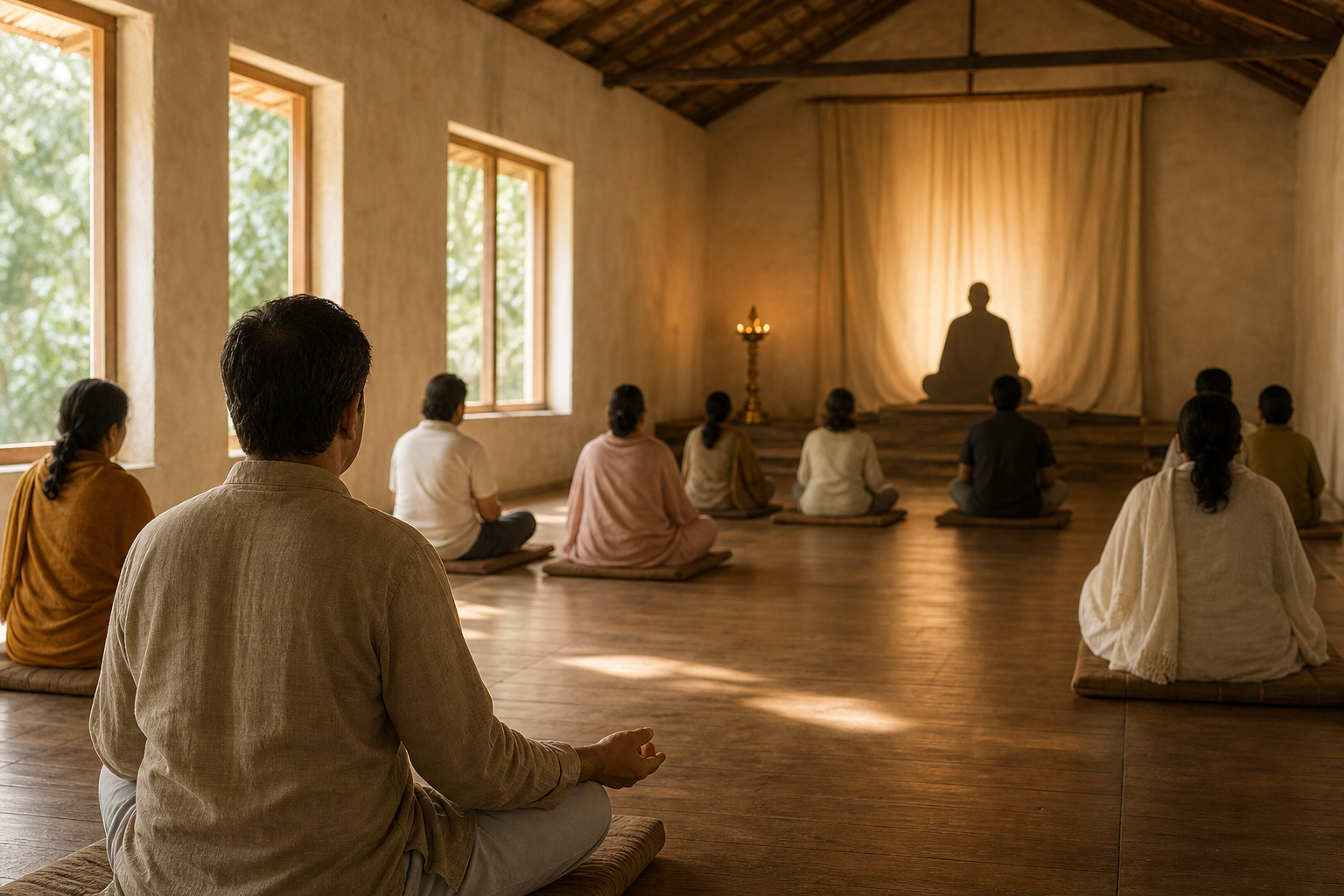
Darshana and seminar aren’t interchangeable labels. Darshana, from a Sanskrit term connected with seeing or beholding, ordinarily places the encounter at the centre. In a devotional setting, seeing is more than gathering visual information. You approach with attention, reverence and a willingness to be inwardly corrected.
A seminar asks for another kind of discipline. You follow propositions, distinctions, explanations and their practical consequences. A teacher’s name tells you who taught; it doesn’t tell you the teaching’s thesis. Until you have listened carefully, don’t fill that blank with familiar doctrines and present them as the content of this particular session.
This distinction immediately improves the way you use the available material. Don’t judge darshana only by how many quotable statements it produces. Don’t reduce a seminar to the feeling created by the speaker’s presence. Let each form do its own work.
Approach the Day 4 darshana without manufacturing an experience
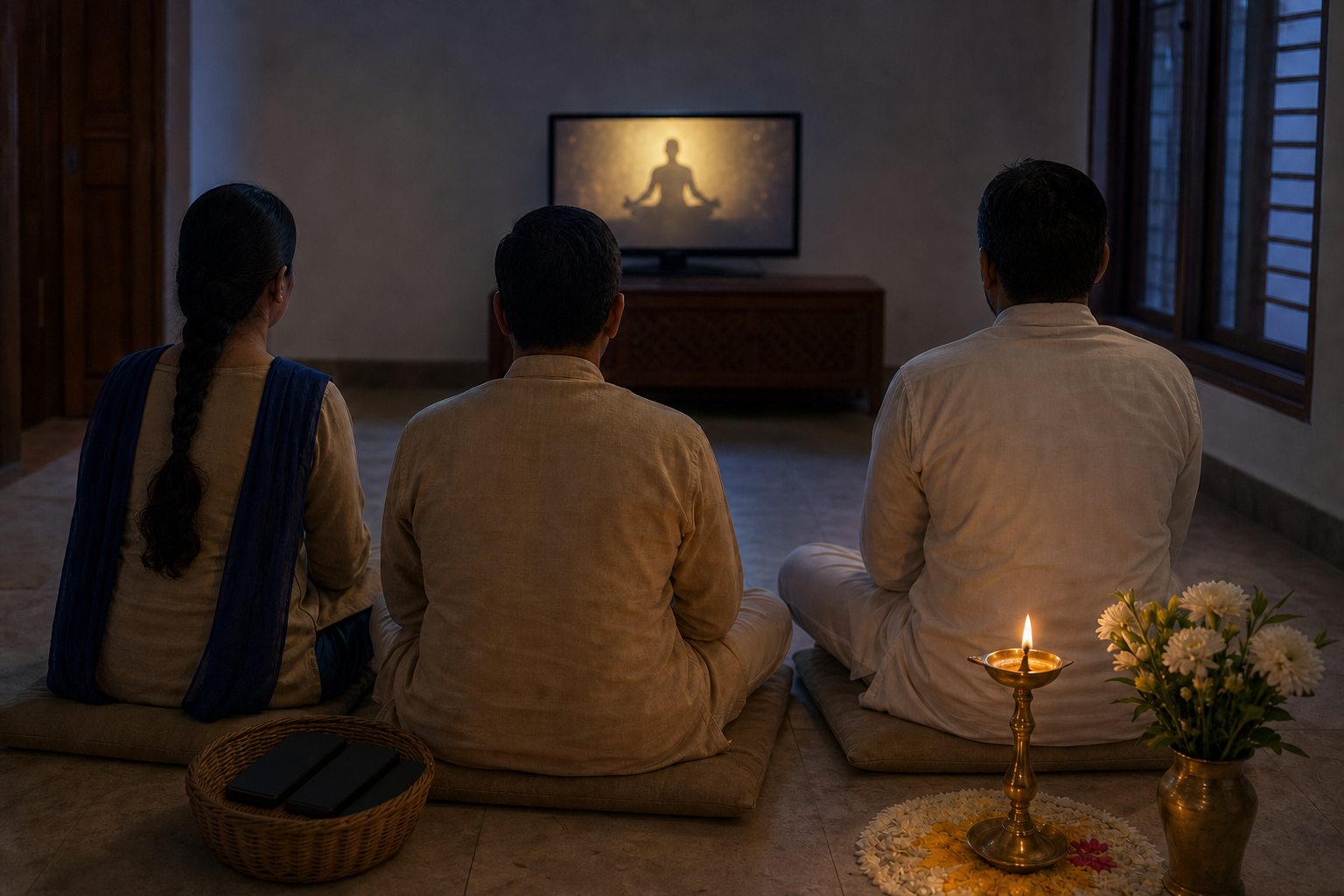
A recorded darshana can carry voice, expression, gesture, silence and the devotional atmosphere visible in the gathering. It doesn’t automatically reproduce physical presence, personal interaction or the full experience of being in the assembly. Honour what the medium offers without making a claim it cannot support.
Use this viewing discipline:
- Before watching, write one sentence naming what you are seeking: instruction, encouragement, clarification or simply attentive association.
- On the first viewing, don’t skip ahead in search of a dramatic quotation. Notice the pace of the encounter as well as the spoken words.
- Separate observation from interpretation. “The speaker paused before answering” is an observation. “The pause proves he knew my private difficulty” is an interpretation.
- After watching, record one thing you observed, one meaning you drew from it and one response it invites from you. Keep those three lines distinct.
This protects darshana from two opposite mistakes. The first is consumption: treating a sacred encounter as another clip to sample and share. The second is projection: assigning supernatural significance to every expression or pause. Reverence doesn’t require credulity. In fact, disciplined attention is one way reverence becomes honest.
Study the Day 5 seminar without attributing teachings you did not hear
The responsible way to receive the Krishna Kshetra Swami seminar is to build your account from the session itself. A familiar speaker may have taught related subjects elsewhere, but material from another lecture cannot silently become the teaching of Bhakti Retreat 2026.
Make notes under four practical questions:
- What did the speaker state directly?
- What reasons, examples or distinctions supported that statement?
- What application did the speaker explicitly give, if any?
- What further application are you proposing in your own words?
The final distinction matters. A reasonable personal application can still be yours rather than the teacher’s. Label it honestly. Write “This leads me to practise…” instead of “Maharaja taught that everyone must…” unless you can point to the actual instruction in context.
Context also controls meaning. If a striking sentence appears inside an answer to a particular question, retain the question. If a term is defined during the seminar, use that definition rather than importing the meaning you already prefer. If an example illustrates a principle, don’t automatically turn the example into a universal rule.
Let seeing, hearing and practice remain connected
The two sessions can support one another without being collapsed into one experience. Darshana can train the quality of attention you bring to teaching. Careful study can prevent devotional feeling from becoming vague or self-confirming. Practice then tests whether either encounter has changed more than your mood.
After engaging both sessions, ask three different questions:
- What did I actually see?
- What did I actually learn?
- What will I now do differently?
Your answer to the last question should be small enough to perform and clear enough to verify. “Deepen my bhakti” is an aspiration, not an action. “Listen again to the passage I could not explain, write its main claim in my own words and discuss it with a trusted practitioner” is actionable. So is choosing one instruction that was explicitly given and placing it into an existing daily practice.
Don’t make a permanent vow merely because a retreat session moved you. First confirm that you understood the instruction, that it was meant as general guidance rather than a response to one person’s circumstances, and that it accords with responsibilities you have already accepted. Where guru, lineage or initiation commitments are involved, seek clarification within the relationship that carries those commitments.
Key takeaways for engaging the retreat faithfully
- Day 4 identifies a darshana with HH SB Keshava Maharaja; Day 5 identifies a Krishna Kshetra Swami seminar.
- A session title establishes the teacher and format, not a complete account of what was taught.
- During darshana, distinguish direct observation from the meaning you assign to it.
- During the seminar, distinguish the speaker’s words from your inference and personal application.
- Treat a recording as mediated access. Receive what it carries without pretending that it recreates every dimension of physical presence.
- Carry forward one modest, verifiable practice grounded in something you actually heard.
Open the Day 4 darshana with undivided attention, then approach the Day 5 seminar with a notebook and intellectual honesty. The most respectful response to Bhakti Retreat 2026 isn’t to manufacture a grand summary. It is to see carefully, hear accurately and allow one genuine instruction to enter your conduct.

References
- Dandavats — Bhakti Retreat 2026 – Day 5 – Krishna Kshetra Swami Seminar
- Dandavats — Today’s Featured Video: Bhakti Retreat 2026 – Day 4 – Darshana – HH SB Keshava Maharaja
