
If you are deciding whether to keep Ekadashi vrata on Saturday, March 14, the short answer is yes for most Indian locations. Krishna Paksha Dashami ends at 05:49 AM IST, after which Ekadashi prevails for the rest of the civil day. Because the observance is assigned through the tithi present at local sunrise, you should still confirm a city-specific panchang if you live outside India or follow sampradaya-specific rules.
The important distinction is simple: the tithi transition is an astronomical event, but your vrata date, nakshatra, Rahu Kalam, Abhijit Muhurta and parana window are applied through local time. Use the fixed information below to settle the date, then complete the few local checks that actually affect your observance.
March 14 Ekadashi at a glance
| Panchang point | Guidance for March 14, 2026 |
|---|---|
| Civil date and vara | Saturday, March 14, 2026; Shanivara |
| Paksha | Krishna Paksha, the waning half of the lunar cycle |
| Tithi transition | Dashami until 05:49 AM IST; Ekadashi afterward |
| Vrata date | March 14 in most Indian locations; confirm the tithi at local sunrise for your city |
| Parana date | Sunday, March 15, during the locally valid Dwadashi window |
| Location-sensitive details | Sunrise, sunset, nakshatra, Chandra Rashi, yoga, karana, Rahu Kalam, Yamaganda, Gulika, Abhijit and exact parana time |
Key takeaways
- If you only need the likely vrata date in India, keep Saturday, March 14 available for Ekadashi.
- Do not copy another city’s nakshatra, muhurta or parana clock time; all depend on local calculations.
- Choose your fasting level before the day begins, especially if food or water restriction could affect your health.
- Record the March 15 Hari Vasara ending and Dwadashi ending before you start the vrata. Sunrise alone does not define the complete parana window.
A tithi is measured from the changing angular separation of the Moon and Sun. Each tithi covers 12 degrees, but tithis do not last a fixed number of clock hours because the Moon’s apparent motion is not perfectly uniform. A tithi can therefore begin before dawn, during the afternoon or close to midnight. The civil date boundary at 12:00 AM is not what decides an Ekadashi observance.
For March 14, the transition at 05:49 AM IST places Ekadashi after Dashami early in the morning. Most Indian locations will encounter Ekadashi at sunrise, but the word most matters. A person in another time zone must use the same astronomical transition expressed in local time and then apply the sunrise rule followed by that person’s tradition.
Complete the panchang for your own city
Panchanga literally points to five limbs: tithi, vara, nakshatra, yoga and karana. A general date entry can establish the weekday and give the principal tithi transition, but it cannot honestly supply every limb for every reader. This is where a local calculation becomes necessary.
- Tithi: Krishna Paksha Dashami gives way to Krishna Paksha Ekadashi at 05:49 AM IST.
- Vara: The weekday is Shanivara, or Saturday.
- Nakshatra: Check the Moon’s exact longitude for your city and intended time. A nakshatra can change during the day.
- Yoga: Verify the active yoga locally if you are selecting a precise muhurta rather than simply keeping the vrata.
- Karana: Because a karana covers half a tithi, the active karana can change within the civil day and also requires a timed calculation.
Chandra Rashi, although not one of the five limbs, is also commonly displayed in daily calendars. Broad seasonal placement may put the Moon near the Makara-Kumbha sector and the Shravana-Dhanishtha region around this part of Krishna Paksha, but that range is not precise enough for a sankalpa, samskara or time-sensitive beginning. Use the actual transition shown for your location.
A reliable five-step local check
- Set the panchang to the city where you will physically observe the vrata, not merely your birthplace or family temple’s city.
- Record local sunrise and confirm which tithi is active at that sunrise.
- Check whether nakshatra or Chandra Rashi changes before the particular puja, journey or beginning you are planning.
- If the activity needs a formal muhurta, also record yoga, karana and the locally calculated avoidance periods.
- Select the calendar and sampradaya convention your household follows, then save the exact March 15 parana window from that same system.
Do not assume that two calendars disagree merely because they use different lunar-month names. Amanta and purnimanta reckoning can attach different month labels to the same lunar day, while Tamil, Malayalam, Kannada and Telugu calendars use their own regional month systems. The conventional name assigned to this Ekadashi may therefore vary. Match the tithi, sunrise and lineage rule before treating a different label as an error.
Choose a vrata that supports attention, not strain
Ekadashi restraint is meant to make room for remembrance, clarity and self-command. The strictest food rule is not automatically the most suitable one for you. Choose a recognised level that you can keep honestly and safely:
- Nirjala: A waterless fast. This is the most demanding option and should not be treated as the default.
- Phalahara: Fruits and other simple permitted foods, commonly including milk and nuts where the practitioner’s dietary tradition allows them.
- Anukalpa: One light sattvic meal made from ingredients accepted by the household’s Ekadashi practice.
Many Hindu households avoid grains and legumes and use fruit, milk, nuts, sabudana or sama, also known as barnyard millet. Jain practitioners observing Agiyaras may apply stricter ahimsa-based food rules, including avoidance of root vegetables. Decide the rule in advance instead of negotiating it meal by meal; that turns the vrata from a day of food anxiety into a deliberate spiritual rhythm.
If a health condition makes food or water restriction risky, do not attempt nirjala merely to prove devotion. Seek qualified medical guidance about fasting and choose a safer discipline when necessary. A simple permitted diet combined with japa, reduced consumption, truthful speech, dana and seva preserves the vrata’s inner direction without making physical harm a religious achievement.
A workable practice for the day
- Begin with a brief sankalpa stating what restraint you will keep and to whom the vrata is dedicated.
- Use Om Namo Bhagavate Vasudevaya for mantra-japa, or recite the Vishnu Sahasranama according to your capacity.
- Read a contained passage from the Bhagavad-Gita or an Upanishad rather than setting an unrealistic reading target.
- Choose one concrete act of seva or dana. Supporting an elder, meeting a neglected duty or offering food and assistance with respect can carry the discipline into daily life.
- Keep the evening quieter than usual and prepare what you need for parana before sleeping.
A mixed Dharmic household does not need to pretend that every tradition gives Ekadashi the same canonical status. A Hindu family member may centre Vishnu-bhakti; a Jain may emphasise Agiyaras, dietary discipline and ahimsa; a Buddhist may undertake metta meditation and restraint; and a Sikh may deepen simran and seva. Shared simplicity and compassion can unite the household while each person remains faithful to the language and obligations of the person’s own path.
Plan March 15 parana before the fast starts
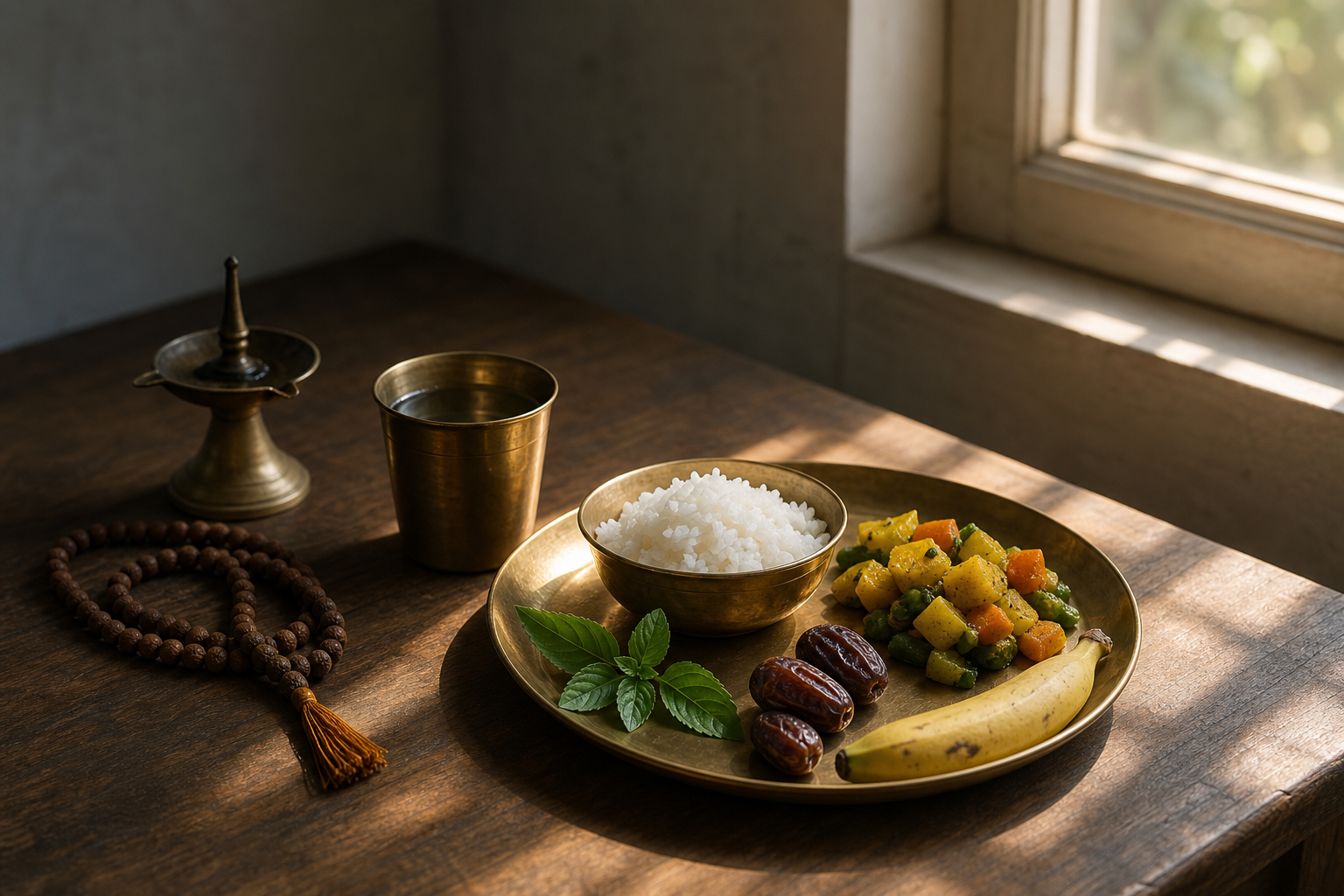
Parana is not simply breakfast whenever you wake up. For this sequence, the fast is broken on Sunday, March 15, during Dwadashi. The governing order is to wait until local sunrise, avoid Hari Vasara and complete parana before Dwadashi ends. Hari Vasara is the first quarter of Dwadashi, a period during which traditional practice postpones breaking the fast.
- Find March 15 sunrise for your location.
- Find the ending time of Hari Vasara and the ending time of Dwadashi in the same local panchang.
- Use the later of sunrise or the Hari Vasara ending as the beginning boundary for parana.
- Break the fast before Dwadashi ends and within any narrower window prescribed by your sampradaya.
- Prepare a simple permitted meal in advance so that an avoidable delay does not push parana beyond the window.
Smarta and Vaishnava calendars can publish different parana windows because their observance rules are not always identical. Do not combine the start time from one calendar with the ending time from another. Choose the system used by your family, guru or temple and follow its complete window consistently.
This is also why a universal March 15 clock time would be misleading. Sunrise and the relevant tithi boundaries must be converted for the observer’s city. The dependable entry is the local interval, not a time copied from a national calendar without checking its location.
Use Saturday muhurta rules without false precision
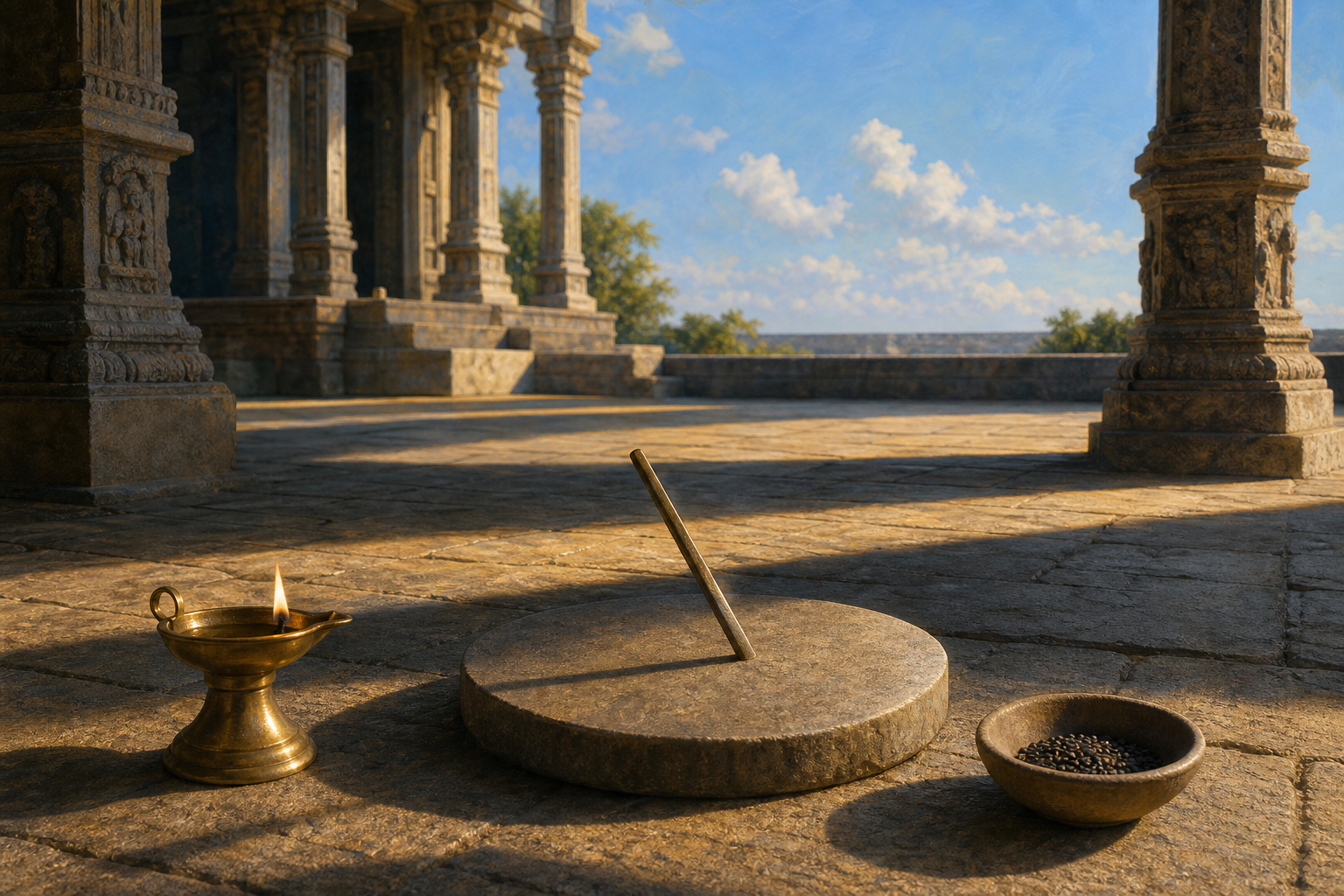
Saturday brings the discipline associated with Shani into a day already oriented toward restraint. That does not make every hour equally suitable for a new material undertaking. It also does not make Rahu Kalam or Yamaganda a prohibition on prayer. Regular worship, japa, reflection and necessary duties can continue throughout the day.
To calculate the daytime periods, take the interval from local sunrise to local sunset and divide it into eight equal segments. If the length of daylight is D, each segment is D divided by 8. Segment 1 begins at sunrise; segment 2 begins one segment later; segment 3 begins two segments later, and so forth.
| Saturday period | Daytime segment | Practical use |
|---|---|---|
| Rahu Kalam | 3rd segment | Avoid initiating an elective, auspicious undertaking |
| Yamaganda | 4th segment in the mapping used here | Avoid favourable beginnings; confirm if your regional convention differs |
| Gulika Kalam | 7th segment | Generally avoid selecting it for a beneficial new start |
Abhijit Muhurta is centred near local solar noon and is often used for prayer, study and quiet beginnings. Its clock time still changes with location and date. Calculate it locally, and for an important ceremony compare it with the other panchang limbs rather than treating midday alone as sufficient.
Saturday daytime Choghadiya commonly runs through Udveg, Chal, Labh, Amrit, Kaal, Shubh, Rog and Udveg across the eight daylight divisions. Labh, Amrit and Shubh are normally preferred for constructive activity; Chal is moderate; Udveg, Kaal and Rog are generally avoided for beginnings. Since every division expands or contracts with daylight, the sequence can be portable but the clock times are not.
If your family also keeps a Saturday sadhana, you can light a sesame-oil lamp, recite the Hanuman Chalisa, assist elders or address an ethical duty you have postponed. Let the two disciplines reinforce one another: Ekadashi gives the day devotional focus, while Shanivara asks whether that intention appears in patient, responsible action.
Before sunset on Friday, March 13, write down your local sunrise, the tithi at sunrise and the complete March 15 parana interval. Then choose your fasting level, arrange permitted food and commit to one specific form of japa or seva. Once those decisions are made, March 14 can remain a day of practice rather than a day spent repeatedly checking the calendar.
References
