
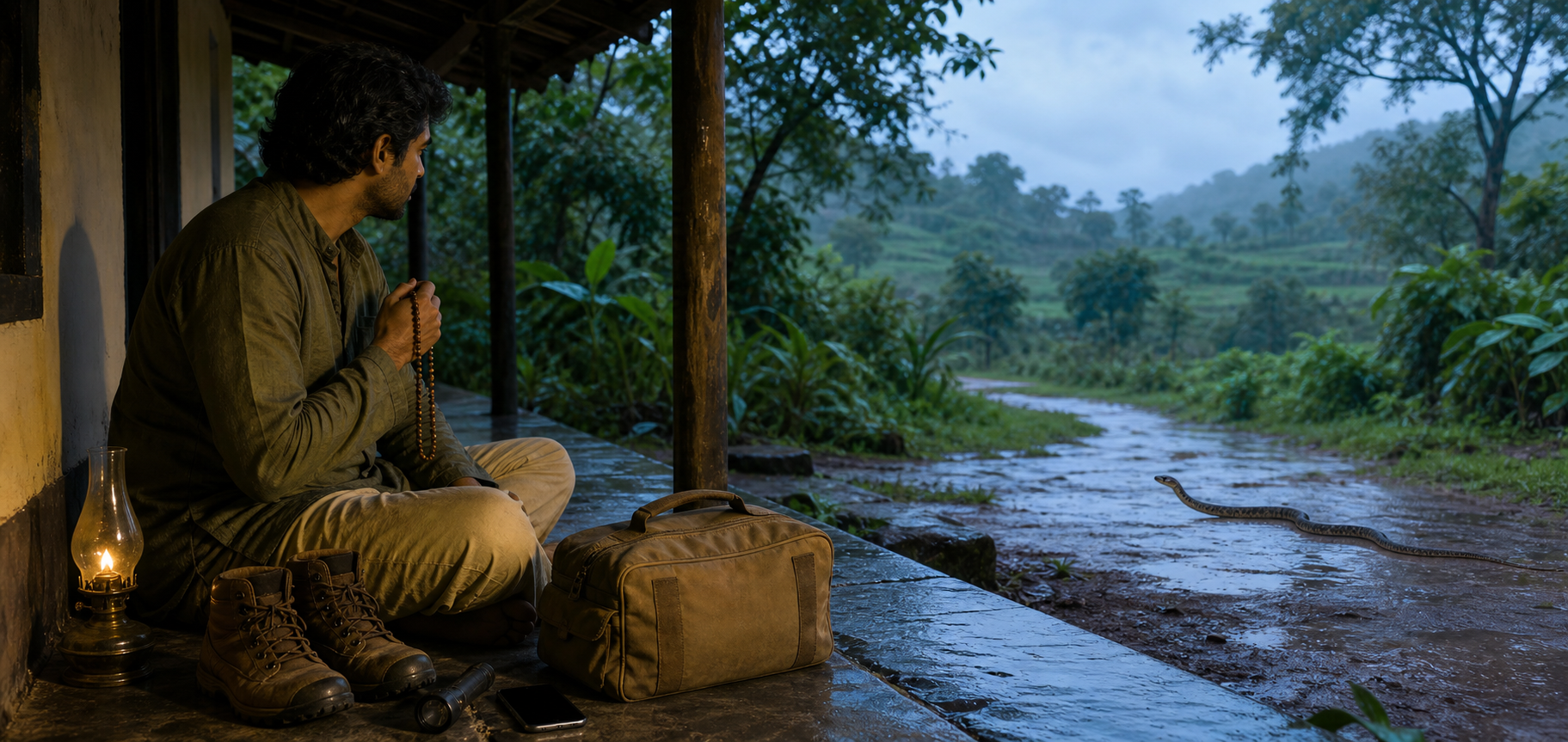
If you are reading because a bite may just have happened, the next step is not more recitation. Keep the person still, immobilize the bitten limb, remove rings or other tight items, and arrange immediate transport to a medical facility that can provide antivenom. The Astika mantra may steady the patient and companions on the way, but it must not consume even a minute needed for care.
At every other time, you can use this mantra to enter fields, forests, storerooms, or monsoon paths with respect instead of panic. Its dharmic force does not lie in a claim that sound neutralizes venom. It lies in remembrance, restraint, attentive conduct, and a direct request for non-injury.
When a bite is suspected, keep the sequence simple
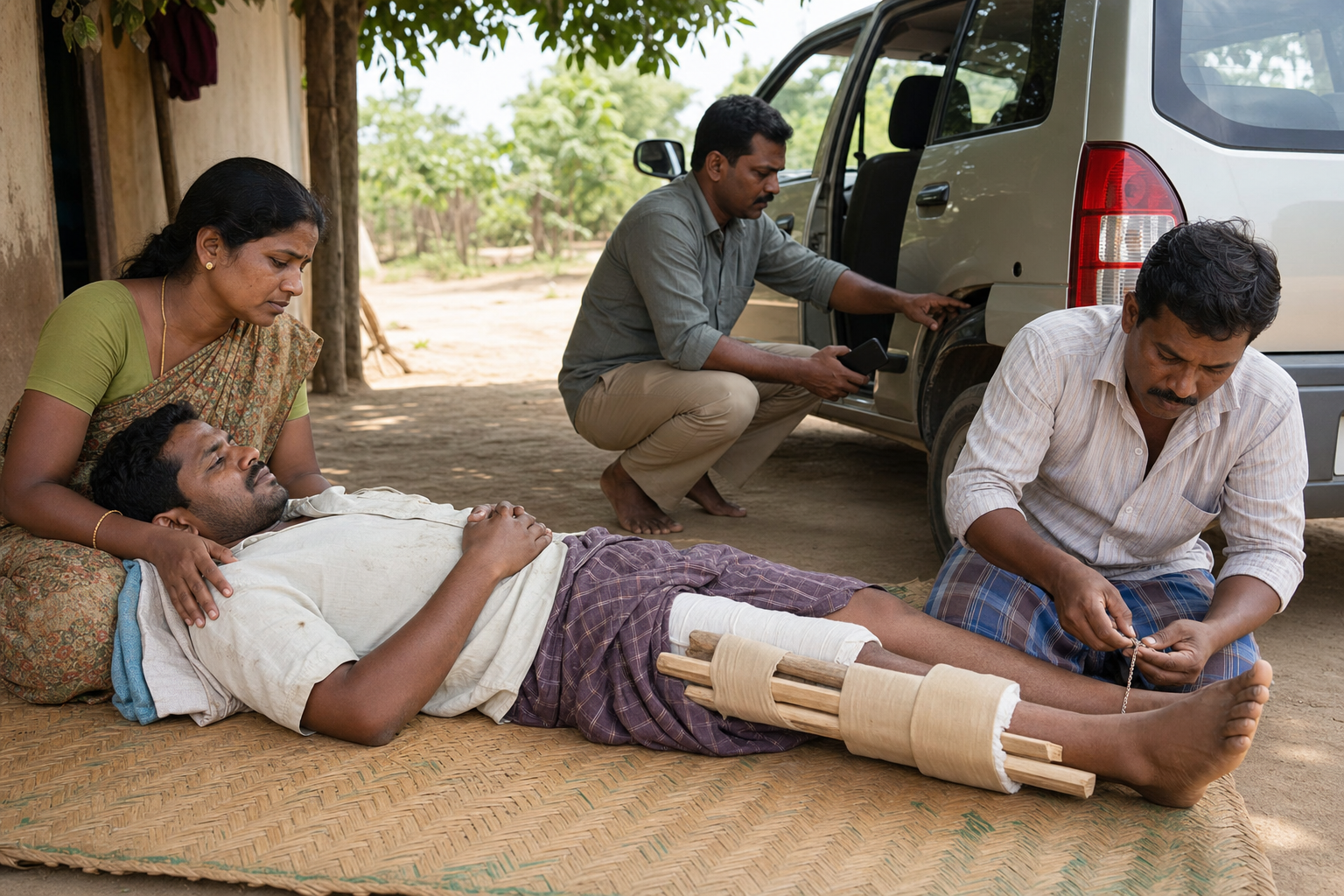
A suspected snake bite requires prompt professional treatment. Do not wait for severe symptoms before acting. Unnecessary movement can hasten the spread of venom, while improvised remedies can damage tissue or delay the treatment that matters.
- Ask the person to stop walking and remain as calm and still as possible.
- Remove rings, bangles, anklets, tight footwear, or restrictive clothing near the affected area before swelling develops.
- Gently immobilize the affected limb with a splint. Keep it around heart level rather than raising it high or leaving it hanging well below the body.
- Note the time of the suspected bite and any symptoms that appear or change.
- Arrange immediate transport to the nearest medical facility with antivenom capability.
- If the snake can be observed from a safe distance, remember its color and pattern. Do not approach, trap, kill, or carry it for identification.
If several people are present, divide the work: one person arranges transport while another keeps the patient still and removes constricting items. A companion may chant quietly if it helps everyone remain methodical. Chanting belongs beside evacuation, never before it.
Do not let panic cause a second injury
- Do not cut or incise the bite wound.
- Do not try to suck venom from the wound.
- Do not tie a tight constricting band or improvised tourniquet; it can cause ischemic injury and complicate treatment.
- Do not apply ice or electric shock.
- Do not apply alcohol, herbal poultices, a black stone, or similar folk remedies. They have no proven ability to replace antivenom and can waste critical time.
- Do not attempt to capture the snake. A second bite helps no one.
The safe boundary is clear: the mantra can support composure, prayer, and mutual reassurance. It cannot identify a snake, determine whether venom was injected, reverse envenomation, or replace clinical care.
What the mantra asks, and why Astika is remembered
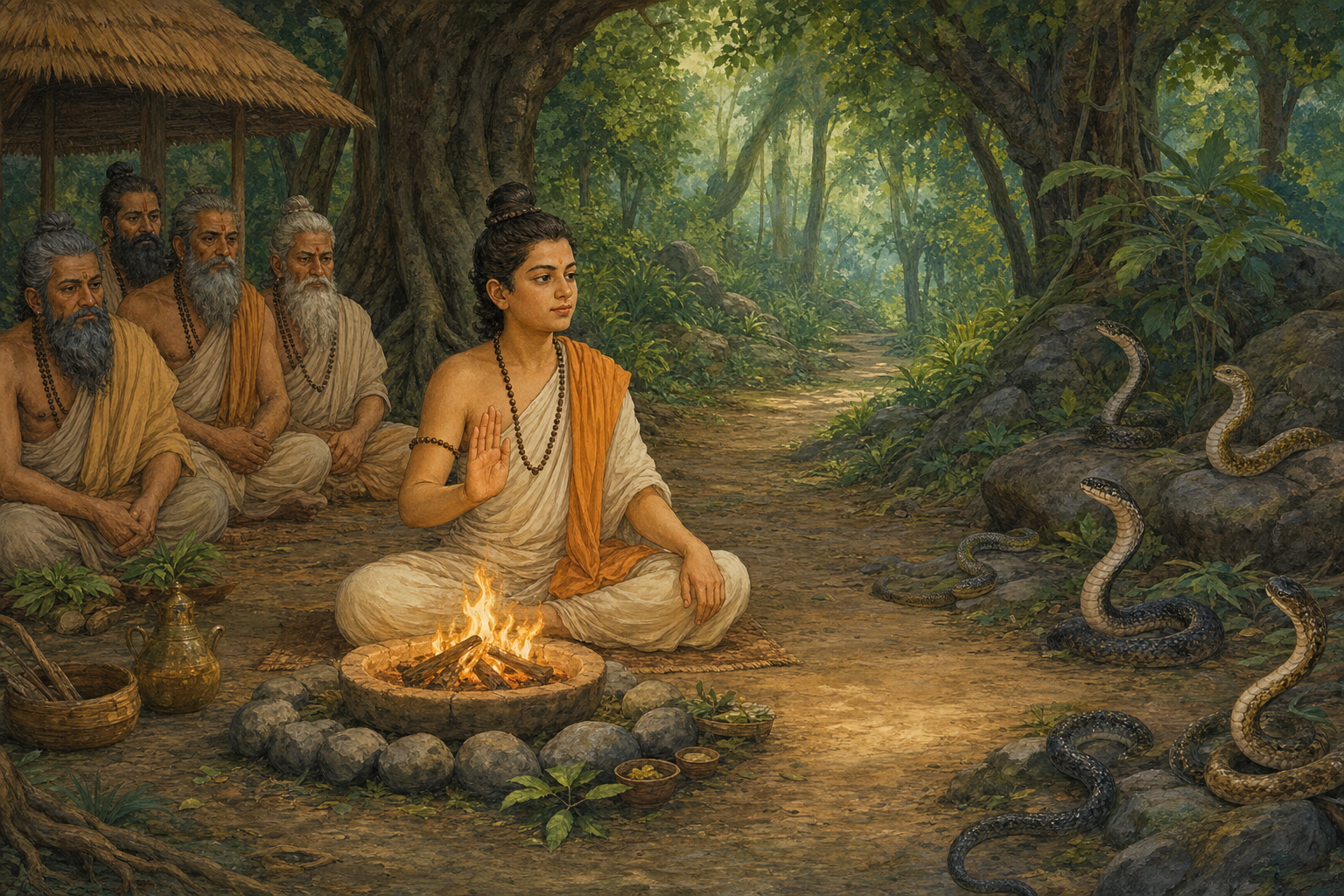
In the Mahabharata’s Astika Parva, King Janamejaya begins the sarpa-satra, a sacrifice intended to destroy the serpents, after his father Parikshit dies from Takshaka’s bite. At the rite’s climax, Astika arrives, speaks with learning and composure, and secures a boon that ends the sacrifice.
Astika’s parentage gives the intervention its deeper meaning. He is born of the sage Jaratkaru and the serpent maiden Jaratkaru, the sister of Vasuki. He therefore stands across the boundary that Janamejaya’s rage has made absolute. He protects the naga clans without denying the grief that began the conflict.
यो जरत्कारुणा जातो जरत्कारी महायशाः ।
Mahabharata, Astika Parva
आस्तीकः सर्पसत्रे वः पन्नगान् योऽभ्यरक्षत ।
तं स्मरन्तं महाभागा न मां हिंसितुमर्हथ ॥
Transliteration:
yo jaratkāruṇā jāto jaratkārī mahāyaśāḥ |
āstīkaḥ sarpasatre vaḥ pannagān yo ‘bhyarakṣata |
taṁ smarantaṁ mahābhāgā na māṁ hiṁsitum arhatha ||
In plain English, the chanter remembers the illustrious Astika, born of Jaratkaru and Jaratkaru, who protected the serpents during the snake-sacrifice. The final appeal addresses the nagas respectfully: as you remember the one who saved your lineage, you ought not harm me.
That wording matters. The mantra does not threaten, dominate, or demand the destruction of snakes. The word mahābhāgā honors them as greatly fortunate beings. Abhyarakṣata recalls an act of effective protection already completed. The closing phrase, na māṁ hiṁsitum arhatha, asks for non-injury. Protection is sought through gratitude and reciprocity rather than hostility.
Pronounce it steadily rather than fearfully
The verse follows the classical anuṣṭubh pattern. Sustain long vowels such as ā and ī. Distinguish retroflex sounds such as ṭ, ḍ, and ṇ from dental t, d, and n; pronounce ṣ as the retroflex sibilant; and lightly nasalize the anusvāra in hiṁsitum. A slow, even cadence is more faithful to the verse than hurried repetition driven by anxiety.
Perfect Sanskrit is not a condition for sincere practice. Learn the sounds carefully, but keep the intention equally clear: you are remembering an act that stopped collective destruction and asking another living being to remain within the same covenant of non-harm.
Chant before an encounter without treating it as antivenom
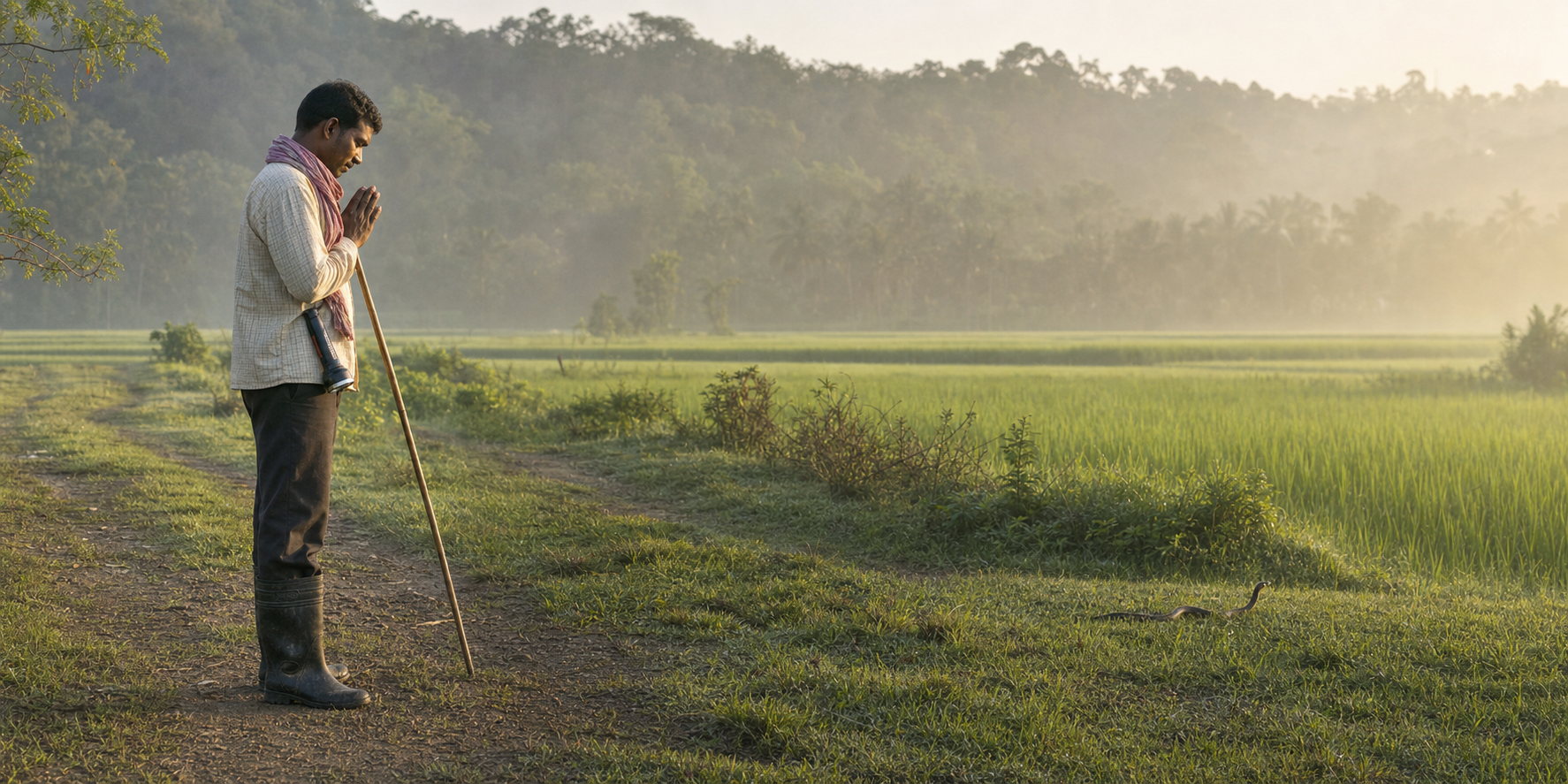
Use the Astika mantra when there is no medical emergency: before entering tall grass, clearing a grain store, starting a monsoon trek, or walking a forested pilgrimage route. Reciting before you enter a risky area is better than stopping in the middle of dense vegetation to complete a long count.
- Pause in a clean, secure place where you can stand or sit steadily.
- Let your breathing become quiet enough that you can pronounce each line without rushing.
- Recite the verse three, nine, or twenty-one times if a fixed count supports concentration. These are traditional practice counts, not a medical dosage or a guarantee of protection.
- Recall Astika’s restraint and hold a reciprocal intention: you will neither provoke nor harm the snake, and you ask not to be harmed.
- Finish with a practical check of your footwear, path, surroundings, and the work you are about to do.
For daily sadhana, you may recite it once in the morning and once at dusk. It also fits observances such as Naga Panchami and Nagula Chavithi, when remembrance of the nagas is already central. No festival, vow, or successful recitation makes handling a snake or approaching an occupied burrow safe.
The dependable practical benefit is a pattern of attention. A steady recitation can cue you to breathe, slow down, notice where you place your feet and hands, and avoid startling an animal. That is a behavioral safeguard. It should not be inflated into a clinical claim that the mantra prevents venom from acting after a bite.
Turn ahimsa into household and field safety
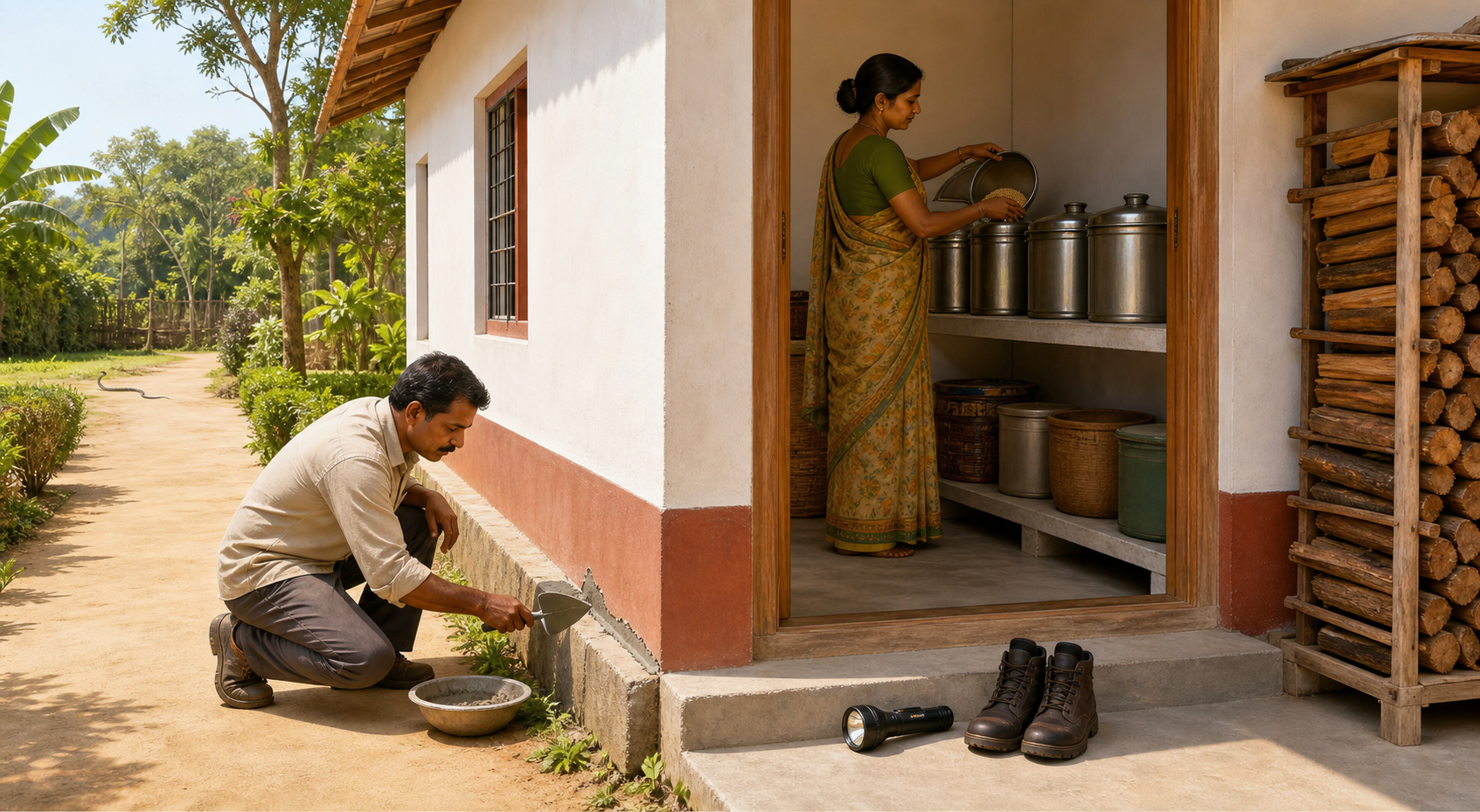
Astika’s example becomes useful when reverence changes what you do before an encounter. Snakes contribute to agrarian balance by controlling rodents that threaten crops and stored grain. Coexistence therefore serves both dharma and practical ecology, but it needs preparation.
- Remove debris and unnecessary hiding places from household and work-area perimeters.
- Seal grain stores and keep their surroundings orderly.
- Wear protective footwear, especially when walking outdoors at dusk or working near tall grass.
- Identify in advance which nearby medical facility can manage snake bite and how you would reach it quickly.
- Keep contact details for a trained snake rescuer or relocation service. Do not improvise a capture if you lack training.
- Teach everyone in the household the same first-aid sequence, including the remedies they must avoid.
This union of reverence and prudence belongs to a wider Dharmic inheritance. Hindu traditions remember Shesha and Vasuki in relation to cosmic order. In Buddhism, Mucalinda shelters the Buddha during contemplation. Jain images of Tirthankara Parshvanatha often place a many-hooded serpent canopy above him. These forms differ, but they share a civilizational refusal to reduce the serpent to a creature fit only for extermination.
That symbolism does not require you to romanticize venomous animals. Ahimsa is not carelessness. It asks you to avoid needless killing, preserve distance, use trained relocation where possible, and prepare for medical treatment when an encounter becomes an emergency.
Key takeaways for the moment you face
- Before entering a field, forest, or storeroom: chant in a secure place, put on protective footwear, check the area, and move attentively.
- When you see a snake: stop, give it space, do not corner or capture it, and call a trained relocator if it cannot safely leave on its own.
- When a bite is suspected: keep the person still, remove tight items, splint the limb around heart level, note the time, and begin immediate transport for professional care.
- During transport: observe changing symptoms, avoid incisions, suction, tight tourniquets, ice, shock, alcohol, poultices, and black-stone remedies. Recite quietly only if doing so supports calm action without delaying it.
Before your next monsoon journey or round of field work, choose the medical facility and trained relocation contact your household would use, then place those details where everyone can find them. Learn the verse in calmer circumstances. You will then carry Astika’s memory as it was meant to be carried: with reverence for life, restraint in action, and clear judgment when safety is at stake.
References
