
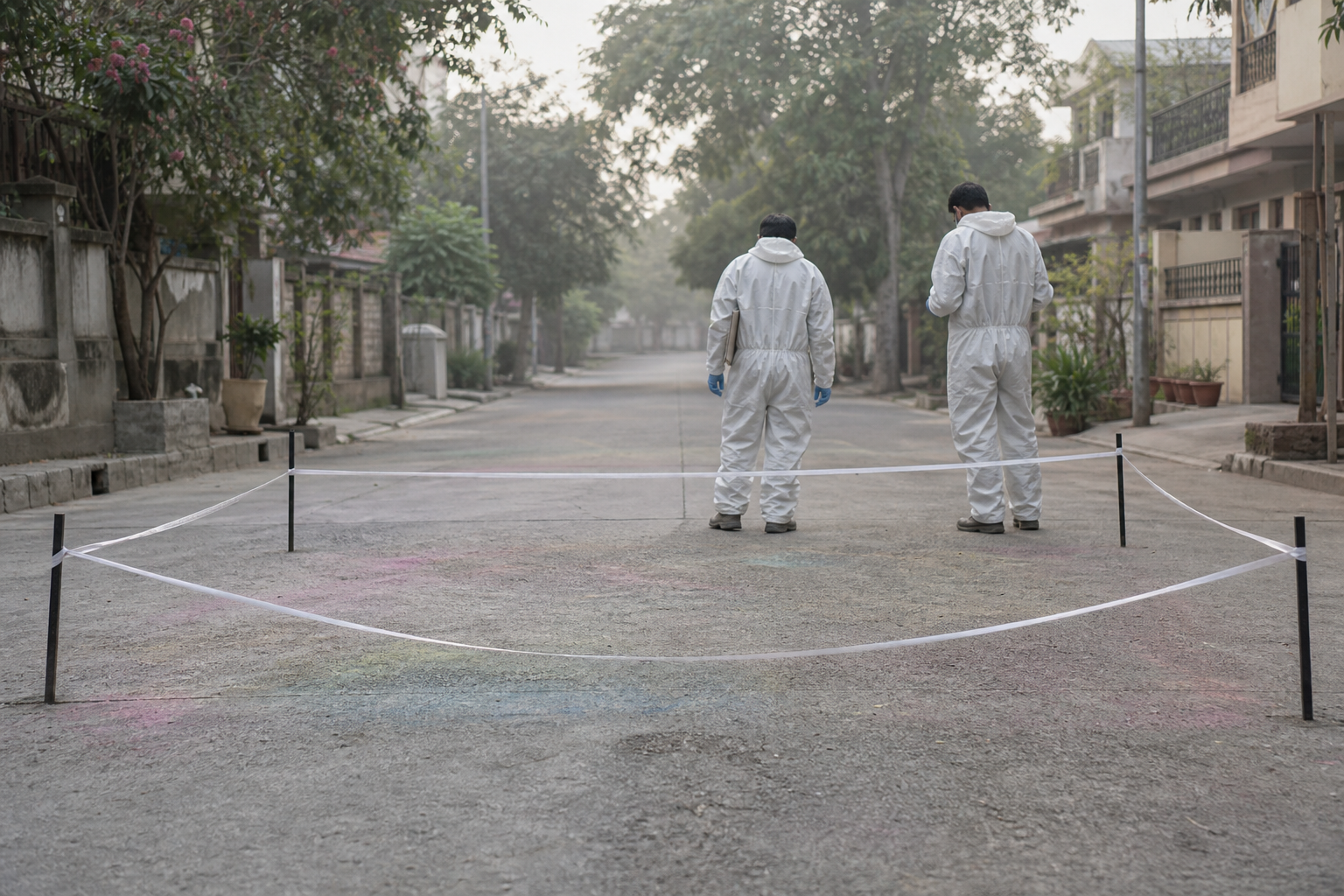
If you are reading about Tarun Kumar’s death and wondering whether the demand for a CBI probe is justified, resist the pressure to choose between instant accusation and passive waiting. The useful question is more exact: which investigative arrangement can preserve the evidence, identify each participant and earn the bereaved family’s confidence?
This distinction matters because the reported trigger, the fatal violence and the criminal responsibility of particular people are not yet the same thing. You can stand firmly with Kumar’s family while insisting that every public claim remain within what the evidence can establish.
Separate the reported encounter from what must be proved
The family’s account says that the confrontation began after a water balloon allegedly struck a woman wearing a burqa, and that Kumar suffered fatal injuries when the encounter escalated. His father has said that Kumar was the family’s only source of support and has asked for the Central Bureau of Investigation to take over the case.
Those facts define the family’s grievance, but they do not yet answer the questions on which a prosecution will stand or fall. The number of people involved, the act committed by each person, the sequence of Kumar’s injuries, the presence of any weapon, the intention behind the violence and the possible communal dimension all require proof.
- The alleged water-balloon incident may explain how the dispute began; it does not by itself identify who inflicted the fatal injuries.
- The description of religious attire may be relevant to reconstructing the encounter; it does not by itself establish a communal motive.
- A person visible in a crowd is not automatically a participant in an assault. Investigators must distinguish presence, intervention, encouragement and direct violence.
- A family’s demand for a particular investigating agency is not a verdict against any suspect. It is a request for a process the family and the public can trust.
This discipline is not indifference disguised as neutrality. It protects the case from mistaken identification, exaggerated claims and communal speculation that could distract from the people actually responsible.
A CBI demand concerns the forum, not the final finding
A CBI transfer is not automatic merely because a bereaved family requests one. Under the Delhi Special Police Establishment Act, 1946, the agency may assume an investigation through action by the competent government or through a direction of a constitutional court. Delhi’s policing structure gives the Union Government a central role, while the High Court or Supreme Court can intervene when credible material shows serious investigative deficiencies, a conflict of interest or exceptional public importance.
A Special Investigation Team within Delhi Police, including the Crime Branch where appropriate, is another possible route. It can coordinate local investigators, forensic laboratories and witness examination quickly. Judicial monitoring can add an independent layer of scrutiny. A CBI investigation may offer greater institutional distance and can be especially relevant when evidence crosses jurisdictions, interference is credibly alleged or confidence in the local process has seriously broken down.
| Investigative route | What it can provide | What the family should test |
|---|---|---|
| Delhi Police SIT or Crime Branch | Rapid local access, coordination with forensic laboratories and the possibility of court-monitored milestones | Whether the team is sufficiently independent, properly resourced and transparent about progress |
| CBI investigation | Centralised oversight and greater institutional distance where confidence, interference or cross-jurisdictional evidence is at issue | Whether the legal basis for transfer is established and whether the transfer would preserve rather than delay evidence collection |
The agency’s name cannot repair evidence that was never collected. Nor does retaining a case locally prove that it will be compromised. The serious comparison is therefore not CBI prestige versus local prestige. It is independence, competence, speed, forensic discipline, witness safety and accountable supervision.
Key takeaways
- Kumar’s father deserves a reasoned response to his CBI request, not a vague assurance or an unexplained refusal.
- A court-monitored SIT can be credible only if it has real independence, adequate forensic capacity, protected witnesses and measurable reporting obligations.
- A CBI transfer can strengthen confidence, but it is a means of investigation rather than evidence of anyone’s guilt.
- The decisive issue is whether physical, medical, digital and testimonial evidence forms one consistent chain.
- Justice for Kumar and protection of innocent people from collective blame are parts of the same obligation.
The evidence must answer six concrete questions
Whichever agency handles the case, you should judge progress by the questions it is answering. Arrest totals and emphatic press statements are poor substitutes for an evidence-backed reconstruction.
What investigators need to establish
- What was the complete timeline? Investigators need to map events before the balloon incident, the first verbal exchange, the first physical act, the arrival and departure of each participant, any attempt at intervention and the movement of Kumar for medical care.
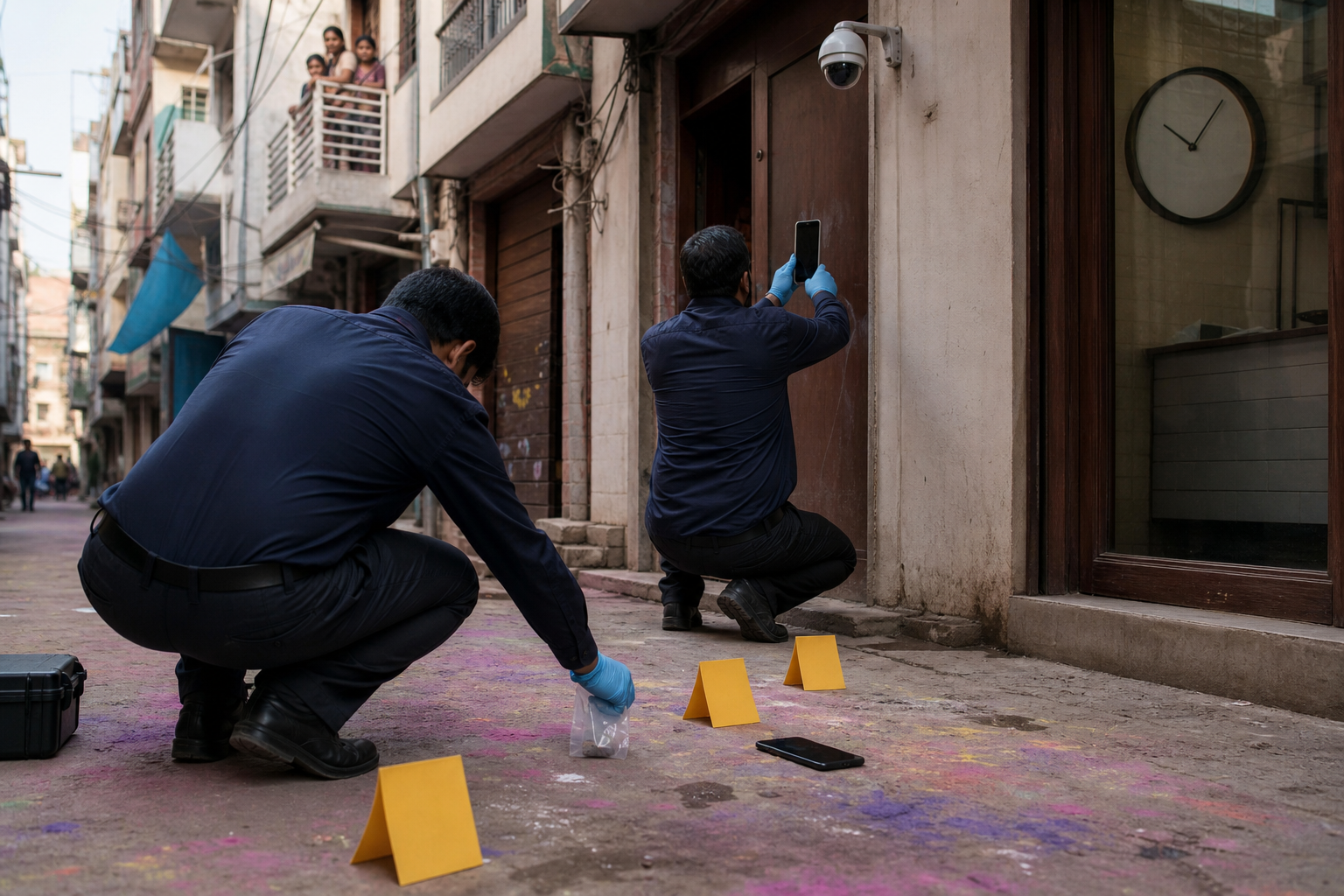
- Which injuries caused the death? Crime-scene photography, blood and trace evidence, any suspected weapon, the postmortem findings, toxicology and the nature and sequence of wounds must be read together. A witness’s impression cannot replace medical causation.
- What did each person do? Crowd violence creates a temptation to treat a group as a single actor. Investigators must connect individuals to acts, words, movements and shared plans using admissible evidence.
- What do the digital records show? CCTV, dashcam or body-camera footage, call-detail records, cell-site information and relevant social-media metadata can test competing timelines. Original records, documented custody and the certification required by applicable evidence law matter as much as the visible clip.
- Can witness testimony withstand pressure and cross-examination? Police statements should be recorded promptly. Where appropriate, judicially recorded statements can reduce the risk of later recantation. Witnesses facing intimidation may need protection under the Witness Protection Scheme, 2018.
- Is there evidence of communal intent or incitement? Investigators should examine words, threats, messages and conduct in context. They should neither ignore credible provocation nor infer it solely from the religious identity or clothing of the people present.
When several camera angles show a dense and moving crowd, photogrammetric analysis, gait comparison and clothing matching may help track a person from one frame to another. Such methods can supplement identification; they cannot substitute for corroboration and legally tested evidence.
Chain of custody is the quiet issue that can decide the case. Every transfer of an object, recording or device should be documented so that the court can tell where it came from, who handled it and whether it remained intact. A dramatic video circulating through messaging groups may attract attention while proving less than an authenticated original obtained from its custodian.
What the family and its supporters can do now
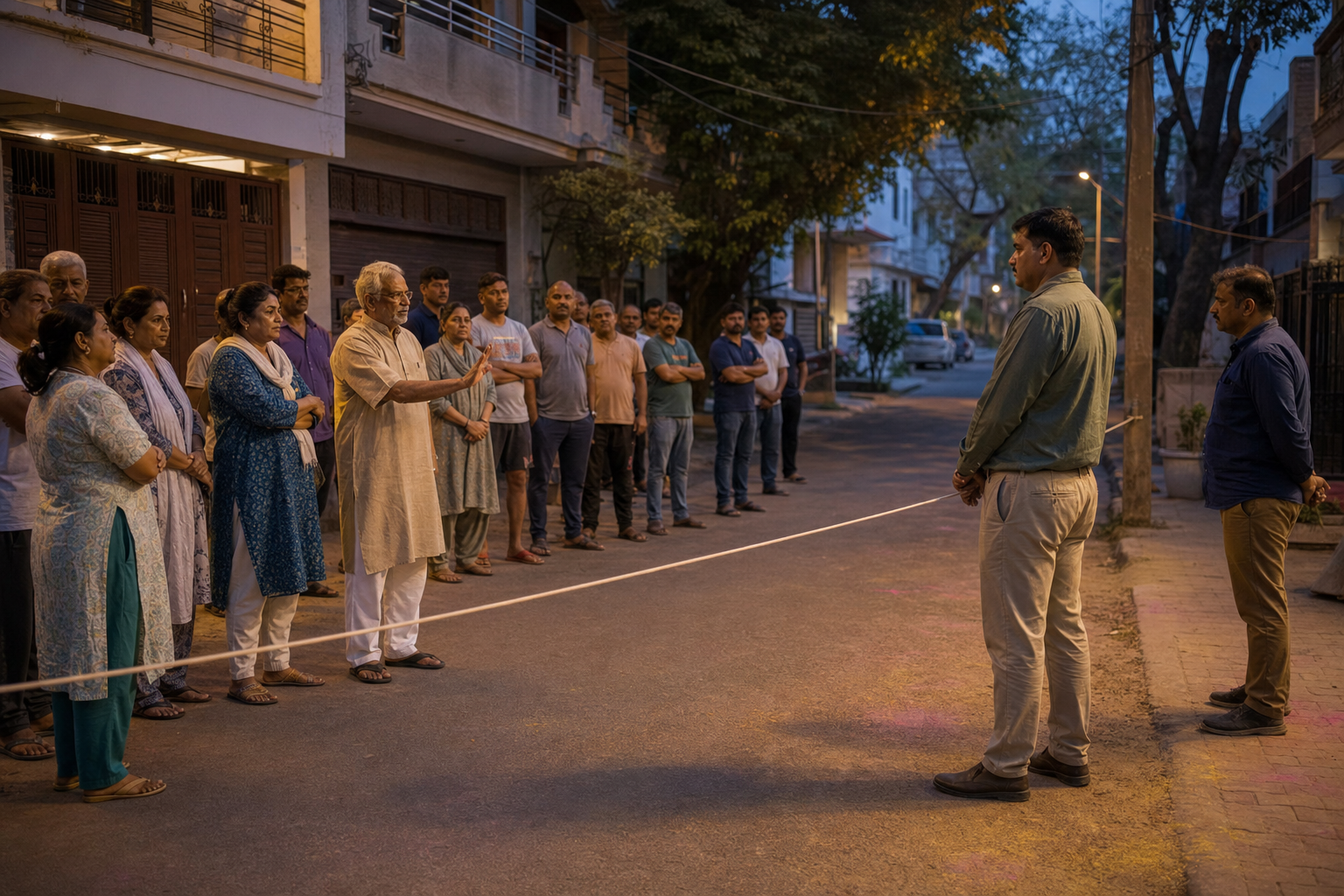
If you are helping Kumar’s family, convert public concern into a dated paper trail. Let a lawyer or a Legal Services Authority frame court applications and agency-transfer requests against the actual case documents. Lists of criminal sections circulating online may be incomplete or inapplicable; the FIR and the law applicable to the alleged conduct need professional review.
- Prepare one verified chronology. Record known events, locations, potential camera positions, medical movements, witness names and previous representations. Clearly label what a person directly observed and what was heard from someone else.
- Submit a written evidence-preservation request through counsel. Identify relevant CCTV locations, devices and time windows as precisely as the known facts allow. Do this before recordings are overwritten or devices change hands.
- Keep original digital material intact. Do not crop, enhance or repeatedly re-export a file presented as evidence. Preserve information about who created it, when it was received and how it was transferred to investigators.
- Ask for milestone-based updates. Useful questions concern scene documentation, postmortem and forensic reports, camera recovery, witness examination, laboratory submissions and the reasoned decision on an SIT or CBI transfer. The public need not receive sensitive evidence that could compromise the case.
- Seek material support as well as prosecution. The Delhi Victim Compensation Scheme, court-directed interim relief, legal aid and psychosocial assistance can matter immediately to a family that has lost its stated source of support.
- Report witness intimidation at once. Preserve messages or call details and take them to counsel and investigators. Do not confront the suspected intimidator or expose the witness’s identity online.
- Do not crowdsource a suspect list. Publishing unverified names, faces, addresses or religious labels can endanger innocent people, alert actual offenders and contaminate witness identification.
A demand should be precise enough to receive a measurable answer. Instead of saying only “give us justice,” supporters can ask whether named evidence has been secured, whether vulnerable witnesses have protection, whether forensic submissions are tracked and whether the choice of investigating agency has been explained in writing.
Communal restraint makes the demand for justice stronger
The reported reference to a woman wearing a burqa cannot simply be erased from the timeline, but neither should it be made to carry a conclusion the evidence has not established. Religious identity may become legally relevant if words, conduct or digital records demonstrate communal hostility or incitement. Until then, investigators must pursue individuals and provable acts.
Two moral duties can be true at once. Throwing colour or water at someone without consent can violate personal dignity, particularly when religious attire is involved. It still cannot justify lethal violence or collective retaliation. In the same way, anger over Kumar’s death cannot justify assigning guilt to every member of a community.
A pro-Hindu public voice loses nothing by making that distinction. It becomes more credible. It can refuse to let a Hindu family’s loss disappear behind generic appeals for calm while also refusing to turn unproven claims into communal guilt. Ahimsa, karuna, maitri and daya do not require passivity before violence. They require us to pursue accountability without reproducing injustice in the method.
- Share a verified timeline, not a montage designed to provoke anger.
- Label an allegation as an allegation, evidence as evidence and a judicial finding as a finding.
- Correct a false identification as visibly as it was first circulated.
- Keep graphic material and witness identities out of public circulation unless disclosure serves a clear and lawful purpose.
- Demand the same evidentiary standard regardless of the accused person’s community.
If you want to help now, ask for preservation of evidence, a reasoned decision on investigative oversight, witness protection and prompt support for the bereaved family. Refuse the rumours that make those demands easier to dismiss. That is how public solidarity can strengthen Kumar’s case instead of consuming it.

References
