
If you are deciding when to perform puja on Friday, March 20, the important distinction is not simply morning versus afternoon. You need to know whether your observance follows the tithi prevailing at local sunrise or the tithi active at the actual moment of the rite.
For the reference timing, Shukla Paksha Pratipada ends at 5:24 AM, after which Shukla Paksha Dwitiya prevails. Most places with sunrise after that boundary will therefore treat March 20 as a Dwitiya day. Exact ritual planning still requires a Panchang calculated for your location.
First decide which tithi rule your observance uses
A Hindu calendar date is commonly identified by udaya tithi, the lunar day present at local sunrise. This is different from asking which tithi is active at a particular clock time. The distinction matters on March 20 because the change occurs close to dawn.
| Question | Panchang position | What you should do |
|---|---|---|
| Which tithi is active before the boundary? | Shukla Paksha Pratipada continues until 5:24 AM in the reference timing. | If a rite specifically requires Pratipada, confirm the corresponding local boundary and complete it before that time. |
| Which tithi is active after the boundary? | Shukla Paksha Dwitiya begins after 5:24 AM. | Use Dwitiya guidance for worship or activity performed after the locally verified transition. |
| What is the civil day’s udaya tithi? | It is whichever tithi prevails at your local sunrise. | Check your city’s sunrise. A sunrise after the transition normally makes March 20 a Dwitiya day. |
This is why midnight does not change a tithi. A tithi advances whenever the angular separation between the Moon and Sun crosses the next 12-degree interval. Since their relative motion is not uniform, one tithi can last roughly 19 to 26 hours and can end at any civil-clock time.
If two reputable calendars differ slightly, first check whether they use the same location, time zone, ayanamsha, and astronomical data. Purnimanta and Amanta calendars can also give the lunar month different names, but they do not turn Dwitiya into a different tithi. Small minute-level differences are a reason to follow one trusted local Panchang consistently, especially when the rite depends on a boundary near sunrise.
Calculate Friday’s avoidance periods from local daylight
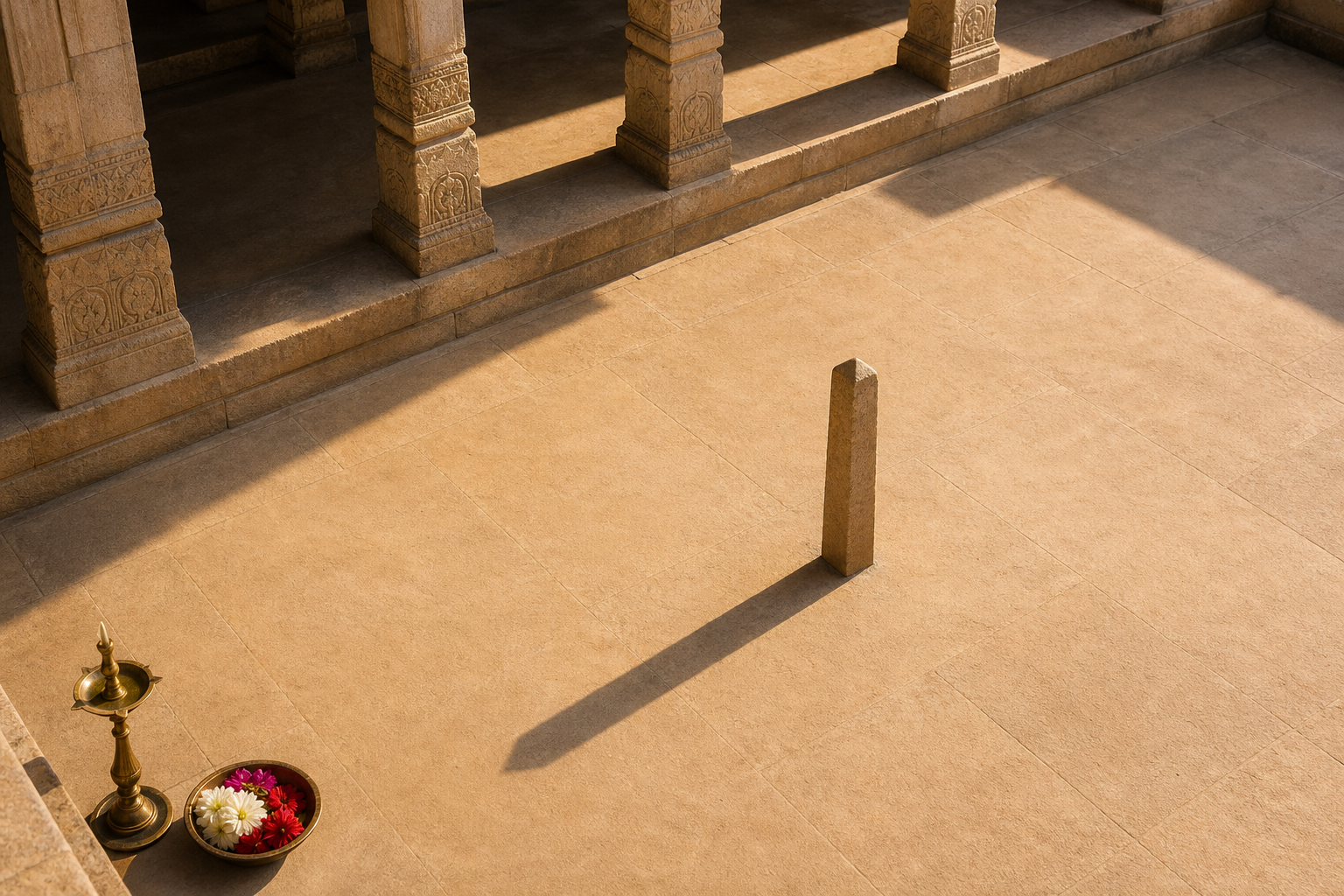
Rahu Kalam, Yamaganda, and Gulika are not fixed clock appointments that can be copied from another city. They are obtained by dividing the interval from local sunrise to local sunset into eight equal segments. Longer or shorter daylight changes every segment, so a generic 6:00 AM to 6:00 PM chart is unsuitable unless it happens to match your actual sunrise and sunset.
Let S be local sunrise, E be local sunset, and D be the daylight duration E minus S. Each daytime segment has a length of D divided by 8. For Friday, use the following mapping:
| Period | Friday segment | Clock-time formula | Planning use |
|---|---|---|---|
| Gulika | First segment | S to S + D/8 | Exclude this opening interval when selecting a conservative auspicious window. |
| Rahu Kalam | Second segment | S + D/8 to S + 2D/8 | Avoid beginning the intended auspicious undertaking in this interval. |
| Yamaganda | Sixth segment | S + 5D/8 to S + 6D/8 | Remove this interval from the available daytime choices. |
Abhijit Muhurat is a separate favorable interval centered on local solar noon and often lasts about 48 minutes. Use the exact Abhijit time printed for your city rather than assuming that civil noon at 12:00 PM is the center. Daylight-saving rules, longitude within a time zone, and the season can all separate local solar noon from the clock’s nominal noon.
The cleanest practical method is to mark all three avoidance periods first and then look for a favorable interval outside them. If a calculated Abhijit window overlaps an avoidance period in the Panchang you follow, do not assume that one label automatically cancels the other. For ordinary household worship, choose an uncontested interval. For a formal samskara or another consequential life-event muhurta, obtain tradition-specific guidance rather than resolving the conflict from a general daily calendar.
Build a ritual plan around Pratipada and Dwitiya
Pratipada carries the character of initiation: forming an intention, beginning a vrata, or arranging the foundations of worship. Dwitiya carries that movement into continuity, making it well suited to sustained study, household harmony, seva, and the practical work that follows an intention. You can use the dawn transition as a simple movement from resolve to implementation without turning the calendar into fatalism.
- Select your city or the nearest available locality in a trusted Panchang. Confirm the time zone, sunrise, sunset, and the Pratipada-Dwitiya transition.
- Identify the rule governing your observance. If it requires the tithi at sunrise, use udaya tithi. If it must occur while a particular tithi is actually running, use the local transition time.
- Calculate or copy the Friday intervals for Gulika, Rahu Kalam, and Yamaganda. Remove them from your available schedule.
- If you want to use Abhijit Muhurat, copy its locality-specific time and make sure your proposed start does not fall inside an avoidance period.
- For a simple Dwitiya practice, light a lamp, recite your ishta-mantra, and state a brief sankalpa directed toward learning, discipline, or service. Then begin one concrete action that fulfills that resolve on the same day.
A workable sankalpa can remain plain: May this waxing fortnight strengthen clarity, learning, and service. The point is not elaborate wording. It is to connect the bright fortnight’s rising movement with a practice you will actually continue.
Do not treat tithi and Abhijit alone as a complete muhurta for a major ceremony. The five limbs of Panchang are Vara, Tithi, Nakshatra, Yoga, and Karana. Chandra Rashi is also commonly considered in daily and ceremonial guidance. The exact Nakshatra and Moon sign for March 20 depend on lunar position at the relevant place and moment, so they cannot be safely inferred from the date and tithi alone.
The same care applies across Dharmic communities. Buddhist lunar observance and Jain fasting or pratikraman can depend on precise lunar timing, while Sikh practice is primarily ordered through the solar Nanakshahi framework. Follow the rules of your own sampradaya or community rather than mechanically transferring a Hindu household muhurta convention to every observance.
Key takeaways: check these before your puja
- Have you selected a Panchang for the place where the rite will occur, not merely for the place where a calendar was published?
- Does your observance follow the tithi at sunrise or the tithi active at the moment of performance?
- Is local sunrise before or after the 5:24 AM reference transition from Pratipada to Dwitiya?
- Have you divided the actual sunrise-to-sunset span into eight parts and marked Friday’s first, second, and sixth segments?
- If you are using Abhijit Muhurat, have you checked its local clock time instead of assuming it begins around ordinary civil noon?
- Does the rite also require a particular Nakshatra, Yoga, Karana, or Chandra Rashi? If so, a tithi-only calculation is incomplete.
Open your local Panchang before fixing the ceremony, mark the tithi boundary and the four relevant daytime periods, and choose a window that is clear under the tradition you follow. That small amount of preparation lets March 20 serve its proper purpose: turning a bright-fortnight intention into steady practice.
References
