
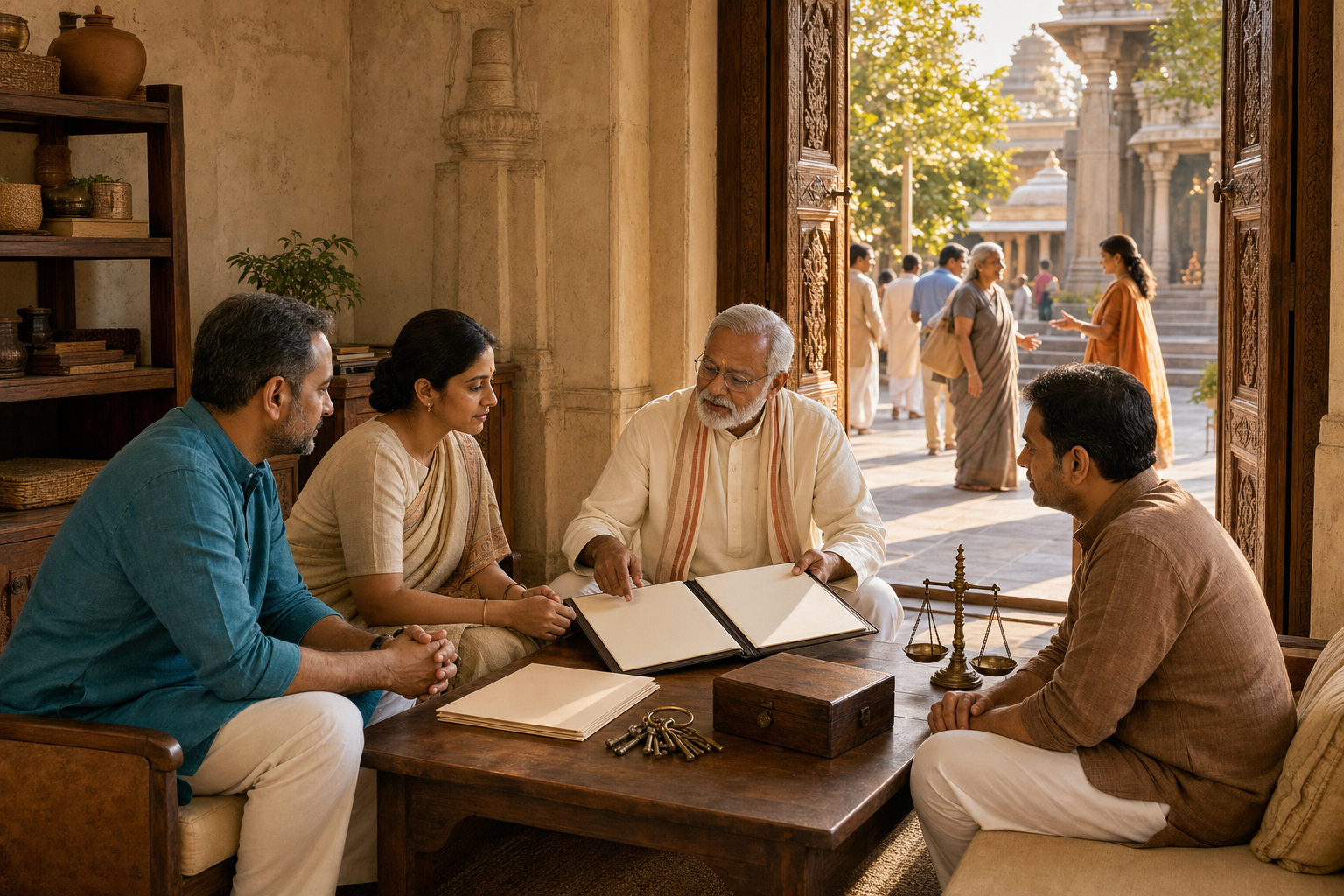
If you help govern a mandir, matha, vihara, derasar, or gurdwara, your hardest decision may look deceptively small: a dress rule, a procession permission, a volunteer incident, a property complaint, or a threat online. The decision becomes dangerous when nobody can show who authorised the rule, how volunteers must apply it, what remedy a devotee receives, or where the evidence is kept.
Your practical goal is not legal aggressiveness. It is institutional steadiness: preserve maryada, treat people with dignity, document decisions, and know when a priest, trustee, police officer, mediator, or advocate should take over. The same discipline that protects religious freedom also keeps a sacred institution from becoming arbitrary.
Key takeaways
- Turn every important rule into a governance chain: authority, purpose, written standard, implementation procedure, remedy, record, and review.
- Treat Articles 25 and 26 as part of a wider constitutional framework that also includes equality, liberty, peaceful association, public order, morality, and health. Their application to a particular institution or dispute is fact-specific.
- Make inclusion operational. Publish rules before entry, train volunteers, provide practical alternatives, protect accessibility, and never shame a devotee.
- Prepare an incident protocol before a procession, festival, or dispute. Current criminal-law, procedure, and evidence requirements must be checked under the 2023 enactments and applicable state notifications.
- Preserve original electronic material, maintain a chain-of-custody record, control public statements, and have an advocate review any consequential complaint or filing.
- Review policies on a defined cycle. A six-month review is a workable starting point for tracking devotee experience, enforcement consistency, legal readiness, and unintended barriers.
Turn maryada into a defensible governance chain
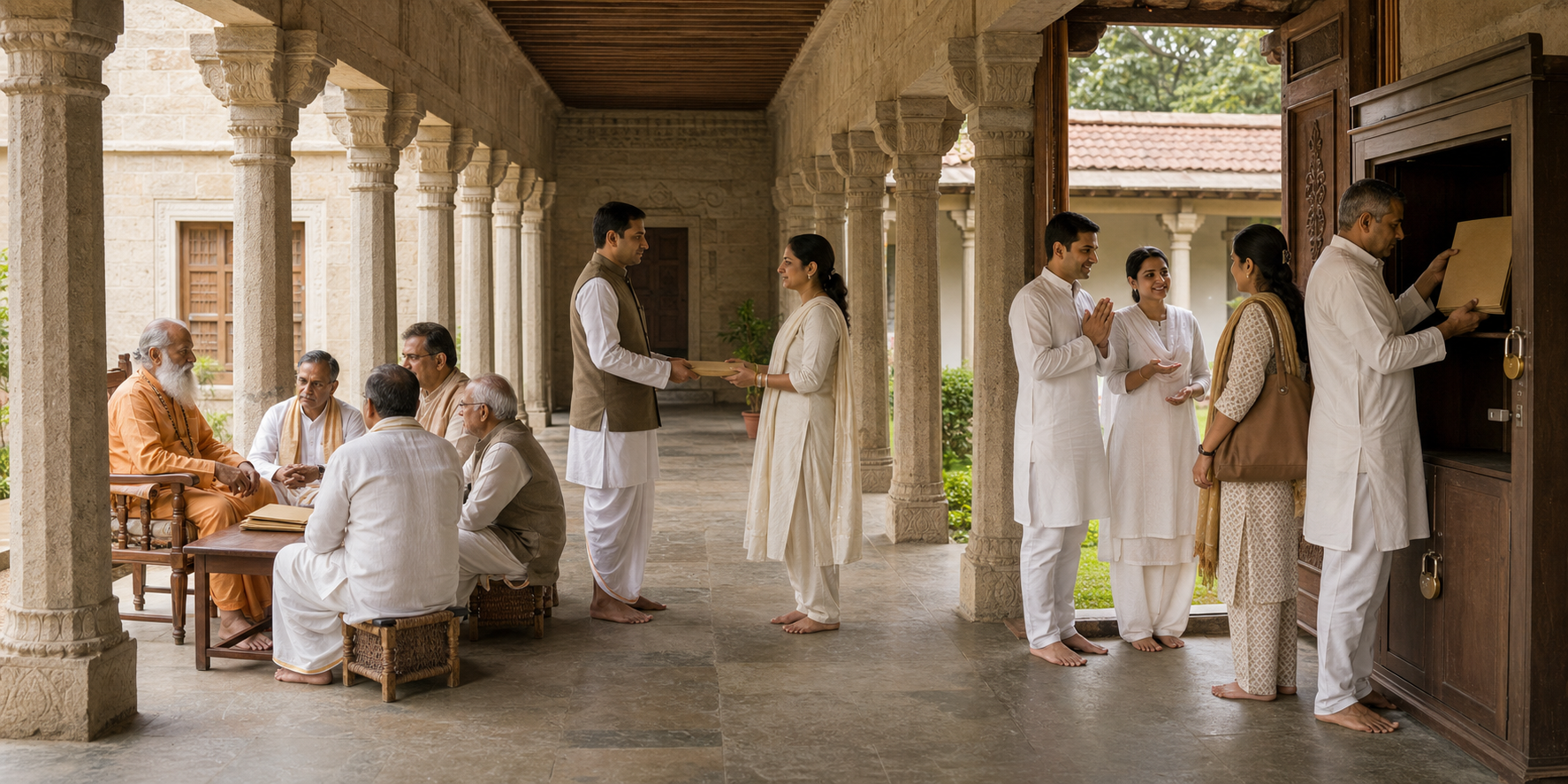
A sacred custom and an enforceable institutional rule are not the same thing. Maryada supplies the religious or ethical purpose. Governance identifies who may translate that purpose into a rule, where the rule applies, how it is communicated, and what happens when a person cannot immediately comply.
Before approving a policy, work through this chain in order:
- Identify authority. Check the trust deed, scheme, constitution, existing by-laws, resolutions, applicable state trust or endowment law, and the roles assigned to trustees and religious functionaries.
- Record the purpose. State the religious, safety, access, preservation, or administrative objective in plain language. A purpose such as preserving a contemplative atmosphere is easier to apply fairly than an instruction to stop inappropriate behaviour.
- Write the rule. Define its scope, location, effective date, responsible role, exceptions, and available accommodations. Do not leave the operative standard to individual volunteers.
- Write the procedure. Specify how notice is given, who speaks to a visitor, what immediate remedy is offered, when a supervisor is called, and how a complaint is recorded.
- Create a record. Keep the resolution, attendance, consultations, reasons, policy version, training materials, complaints, and review decisions together.
- Set a review date. A policy without a review mechanism can preserve an avoidable mistake as easily as it preserves tradition.
For a Maharashtra public trust, the trust’s governing instruments and the Bombay Public Trusts Act, 1950, where applicable, belong in the authority check. The practical lesson from the collective decision by 25 Navi Mumbai temples is not that every mandir needs an identical rule. It is that trustees must convert a shared commitment into institution-specific language, facilities, training, and accountability.
The constitutional frame is equally important. Articles 14 and 15 concern equality and non-discrimination. Article 19 protects freedoms that include speech, association, and peaceful assembly, while Article 21 protects life and personal liberty. Articles 25 and 26 protect freedom of conscience, religious practice, and denominational management, subject to public order, morality, and health. Articles 32 and 226 provide routes to the Supreme Court and High Courts for enforcement of fundamental rights. Articles 29 and 30 may also matter in cultural and educational settings.
Do not print Article 26 on a notice and assume the legal work is finished. Whether a body qualifies for a particular constitutional protection, whether a disputed matter is religious or administrative, and how general law applies all depend on the institution and facts. Before adopting a consequential restriction, ask qualified counsel to review the governing instrument, statutory authority, constitutional implications, and actual implementation plan. A blog article cannot determine those questions for an individual trust.
A useful one-page resolution record should answer eight questions: What problem are we solving? Which provision gives us authority? Who was consulted? What exact text was approved? Who implements it? What accommodation is available? How can a person complain? When will the trustees review the result? If the file cannot answer those questions, the policy is not ready for the entrance gate.
Write rules that preserve sanctity without creating arbitrariness
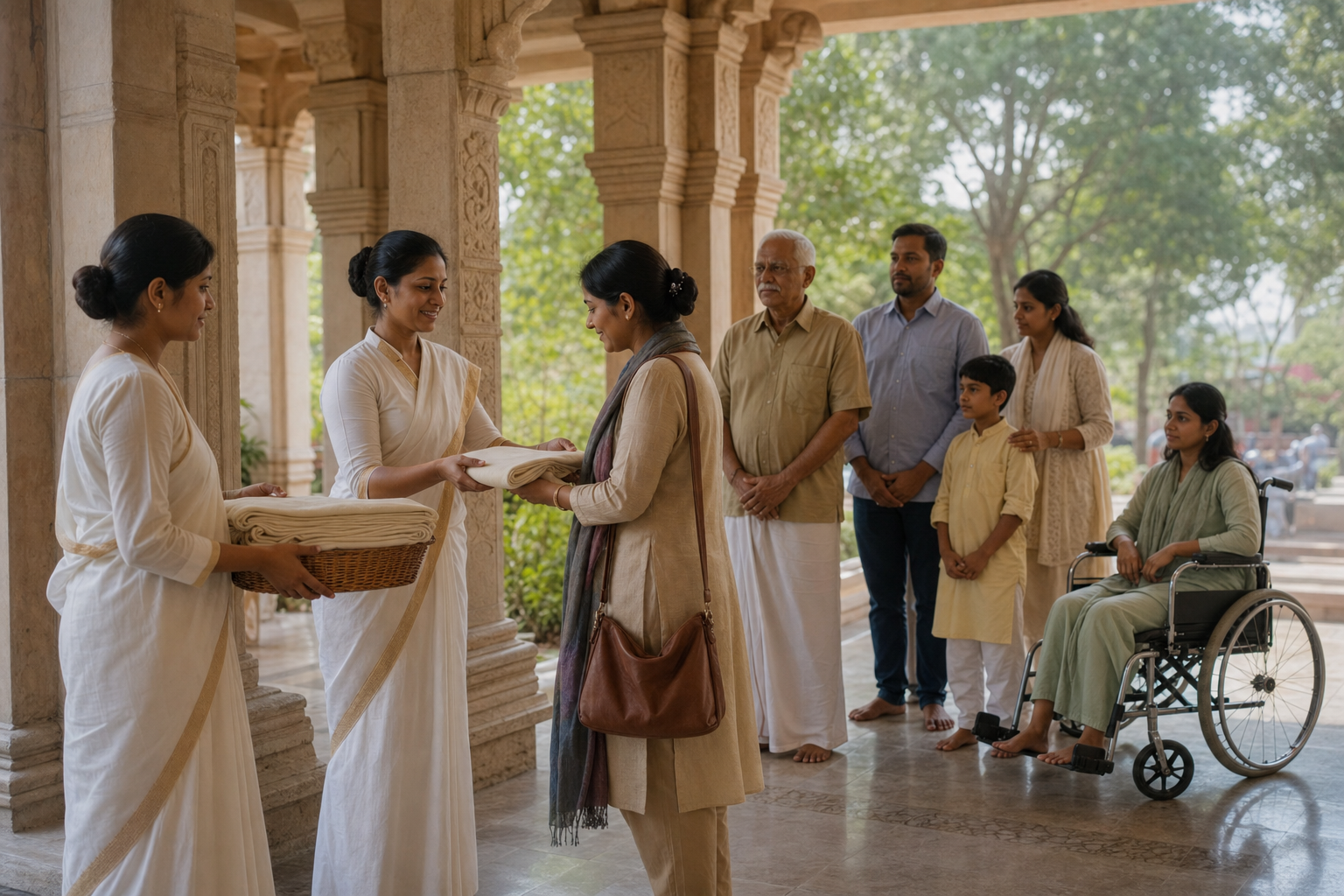
A dress code is a good stress test because it touches ritual atmosphere, personal dignity, unfamiliar visitors, climate, disability, and volunteer discretion at the same moment. It can preserve sanctity when it is clear and compassionate. It can damage institutional trust when it is vague, selective, or humiliating.
Begin with the tradition actually observed at your institution. Covered shoulders and knees are common expectations in many Hindu and Buddhist sacred spaces. Jain derasars may request simple, clean clothing and restrict leather. Sikh gurdwaras ordinarily require a head covering and barefoot entry. These practices express related dharmic values of humility and respectful presence, but they are not interchangeable. A mandir should not copy another institution’s rule without asking its own archakas or other competent religious authorities what its maryada requires.
A workable written policy contains the following:
- A short purpose statement centred on sanctity, respectful presence, and devotee experience rather than judgement about a person’s character.
- A concrete description of acceptable attire. If shoulders or knees must be covered, say so. Give climate-appropriate examples such as a saree, salwar-kameez, kurta-pajama, trousers with an appropriate top, or another modest equivalent.
- The precise areas covered by the rule. The threshold for a sanctum-facing area may differ from the standard for an outer courtyard, event hall, office, or food-service area.
- Any tradition-specific requirement, such as a head covering, removal of footwear, or restriction on leather. State whether it is mandatory or advisory.
- Practical accommodations, including shawls, uttariya, dupattas, waist cloths, dhotis, or head coverings offered free or against a clearly explained refundable deposit.
- Accessible options for children, older devotees, people with disabilities, and anyone whose mobility, medical device, or necessary clothing affects compliance.
- A private complaint and review route, including the role authorised to make an immediate decision.
Publish the policy before enforcement. Put a visual guide at the approach to the entrance rather than revealing the rule only after a visitor has queued. In Navi Mumbai, Marathi, Hindi, and English are practical choices; elsewhere, choose the languages your devotees and visitors actually use. Repeat the guidance on the institution’s official website or event notice when those channels exist.
Volunteer conduct matters as much as the written rule. Train volunteers to point to the policy, explain its purpose in one sentence, and offer a solution immediately. A workable opening is: Namaste. This temple asks visitors to cover their shoulders in this area. We can provide a shawl here. The wording identifies the institution’s rule, avoids a personal accusation, and moves directly to a remedy.
Use a simple escalation sequence:
- Indicate the published rule courteously.
- Explain the sacred-space purpose without debating the visitor’s morality or intention.
- Offer the on-site covering or another permitted option.
- If the visitor objects, move the conversation away from the queue and call the designated supervisor.
- Record the interaction without photographing or publicly identifying the person unless a genuine safety or evidentiary need lawfully requires it.
- Reserve security intervention for conduct or safety concerns, not an ordinary clothing misunderstanding.
Uniform enforcement does not mean inflexible enforcement. It means that the same written standard, remedy, escalation route, and respect apply to similarly situated people. An accommodation for disability or an emergency is part of the policy, not evidence that the policy has failed.
Track what happens after implementation. Record how often a covering resolves the issue, how many complaints arise, whether queues slow down, which signs confuse visitors, and whether particular groups face an unintended barrier. Review aggregated information rather than creating dossiers on devotees. If a sincere visitor can comply through an immediate remedy, turning that person away should be the last response, not the first reflex.
Build legal readiness before a procession or dispute begins

The worst time to search for an advocate, locate a permission letter, or decide who may speak for the institution is after an incident has begun. Legal readiness is an operating function. It belongs beside festival planning, crowd management, accounts, and maintenance.
For each major gathering, procession, or sensitive event, assemble one controlled operating file containing:
- The application, permission, route, timing, sound, crowd-management, and emergency requirements that actually apply in that jurisdiction.
- Copies of submissions, receipts, approvals, conditions, correspondence, and the name of the authorised institutional signatory.
- A current contact tree for trustees, event leads, local authorities, emergency services, and counsel.
- A volunteer deployment sheet that separates crowd guidance, evidence preservation, family assistance, media response, and liaison roles.
- A pre-approved public communication process so that unverified claims do not appear on an official account.
- An incident form that captures time, place, people involved, witnesses, injuries or damage, authority contacted, and files collected.
Do not recycle a pre-2023 criminal-law template without review. Substantive criminal offences are now framed under the Bharatiya Nyaya Sanhita, 2023; criminal procedure under the Bharatiya Nagarik Suraksha Sanhita, 2023; and evidence under the Bharatiya Sakshya Adhiniyam, 2023. Older references to the Indian Penal Code, Code of Criminal Procedure, or Indian Evidence Act may point your team toward superseded labels or section numbers. Current statutory text, applicable state notifications, court directions, and local procedure must be checked by counsel.
The law addresses conduct that can include deliberate religious insult, defilement of places of worship, promotion of enmity, and incitement affecting public order. That does not mean an upsetting statement automatically satisfies every element of an offence. Record the actual words or conduct, context, speaker if known, time, place, audience, resulting harm, and original evidence. Let an advocate assess the legal classification.
Use a disciplined incident sequence
- Protect people first. Contact emergency services or law enforcement when there is an immediate threat, injury, fire, violence, or serious public-order risk.
- Stabilise the scene without retaliation. Separate participants where safely possible, protect vulnerable people, and prevent volunteers from pursuing, threatening, or publicly naming suspects.
- Preserve contemporaneous facts. Note the time, location, sequence, witnesses, physical damage, official contacts, and electronic files before memories and online narratives change.
- Contact the designated advocate. Counsel can assess FIR wording, notice and appearance obligations, search-and-seizure issues, remand, anticipatory or regular bail, custody safeguards, medical examination, and available supervisory remedies.
- Prepare a factual complaint. Use chronology, identify supporting records, distinguish direct observation from information received, and avoid collective allegations against an entire community.
- Track the matter. Record submission time, acknowledgement, FIR status where applicable, evidence handed over, the officer or authority engaged, court dates, conditions, and required follow-up.
If police registration or investigation stalls, do not improvise a confrontation at the station. An advocate can assess the correct supervisory, magistrate, administrative, or writ remedy under current law. Articles 226 and 32 may support judicial enforcement of fundamental rights, but the correct forum and form of proceeding depend on the facts. Public Interest Litigation is best reserved for a genuine systemic problem supported by a developed record, not used as a dramatic label for every individual dispute.
Choose the remedy that fits the problem
A threat, assault, unlawful damage, or serious interference with worship may require immediate police and legal action. A recurring failure in permissions or protection may justify a documented representation, supervisory escalation, or carefully selected strategic litigation. A property, management, access, or relationship dispute may be better suited to negotiation, mediation, Lok Adalat, or a civil procedure route such as Section 89 of the Code of Civil Procedure, depending on the rights involved.
The district-to-appellate model discussed across Ayodhya, Pratapgarh, and Prayagraj captures an important institutional principle: community access, district-level representation, and High Court strategy should form one referral chain. A local volunteer should not have to guess whether a matter needs mediation, an FIR, bail counsel, a writ lawyer, or no litigation at all.
Keep the ethical boundary explicit. Legal protection is not permission for vigilantism, retaliation, intimidation, hate speech, or collective blame. A dharmic institution weakens its own claim to lawful protection when its representatives disregard due process. Means and ends must both remain just.
Preserve electronic evidence before the story outruns the facts
A forwarded clip is not the same as an original recording. Compression, cropping, captions, and repeated forwarding can remove context or metadata and complicate authentication. Preserve the original device or file where lawful and practical, create working copies, restrict access, and record each transfer.
Your evidence log should identify the item, collector, date and time, location, device or system, method of acquisition, original storage location, copies created, every person who received it, and the purpose of each transfer. Export relevant CCTV before the system overwrites it. Keep geo-tagged photographs when available. Record each eyewitness separately in the witness’s own account, and obtain prompt medico-legal documentation when an injury makes it relevant. Never coach a witness or edit an original file to make the case appear cleaner.
Electronic records may require certification or other authentication under the Bharatiya Sakshya Adhiniyam’s successor framework to the former Section 65B regime. Have counsel determine the current requirement before filing or handing over the only copy. Evidence handling can affect a person’s liberty, an institution’s property, and the credibility of the proceeding, so informal social-media habits are not an adequate substitute.
Use official accounts for verified operational information: whether an event is proceeding, which entrance is open, where assistance is available, or which authority has been contacted. Do not publish unverified accusations, witness identities, private medical details, or material that may inflame the situation. Retain original content even when the public-facing response is brief. Truth, timeliness, and legality are the right tests for every update.
Measure fairness and build a durable dharmic legal network
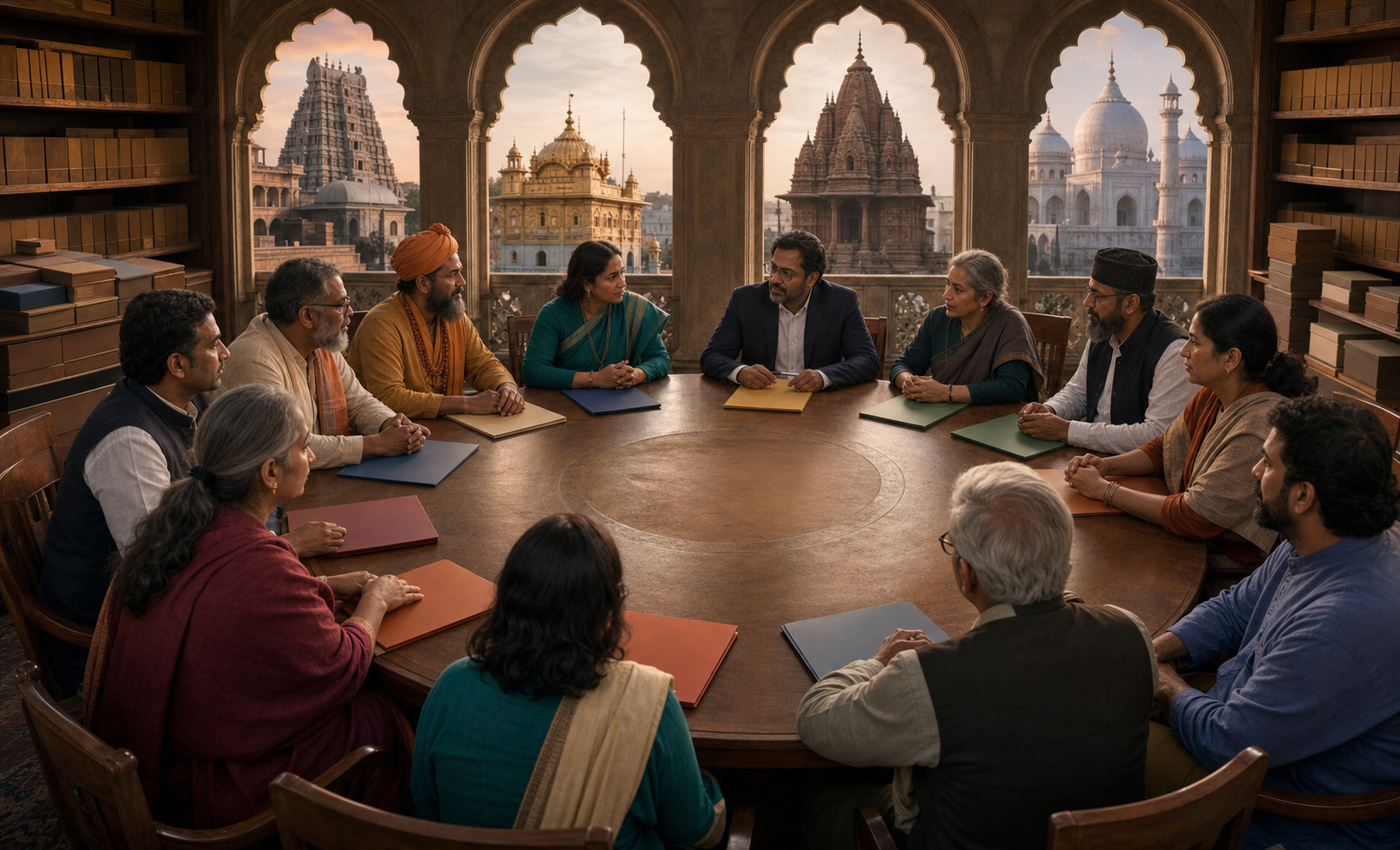
A policy should be judged by what it does, not only by the trustees’ intention. Set a six-month review date when you adopt a new operational rule, then examine a small dashboard that reveals both sanctity and access.
- Devotee experience: complaints, compliments, accessibility requests, common points of confusion, and the share of routine issues resolved through an immediate remedy.
- Operations: footfall, queue effects, covering-counter use, volunteer escalations, signage gaps, and recurring pressure points during aarti or major festivals.
- Consistency: whether the written standard was applied across shifts, entrances, languages, genders, and visitor groups without selective humiliation.
- Legal readiness: permissions obtained, documents missing at the event site, response time, evidence logs completed, and referrals made to counsel.
- Case process: time to FIR where relevant, bail and remand outcomes, investigation or charge-sheet quality, compliance with court directions, and matters resolved through mediation.
- Institutional capacity: training hours, advocates on the roster, paralegals prepared, legal-service referrals, policies reviewed, and corrective actions completed.
Metrics need context. A rise in recorded complaints may mean the policy is causing harm, but it may also mean devotees finally have a usable complaint channel. Read the underlying cases before drawing a conclusion. Publish an aggregated review where appropriate, while protecting witness safety, confidentiality, legal privilege, and personal information.
No single temple needs to build every legal capacity alone. A durable district network can combine:
- A screened roster of advocates covering criminal procedure, constitutional remedies, public trusts, property, permissions, and mediation.
- A rapid-response schedule that identifies who can assist at a police station, remand hearing, district court, or High Court.
- Trained paralegal volunteers who collect facts and documents without offering legal advice beyond their competence.
- Referral links to District and State Legal Services Authorities for eligible people who need affordable representation.
- Relationships with law schools for clinics, research, current-law updates, bilingual materials, and continuing education.
- Shared templates for incident intake, evidence custody, event permissions, complaints, referrals, and post-incident review.
- Written ethical controls covering confidentiality, conflicts of interest, gender-sensitive representation, witness safety, non-discrimination, and public communications.
A Hindu temple, Buddhist vihara, Jain derasar, and Sikh gurdwara need not erase their distinct traditions to cooperate. The network should standardise lawful process, not theology: accurate documentation, timely representation, evidence preservation, ethical advocacy, and access to remedies. Each institution remains responsible for defining its own maryada through its legitimate authorities.
At your next trustee meeting, choose one real policy and run it through the full chain. Confirm authority, write the purpose and rule, add the remedy and complaint route, train the people at the entrance, open an evidence file, identify counsel, and put the review date in the minutes. Institutional protection begins before a dispute, in the quality of the decision you can calmly explain and consistently defend.
References
- DharmaRenaissance Blog – After Nerul Meet, 25 Navi Mumbai Temples Adopt Dress Code to Preserve Sanctity and Inclusion
- DharmaRenaissance Blog – Ayodhya-Pratapgarh-Prayagraj summits unite dharmic advocates to fortify legal protections
