
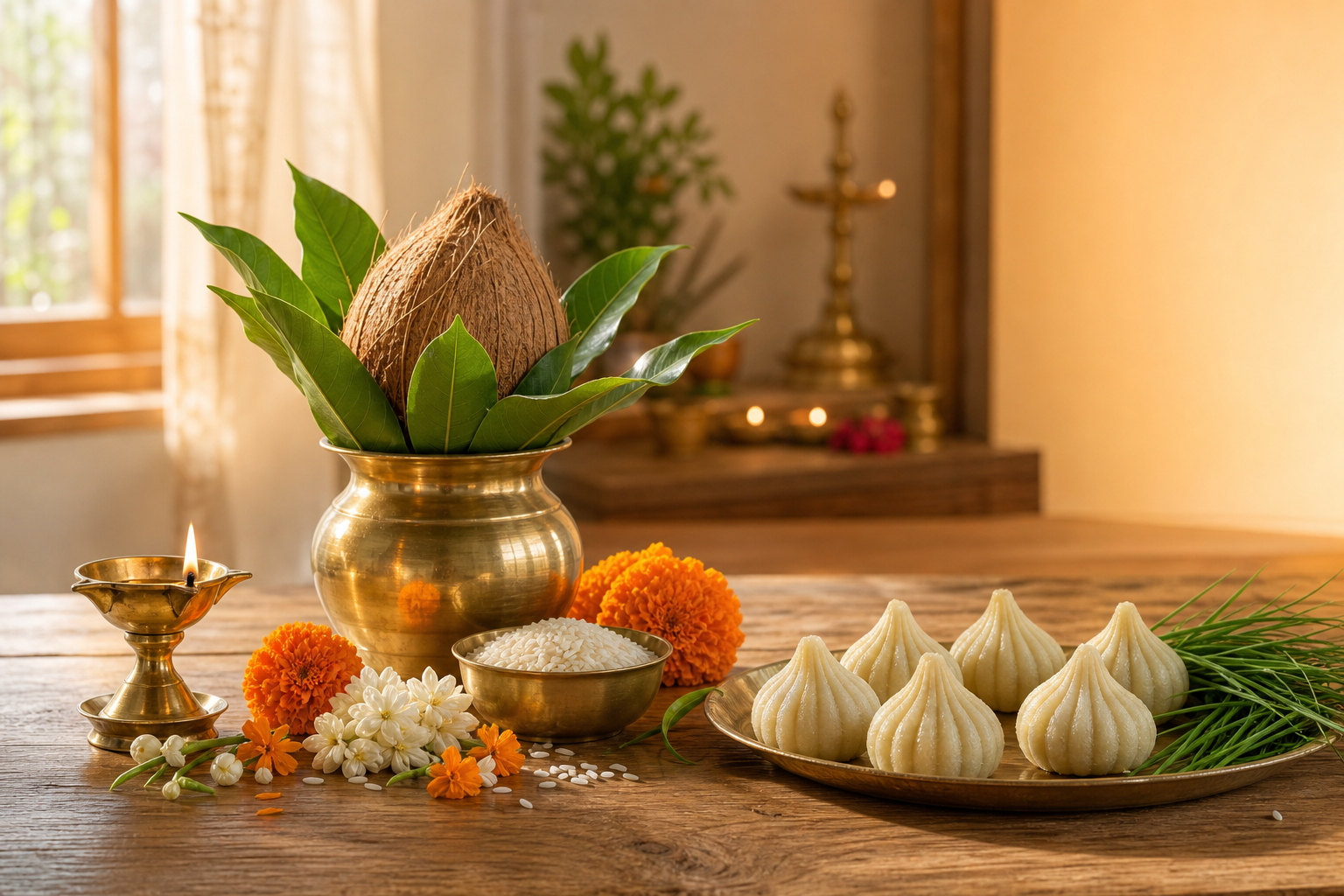
If March is already crowded with work, school, and community commitments, you do not need a longer list of festival names. You need to know which confirmed dates require preparation, what part of the day matters, and whether a time published for India applies where you live.
For the observances covered here, March 19 and March 22 are the two planning anchors. March 19 opens the Chaitra bright fortnight and the New Year for many Hindu traditions. March 22 carries the monthly Vinayaka Chaturthi observance. This is a focused working calendar for those dates, not an exhaustive register of every regional vrata or temple event in March.
The two March dates to put on your calendar
| Date | Calendrical basis | Main observance | What you should plan |
|---|---|---|---|
| March 19, 2026 | Chaitra Shukla Pratipada prevails at sunrise in Delhi | Nav Samvatsar, Vikram Samvat 2083, Ugadi, Gudi Padwa, Navreh, and the beginning of Chaitra Navaratri | Confirm the date for your city, choose the form followed by your family, and prepare the household or community observance |
| March 22, 2026 | Shukla Chaturthi begins at 01:48 AM IST after the preceding Tritiya | Monthly Vinayaka Chaturthi | Find the local Madhyahna window and prepare a simple Ganesha puja or vrata |
The March 19 date rests on Chaitra Shukla Pratipada holding at sunrise in Delhi. March 22 is a Sunday on which Tritiya ends and Shukla Chaturthi begins at 01:48 AM IST, after which Chaturthi continues through the rest of the Indian civil day.
Key takeaways
- Use March 19 for Nav Samvatsar in Delhi and other places where a trusted local panchang assigns Chaitra Shukla Pratipada to that sunrise.
- Treat Ugadi, Gudi Padwa, and Navreh as distinct regional expressions of the same calendrical threshold, not as interchangeable decorations.
- Use March 22 for monthly Vinayaka Chaturthi in India; the relevant worship period is local Madhyahna, not automatically 12:00 PM.
- Do not transplant an IST boundary into another time zone and assume the same civil date or worship window. Recalculate for your city.
- Choose one location-aware panchang for the household or organisation before invitations, fasting plans, and ritual timings are circulated.
March 19: begin the year in the form your family actually follows
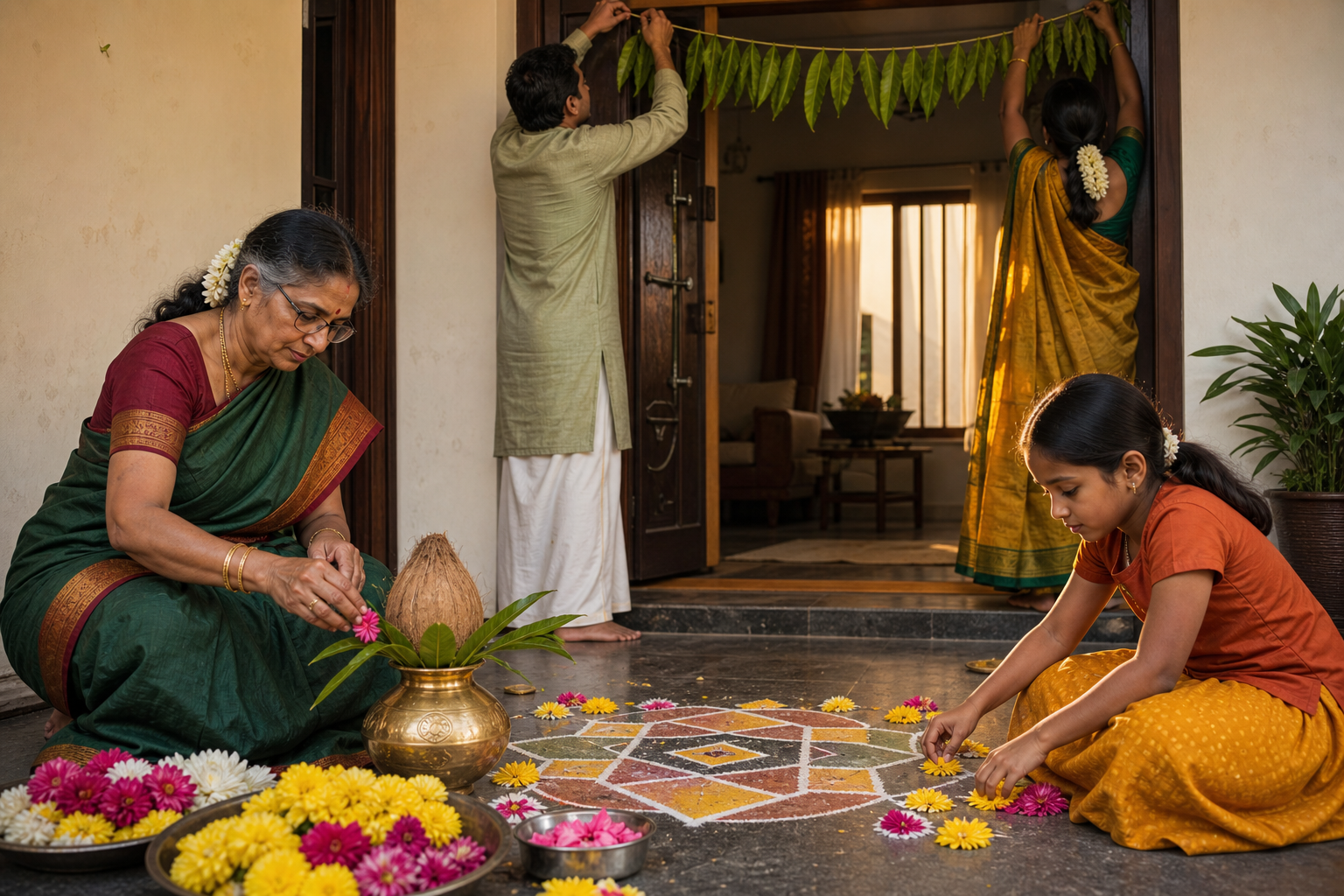
Chaitra Shukla Pratipada is the first lunar day of the bright fortnight following the new moon. In many Hindu traditions it serves as the turn of the year, and in 2026 it marks the beginning of Vikram Samvat 2083 and Chaitra Navaratri on March 19.
The practical mistake is to treat the regional names as labels for one generic ceremony. The tithi is shared, but the embodied forms matter. Kannada and Telugu households know the day as Ugadi and may prepare a six-flavoured pachadi representing the mixed experiences of life. Maharashtrian and Konkani households raise the gudi as a sign of auspiciousness, victory, and renewal. Kashmiri Pandit families observe Navreh through a prepared thaal, sacred reading, and contemplation. Preserve the inherited form you know rather than manufacturing a blended ritual merely because several names appear on the same calendar square.
If your family has become disconnected from its regional practice, choose a modest observance you can perform correctly and repeat next year. A home altar, a clear sankalpa, prayer according to your lineage, seasonal food, and dana are enough to give the day structure. You can learn the fuller regional procedure from elders, your temple, or the almanac followed by your community without postponing the observance until everything is perfect.
A workable household plan
- Settle the calendar first. Select your city in a location-aware panchang and confirm that Chaitra Shukla Pratipada is assigned to March 19 at local sunrise. If your family follows a particular almanac, use it consistently.
- Choose one regional centre of gravity. Prepare the Ugadi dish, raise the gudi, arrange the Navreh thaal, or follow the form given by your own sampradaya. Explain its meaning to children and guests in a few plain sentences.
- Make a specific sankalpa. Replace a vague promise to be better with one discipline you can observe: measured speech, daily japa, a defined act of seva, or a restraint already recognised in your tradition.
- Carry the discipline into Navaratri. Chaitra Navaratri begins with this Pratipada and culminates in Sri Rama Navami. Keep the chosen restraint through the Navaratri period, using your local panchang to determine the later observances rather than guessing their civil dates.
- Let renewal reach another person. Add dana, anna-dana, neighbourhood service, or help for someone outside your immediate household. A New Year intention becomes more durable when it changes an actual obligation, habit, or relationship.
March is also a good time to teach children why the date moves in the Gregorian calendar. The Hindu calendar is lunisolar: lunar months follow the phases of the Moon, while intercalation keeps the ritual year aligned with the seasons. The New Year therefore belongs to a recurring relationship between the Sun, Moon, season, and sunrise, not to a permanently fixed Gregorian date.
How to make a community programme genuinely Dharmic
A public Nav Samvatsar event works best when worship, cultural memory, and service reinforce one another. A prabhat-pheri, collective prayer, heritage talk, classical or folk performance, tree planting, cleanliness drive, and anna-dana or langar can all belong to the programme. You do not need to crowd every activity into one day. Choose a devotional centre and one form of useful seva.
Plan civic courtesy as carefully as the ritual. Keep routes away from hospital zones and examination centres, respect quiet hours, provide access for elders and people with disabilities, and use clear multilingual signs where appropriate. Reusable decorations, natural rangoli materials, locally available seasonal food, and restrained amplification allow the celebration to express dharma without transferring the cost to neighbours or the environment.
Pan-Dharmic fellowship should recognise difference rather than erase it. Jain communities traditionally begin their New Year after Deepavali; Sikh observance includes the Nanakshahi beginning of Chet in March and the civilizational importance of Vaisakhi in mid-April; Theravada Buddhist New Year traditions occur in mid-April. March 19 can still welcome Hindu, Buddhist, Jain, and Sikh neighbours around shared commitments such as satya, ahimsa, daya, dana, discipline, and seva. It should not be presented as though every Dharmic community follows the same New Year reckoning.
March 22: plan Vinayaka Chaturthi around Madhyahna
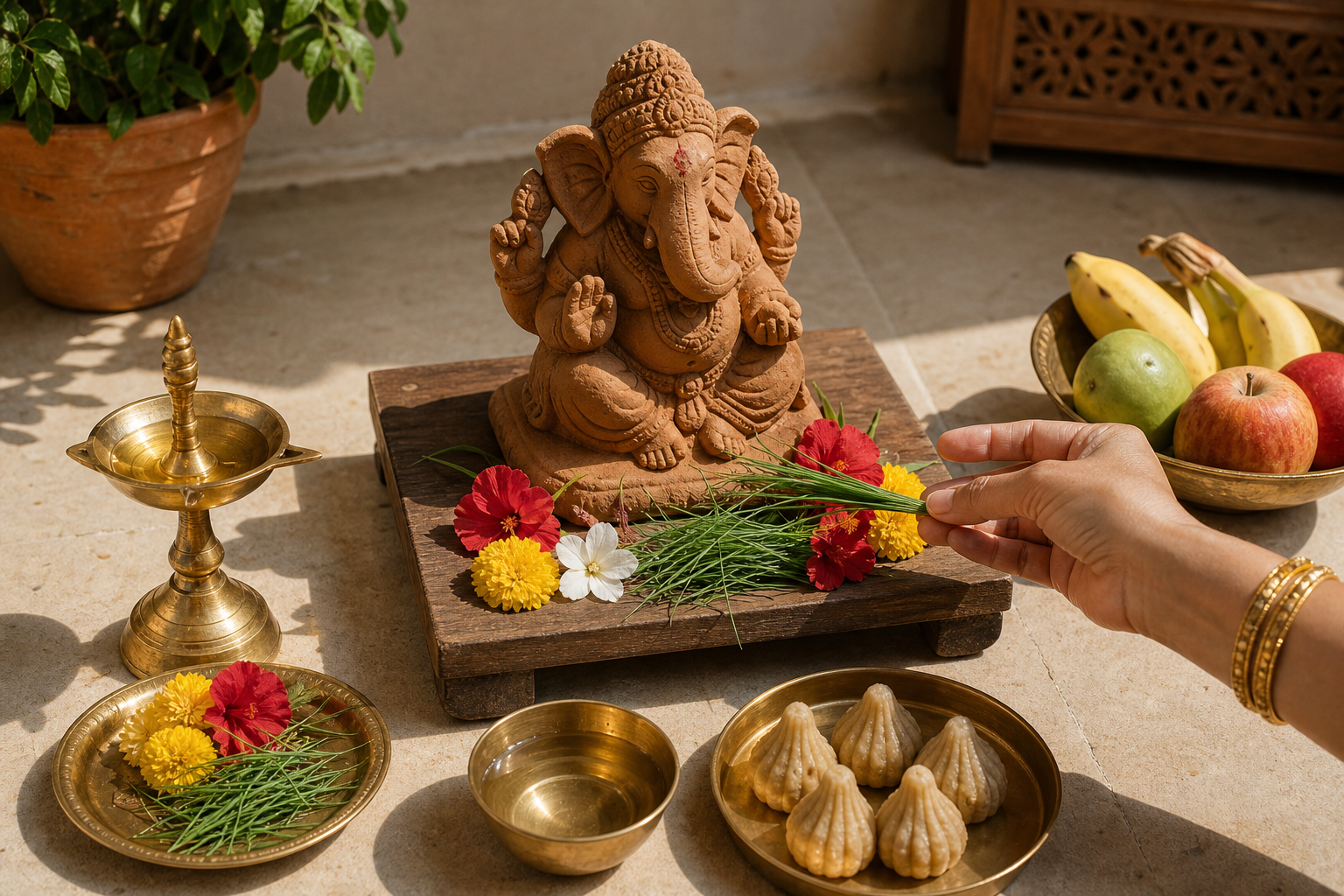
On March 22, Shukla Tritiya lasts only until 01:48 AM IST. Shukla Chaturthi then prevails for the remainder of the day in the cited Indian calculation, making March 22 the operative date for monthly Vinayaka Chaturthi.
The number that matters for worship is not simply 01:48 AM. That boundary tells you when the tithi changes in IST. Vinayaka Chaturthi puja is conventionally placed in Madhyahna, the local astronomical midday period. Madhyahna is tied to local sunrise, daylight length, and solar transit, so it should not be replaced automatically by 12:00 PM on a wall clock.
Look up the Madhyahna window for your city. If a calendar shows only an India-based time while you live elsewhere, use a different calendar or ephemeris that calculates for your location. Simply subtracting a time-zone offset from 01:48 AM IST does not establish the correct local festival date, sunrise rule, or Madhyahna period.
A simple monthly Ganesha puja
- Prepare a clean worship place and make a brief sankalpa naming Shukla Paksha Chaturthi.
- Perform achamana and the purification customary in your household or lineage.
- Invoke Ganesha with Om Gam Ganapataye Namah.
- Offer durva, traditionally arranged as 21 blades where that practice is followed, together with red flowers, fruit, coconut, and naivedya such as modaka or laddu.
- Recite the Ganesha Atharvashirsha, the Ganesha Ashtottara Shatanamavali, or the shorter prayer your family can perform with attention.
- Complete arati and sit quietly long enough to identify the obstacle your own conduct is creating: delay, scattered attention, harsh speech, poor preparation, or an unkept commitment.
- Begin one appropriate task after worship, carrying the steadiness of the puja into practical action rather than treating auspicious timing as a substitute for effort.
The vrata may include a light sattvic fast, but the spiritual purpose is restraint and clarity, not avoidable harm. If fasting is medically unsuitable for you, follow the dietary guidance already given by your clinician or caregiver and keep the vrata through prayer, disciplined speech, and suitable sattvic food.
One common confusion deserves correction. The familiar restriction on seeing the Moon is associated primarily with the major Bhadrapada Ganesh Chaturthi. It is not ordinarily imposed on every monthly Vinayaka Chaturthi, unless your sampradaya or regional tradition explicitly instructs you to follow it.
Why two panchangs can show different details

A tithi is not a midnight-to-midnight date. It measures the angular separation of the Moon from the Sun. Each tithi occupies another 12 degrees of that separation, and its duration varies because the Moon does not move at a perfectly uniform apparent rate. A tithi can last roughly 20 to 27 hours, so it may begin in the middle of a civil day, cross midnight, or fail to be present at sunrise on a date you expected.
This is why March 22 can contain a short portion of Tritiya followed by a much longer portion of Chaturthi. It is also why the sunrise rule and the festival-specific worship period matter more than the tithi name displayed at midnight.
The five classical limbs of the panchang answer different questions:
- Tithi identifies the lunar day and usually provides the primary basis for a vrata or festival.
- Vara is the weekday.
- Nakshatra identifies the Moon’s position among the 27 lunar mansions.
- Yoga is derived from the combined solar and lunar longitudes.
- Karana is half of a tithi and adds detail for selecting or interpreting a period.
For a festival, do not pick a time merely because one favourable element appears. Brahma Muhurta is valued for pre-dawn meditation and japa. Abhijit Muhurat occupies the central portion of the daylight division and is often used for beginning ordinary tasks. Neither automatically overrides the rule that places Vinayaka Chaturthi worship in Madhyahna. Festival-specific timing comes first.
Month names can also differ without the underlying sky being different. Amanta calendars end the lunar month at Amavasya and are widespread in peninsular India. Purnimanta calendars end it at Purnima and are common in northern India. Tamil, Malayalam, and Bengali calendars add their own solar or regional conventions. Two households may therefore use different month labels while agreeing about the tithi operating at a particular moment.
Use this verification checklist
- Set the actual worship location. Use the city where you will perform the observance, not your birthplace, family hometown, or a default Indian city.
- Check the tithi boundary. Record when the required tithi begins and ends in local time.
- Check sunrise prevalence. This is essential for observances such as Chaitra Shukla Pratipada that are assigned by the tithi present at sunrise.
- Check the festival-specific period. For March 22 Vinayaka Chaturthi, look for Madhyahna rather than selecting a generic auspicious muhurta.
- Identify the calendar convention. Note whether your family uses an amanta, purnimanta, or regional solar-lunar calendar.
- Use one authority for group planning. A family, temple committee, or neighbourhood association should agree on one almanac before publishing a date or time. This prevents several individually reasonable calculations from turning into collective confusion.
Turn the dates into a schedule you can keep
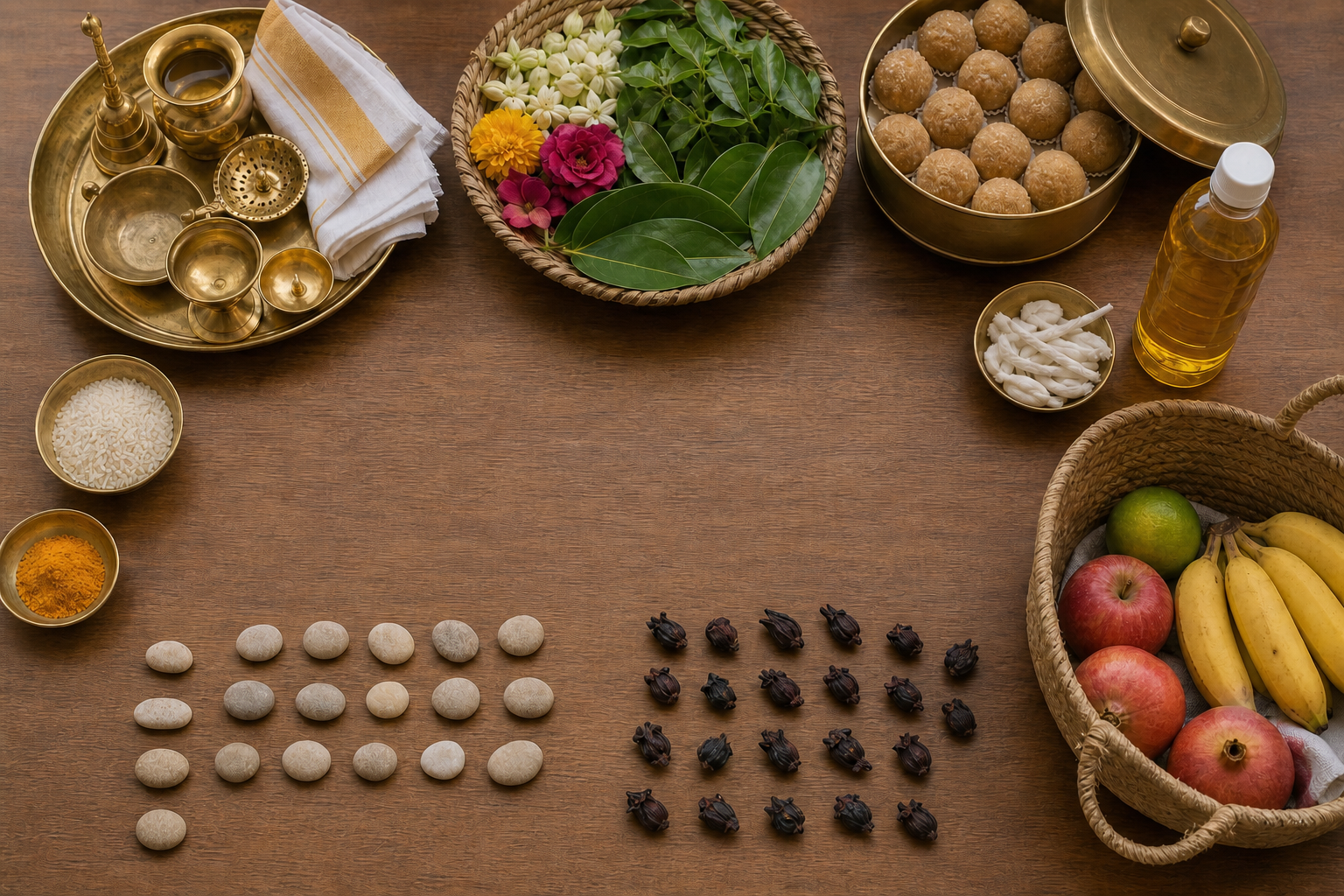
The evening before March 19, place the required ritual objects together, confirm the local sunrise-based date, and tell the household when the observance will begin. Decide in advance whether your New Year discipline concerns food, speech, japa, study, or seva. A sankalpa made without a defined practice is easy to admire and difficult to keep.
On March 19, perform the form native to your family or community and begin the Chaitra Navaratri discipline. If you are organising a public programme, publish the devotional schedule, accessibility arrangements, service activity, and noise limits together. Civic responsibility should be visible in the first announcement, not added after a complaint.
Before March 22, save the local Madhyahna window and prepare only what you will actually offer. A short, attentive Ganesha puja is better than an elaborate sequence rushed between unrelated commitments. After arati, take up one delayed task whose completion depends on clarity and steady effort.
Open your location-aware panchang now, mark March 19 and March 22, and share the chosen timing reference with everyone who will observe alongside you. That one act prevents most last-minute disagreement and leaves the days themselves free for worship, family, and seva.
References
- DharmaRenaissance Blog – March 22, 2026 Panchang: Shukla Chaturthi from 01:48 AM IST, Rituals, Muhurat, Nakshatra and Rashi
- Hindu Existence – Unite for Nav Samvatsar: VHP urges Delhi to celebrate Vikram Samvat 2083 on March 19
