
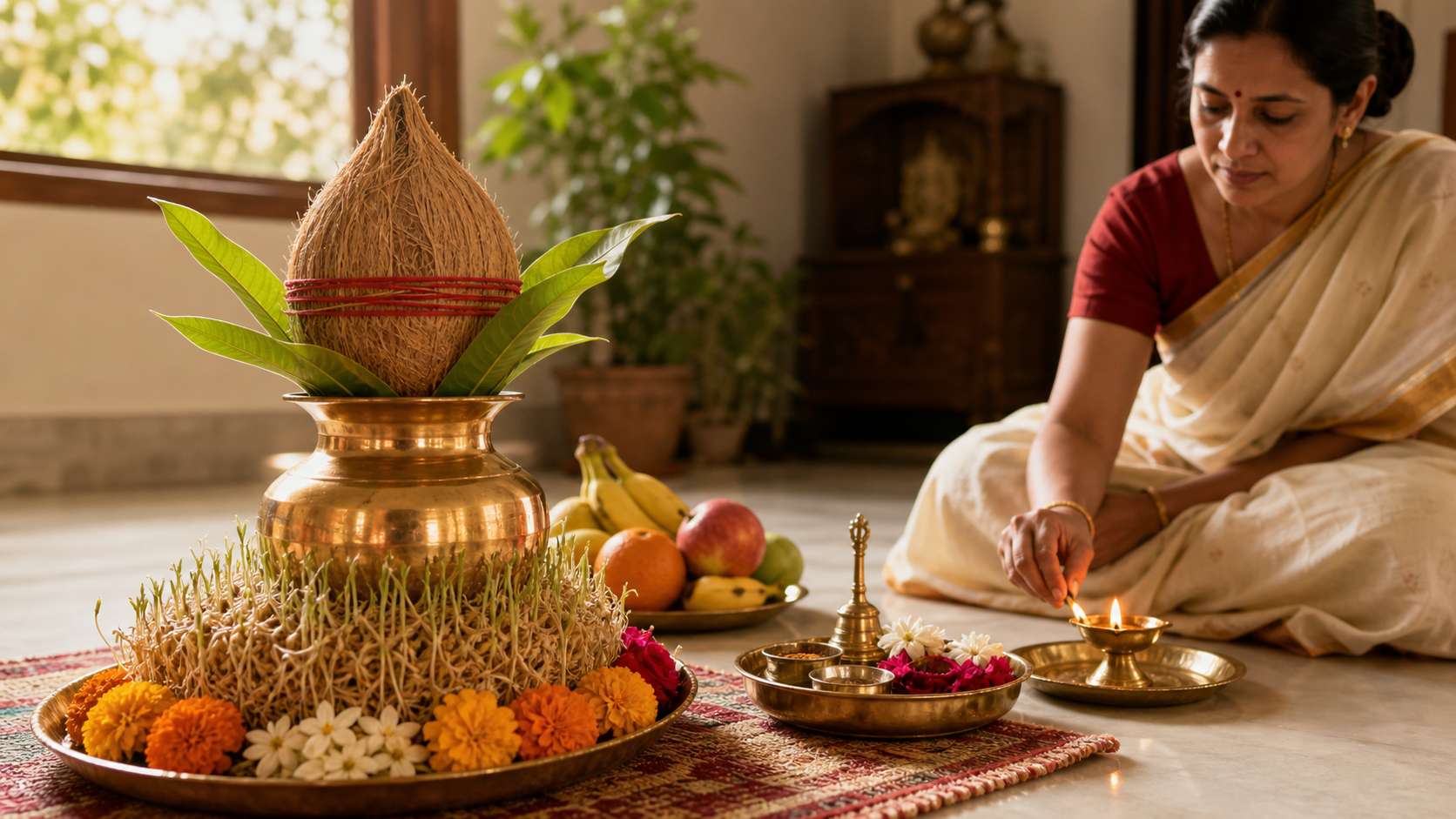
You have March 19 circled, but the nine-day span is usually the easy part. The real decisions are which local tithi controls Ghatasthapana, what you can simplify on workdays, and what you should not improvise, especially a severe fast or an unattended lamp.
For most locations, Chaitra Navratri 2026 runs from Thursday, March 19, through Friday, March 27. Treat those as your planning dates, then confirm the ritual timing with a trusted local Panchang, temple bulletin, or priest. A steady observance that fits your actual duties is more coherent than an elaborate first morning followed by eight strained days.
Fix the local calendar before planning the ritual
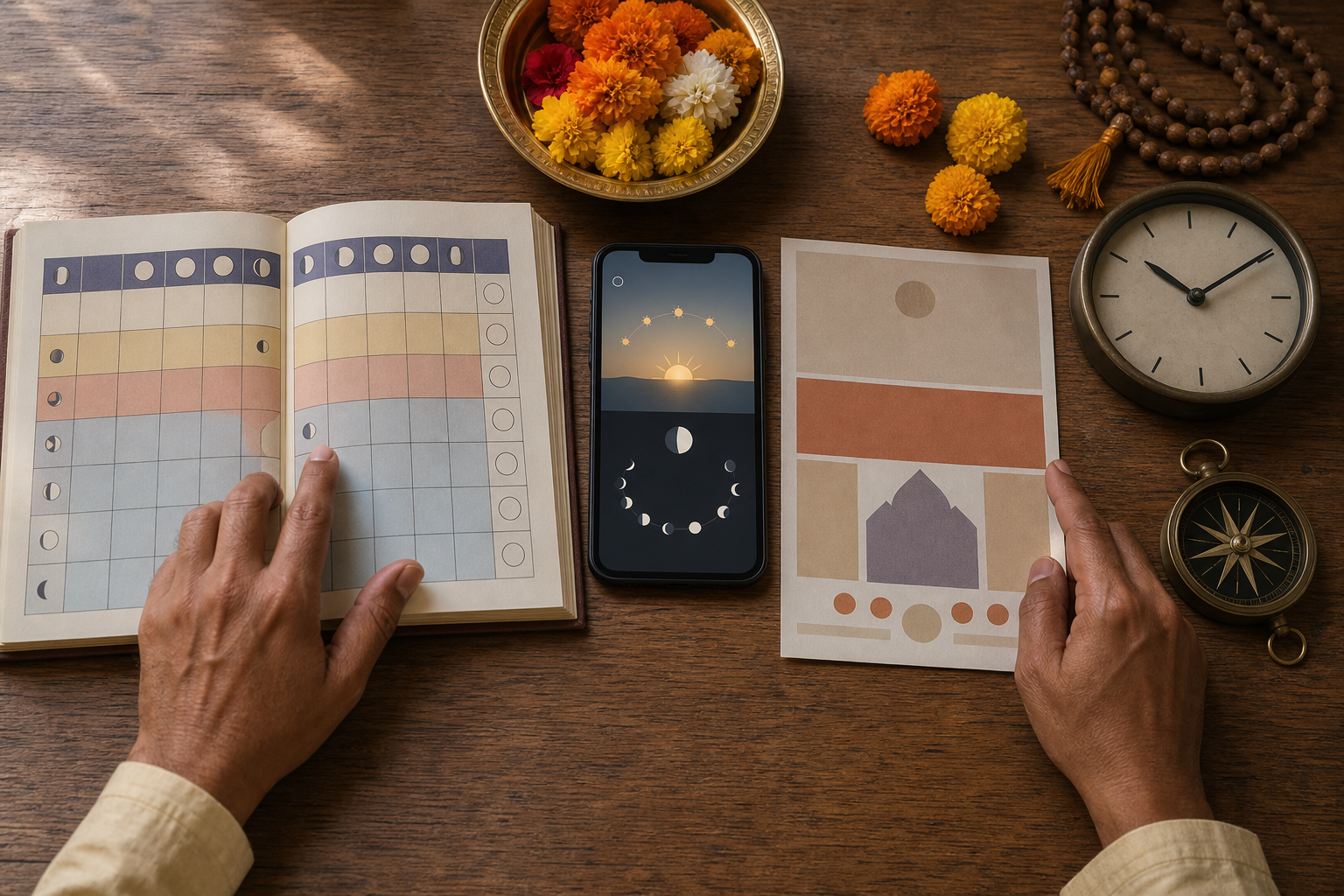
Chaitra Navratri follows lunar tithis, not midnight-to-midnight civil dates. It begins on Chaitra Shukla Pratipada and culminates on Navami. Because a tithi can begin or end at any point in the civil day, a timing graphic prepared for another city cannot settle your Ghatasthapana muhurta.
Key takeaways
- Use March 19-27 as the 2026 planning span for most locations, but let your local Panchang determine the exact observance.
- Plan Ghatasthapana for March 19 only after confirming that Pratipada and the prescribed local window coincide.
- For most locations, March 26 is Day 8 and March 27 is Day 9 as well as Sri Rama Navami.
- The yellow-to-purple colour sequence is a widely followed Maharashtra-Gujarat custom, not a universal requirement.
- Choose one daily recitation, one realistic fasting discipline, and one form of seva before the festival begins.
- If health, fire safety, or an established family sampradaya conflicts with an online checklist, protect health, protect the home, and follow the living tradition you actually belong to.
A nine-day plan you can put on the family calendar
The Navadurga progression moves from foundation and discipline toward courage, purification, and integrated wisdom. The final day can hold both Siddhidatri worship and Sri Rama Navami remembrance; you do not have to choose one and exclude the other.
| Day and date | Devi | Quality to cultivate | A concrete observance | 2026 colour |
|---|---|---|---|---|
| Day 1: Thu, Mar 19 | Shailaputri | Foundation and steadiness | Perform Ghatasthapana and write one sankalpa you can keep for all nine days. | Yellow |
| Day 2: Fri, Mar 20 | Brahmacharini | Discipline and study | Keep the chosen vrata without adding unnecessary austerities midway. | Green |
| Day 3: Sat, Mar 21 | Chandraghanta | Courage with serenity | Face one duty you have been postponing, without anger or drama. | Grey |
| Day 4: Sun, Mar 22 | Kushmanda | Creative radiance | Make, repair, teach, or contribute something that benefits another person. | Orange |
| Day 5: Mon, Mar 23 | Skandamata | Nurturance and protection | Perform one act of care without seeking recognition for it. | White |
| Day 6: Tue, Mar 24 | Katyayani | Resolve and righteous strength | Take one principled decision that fear or convenience has delayed. | Red |
| Day 7: Wed, Mar 25 | Kalaratri | Fearlessness and obstacle-removal | Name a real fear in prayer, then take one measured step toward it. | Royal Blue |
| Day 8: Thu, Mar 26 | Mahagauri | Purity and grace | Prepare for Ashtami worship or Kanya Pujan and clear one source of disorder. | Pink |
| Day 9: Fri, Mar 27 | Siddhidatri and Sri Rama Navami | Fulfilment, wisdom, and maryada | Complete the vrata, remember Sri Rama, and decide which discipline will continue. | Purple |
The commonly circulated 2026 colour sequence is Yellow, Green, Grey, Orange, White, Red, Royal Blue, Pink, and Purple. Some communities instead associate colours directly with each form of Devi, such as white with Brahmacharini or darker shades with Kalaratri. Follow your temple or family convention when it differs.
You do not need nine new outfits. Rewear garments, borrow within the family, or use a scarf, stole, dupatta, wrist thread, pocket square, or another small accent. The colour should support remembrance, not turn vrata into a shopping obligation.
March 19 also opens Vikram Samvat 2083 for most locations and falls near regional new-year celebrations such as Gudi Padwa and Ugadi. The Saka civil year changes around March 22, while the vernal equinox falls around March 20. These are related features of the spring calendar, but they are not substitutes for the local tithi calculation that governs Ghatasthapana.
Establish the kalash with the right time and a safe setup
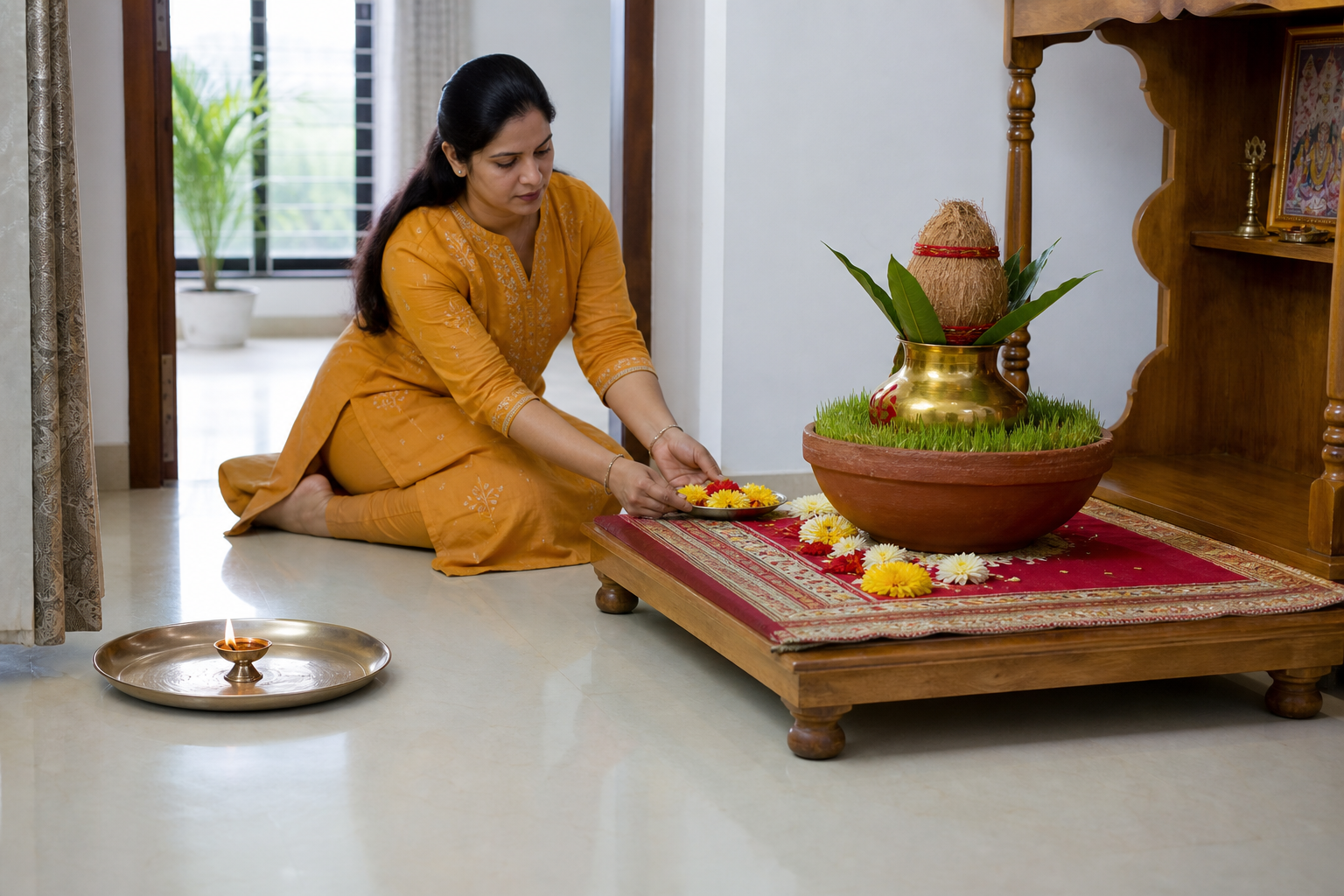
Confirm the Ghatasthapana window
Ghatasthapana is normally performed in the first one-third of the day while Pratipada prevails. If Pratipada is not available during that portion of the day, Abhijit muhurta on the same day is an accepted alternative. Traditional calculations also seek to avoid Vaidhriti and Vyatipata yogas and, where possible, Chitra nakshatra. When Pratipada crosses two civil dates, the day on which it is present at local sunrise is generally preferred.
These rules interact, so do not try to derive a local clock time from the festival date alone. Ask your Panchang or temple four precise questions:
<!– wp:list {