

If you saw the March 2026 notice about HH Mukunda Goswami’s brain surgery and were left somewhere between alarm and reassurance, hold on to the distinction that matters most: the procedure was serious, but it was not classified as an emergency. That does not mean minor, optional, or risk-free. It means he was stable enough for the medical team to prepare in a measured way.
The safest way to follow this situation is to keep the confirmed facts tied to their date, understand the medical language without turning it into a diagnosis, and refuse to fill gaps with rumor. You can then respond with prayer, steadiness, and disciplined care for the truth.
Planned and non-emergency can still mean serious neurosurgery
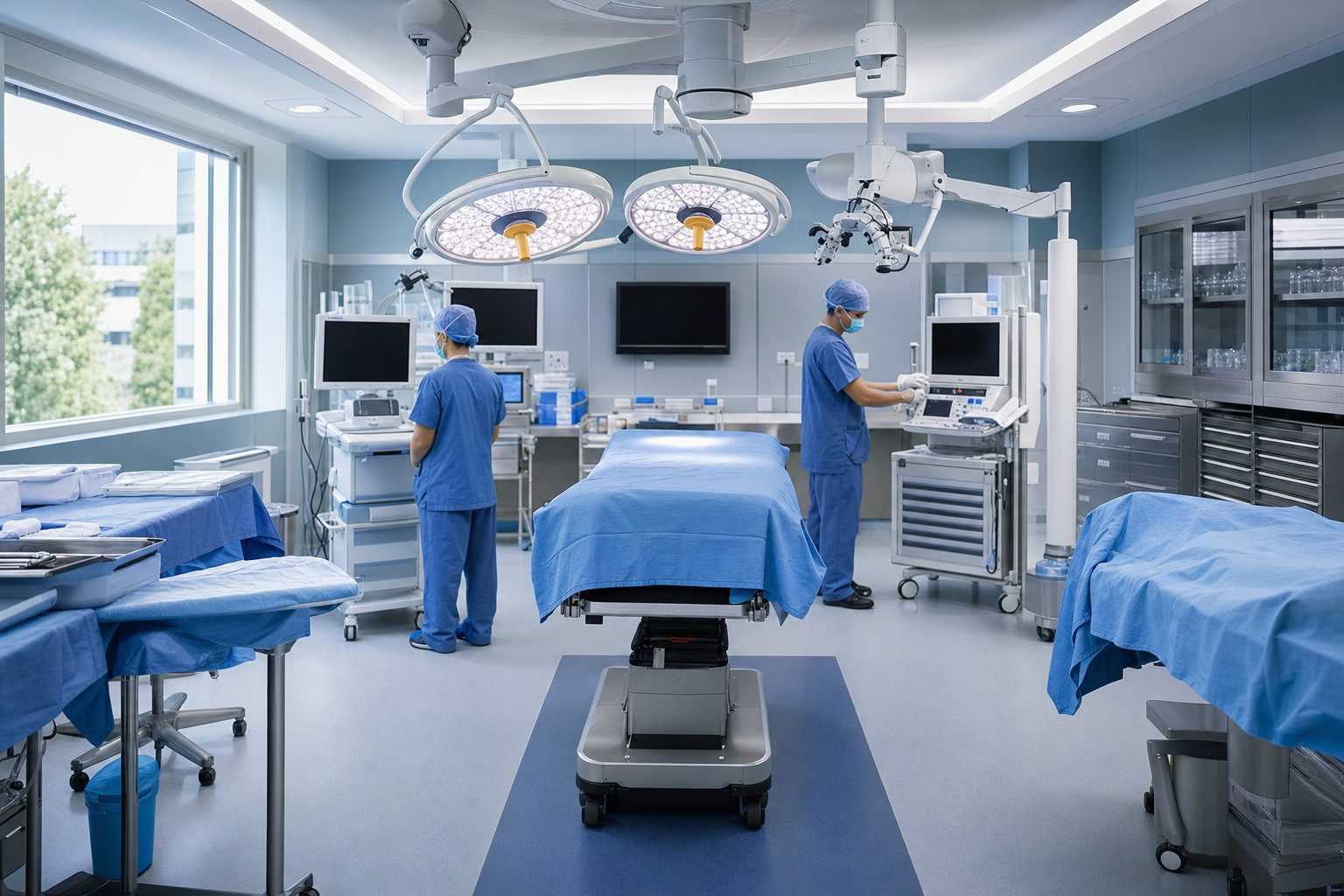
As of Tuesday, March 24, 2026, HH Mukunda Goswami was at Gold Coast University Hospital in Queensland, Australia. He was scheduled that day for a neurosurgical procedure to remove an accumulation of blood around the brain. His overall condition was reported as stable, and the case was not being classified as an emergency.
People often imagine that hospital cases fit into only two boxes: an immediate emergency or a routine elective operation. The real distinction is not so simple. A person can be stable enough for neurological examinations, imaging, anesthesia assessment, medication review, and operating-room coordination while still needing timely treatment. No formal triage label beyond planned and non-emergency has been made public, but the reported circumstances are compatible with that measured, time-sensitive pathway.
In general clinical usage, blood around the brain can describe an extra-axial collection: blood located around, rather than within, the brain tissue. Such a collection may press on or displace nearby structures, an effect clinicians call mass effect. Neurological examinations and brain imaging, commonly CT imaging, help the treating team judge its location, size, effect, and progression.
The word stable is encouraging, but it is a dated clinical snapshot, not a guarantee about what follows. Likewise, non-emergency describes the pace and circumstances of care; it does not make neurosurgery routine. The sound reading is cautious reassurance: the team reportedly had room for orderly preparation, while the condition still warranted an operation.
Keep confirmed facts separate from unanswered questions
When concern travels through temple networks, messaging groups, and social media, small changes in wording can create large distortions. Saying that an operation was scheduled is not the same as saying that it occurred. Saying that a patient was stable at the time of a notice is not the same as announcing a postoperative result.
The publicly confirmed facts are limited:
- HH Mukunda Goswami was reported to be at Gold Coast University Hospital in Queensland.
- A procedure to remove accumulated blood around the brain was scheduled for March 24, 2026.
- The situation was not being classified as an emergency.
- His overall condition was reported as stable at that time.
Important clinical details had not been disclosed:
- The cause and exact anatomical diagnosis of the blood collection.
- The symptoms or imaging findings that led to the decision to operate.
- The particular surgical technique selected.
- Relevant medications, other health conditions, or individualized risk factors.
- The operative findings, immediate postoperative condition, or longer recovery course.
Those gaps belong to the treating clinicians and authorized caretakers. They are not invitations for remote diagnosis. Age, other medical conditions, neurological status before surgery, imaging, and findings during the operation can all affect an individual’s course. General descriptions cannot produce a reliable personal prognosis.
If you forward the information, preserve its verbs and its date. Write that the operation was scheduled on March 24 and that he was reported stable at that time. Do not silently change scheduled to completed, stable to recovered, or planned to routine. Until authorized caretakers disclose a later result, the outcome remains unconfirmed within the information available here. A period without public detail is not evidence of either improvement or deterioration.
What the clinical pathway may involve, without guessing his case

Knowing the broad shape of neurosurgical care can make later terminology less frightening. It must not be mistaken for a prediction about HH Mukunda Goswami. Only his treating team can identify the diagnosis, choose the operation, and interpret the result.
Before the operation
Preparation commonly includes repeated neurological assessment and review of brain imaging. Clinicians may also evaluate blood pressure, oxygenation, ventilation needs, anesthesia risk, and medications that influence bleeding or clotting. If anticoagulation is relevant, its management has to be individualized rather than inferred from a general account.
This preparation explains why a planned pathway can be meaningful. It allows neurosurgery, anesthesia, nursing, imaging, and acute-care teams to coordinate around the same clinical picture. Gold Coast University Hospital is a tertiary center with neurosurgical, intensive-care, and acute-care capabilities, which provides the multidisciplinary setting such treatment may require.
During the operation
Common methods for evacuating an extra-axial blood collection include making one or more burr holes and placing a drain, or using a limited craniotomy when wider access and visualization are needed. A burr hole is a small opening made in the skull; a craniotomy temporarily opens a larger section. A drain may remain temporarily to support continued decompression.
These are general possibilities, not a disclosure of which method was selected. The technique depends on the character and location of the collection, the imaging, the need to control bleeding, and what the surgical team encounters. If authorized caretakers later name a drain, burr hole, or craniotomy, the term alone will not tell you whether the case went well or badly.
After the operation
Postoperative care commonly focuses on neurological observation and interval imaging to confirm decompression and identify any reaccumulation. Clinicians also watch for recognized complications such as infection, seizures, recurrence, or renewed bleeding. Monitoring for a complication does not mean that it has occurred; vigilance is part of normal risk management after brain surgery.
Mobilization and rehabilitation may begin early when the patient’s condition permits. The type and duration of support depend on function after surgery, not on a generic timetable. That is why predictions about walking, speaking, discharge, travel, or return to public service would be premature without individualized information.
A dharmic response joins prayer with restraint
HH Mukunda Goswami’s decades of service in ISKCON have touched communities through kirtan, teaching, communications, mentorship, and global outreach. Devotees will naturally remember personal encounters and teachings at a moment like this. Such remembrance can steady a community, provided affection does not become a license to speculate about private medical facts.
Dharmic traditions offer distinct ways of directing concern. Hindu devotees may undertake japa or kirtan. Buddhists may cultivate metta, or loving-kindness. Jains may practice maitri-bhavana, the contemplation of friendship toward living beings. Sikhs may offer Ardas with humility and courage. These practices should retain their own integrity rather than being collapsed into a single ritual. What they share here is compassionate attention to another person’s dignity and wellbeing.
Spiritual practice does not need to make a medical claim in order to matter. It can discipline fear, turn concern toward goodwill, and keep a scattered community from feeding panic. It complements expert care; it does not replace surgery, anesthesia, imaging, nursing, rehabilitation, or advice from the treating clinicians.
Ahimsa also applies to speech. An invented explanation for the bleeding, an unverified claim about the operation, or a premature declaration of recovery can burden caretakers and mislead thousands of well-wishers. Restraint is therefore a form of seva.
If you help administer a temple channel or devotional group, use a simple information discipline:
- Pin one dated statement containing only confirmed facts.
- Identify which authorized caretaker or official community channel can validate later information.
- Preserve clinical qualifiers such as scheduled, stable, and non-emergency.
- Correct false claims in the same channel where they appeared, rather than allowing a quiet edit to leave forwarded copies unchallenged.
- Do not seek private details from hospital staff or pressure caregivers for a timetable.
- Replace the pinned status only when authorized information becomes available, while keeping the date visible.
For an individual devotee, the same principle is smaller and simpler: pray in the discipline you actually practice, share less rather than more, and attach the date whenever you share it. Hope does not require certainty, and solidarity does not require access to private medical information.
Key takeaways
- HH Mukunda Goswami was scheduled for neurosurgery at Gold Coast University Hospital on March 24, 2026, to remove accumulated blood around the brain.
- His condition was reported as stable, and the case was not classified as an emergency. That is cautiously reassuring but does not make the operation minor or risk-free.
- Burr-hole drainage and limited craniotomy are general surgical possibilities; no particular technique was publicly confirmed for him.
- No operative outcome or recovery timetable is established by the information available here.
- Devotees can help through sincere spiritual practice, dated and accurate communication, respect for privacy, and freedom from medical speculation.
For now, keep every shared message anchored to March 24, preserve the difference between a scheduled procedure and a confirmed result, and wait for authorized caretakers to establish what came next. That is the most useful service you can offer alongside prayer.