
If you are deciding when to perform puja, begin a journey, arrange a family observance, or complete an important commitment on Friday, April 3, one detail comes first: Krishna Paksha Pratipada changes to Dwitiya at about 7:16 AM in most regions. That morning boundary divides the day into two distinct working periods.
There is no responsible universal clock time for every city, however. Use 7:16 AM as your initial reference, then confirm the local tithi boundary, sunrise, sunset, Nakshatra, Yoga, Karana, and Moon sign when the undertaking is important. The method below lets you turn those local details into a usable plan.
Key takeaways for April 3
- Friday, April 3, 2026 begins under Krishna Paksha Pratipada in places where sunrise occurs before the local tithi boundary. Dwitiya follows at about 7:16 AM under the general timing used here.
- The lunar month is Chaitra Krishna Paksha in the Amanta system and Vaishakha Krishna Paksha in the Purnimanta system. The names differ, but they refer to the same astronomical day.
- Use the early Pratipada period for quiet worship, planning, sacred-space organization, japa, and simple charity. After Dwitiya begins, the day is better suited to coordination, provisioning, and practical travel preparation.
- Do not copy fixed Rahu Kalam, Gulika Kalam, or Yamaganda times from another city. On Friday, calculate them by dividing your local sunrise-to-sunset interval into eight equal portions.
- Abhijit Muhurta lies around local solar noon, which may not be exactly 12:00 PM by the civil clock. Confirm that it does not conflict with an avoidance period or an unsuitable Panchang combination.
- For a samskara, time-specific vrata, public inauguration, or legally binding commitment, the weekday and tithi alone are not enough. Use the complete local Panchang and check Chandra-bala and Tara-bala where your tradition requires them.
Read the tithi and lunar month correctly
A tithi is not a civil date running from midnight to midnight. It is determined by the angular relationship between the Moon and the Sun. Each tithi occupies a 12-degree band of their separation, and the tithi changes when the Moon enters the next band. That is why the April 3 transition falls during the morning rather than at midnight.
The sunrise rule matters when you label the day. If your local sunrise is before the Pratipada-to-Dwitiya boundary, Pratipada prevails at sunrise and Dwitiya begins later. If local sunrise is after that boundary, the sunrise tithi is already Dwitiya. A printed time copied from another location cannot settle that question for you.
You may also encounter two different month names. Western and southern Indian traditions commonly following the Amanta calendar call this Chaitra Krishna Paksha. Much of northern India uses the Purnimanta reckoning and calls it Vaishakha Krishna Paksha. This is not a disagreement about the Moon. The systems place the month boundary differently.
When coordinating a vrata, temple visit, or family observance across regions, write the date as “April 3, 2026, Krishna Paksha Pratipada until the local morning boundary, then Dwitiya.” Add “Chaitra in Amanta; Vaishakha in Purnimanta” if relatives use different calendars. Naming the tithi as well as the month prevents an avoidable argument over two labels for the same lunar phase.
Krishna Paksha gives the day an inward-moving character. It is traditionally suited to simplification, reflection, scriptural study, seva, and the consolidation of commitments already made. That does not make every worldly action inauspicious. It means the waning fortnight supports restraint and completion more naturally than display or expansion.
This lunar cadence also sits within a wider Dharmic pattern. Buddhist communities observe Uposatha on significant lunar days, while Jain disciplines include pakshik observances. Sikh practice is organized predominantly through a solar calendar, yet many families remain aware of the lunar rhythms surrounding local gatherings and inherited custom. You do not need to erase these distinctions to recognize the shared habit of placing disciplined life within sacred time.
Use the morning tithi change to divide your day
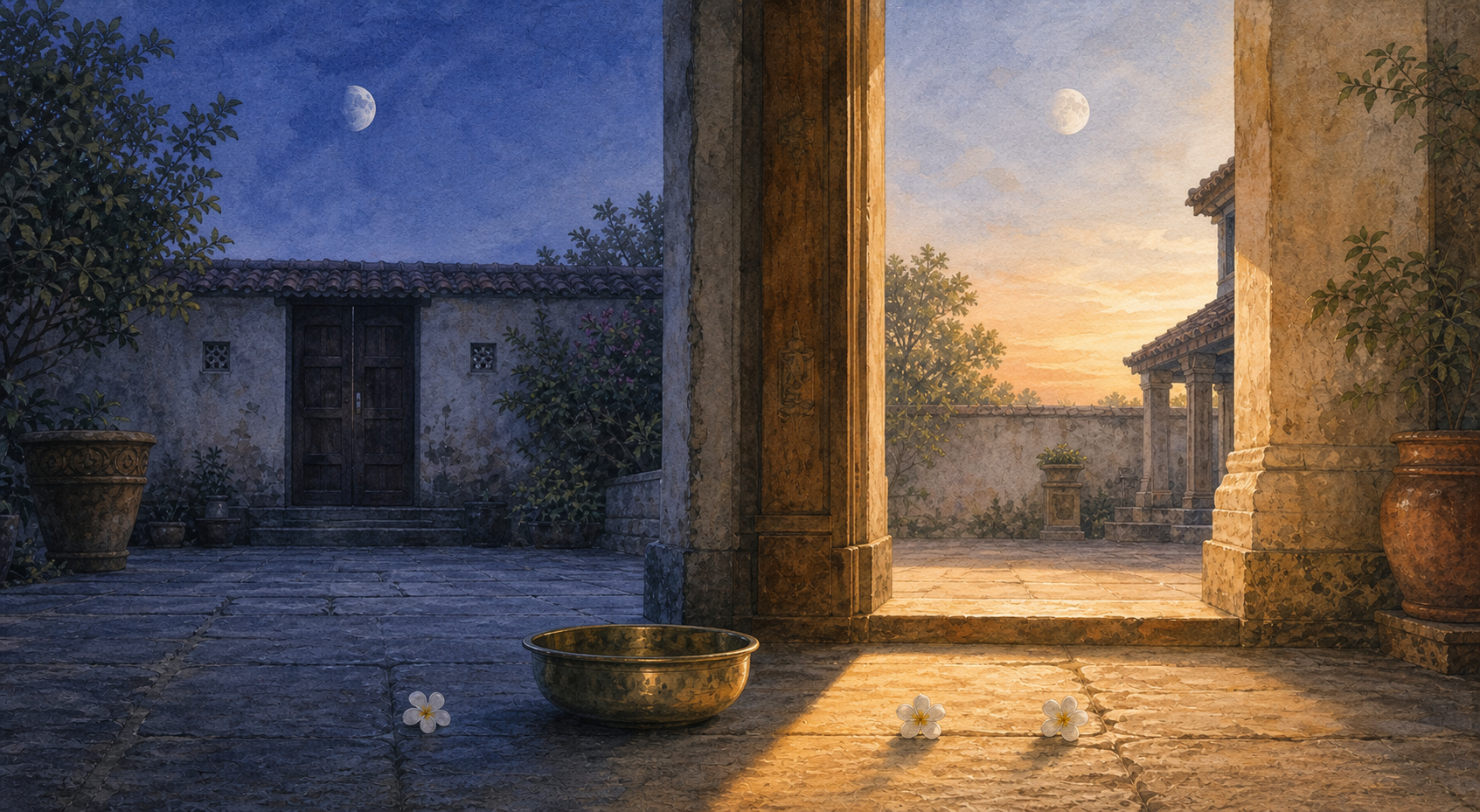
Before the local Pratipada-to-Dwitiya boundary
Use the remaining Pratipada period for a gentle beginning rather than a high-stakes launch. Suitable choices include japa, a brief home puja, cleaning or arranging the sacred space, preparing a study plan, setting out items needed later in the fortnight, and offering satvik charity.
If you must work during this period, favor preparation over proclamation. Draft the proposal, assemble the documents, reconcile the household schedule, or review what is incomplete. Do not treat “Pratipada” by itself as permission to inaugurate a business, sign a binding agreement, or conduct a samskara. A tithi can support an activity without making every minute auspicious.
After Dwitiya begins
Dwitiya has a practical, relational use on this date. It suits coordinated work, travel planning, provisioning, and tasks that require two people or two sides to come into alignment. This is a sensible period for confirming an itinerary, dividing responsibilities, purchasing routine supplies, or settling how an existing plan will be carried out.
April 3 is also Shukravar. Classical jyotisha associates Friday with Shukra, or Venus, giving additional support to harmony, hospitality, reconciliation, aesthetics, and considered self-care. You can use that character constructively: repair a strained but workable relationship, improve a shared space, host a simple meal, or resolve a practical household disagreement.
Friday’s character is a secondary filter, not a guarantee. A Venusian theme cannot cancel Rahu Kalam, an unsuitable Karana, an unfavorable Nakshatra for the proposed activity, or a lack of Chandra-bala. Match the activity to the day only after removing the periods your tradition avoids.
Calculate Friday’s avoidance periods from local daylight
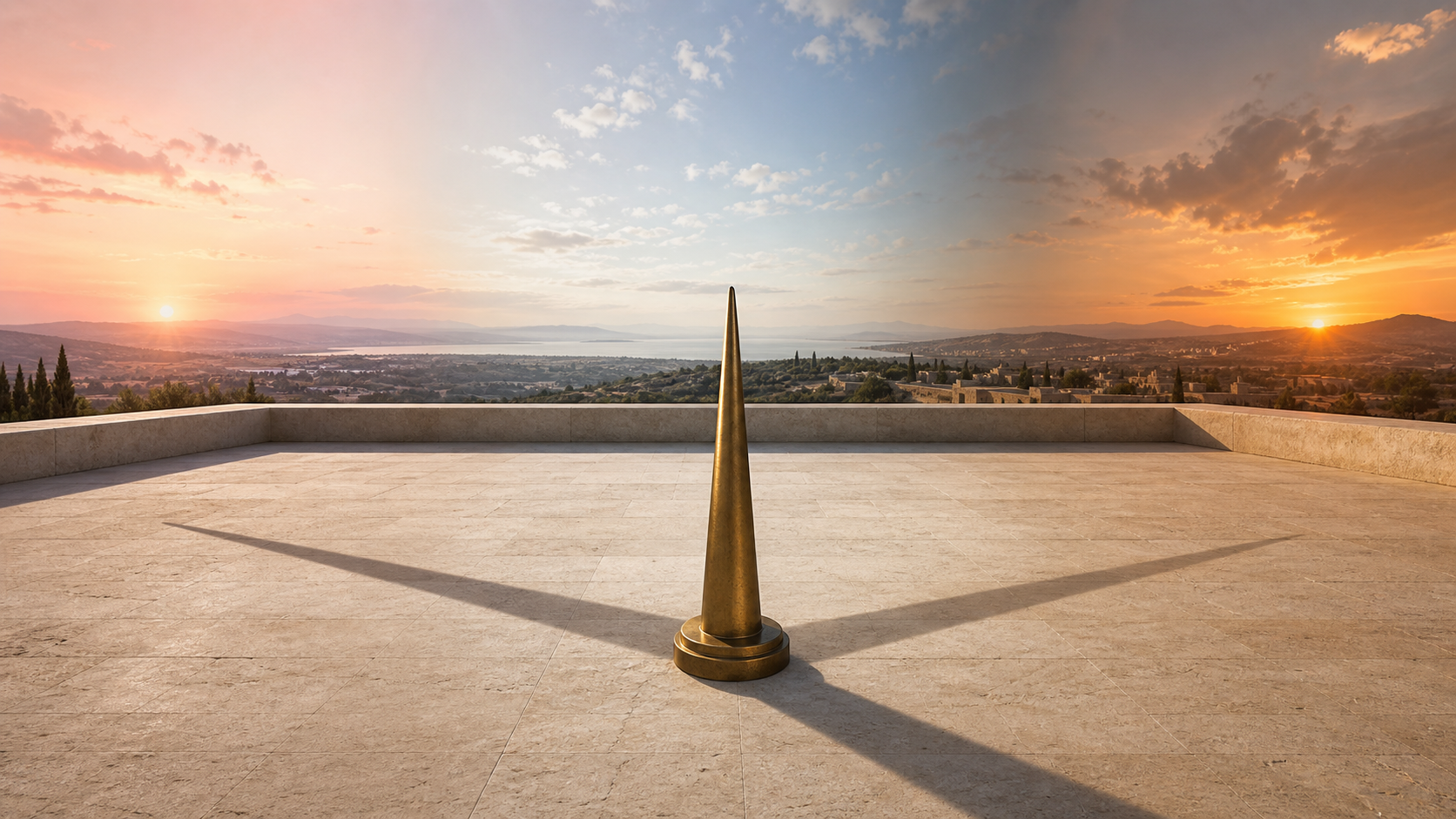
Rahu Kalam, Gulika Kalam, and Yamaganda are daylight divisions, so their civil-clock times move with local sunrise and sunset. The Friday calculation assigns Gulika to the second daylight portion, Rahu Kalam to the fourth, and Yamaganda to the seventh.
Start with the sunrise and sunset published for your city on April 3. Subtract sunrise from sunset to find the total daylight duration, then divide that duration by eight. If the result is S, the Friday intervals are:
- Gulika Kalam: sunrise plus 1S through sunrise plus 2S.
- Rahu Kalam: sunrise plus 3S through sunrise plus 4S.
- Yamaganda: sunrise plus 6S through sunrise plus 7S.
For illustration only, suppose sunrise is 6:00 AM and sunset is 6:00 PM. Daylight lasts 12 hours, or 720 minutes. Dividing by eight gives 90 minutes per portion.
| Friday period | Daylight portion | Time in the 6:00 AM-6:00 PM example |
|---|---|---|
| Gulika Kalam | Second | 7:30 AM-9:00 AM |
| Rahu Kalam | Fourth | 10:30 AM-12:00 PM |
| Yamaganda | Seventh | 3:00 PM-4:30 PM |
Those three clock ranges are not ready-made timings for April 3 in every place. They are valid only for the example’s exact 6:00 AM sunrise and 6:00 PM sunset. Even a modest seasonal or geographic difference changes every boundary. Outside India, the civil clock may also reflect daylight saving time, so enter the local published times rather than converting an Indian schedule by guesswork.
Abhijit Muhurta is centered around local solar noon and can serve as a generally supportive window when a fully selected muhurta is unavailable. Local solar noon is the midpoint of the Sun’s daily passage, not automatically 12:00 PM on the wall clock. Check its actual local timing and compare it with Rahu Kalam, Yamaganda, Gulika, and the active Panchang limbs. Do not assume the word “Abhijit” overrides a conflicting interval.
Match the depth of your check to the importance of the act
A daily tithi reading is enough for choosing the general tone of routine worship or household work. It is not enough for every decision. The more public, binding, expensive, or ritually significant the undertaking, the more precisely you should check the five limbs of the Panchang.
Vara, Tithi, Nakshatra, Yoga, and Karana work together. Vara supplies the weekday’s planetary character. Tithi describes the lunar relationship and ritual tone. Nakshatra refines the suitability of particular activities. Yoga, calculated from the combined longitudes of the Sun and Moon, adds another measure of auspiciousness. Karana, which is half a tithi, gives a finer time filter.
Bava, Balava, Kaulava, and Taitila Karanas are generally usable for beginnings. Vishti, also called Bhadra, is commonly avoided for public-facing starts. The operative word is “generally”: the proposed activity and the other four limbs still matter.
Nakshatra and Chandra Rashi must be checked for the relevant city and hour, especially if the activity occurs well after sunrise or near a Nakshatra transition. A sunrise listing can describe the beginning of the day while failing to describe the sky at the time of an afternoon ceremony. Chandra-bala and Tara-bala add personal suitability, so two people may not receive identical guidance from the same general daily Panchang.
Use a simple threshold. For japa, study, seva, routine shopping, or household organization, confirm the local tithi and avoid the standard Friday periods. For important travel or the start of a substantial but reversible project, also check Nakshatra, Yoga, and Karana. For a samskara, solemn vow, public inauguration, or binding agreement, obtain a city- and time-specific muhurta that includes Chandra-bala and Tara-bala where applicable.
Before April 3, turn the Panchang into a written plan:
- Record the city, time zone, and whether daylight saving time applies.
- Record local sunrise and sunset for April 3.
- Confirm the local Pratipada-to-Dwitiya boundary instead of assuming that 7:16 AM transfers unchanged.
- Divide daylight into eight portions and mark Friday’s Gulika, Rahu Kalam, and Yamaganda.
- Locate Abhijit around local solar noon, then check it against the avoidance periods.
- For an important act, record the active Nakshatra, Yoga, Karana, Chandra Rashi, and any required personal bala.
- Write the chosen clock window beside one named purpose, such as “family puja,” “depart for journey,” or “sign agreement.” Do not reuse it automatically for a different kind of undertaking.
If you want one dependable rule for the day, use the tithi change to organize your intentions, but use the complete local Panchang to choose the clock. Prepare quietly during Pratipada, move into coordination after Dwitiya begins, and reserve consequential actions for a window verified for your city and purpose.