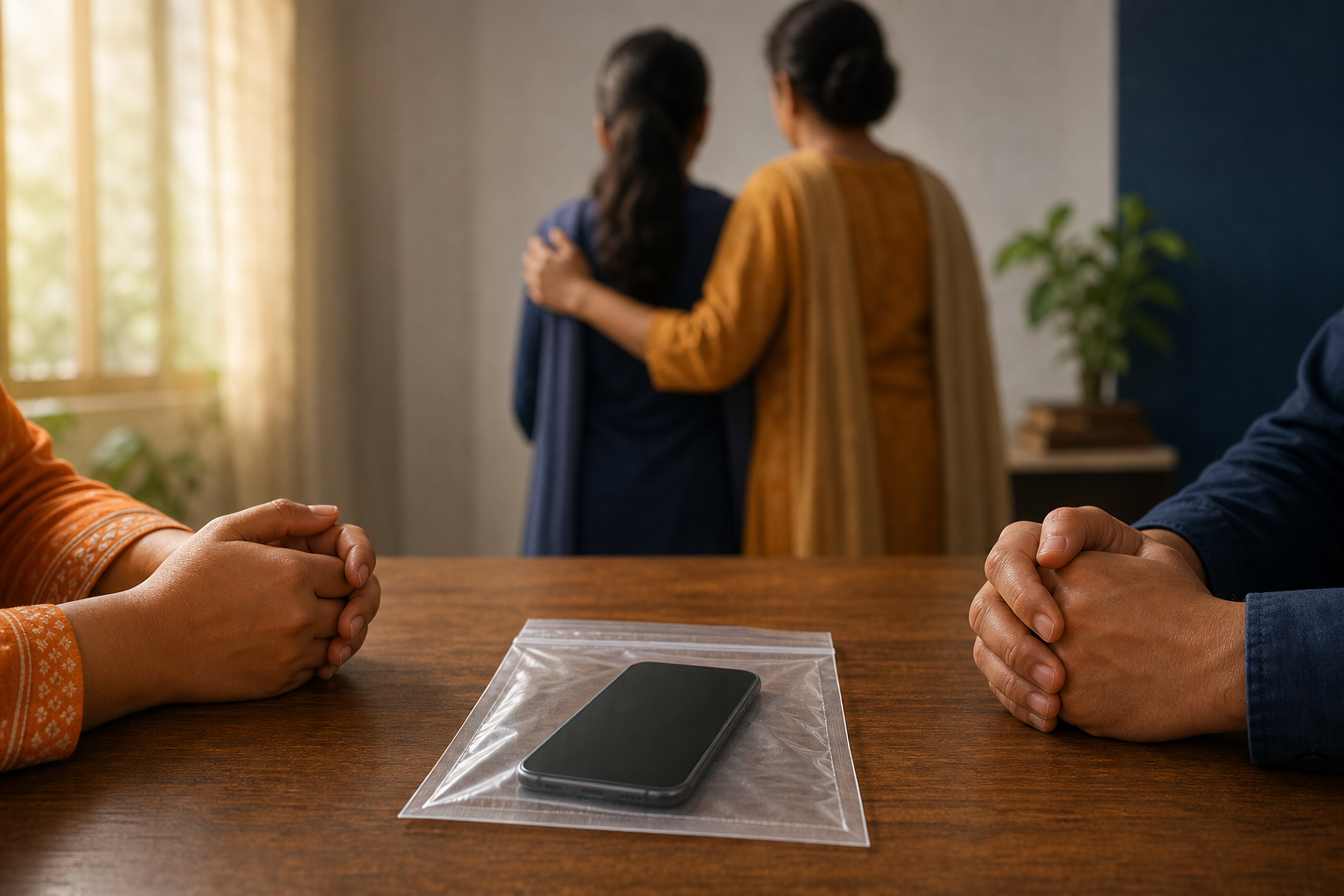
You may have opened this because a claim about the Amravati investigation reached your family, school, temple group, or phone. Your first decision is not which viral number to believe. It is how to protect children without spreading unlawful material, exposing a survivor, or damaging evidence.
Start with a disciplined response: separate confirmed facts from allegations, know what to do if a child speaks to you, and turn public concern into safeguards that teenagers can actually use.
Key takeaways
- In mid-April 2026, two teenagers were reported arrested in an alleged sexual-exploitation case involving minor girls. Claims about a much larger number of victims or recordings had not been confirmed in official police statements at the time and must remain provisional.
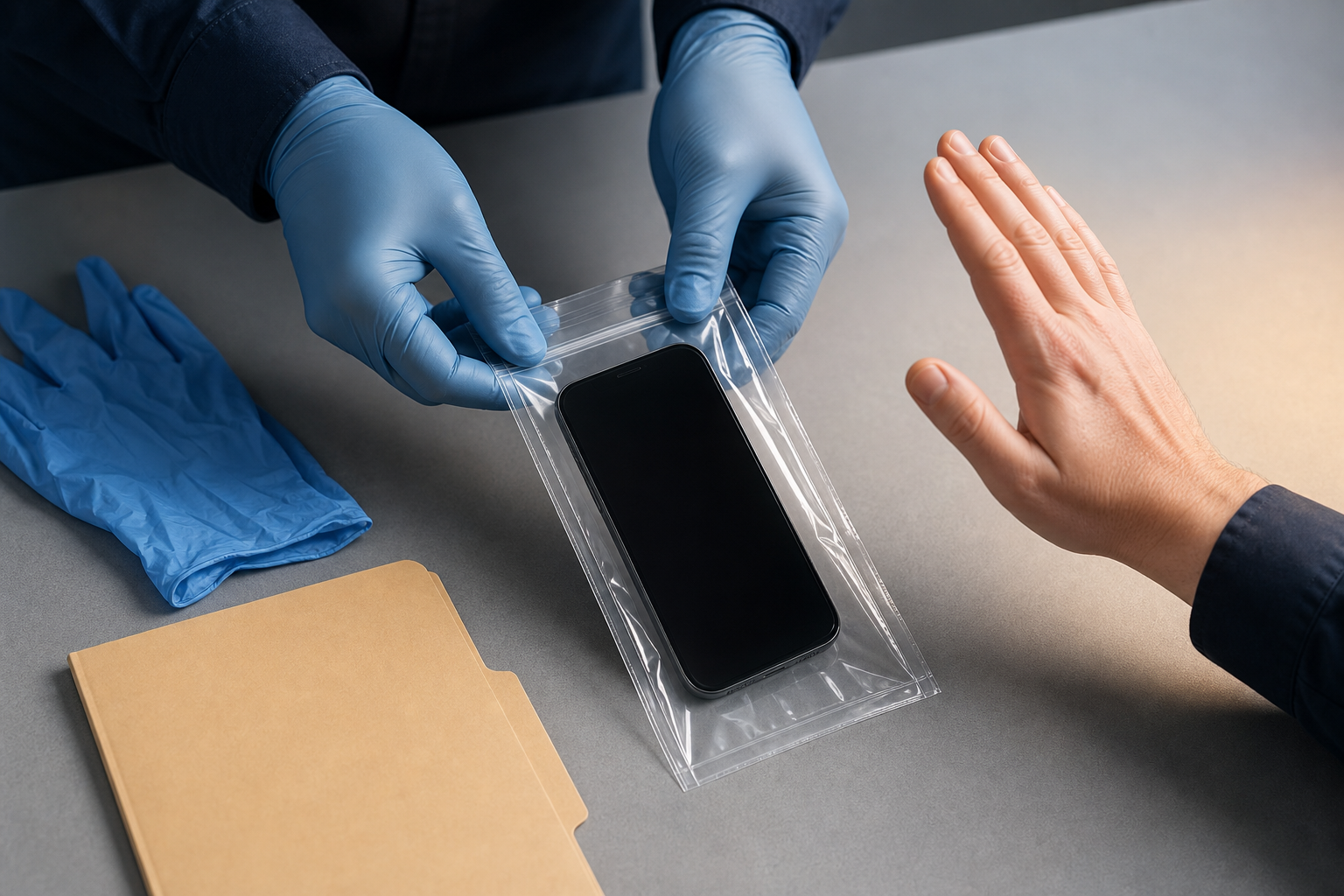
- Do not intentionally view, download, forward, display, or repost suspected child sexual abuse material. Preserve the relevant device without altering it and report the matter to trained authorities.
- If a child discloses exploitation, make immediate safety the priority. Listen calmly, avoid leading questions, do not blame the child, and do not confront the suspected offender yourself.
- POCSO, Section 67B of the Information Technology Act, and the newer criminal procedure and evidence laws may all be relevant. The exact offences and procedures depend on the evidence.
- A responsible Dharmic response protects the dignity of every child, insists on verified facts, and refuses to turn a survivor’s suffering into social-media or communal currency.
Read the Amravati claims without harming the girls
High-emotion cases produce two dangers at once. The alleged conduct may be grave, while the public story may grow faster than the evidence. Treating every forwarded claim as proven does not strengthen accountability. It can expose children, prejudice proceedings, spread unrelated material, and give genuine offenders room to attack the credibility of the case.
Sort what you encounter into three distinct buckets:
- Reported fact: two teenagers were reported arrested in connection with allegations involving minor girls.
- Provisional claim: large tallies of alleged victims, recordings, or participants were circulating, but had not been officially verified at the time covered here.
- Open investigative question: who created any recordings, whether consent was absent or obtained through pressure, where files were stored, who received them, whether threats were used, and how widely any material travelled.
Do not collapse those buckets. A number repeated by many accounts is still not an official finding. A screenshot is not self-authenticating. A clip may be old, altered, miscaptioned, or taken from an unrelated incident. Reliable updates should come from identifiable police bulletins or court filings, with the legal confidentiality of minor victims respected.
Religious identity requires the same discipline. If evidence establishes deliberate selection, coordinated targeting, coercion, or a wider network, investigators should follow that evidence without fear or favour. Until then, the faith of an accused or complainant cannot substitute for proof of motive or conspiracy. Demanding proof is not indifference to possible anti-Hindu harm. It is how a serious allegation survives legal scrutiny and leads to durable accountability.
You should also think beyond a child’s name. A school, neighbourhood, family relationship, photograph, username, uniform, or recognisable screenshot may identify a minor even when the name is omitted. POCSO confidentiality is meant to prevent exactly this kind of indirect exposure. Do not turn identifying clues into a guessing game in community groups.
If suspected child sexual abuse material arrives on your phone, do not forward it to a relative, activist, journalist, lawyer, school group, or community leader as proof. Forwarding creates another distribution event and another injury to the child. It may also expose the sender to criminal liability. Do not make a montage, blur the face and repost it, or display it at a meeting. Report the material through the National Cyber Crime Reporting Portal under the women/children channel or approach the local police cyber cell.
If a child discloses exploitation, protect first and investigate later
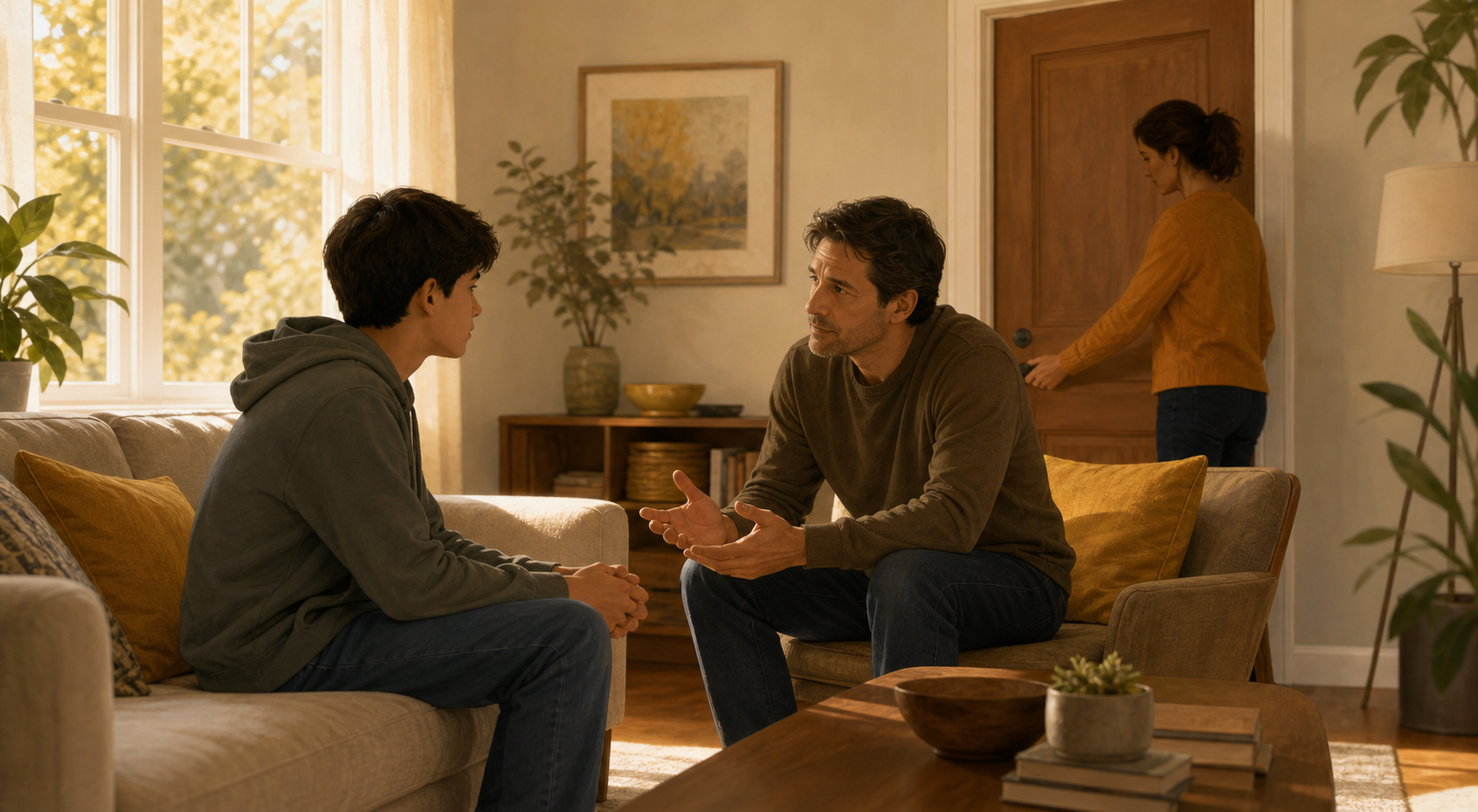
A child may disclose directly, hint that someone has a private image, ask how to delete an account, or become frightened after receiving a threat. Your first reaction matters. Anger, interrogation, or panic can make the child withdraw and can complicate the formal statement that trained professionals will later need.
- Remove the immediate danger. Keep the child away from the suspected person and from any meeting arranged under pressure. If there is an immediate physical threat, contact local law enforcement promptly. Do not organise a private confrontation.
- Respond without blame. Say plainly that the child did the right thing by speaking and that the exploitation is not the child’s fault. Do not begin with questions about why the child trusted someone, met someone, or shared something.
- Ask only what safety requires. Find out whether the suspected person knows the child’s location, whether a meeting is imminent, whether threats are continuing, and which device or account is involved. Avoid repeated, leading, or graphic questioning. Child-welfare and investigative professionals should handle the detailed account.
- Preserve the device. Place the relevant phone or tablet in airplane mode if it can be done without opening suspected files. Do not delete messages, reset the device, log out, edit images, install a recovery tool, or attempt your own forensic extraction. Use another device for urgent calls and reporting.
- Write down non-content details. Note the date and approximate time of the disclosure, the platform involved, visible account handles, and the child’s own spontaneous words. Do not circulate these notes or turn them into a family interrogation script.
- Report promptly. Contact the local police or cyber cell and request that the allegations be examined under the applicable POCSO and Information Technology Act provisions. Online reporting is available at cybercrime.gov.in.
- Ask for child-centred support. Request involvement of trained child-welfare personnel and a support person where available. The District Legal Services Authority can help families understand legal aid and possible compensation. A counselor experienced in child trauma can support recovery without replacing the formal legal process.
Do not negotiate a private settlement with the suspected offender or the offender’s family. Do not threaten public exposure in exchange for deletion. Such contact may increase pressure on the child, prompt destruction of evidence, or produce retaliation. It can also place an already frightened teenager at the centre of an adult conflict.
A disclosure should not be retold to every relative. Decide who genuinely needs to know for safety, reporting, care, or legal representation. Repetition can force a child to relive the event and can introduce inconsistencies that arise from stress rather than dishonesty.
Continuity matters after the initial report. Ask the school to prevent contact and gossip without revealing unnecessary details. Arrange counseling where needed. Preserve education routines when they remain safe. If continued residence or attendance creates a credible threat, seek professional advice about protective arrangements rather than improvising a move under social pressure.
What a credible investigation and child-centred justice process require
The word scandal can obscure the legal structure. Investigators are not merely deciding whether teenagers behaved badly. They may need to establish sexual offences against children, production or possession of abusive material, online transmission, threats, attribution of particular devices, and the role of each person in a distribution chain.
The following map is a guide to the relevant frameworks, not a prediction of charges in Amravati:
| Issue under investigation | Potentially relevant framework | Why it matters |
|---|---|---|
| Sexual harassment or other sexual conduct involving a minor | Protection of Children from Sexual Offences Act, 2012, as amended | POCSO is the primary child-specific criminal law and establishes child-friendly safeguards. |
| Use of a child for pornographic purposes, or storage and circulation of abusive material | POCSO | The harm can continue each time material is retained, shown, or distributed. |
| Online publication, transmission, or browsing of child sexual abuse material | Section 67B of the Information Technology Act, 2000 | Digital conduct can create liability separate from the underlying physical encounter. |
| Substantive offences, investigation, procedure, and admissibility of evidence | Bharatiya Nyaya Sanhita, Bharatiya Nagarik Suraksha Sanhita, and Bharatiya Sakshya Adhiniyam | These newer criminal-law frameworks have governed their respective areas since July 2024. |
| An accused person between 16 and 18 years old | Juvenile Justice (Care and Protection of Children) Act, 2015 | For certain heinous offences, a Juvenile Justice Board may conduct a preliminary assessment before deciding the legally appropriate path. Transfer to an adult trial is not automatic. |
Digital evidence may determine whether an allegation can be proved. A properly secured device is forensically acquired, and the acquired data is assigned a cryptographic hash: a mathematical fingerprint used to show whether the evidence changed. The chain of custody records who handled the device, when it moved, and what was done with it.
Specialists may recover deleted files, examine application databases and cloud backups, read timestamps and device identifiers, and correlate handset records with platform and network data. Investigators may also ask platforms to preserve account information, identify distribution routes, and compare media fingerprints with databases of known child sexual abuse material. Each step must be documented so that the evidence can withstand scrutiny under the BNSS and BSA.
This is why well-intentioned amateur investigation is dangerous. Opening files, moving them between devices, editing screenshots, messaging suspects, or running recovery software can change the evidence environment. It also multiplies the child’s exposure. Your useful contribution is to preserve the original device, record basic context, and hand the matter to trained authorities.
The child-protection side is equally important. A minor should not have to repeat a graphic account to multiple adults. Early involvement of child-welfare professionals can reduce secondary trauma and improve the quality of the formal statement. Applicable BNSS procedures allow statements to be recorded before a magistrate, while POCSO provides confidentiality, in-camera proceedings, support arrangements, and a child-friendly court process.
Families can ask concrete questions: Has a support person been appointed or offered? Who is the single point of contact for case updates? How will the child’s school attendance and privacy be protected? Is legal aid available through the District Legal Services Authority? Does the child need counseling, compensation assistance, or protection from intimidation? The precise answer will depend on the case, and family-specific legal decisions should be made with qualified counsel.
Build protection before grooming becomes a criminal case
Grooming rarely begins with an obvious threat. It may begin with attention, flattering messages, secrecy, peer approval, or the promise of a relationship. Pressure can then shift toward a private meeting, an intimate image, or permission to use a camera. Once material exists, the threat of exposure can become a means of control.
No single behaviour proves exploitation. Look for combinations and changes: sudden secrecy linked to a new contact, an older person exerting unusual influence, persistent pressure to share images, anxiety when notifications appear, unexplained fear about school or social groups, threats involving exposure, or peers treating private recordings as trophies and status symbols.
A family conversation should not sound like a police warning. Make the response route clear before it is needed. Tell your teenager that no one is entitled to an intimate image, that consent to a relationship is not consent to recording, and that consent to one act is not permission to distribute it. Explain that a threat to expose an image is a reason to seek help, not a reason to keep obeying the person making the threat.
Set concrete household rules around cameras and private spaces. Review privacy and discoverability settings with the teenager rather than secretly taking over every account. Discuss why minors’ accounts should generally default to private, why unsolicited direct messages deserve caution, and why private material must never become entertainment in a peer group. Make sure the child can name a trusted adult to approach if speaking to a parent initially feels impossible.
Schools need an operational plan, not an annual slogan. A useful plan includes a confidential reporting channel, age-appropriate POCSO and consent education, a named safeguarding contact, and an up-to-date referral list for counselors, the Child Welfare Committee, local police or cybercrime personnel, and legal-aid services. Staff should know who receives a disclosure and how to prevent the child from being questioned repeatedly.
Community and faith organisations can fill the gap between home and school. Parent circles can practise responding to disclosures without blame. Youth sessions can cover pressure, consent, image-based abuse, safe bystander action, and confidential reporting. Mentors should know the referral route before a teenager comes to them. Mixed-community cooperation on child safety does not erase legitimate concerns about targeted wrongdoing; it denies offenders the isolation and silence on which grooming depends.
Dharmic ethics give this work a demanding practical vocabulary. Karuna means centring the frightened child rather than public appetite. Ahimsa means refusing to inflict another injury by circulating abusive material. Samyama means restraining anger, gossip, and voyeurism. Commitment to truth means distinguishing what is proved from what is merely repeated.
For a pro-Hindu public, the test is straightforward: does our response make Hindu girls and all children safer, or does it convert their pain into content? Protection requires demanding a complete investigation, preserving lawful evidence, supporting survivors without stigma, and holding every proven offender accountable. It also requires refusing claims that cannot yet be substantiated.
Before another alarming message arrives, save the cybercrime reporting address, identify your school’s safeguarding contact, and tell your teenager exactly which adult will listen without blame. Justice in Amravati will depend on verified evidence. The protection you build around a child can begin now.