
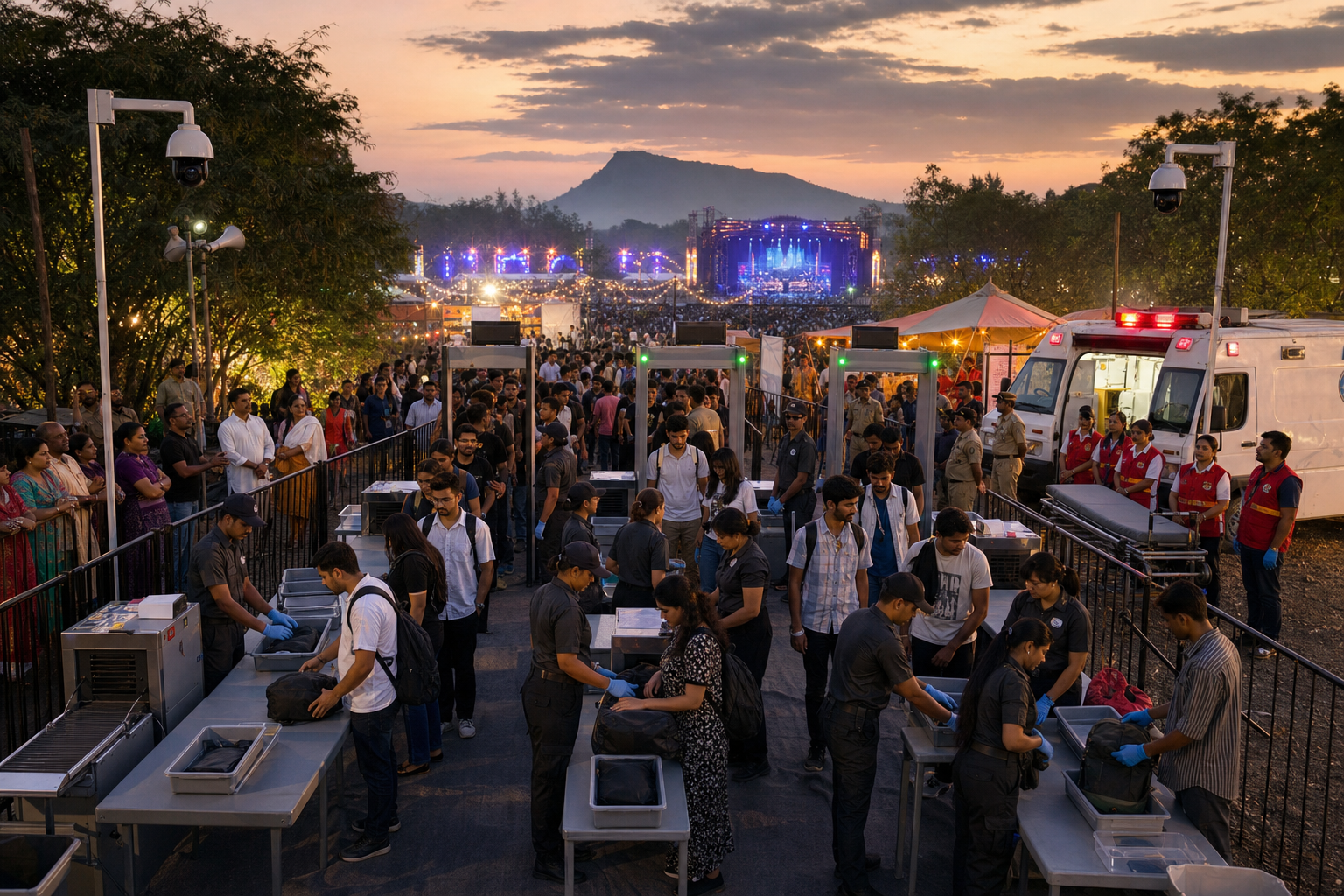
If you are a parent hearing that a large music festival is coming to your city, the useful question is not whether festival culture is wholly good or wholly bad. Ask whether this particular event can keep contraband out, recognise a person in distress, summon qualified medical help quickly and show afterwards that its safeguards actually worked.
A serious drug-free Maharashtra mission should give you concrete answers to those questions. It should be firm with traffickers, careful with evidence and compassionate toward a young person who needs help. That is stricter than a slogan, and far more protective.
Strict oversight must address three different failures
Drug prevention fails when three separate jobs are collapsed into one police operation. Supply reduction targets trafficking and sales. Health protection keeps an emergency from becoming a fatality. Demand reduction helps young people resist initiation and seek help early. Each job requires different people, evidence and measures.
- Supply reduction: Police and specialist agencies investigate sellers, organised networks, financial flows and digital distribution. Entry controls and event intelligence can support that work, but suspicion must still be tested lawfully.
- Health protection: Organisers provide visible medical points, qualified clinicians, trained staff, hydration facilities, stretcher-equipped ambulances and a clear escalation route. Medical readiness is necessary even when no drug offence is established.
- Demand reduction: Families, schools, colleges, workplaces and community institutions provide credible education, counselling, mentoring and confidential routes into treatment.
A raid-only model arrives late: it acts after drugs have entered a network and may leave frightened attendees reluctant to seek medical help. A counselling-only model leaves suppliers untouched. A moral lecture without either enforcement or support gives a young person very little protection when pressure, curiosity or distress becomes immediate.
Key takeaways
- Judge an event by its written safeguards and compliance history, not by its musical genre or promotional image.
- Ask who is responsible for medical response, security escalation and liaison with public authorities. A plan without named responsibility is not yet an operational plan.
- Direct the strongest investigative effort toward traffickers, repeat suppliers and organised distribution rather than treating every young attendee as a criminal suspect.
- Make it safe to request urgent medical care. Staff should escalate obvious distress before debating its cause.
- Pair prevention messages with counselling, rehabilitation, family support and attractive substance-free places where young people can belong.
- Require an after-event audit. Permissions, cameras and ambulances matter only if authorities verify that they were present, usable and properly deployed.
The legal tools also perform different functions. The Narcotic Drugs and Psychotropic Substances Act, 1985 provides the central drug-control framework. The Maharashtra Control of Organised Crime Act, 1999 may be relevant to organised trafficking only when its statutory conditions are met. The Noise Pollution (Regulation and Control) Rules, 2000 govern noise rather than proving drug activity. Officials and organisers should obtain situation-specific legal advice instead of treating one violation, allegation or cultural objection as proof of another.
Turn the festival permission into a verifiable safety plan
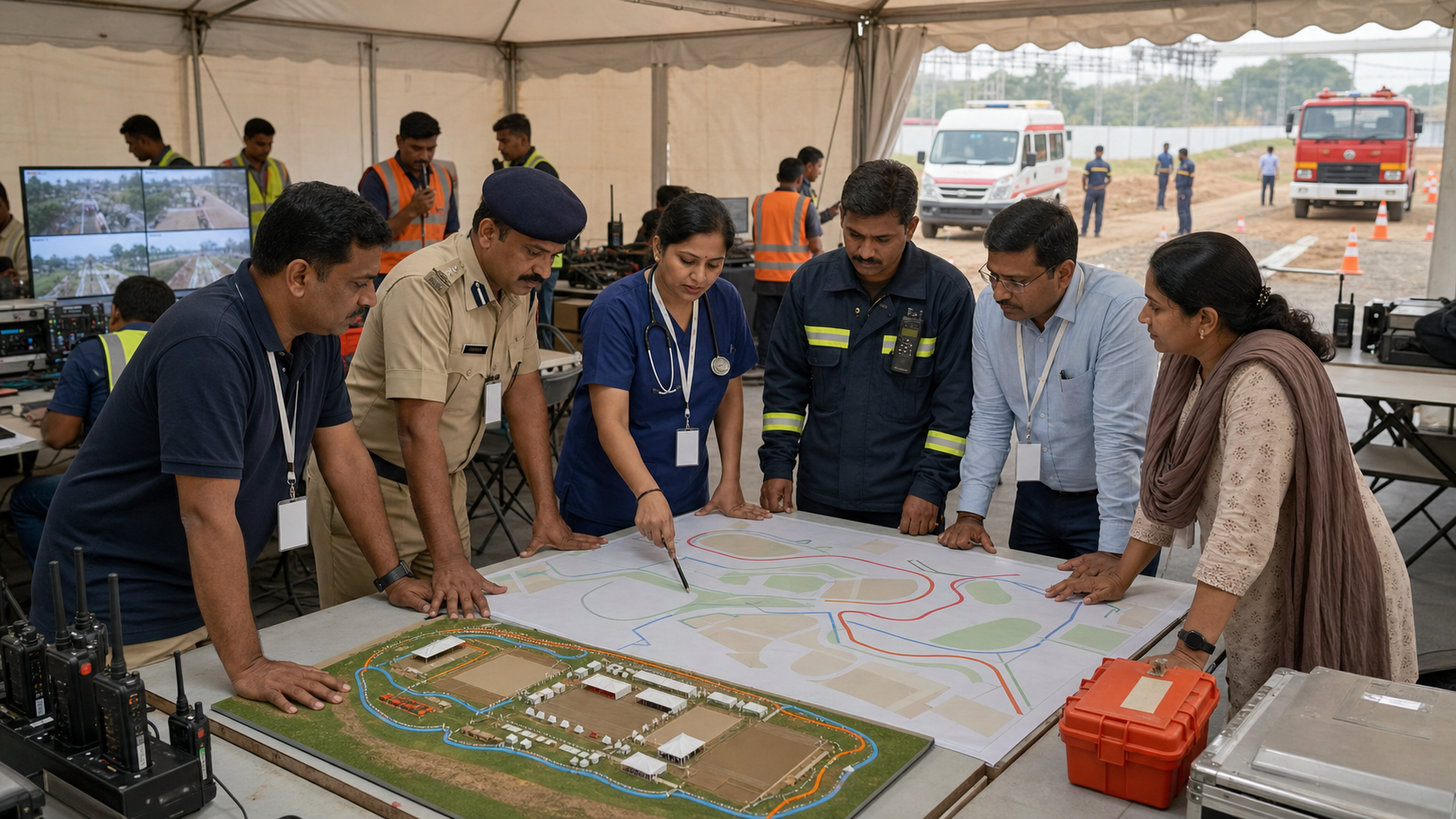
Permission should operate as a safety contract, not as a stack of papers completed before the gates open. You should be able to trace each important risk to a control, a responsible person and a record that can be checked later.
- Build an event-specific risk profile. Consider the scale of the gathering, venue layout, crowd density, access points, operating hours, previous compliance, transport conditions and the time required to transfer a patient to further care. The profile should determine the intensity of oversight; the event’s fame should not.
- Name the decision-makers. The plan should identify the organiser’s safety lead, medical lead, security lead and liaison with police or other public authorities. It should say who can stop admissions, call for additional help, pause an activity or activate an emergency procedure.
- Control entry lawfully. Age gating, defined access points, trained screening personnel, prohibited-item rules and cooperation with law enforcement should be written into the plan. Screening must be proportionate, consistently applied and respectful of privacy and due process. An attendee’s appearance, clothing or taste in music is not evidence of possession.
- Make the interior observable and navigable. Staff need working communications, clearly marked medical locations, usable routes for stretchers and ambulances, hydration points and a method for reporting emerging problems. CCTV can support oversight, but cameras do not replace trained people or rapid decisions.
- Audit what happened. Record safety incidents, medical escalations, suspected contraband discoveries, referrals and operational failures. After the event, authorities and organisers should examine those records, protect personal information and assign corrective actions before another permission is granted.
When an organiser says that security will handle everything, ask for the next layer of detail. Who leads security? How do stewards contact the medical team? Where can a parent or attendee find the emergency point? What happens if one access route becomes blocked? Which authority receives a serious incident report? What will be reviewed after the crowd leaves?
You do not need confidential police intelligence to assess basic preparedness. A venue map, a public safety policy, the location of medical and hydration points, an emergency contact method and a description of attendee protections can be communicated without compromising enforcement. If those basics cannot be explained before an event, that is a legitimate reason to press the organiser and licensing authority for answers.
Medical readiness must work before anyone knows the cause
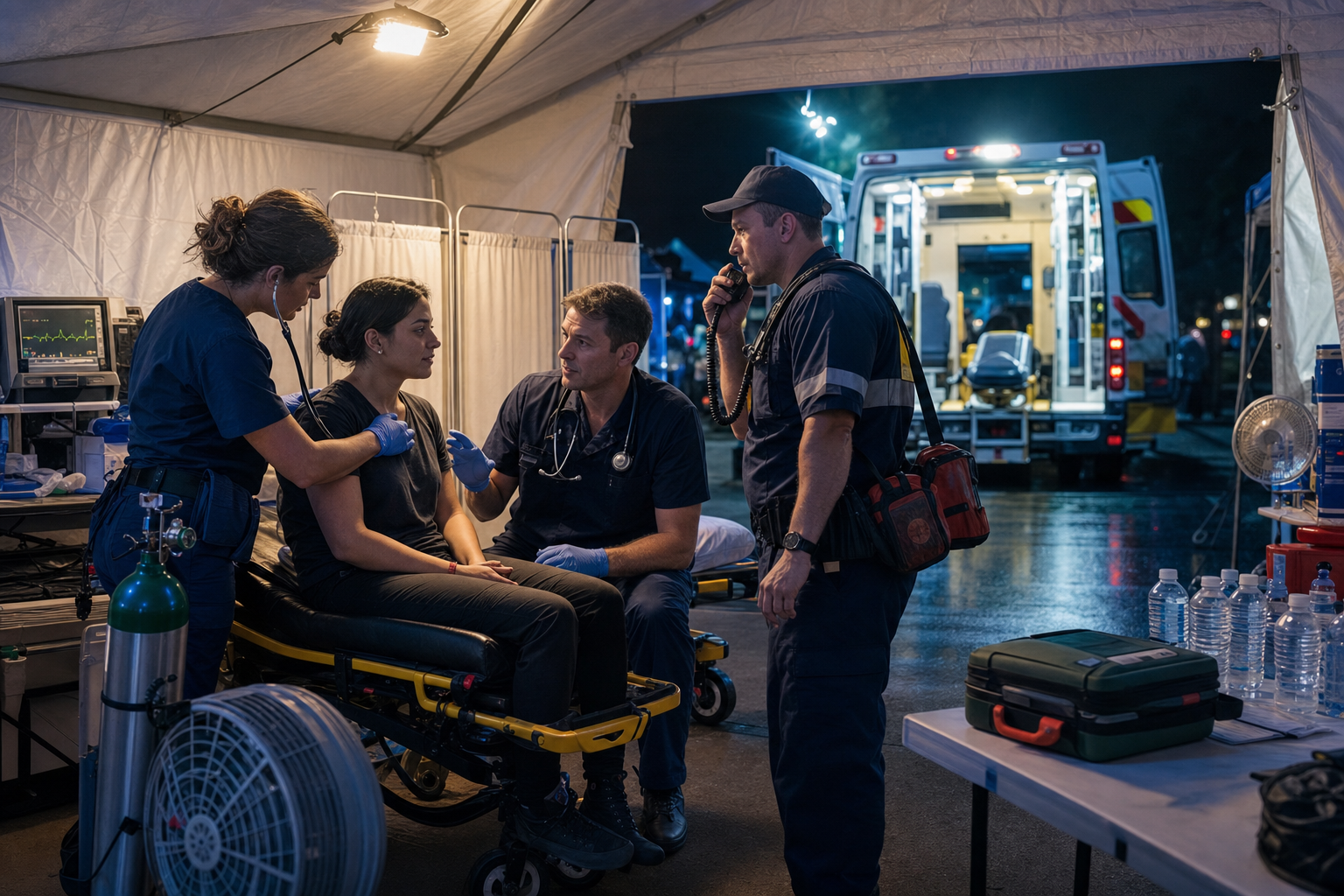
A person may collapse or become unresponsive for many reasons. Front-line staff should not wait to establish whether an illegal substance, a medical condition, heat, dehydration or another cause is responsible. Obvious severe distress, loss of responsiveness or difficulty breathing requires immediate escalation to qualified medical personnel and emergency services.
The practical test is the handoff. A steward notices a problem, contacts the medical team through a known channel, keeps the route clear and guides clinicians to the person. The clinician assesses and stabilises the patient. An equipped ambulance can then transfer the patient when necessary. A medical tent that cannot be found, a vehicle blocked by crowd infrastructure or a staff member without a working communication route can break that chain.
Parents can ask six direct questions before a young person attends:
- Where are the medical and hydration points shown on the venue map?
- Will qualified clinicians and stretcher-equipped ambulances be on site?
- Are stewards trained to recognise distress and escalate it without delay?
- Can an attendee request medical help without first proving what caused the problem?
- What is the meeting point if friends become separated?
- How will the group travel home, and who should be contacted if plans change?
Have the family conversation before the event, when nobody is frightened or defensive. A useful sentence is simple: if you or a friend is in serious distress, get medical help first and call home; the safety discussion comes before the argument. This does not excuse illegal drug use. It removes a dangerous hesitation at the moment when minutes can matter.
Hydration, friends and check-ins are sensible event precautions, but none of them makes an illegal substance safe. Do not turn a logistical safety plan into an implied formula for managing drug use. If substance misuse is suspected or recurring, the appropriate next step is assessment by qualified medical, mental-health or addiction professionals, followed where needed by treatment, rehabilitation and family counselling.
Prevention starts well before the festival gate
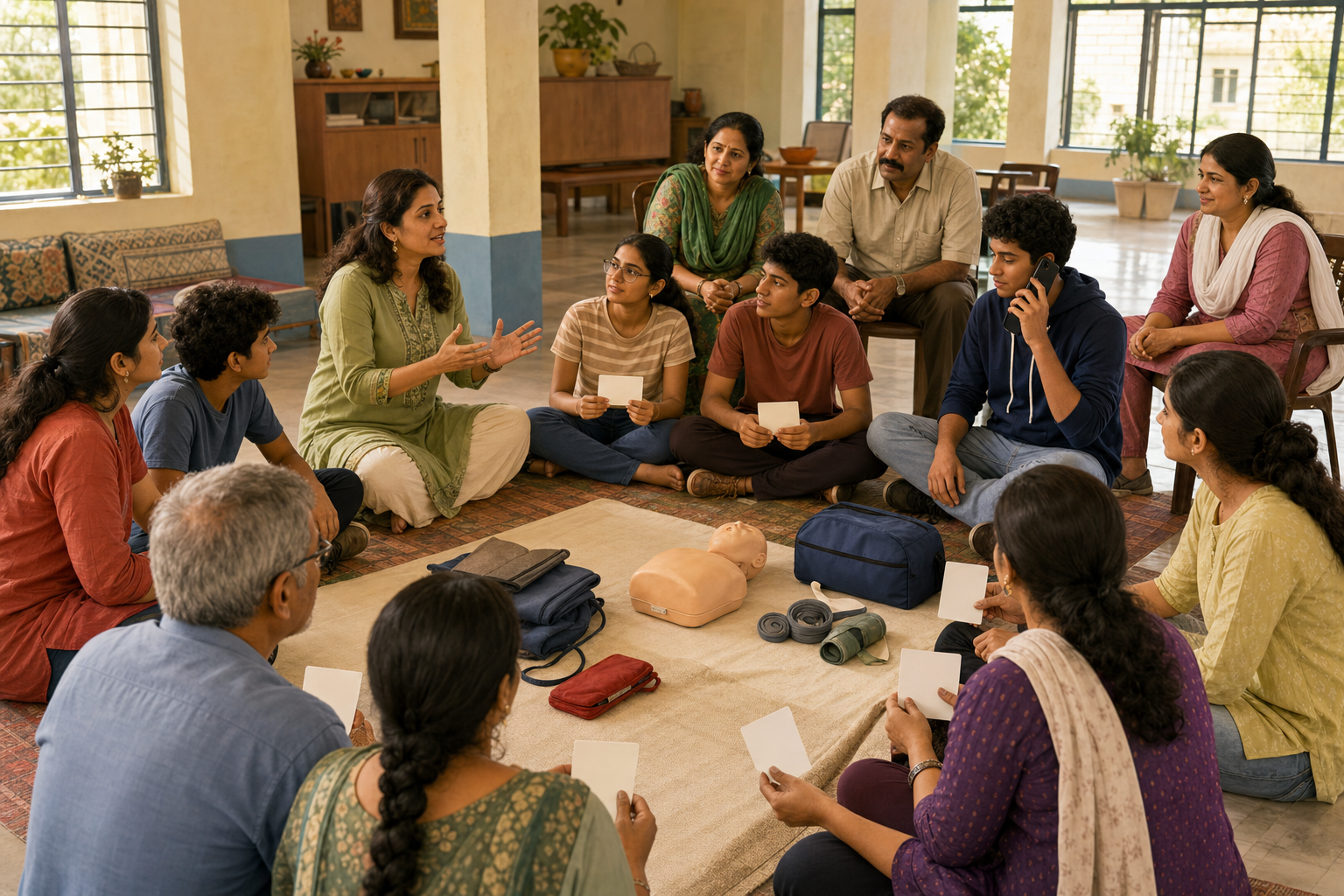
A festival is a concentrated risk environment, not the origin of every risk. Young people encounter pressure, sales approaches and intoxicant-normalising messages through peer groups, social media, encrypted messaging and other settings. Effective prevention therefore cannot be switched on for one weekend and forgotten on Monday.
Schools and colleges should replace occasional fear-based assemblies with an ongoing route to help. Age-appropriate education can explain legal and health risks. Peer educators can help identify concerns and direct someone toward assistance, but they should be trained by accredited professionals and should not attempt diagnosis. A qualified counsellor must be available for private conversations, early intervention and referral.
Parents should notice patterns rather than trying to prosecute a case at the dining table. A sudden concern about behaviour, social withdrawal, repeated impairment or unexplained risk-taking warrants a calm conversation and, when the concern persists or safety is at stake, professional assessment. One sign alone may have many explanations. Accusation without evidence can close the very channel through which a young person might ask for help.
Dharmic institutions have a practical role here. Satsangs, kirtans, meditation circles, yoga, sports, classical and folk arts, mentorship and seva projects can give young people regular companionship and meaningful responsibility. The point is not to market tradition as a medical cure. It is to build protective social conditions: belonging without intoxication, elders who listen, peers who notice absence and service that gives energy a constructive direction.
A Dharmic response can be tested against four duties. Satya requires verified facts rather than rumour. Ahimsa requires preventing foreseeable harm. Karuna requires helping a young person without reducing that person to a mistake. Seva requires communities to provide time, mentorship and practical support rather than outsourcing the entire problem to police.
These community programmes must connect to professional care. Someone dealing with dependence, acute mental distress or repeated risky use needs qualified treatment, not only encouragement to exercise, meditate or attend a gathering. Community support can make treatment easier to enter and sustain; it must never be presented as its substitute.
Demand accountability without turning culture into evidence

Concerns about rave parties and large commercial festivals deserve investigation. They do not justify a presumption that every organiser, artist or attendee is involved with drugs. Most people at a music event are there lawfully. If authorities attach guilt to a genre or crowd image, investigative attention can drift away from the people actually supplying contraband.
The same core standard should apply to Sunburn, another electronic-music festival, a college celebration or any other large gathering. Scale, prior compliance and local conditions may justify different levels of screening, staffing and monitoring. The name of the event should neither immunise it from scrutiny nor convict it in advance.
That distinction also protects cultural advocacy from becoming careless. It is reasonable to debate whether some commercial environments normalise intoxication or undermine local norms. It is not reasonable to use that cultural argument as proof that a particular offence occurred. Enforcement decisions should rest on verified conduct, documented compliance, admissible evidence and a fair opportunity to answer allegations.
Investigators can direct specialist attention toward distribution through social media, encrypted channels, darknet markets and financial networks, subject to Indian law, privacy safeguards and due process. This is more demanding than indiscriminate suspicion, but it is also more likely to identify organisers of supply rather than merely visible young people near the end of the chain.
Public accountability should continue after enforcement photographs disappear from the news cycle. A state-level dashboard can publish lawful, anonymised measures of prevention activity, seizures, treatment linkages and corrective actions. Those measures should remain distinct: a seizure describes enforcement activity, a treatment linkage describes access to care and a prevention outcome concerns whether risk is being reduced. Combining them into one success number would conceal more than it reveals.
Before you support or oppose the next festival permission, send the organiser or licensing authority the practical questions in this checklist. Look for names, maps, written protocols, medical capacity, referral routes and a commitment to audit. Reputation, alarm and assurances are weak substitutes for those things. A Maharashtra that protects its youth will need both firmness and compassion: fewer places for traffickers to operate, faster help when a life is at risk and more places where young people can find purpose without intoxication.