
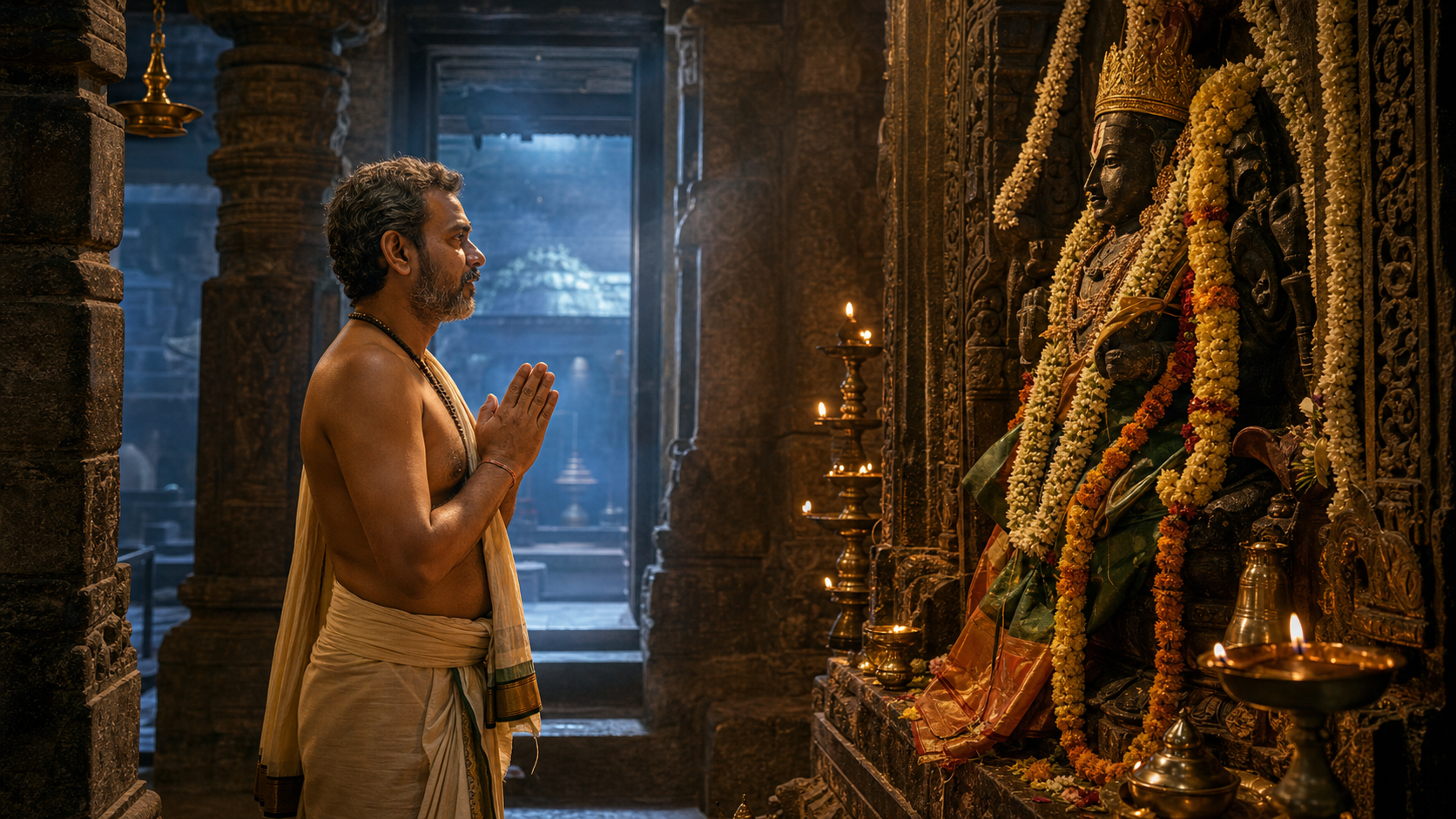
You stand before a murti with folded hands, yet a question remains active in the mind: are you meeting a divine presence, contemplating a symbol, or simply looking at stone, metal, wood, or paint? If that question is left unresolved, darshan can become either mechanical ritual or an exercise in forcing yourself to feel something.
Dharmic worship offers a more disciplined approach. Sacred form gives your attention somewhere truthful to rest, while darshan teaches you to receive rather than merely observe. You do not have to manufacture a vision. You have to learn how form, mantra, attention, and conduct belong to one encounter.
Sacred form is a mode of divine accessibility
A murti can be encountered at three related levels. Keeping them distinct prevents both credulity and dismissal.
- At the material level, the murti is fashioned from a physical medium. Dharma does not require you to deny what your senses plainly perceive.
- At the iconographic level, posture, eyes, hands, ornaments, companions, weapons, mudras, and bodily proportions disclose the identity and qualities of the deity.
- At the liturgical level, a consecrated form becomes the focus of an inherited relationship involving mantra, offering, service, festival, memory, and darshan.
These levels are not rivals. Material form supplies the visible basis; iconography makes the form intelligible; consecration and worship place it within a living sacred relationship. In Vaishnava theology, the arca-avatara is the Supreme made tangibly approachable without ceasing to be transcendent. Accessibility is not a reduction in divinity. It is an expression of grace.
This changes the question you bring to the shrine. Instead of asking whether the limitless Divine has been trapped inside an object, ask why the limitless Divine could not make use of form to receive finite beings. You already approach reality through names, relationships, gestures, places, and embodied acts. Sacred form takes that human condition seriously and directs it toward worship.
Consecration also protects the practice from private fantasy. You are not inventing a deity according to your mood. Agamic ritual, inherited iconography, temple discipline, and a community of worship establish the form before your individual response begins. Your feelings may rise or remain quiet, but the practice does not depend on emotional improvisation.
When you next approach a murti, therefore, notice all three levels. Recognize the physical craftsmanship. Read the iconographic signs. Then remember that generations of mantra, offering, and service have made this a place of relationship. That movement from object to meaning to presence is part of learning how to see.
The eyes are the meeting place of darshan
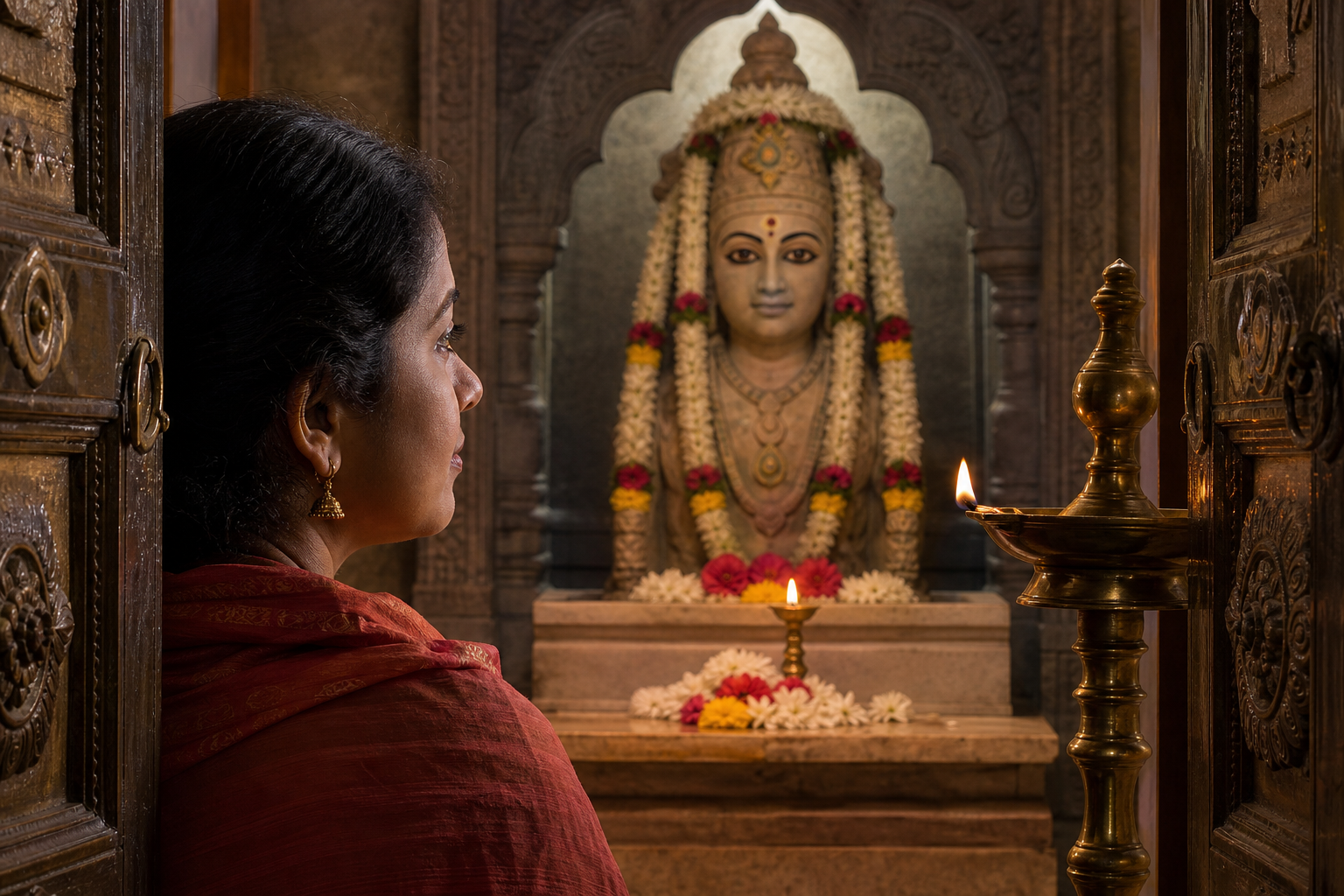
Ordinary looking moves in one direction: you inspect something before you. Darshan is reciprocal. You behold the deity while placing yourself before the deity’s sight. This is why the eyes of a murti carry such unusual theological weight.
In prana-pratishtha, the ceremonial opening of the eyes, or netronmeelana, signals the deity’s readiness to offer and receive darshan. At the Jagannath Temple in Puri, Netrotsava renews this focus on the divine eyes as the axis of encounter. The rite teaches something practical: sacred vision does not begin with your power to scrutinize the Divine. It begins with your willingness to stand where you may be seen.
Classical Indian aesthetics helps explain why this visual language is so precise. The eyes, eyebrows, sidelong glances, and tears function as anubhavas, visible expressions through which inward bhava becomes perceptible. A slight movement of the eye can communicate tenderness, longing, restraint, compassion, or delight more directly than an elaborate speech. Temple iconography enlarges and emphasizes the eyes because the eyes are doing theological work.
This reaches its most intimate expression in devotion to Sri Radha. The traditional image of Krishna concealed within her heart yet dancing openly in her eyes presents the gaze as an overflow of divine love. Sri Radha, understood in Gaudiya Vaishnavism as hladini-shakti, does not merely look at the devotee. Her compassionate glance mediates Krishna’s sweetness in a form the heart can approach.
Brahma-samhita 5.38 describes devotional vision through the phrase premāñjana-cchurita-bhakti-vilocanena: eyes anointed with the salve of love. The metaphor places responsibility on the beholder as well as grace in the one beheld. The sacred form does not need to become more divine. Your sight must become less distracted, less possessive, and more receptive.
During darshan, do not rush from crown to ornaments to surroundings as though conducting a visual inventory. Let the whole form register first. Then allow attention to settle upon the face and finally the eyes. Keep your gaze soft. The aim is not an intense stare, a trance, or a demand for an unusual sensation. It is a steady acknowledgement: you are here, the deity is present in sacred form, and this meeting places your inner life within a divine field of regard.
Grace in sacred form protects truth and relationship
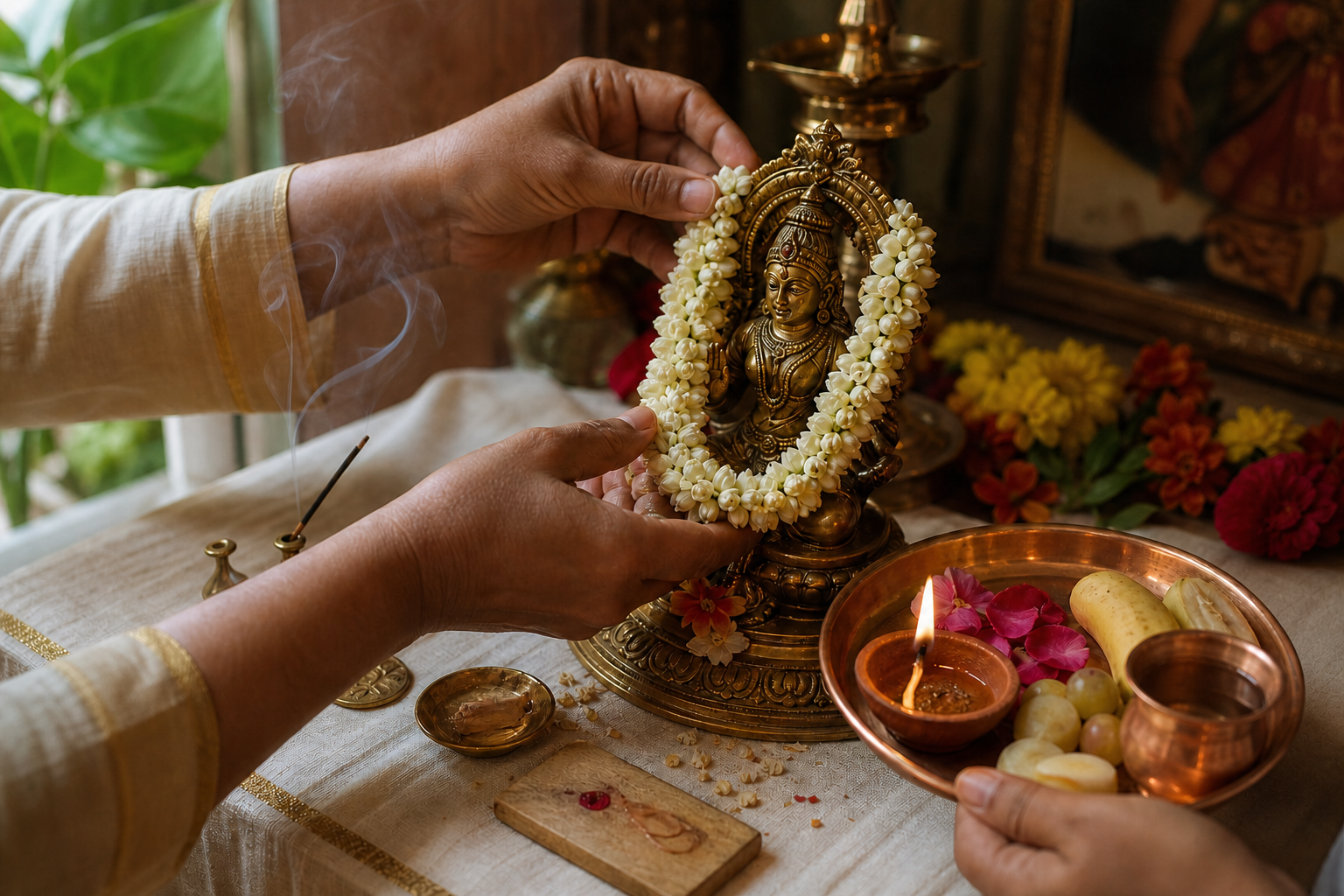
Sacred form is not valuable only because it gives the mind a beautiful object for meditation. Within temple traditions, the deity in arca form may act, respond, protect, and teach through an enduring relationship with devotees.
The sthala-purana of Thirukannapuram gives this principle a memorable shape. The Lord worshipped there as Sowriraja Perumal is remembered as manifesting flowing locks of hair in order to uphold a devotee’s word before temporal authority. His name joins sowri, locks of hair, with raja, lord or sovereign. The visible change in the arca form signifies divine protection of truth and a devotee placed in peril.
A temple legend should not be handled as a demand for laboratory proof or as entertainment about the miraculous. Its religious force lies in the kind of divine-human relationship it reveals. At Thirukannapuram, form is responsive rather than inert, compassion is active rather than sentimental, and divine sovereignty is shown by defending truth rather than displaying arbitrary power.
This gives you a way to examine what you seek from grace. Before presenting a request during darshan, ask three questions:
- Does this request move me toward satya, or am I asking the Divine to protect a convenient falsehood?
- Does it preserve compassion and responsibility, or am I using devotion to avoid a duty that is already clear?
- If help comes, what truthful action will I take in response?
Grace is not simply the fulfilment of preference. The form of Sowriraja teaches that divine nearness can expose a moral demand: keep your word, protect those placed at risk, and do not separate worship from integrity. If your prayer asks the deity to reinforce adharma, the problem is not that sacred form has failed to respond. The request itself needs purification.
A shared Dharmic grammar without erasing differences
The relationship between sight and grace extends beyond one Hindu sampradaya, but the traditions should not be collapsed into interchangeable doctrines. Their metaphysics and disciplines remain distinct. What they share is a recognizable grammar in which purified vision, compassion, and ethical transformation belong together.
- In Buddhist devotion, Avalokitesvara embodies a compassionate gaze directed toward suffering beings. Vision becomes inseparable from karuna.
- In Jain iconography, the serene and unwavering eyes of the Tirthankaras call the beholder toward samyaktva, right vision, and the stillness required for ahimsa.
- In Gurbani, nadar names the gracious divine glance by which the seeker is lifted. Grace is received rather than seized as a personal achievement.
The common lesson is not that every sacred figure represents the same theology. It is that spiritual sight must change the way you regard living beings. If you seek a compassionate gaze from the Divine while maintaining a contemptuous gaze toward other people, animals, or communities, your seeing remains divided.
A six-step practice for receiving darshan
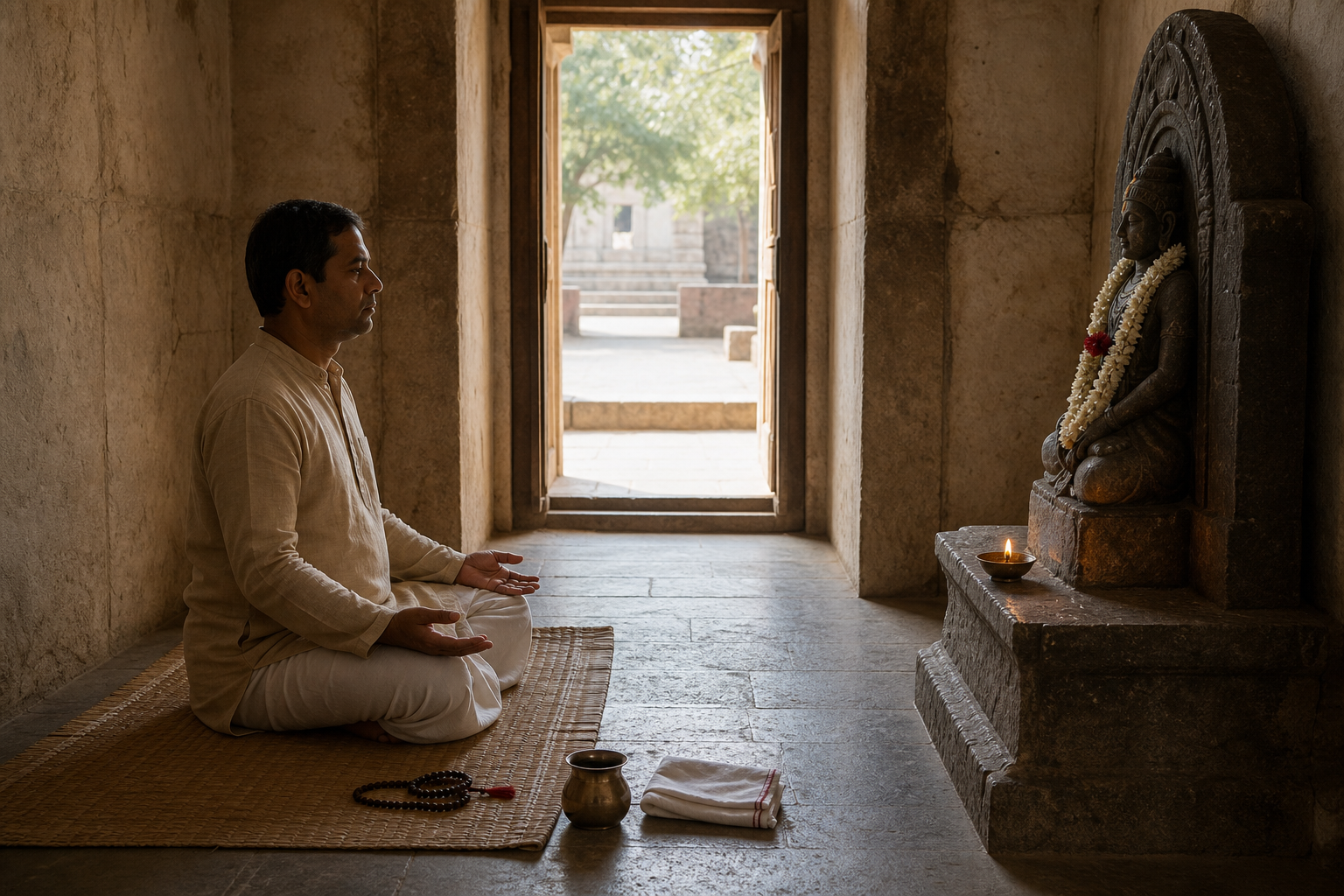
You can use the following practice in a temple or before a suitable sacred image at home. In a busy shrine, adapt it to the time and movement allowed by temple custom. Do not block another devotee’s darshan in order to prolong your own.
- Arrive as a participant, not a spectator. Put away the phone, settle your posture, and gather the concerns that are actually present. You do not need to pretend to be peaceful. You need to become available.
- Recognize the whole form. Notice the deity’s posture, hands, face, companions, and principal attributes. Let iconography identify whom you are approaching before private associations take over.
- Move from the feet toward the face. Traditional dhyana often begins at the lotus feet and ascends. At the feet, acknowledge dependence and surrender. As attention rises, receive the form as a coherent presence rather than a collection of attractive details.
- Rest gently upon the eyes. Do not strain or search for movement. Let the gaze become reciprocal: you see, and you consent to being seen without hiding the motive, fear, duty, or attachment you brought with you.
- Join name to form. Recite one chosen mantra rather than changing formulas whenever the mind becomes restless. Let the sound name the presence before you, and let the visible form keep the mantra from becoming mechanical noise.
- Carry one response out of the encounter. Before leaving, identify a concrete act of truthfulness, patience, service, restraint, or repair. Darshan is completed in conduct, not at the instant your eyes turn away.
At home, place the image where the deity’s eyes are clearly visible and where the setting can be kept clean and dignified. Consistency matters more than continually seeking a more dramatic picture. Repeated attention to the same sacred form allows iconography, mantra, memory, and affection to deepen together.
If no strong emotion arises, do not assume the practice has failed. Tears and other visible expressions have a place in bhakti’s aesthetic language, but rasa is not manufactured sentiment. A quiet mind that becomes more truthful may have received more than an agitated mind hunting for an experience.
Three mistakes that weaken darshan
- Hunting for spectacle. Demanding a vision, bodily sensation, or immediate sign turns receptivity into control. Return to the form and mantra already present.
- Consuming beauty without relationship. Admiring ornament and artistry is appropriate, but stopping there makes the murti a museum object. Ask what the form discloses about divine character and your responsibility.
- Leaving ethics outside the shrine. If worship does not affect speech, promises, anger, or treatment of the vulnerable, it remains compartmentalized. Choose one conduct-level response before you depart.
The proof of darshan appears in how you see others
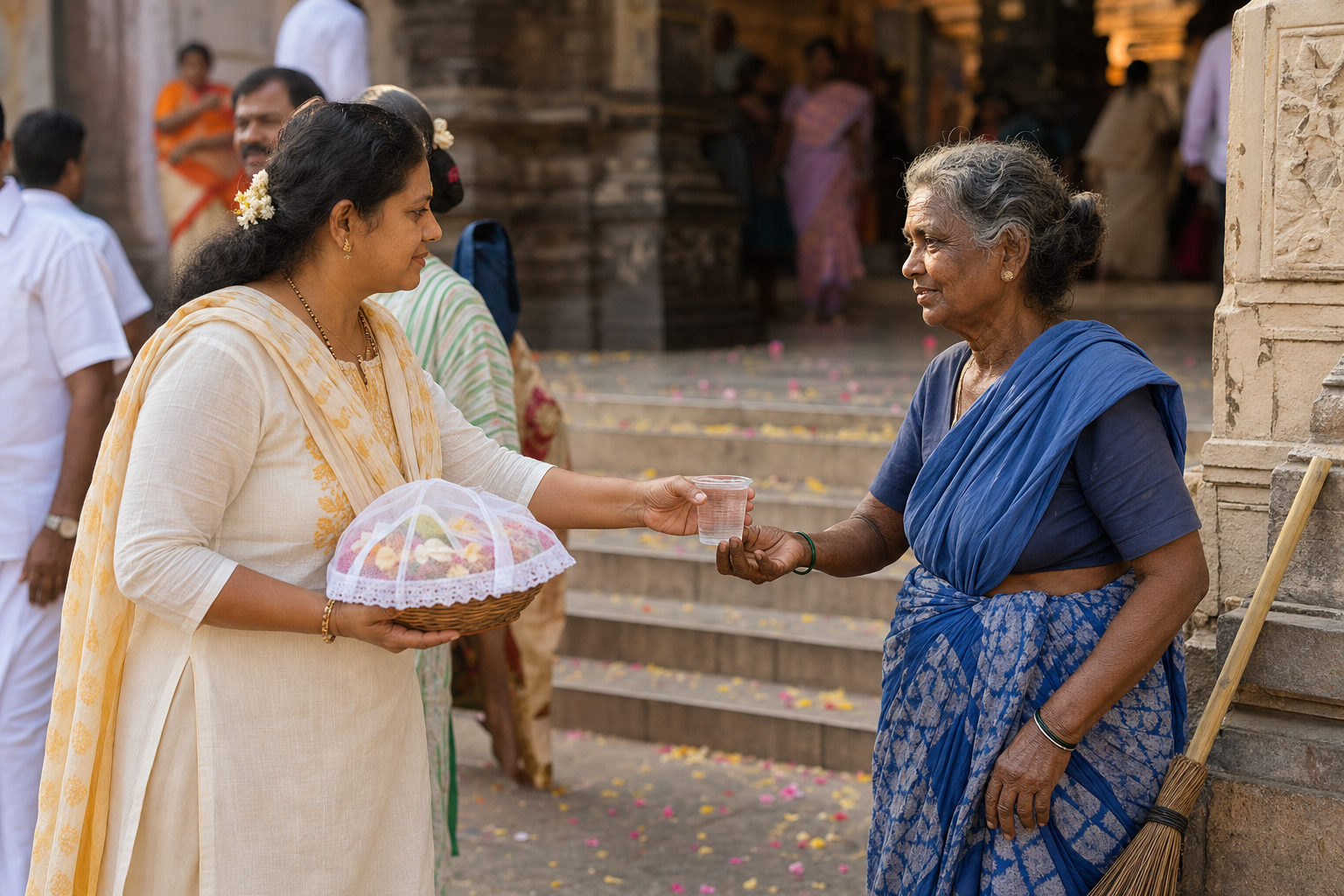
The most reliable fruit of sacred vision is not a claim that something extraordinary happened inside the sanctum. It is a gradual reform of ordinary sight. The compassionate eyes you seek become the pattern for the eyes with which you meet the world.
This is where the theology of Sri Radha’s glance becomes an ethical discipline. Soft eyes do not mean weak judgement or refusal to confront adharma. They mean that judgement is no longer fed by contempt. You can defend truth without delighting in humiliation, correct someone without denying their dignity, and notice suffering before it becomes convenient to ignore.
The same test applies to the grace embodied by Sowriraja Perumal. Divine protection of a devotee’s word should make your own promises weightier. If you repeatedly ask for protection while treating commitments casually, let the form correct you. Grace does not merely reassure the self; it returns the self to dharma.
Key takeaways
- Sacred form does not confine the Divine. In arca theology, it makes divine relationship accessible to embodied beings.
- Darshan is reciprocal. You behold the deity while allowing your motives, fears, and duties to stand within the deity’s gaze.
- The enlarged eyes of sacred images are visual theology, not decorative excess. They direct attention toward presence, compassion, and relationship.
- Mantra and form should work together. The name steadies the meaning of the image, and the image keeps recitation relational.
- Do not measure darshan by spectacle or emotional intensity. Measure it by greater truthfulness, steadiness, compassion, and responsibility.
- Dharmic traditions share important connections between grace and vision without becoming identical in doctrine or practice.
At your next darshan, make one change: after seeing the whole form, rest quietly upon the deity’s eyes and place one real obligation within that gaze. Then leave with one action that honours what you asked to receive. Return to the same practice often enough that sacred form becomes more than something you visit. Let it teach you how to see.
References
- Dandavats — Ecstatic Love in Focus: Sri Radha’s Enchanting Glance and the Science of Sacred Vision
- DharmaRenaissance Blog — Thirukannapuram Sowriraja Perumal: A Divya Desam of Compassion, Legend & Living Faith