
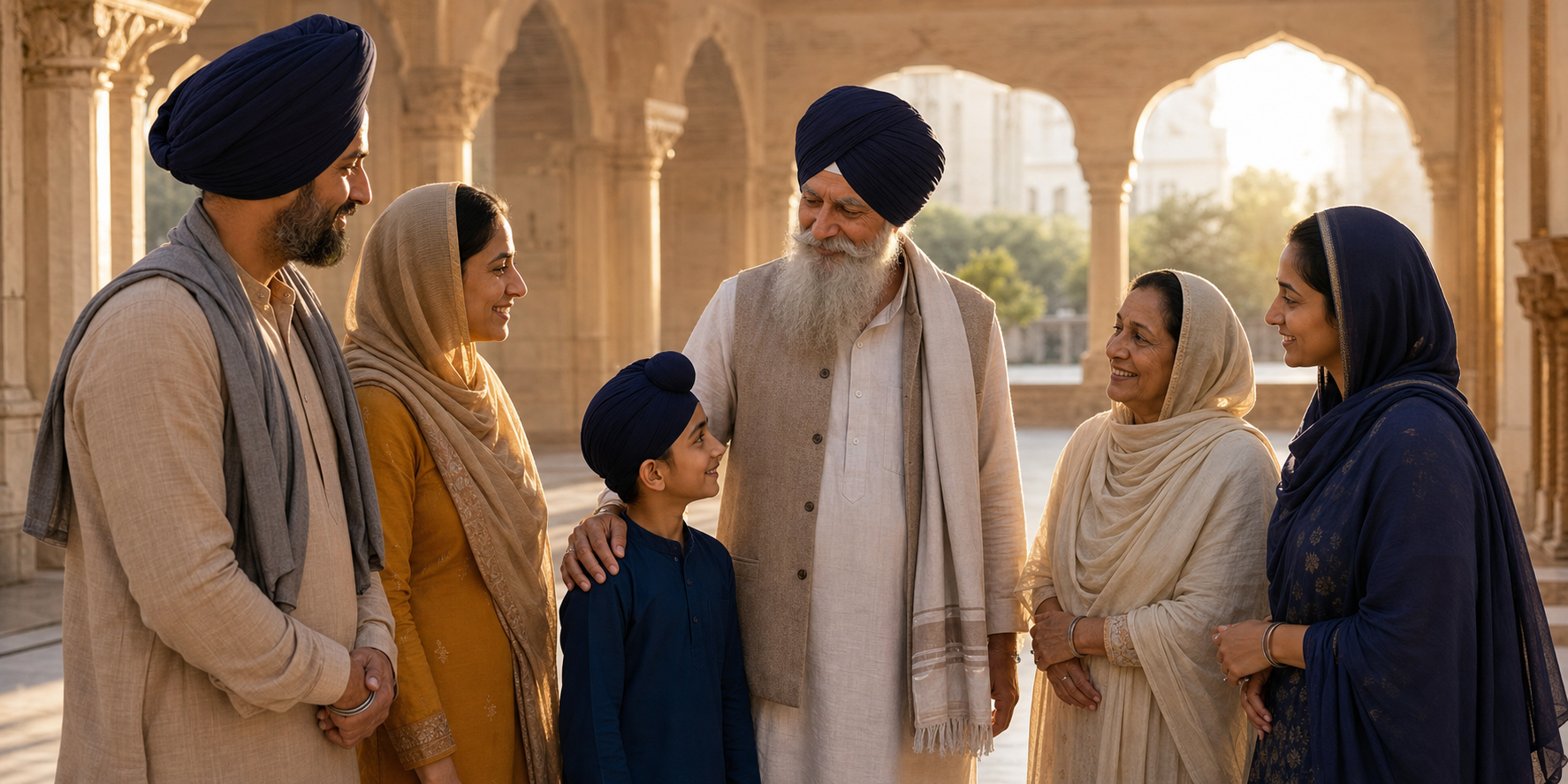
You may have arrived wanting to know why Niranjan Singh still matters, especially if you know him only by the affectionate name Nanji Bhaji. We can securely state only a few things here: his name, that familiar form of address, and his remembrance as a humble guardian of generations. Anything more specific about his dates, offices, family history, or daily work would require evidence we do not have.
That restraint does not leave us empty-handed. It directs us toward a more useful question: what kind of Sikh life becomes a shelter for people who come after it? Niranjan Singh’s intergenerational significance can be read through three carefully chosen ideas – relationship, guardianship, and humility. Together, they also give you a practical way to recognize and preserve such a legacy in your own family or sangat.
Nanji Bhaji places relationship before reputation
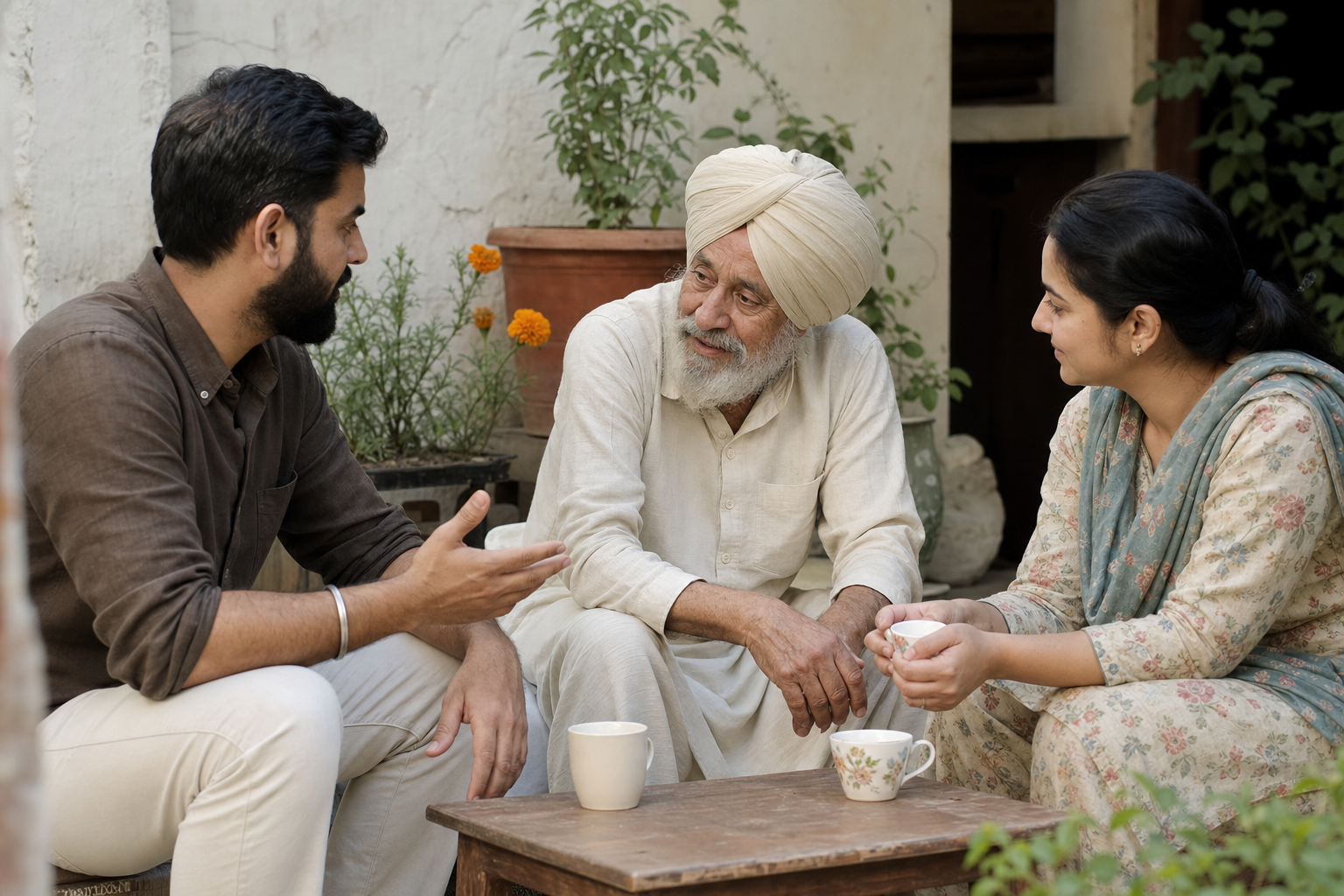
A formal name identifies a person. A familiar name often reveals how people stood in relation to him. Bhaji is a Punjabi form of respectful address associated with an elder brother. Its use does not, by itself, prove a biological relationship or establish a formal religious position. It does tell you that the memory being carried is relational rather than merely institutional.
This distinction matters. A title can tell you what authority someone possessed. An affectionate name can tell you whether people experienced that person as approachable. Institutions preserve offices in minutes, plaques, and letterheads. Families and sangats preserve trust through the names they continue to speak.
When you document a Sikh elder, therefore, do not record only the legal name and public designation. Make a small name map with four entries:
- The full name, spelled as the person or immediate family used it.
- The familiar names used at home, in the gurdwara, at work, and among younger people.
- Who used each form of address and what relationship it expressed.
- An audio recording of the correct pronunciation, made with consent.
Keep the distinctions intact. Do not turn an affectionate address into an official title, and do not discard it as an incidental nickname. Nanji Bhaji is part of the historical evidence because it preserves the human scale of Niranjan Singh’s legacy.
A guardian of generations makes Sikhi repeatable
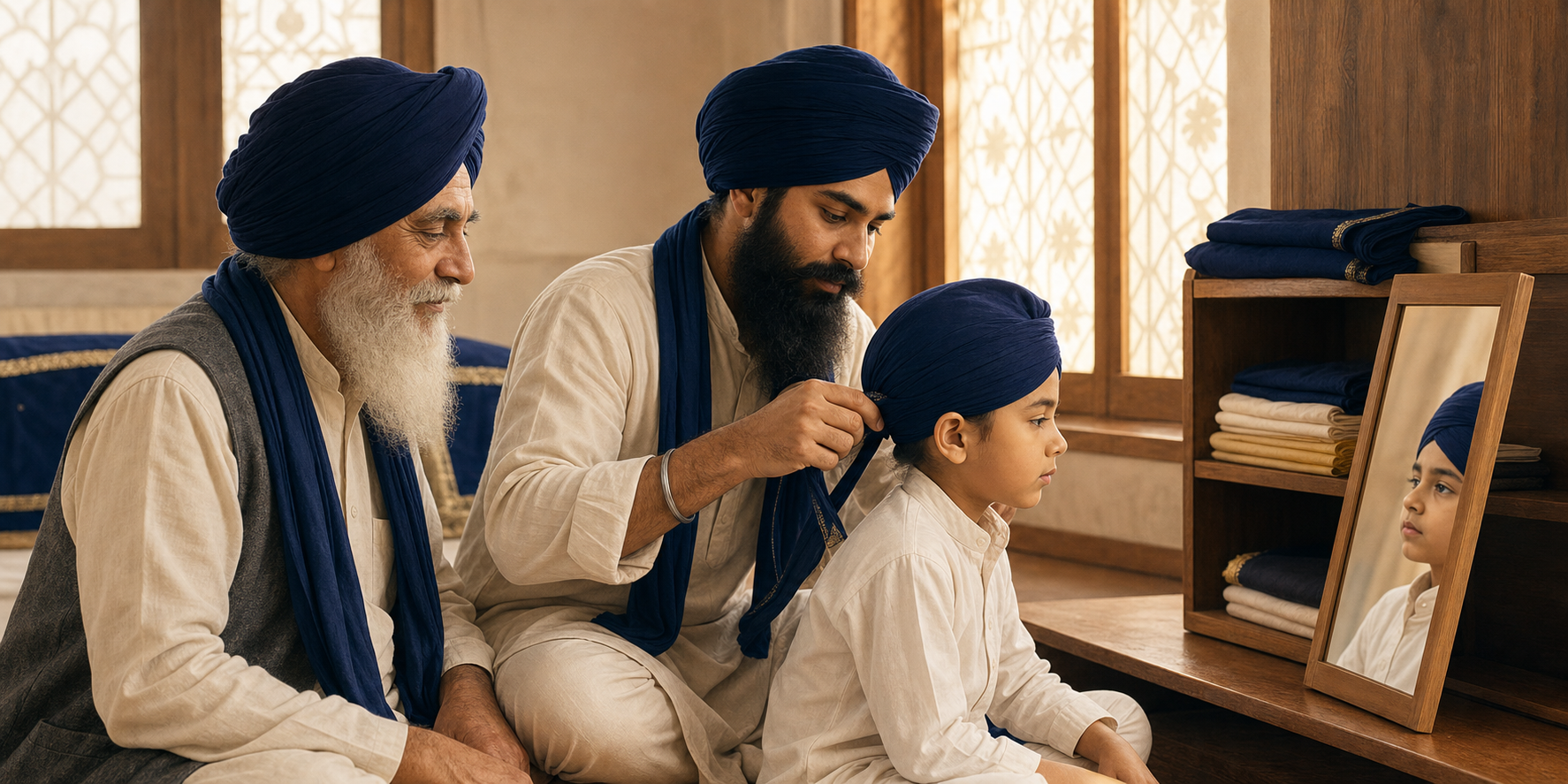
Guardian can sound like gatekeeper: someone who controls access, polices boundaries, or makes himself indispensable. Intergenerational guardianship works differently. Its test is whether the next person gains the understanding and confidence to carry the responsibility forward.
In Sikh life, transmission is not achieved by sentiment alone. It becomes visible when someone can participate in sangat, undertake seva without seeking status, listen to and learn from Gurbani, ask serious questions, and accept responsibility for the community. These are examples of how Sikh continuity becomes concrete; they should not be misrepresented as undocumented details of Niranjan Singh’s personal routine.
If you want to judge whether a practice is truly intergenerational, ask four questions:
- Can a younger person repeat it? Watching an elder perform every task is not the same as learning to perform one.
- Has its meaning been explained? A child may copy a gesture while remaining unaware of its relation to Guru, sangat, or seva.
- Has responsibility actually been shared? Occasional participation is not succession if every decision still belongs to one elder.
- Where does the practice direct attention? Sikh transmission should deepen the learner’s relationship with the Guru and the Panth, not create permanent dependence on the teacher’s personality.
This gives guardian a demanding meaning. The guardian does not merely prevent loss during his own lifetime. He leaves behind people who know what to continue, why it matters, and how to teach it without claiming ownership over it.
You can apply that test at home. If one elder alone knows a family ardas, a historical account, a line of Punjabi vocabulary, or the practical arrangements for recurring seva, the tradition is still vulnerable. Ask that elder to explain one responsibility while another family member performs it. Record the explanation only with permission. Then repeat the responsibility without the elder taking over. That final step reveals whether knowledge has genuinely crossed the generational boundary.
Humility is a method of transmission, not self-erasure
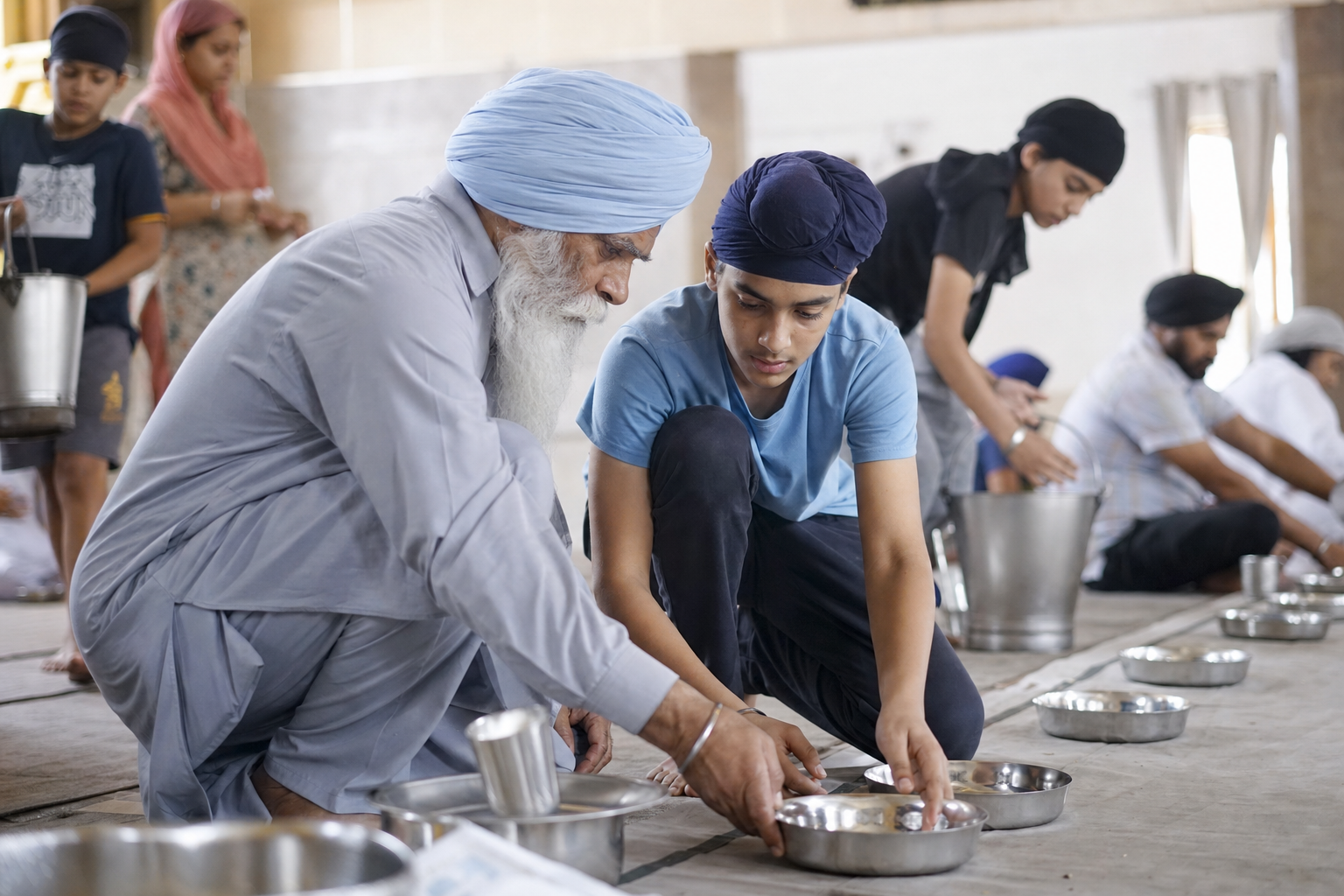
Humility is one of the few qualities explicitly attached to Niranjan Singh’s public memory, so it deserves an exact reading. Nimrata should not be confused with timidity, silence in the face of wrongdoing, or the refusal to use one’s abilities. A person can speak clearly, uphold a standard, and still refuse to make service into a performance of ego.
Humility helps a tradition cross generations because it makes room for another person to learn. An elder who must always be praised, obeyed, or consulted can unintentionally keep younger people in a permanent supporting role. An elder who explains, demonstrates, listens, corrects without humiliation, and then steps aside allows competence to grow.
You can notice this method through behaviour rather than adjectives:
- The teacher names the people from whom he learned instead of presenting knowledge as self-created.
- The experienced sevadar gives a newcomer a real task, not only the work no one else wants.
- The elder corrects the action without attacking the learner’s dignity.
- The person who begins an initiative records the process and trains successors.
- Credit remains shared, while accountability remains clear.
This is also a safeguard for communal memory. Praise that becomes excessive can obscure the very quality being praised. Calling someone humble means little if every remembrance turns him into a flawless hero. A truthful tribute can honour strength while admitting that no human life should be reconstructed from devotion alone.
The most faithful way to honour a humble guardian is therefore not to enlarge his biography with unsupported claims. It is to protect the truth of what is known and to continue the form of service his remembrance represents.
How to preserve a Sikh elder’s legacy without mythologizing it
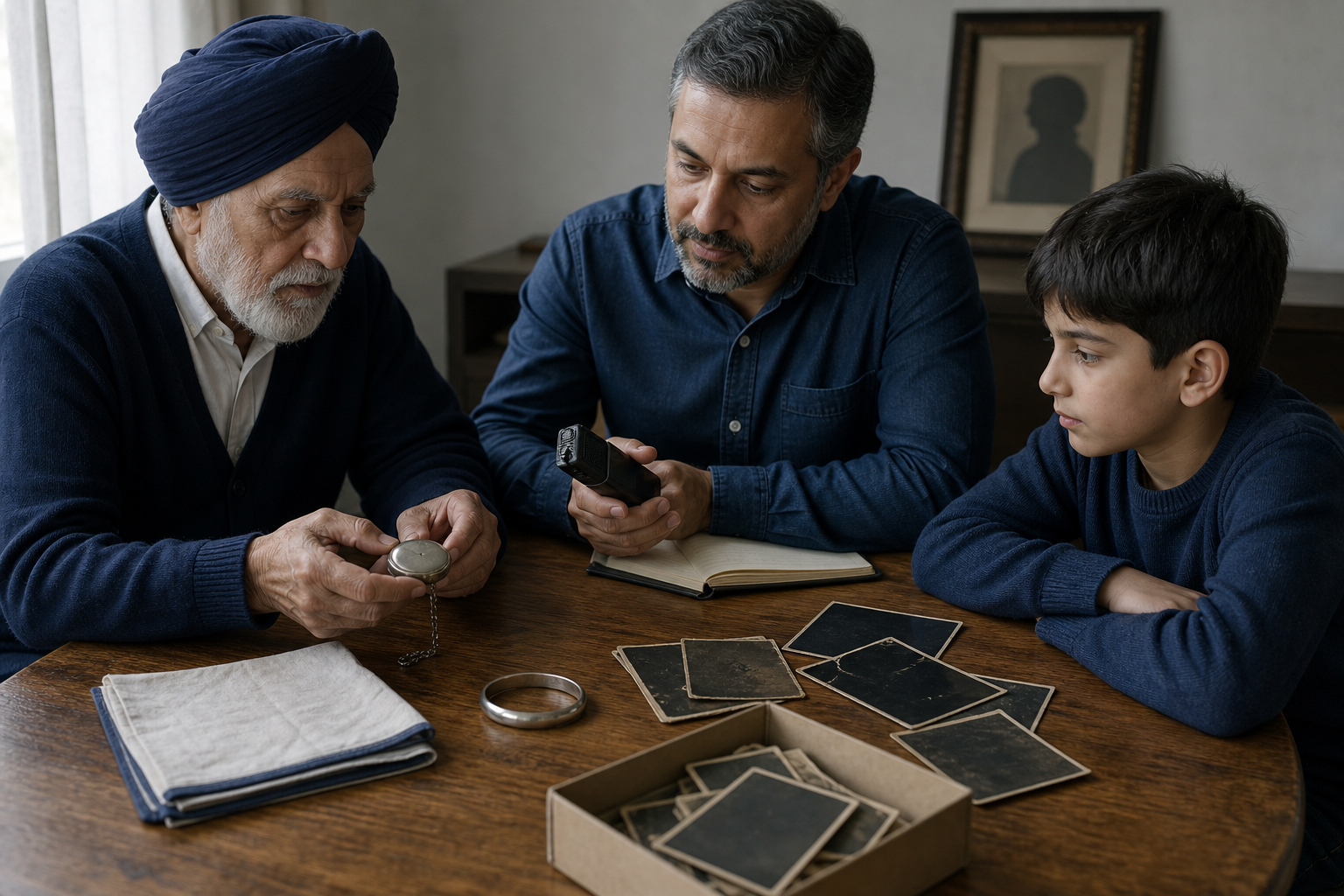
Intergenerational memory becomes unreliable when fact, interpretation, and reverence are mixed together. You can avoid that problem with a simple oral-history process. It works for a family elder, a long-serving sevadar, a teacher, or a largely unrecorded community figure.
- Separate three kinds of material. Mark each note as verified fact, firsthand recollection, or interpretation. A name on a document belongs in the first group. A person’s memory of a conversation belongs in the second. A conclusion about what the conversation meant belongs in the third.
- Ask for actions, not only praise. If someone says the elder was devoted, patient, or generous, ask what the person actually did. Who was present? What responsibility was involved? What changed afterward? Record a date only when the witness or a document can support it.
- Interview people separately before combining accounts. Group conversations often converge around the most confident speaker. Ask each person the same questions: What did you call him? What did he teach you to do? How did he correct people? What responsibility did he entrust to you? What continues because of him?
- Preserve the original language. If a memory is given in Punjabi, retain the Punjabi recording or transcription beside any English translation. Do not replace a culturally specific form of address with a supposedly equivalent English title. Translation should help a new generation enter the memory, not erase the relationships encoded within it.
- Obtain consent and identify limits. Ask whether the recording may remain private, circulate within the family, enter a gurdwara archive, or be published. A tribute does not justify exposing confidential family matters or attributing words to someone who cannot verify them.
- Turn one memory into a repeatable responsibility. Choose a modest action: organize the archive, teach the pronunciation of names, train another person for an existing seva, or convene an annual family conversation. If the activity is newly created in the elder’s memory, label it honestly as new. Do not claim that he founded or practised it without evidence.
This method does more than protect accuracy. It reveals the mechanism of legacy. The question shifts from whether an elder was admirable to what another person learned to carry because that elder was present.
Key takeaways
- Niranjan Singh is securely remembered by the relational name Nanji Bhaji and as a humble guardian of generations; further biographical specifics should not be invented.
- An affectionate form of address can preserve evidence about belonging and trust that an official title cannot.
- A Sikh legacy becomes intergenerational when practices are explained, responsibilities are shared, and younger people can continue without dependence on one personality.
- Humility supports succession by directing attention toward Guru, sangat, and service rather than personal ownership.
- Families and sangats should label fact, firsthand memory, and interpretation separately before publishing a tribute.
Begin with one conversation this week. Speak with someone who knew the elder directly and invite one younger family or sangat member to listen. Ask what that elder taught others to do, record only with consent, and choose one responsibility the younger person can now learn. That is how remembrance stops being a closing ceremony and becomes a living inheritance.