
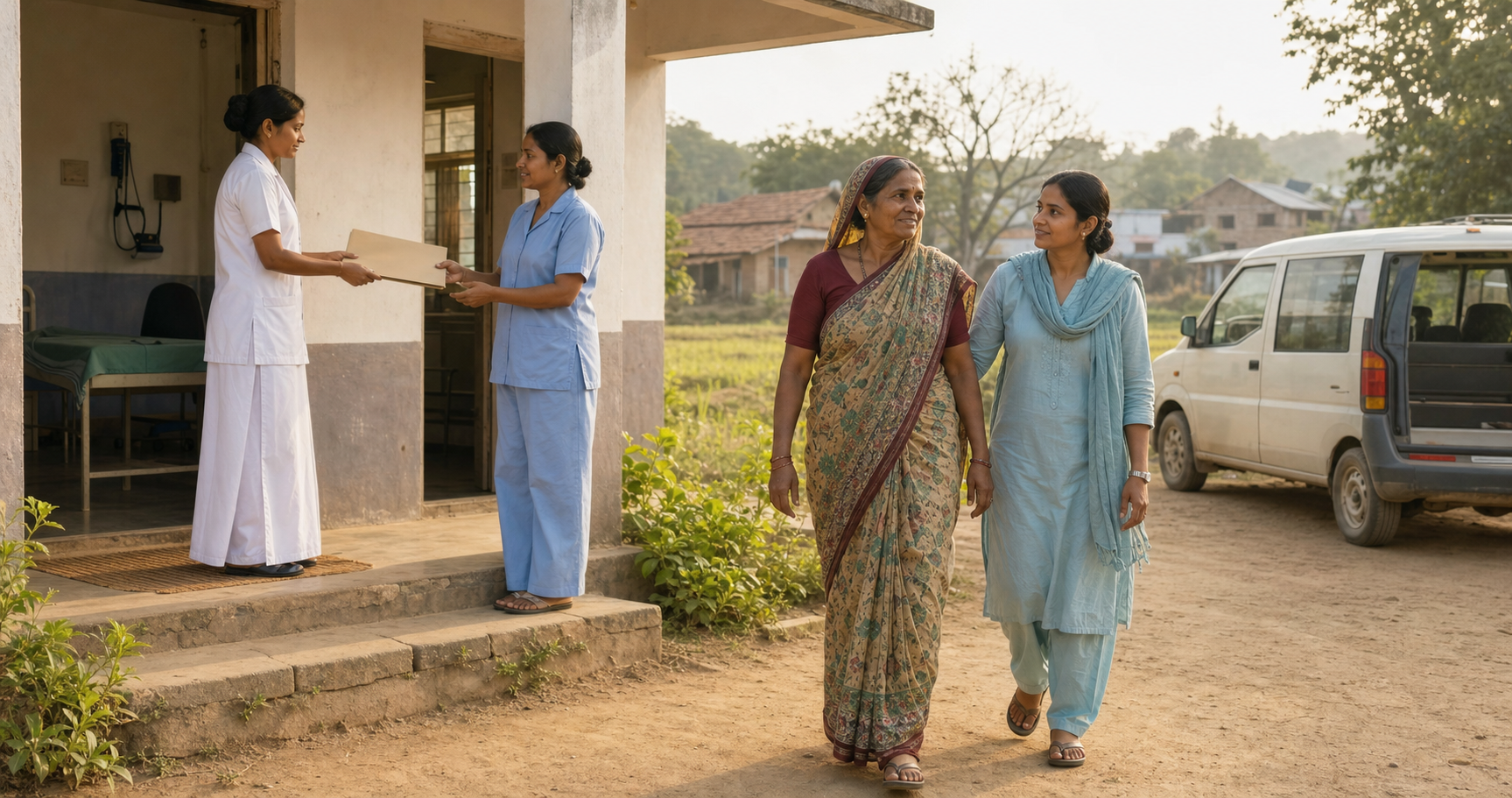
If you are deciding whether to fund a rural clinic, approve a corporate social responsibility grant, or support a Dharmic service organisation, do not begin with the number of camps it promises. Begin with the patient who receives an abnormal screening result. Who explains it, confirms it, arranges the next appointment, and checks whether that appointment actually happened?
That question separates a visible charitable activity from a dependable healthcare system. The ₹2 crore grant announced by the SBI Foundation for Shri Chaitanya Health and Care Trust on 24 April 2026, under the SBI Gram Saksham project, creates an important opportunity for rural Maharashtra. But an announcement is the starting line. If you want to judge what the money can accomplish, follow the patient’s entire journey rather than the grant’s headline.
Start with the patient pathway, not the camp calendar
A mobile medical unit or village camp can reduce travel, lost wages, and the uncertainty of seeking care far from home. That matters. It solves only the first part of the problem, however. Screening can identify a possible health need; it does not by itself provide a diagnosis, treatment, or continuing care.
A credible rural health proposal should show a complete pathway:
- Reach: Villagers know where and when the service will appear, who is eligible, and whether it is free.
- Screen: Trained personnel use a defined protocol, explain the process in an accessible language, and record consent.
- Consult: A qualified clinician reviews concerning results, locally or through telemedicine, rather than leaving interpretation to an unqualified volunteer.
- Refer: The patient receives a clear connection to an appropriate Primary Health Centre, Ayushman Bharat-linked primary-care facility, diagnostic hub, or district hospital.
- Complete: The program checks whether the referral occurred and records the next step.
- Follow up: A responsible worker reconnects with the patient when continuing care, counseling, or another visit is needed.
This is why a hub-and-spoke model is useful. Village-level spokes can provide health education, basic screening, and follow-up. A block- or taluka-level hub can support diagnostics, clinician consultations, telemedicine, and referral coordination. Mobile units can extend the spokes to isolated settlements without pretending to be hospitals on wheels.
Before you fund the model, ask four practical questions: Who owns the patient’s case after an abnormal result? How is the receiving facility identified? Who records whether the referral was completed? What is the escalation route when a patient may need urgent care? If the proposal cannot answer those questions, a larger camp calendar will not repair the underlying gap.
Screening and health education must never be presented as substitutes for medical care. A person with severe symptoms or a potentially urgent condition needs assessment by an appropriately qualified professional and, when indicated, emergency care. The safe role of philanthropy is to shorten that route, not blur it.
Fund the workforce and referral network behind the vehicle
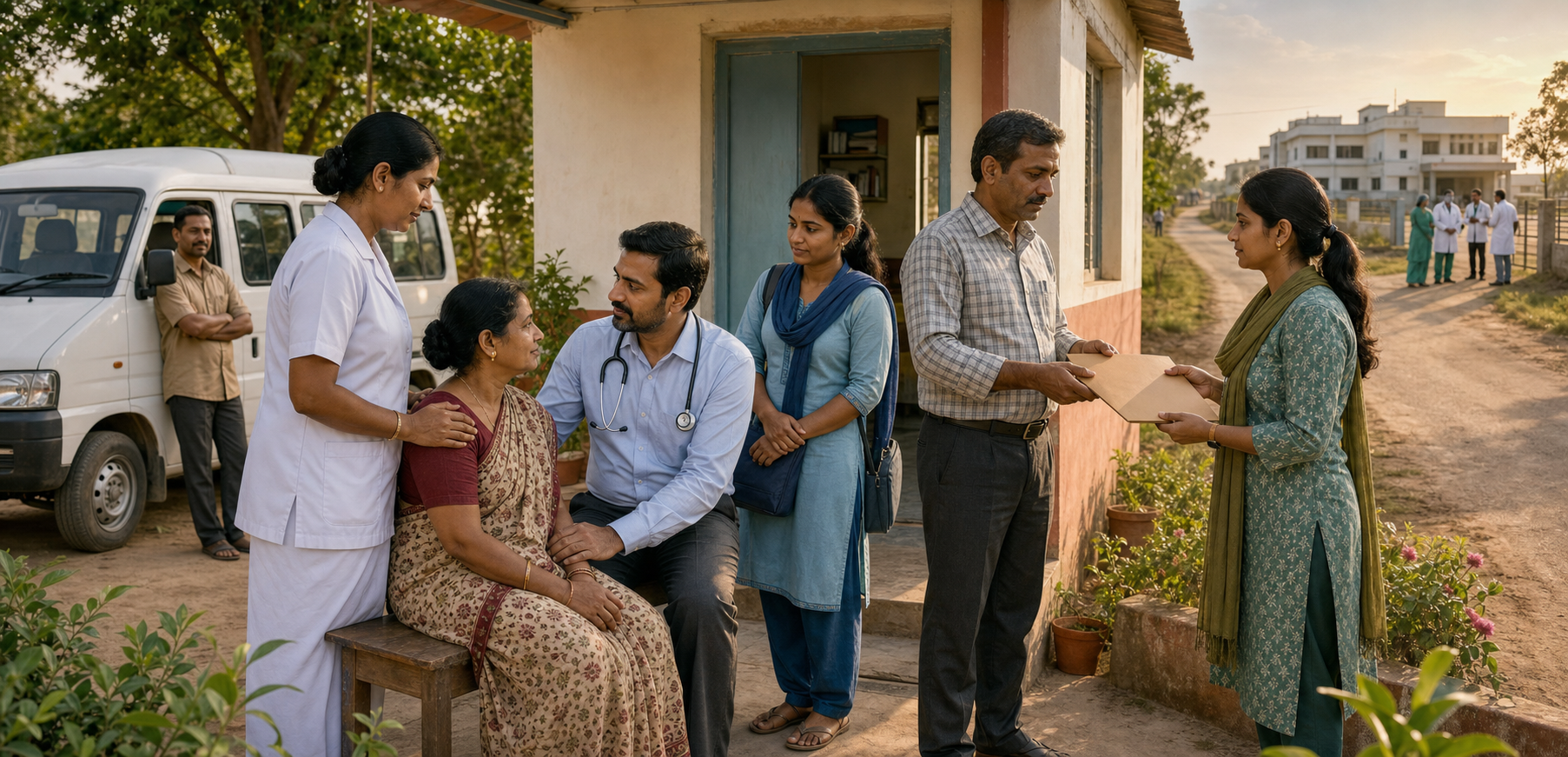
Vehicles, diagnostic devices, and camp photographs are easy to see. Supervision, referral calls, stock management, data entry, and repeat visits are less visible, yet they determine whether the service remains reliable after the launch.
A serious budget should therefore name the people who make continuity possible. Village health facilitators can help with outreach and navigation. Accredited Social Health Activists and auxiliary nurses can contribute within their defined roles and in coordination with the public system. Clinicians must retain responsibility for diagnosis and treatment. Standard protocols, refresher training, mentorship, and supportive supervision should be funded as operating necessities, not treated as optional extras.
Seva does not erase professional boundaries. A volunteer should not be pushed into clinical decisions for which that person is not qualified, and an existing frontline worker should not quietly inherit an unfunded workload. Your due-diligence questions should cover role definitions, supervision, workload, compensation where applicable, and the procedure for reporting mistakes or safety concerns.
The service package also needs discipline. Rural programs may address hypertension and diabetes screening, maternal and child health, immunisation linkages, nutrition counseling, oral health, eye health, or mental-health first aid. Trying to advertise every service at once can produce several shallow promises. Choose interventions for which the program can provide three things: a competent frontline action, a functioning referral destination, and a realistic follow-up process.
Integration is more valuable than duplication. Primary Health Centres, relevant Ayushman Bharat facilities, district hospitals, local health authorities, and Panchayati Raj Institutions already occupy different parts of the care pathway. A philanthropic program should document which gap it fills, how patients enter the public system, and who resolves a failed handoff. Partnerships addressing water, sanitation, and nutrition can complement medical services, but they should not be used to obscure an incomplete clinical pathway.
Measure completed care instead of counting contacts
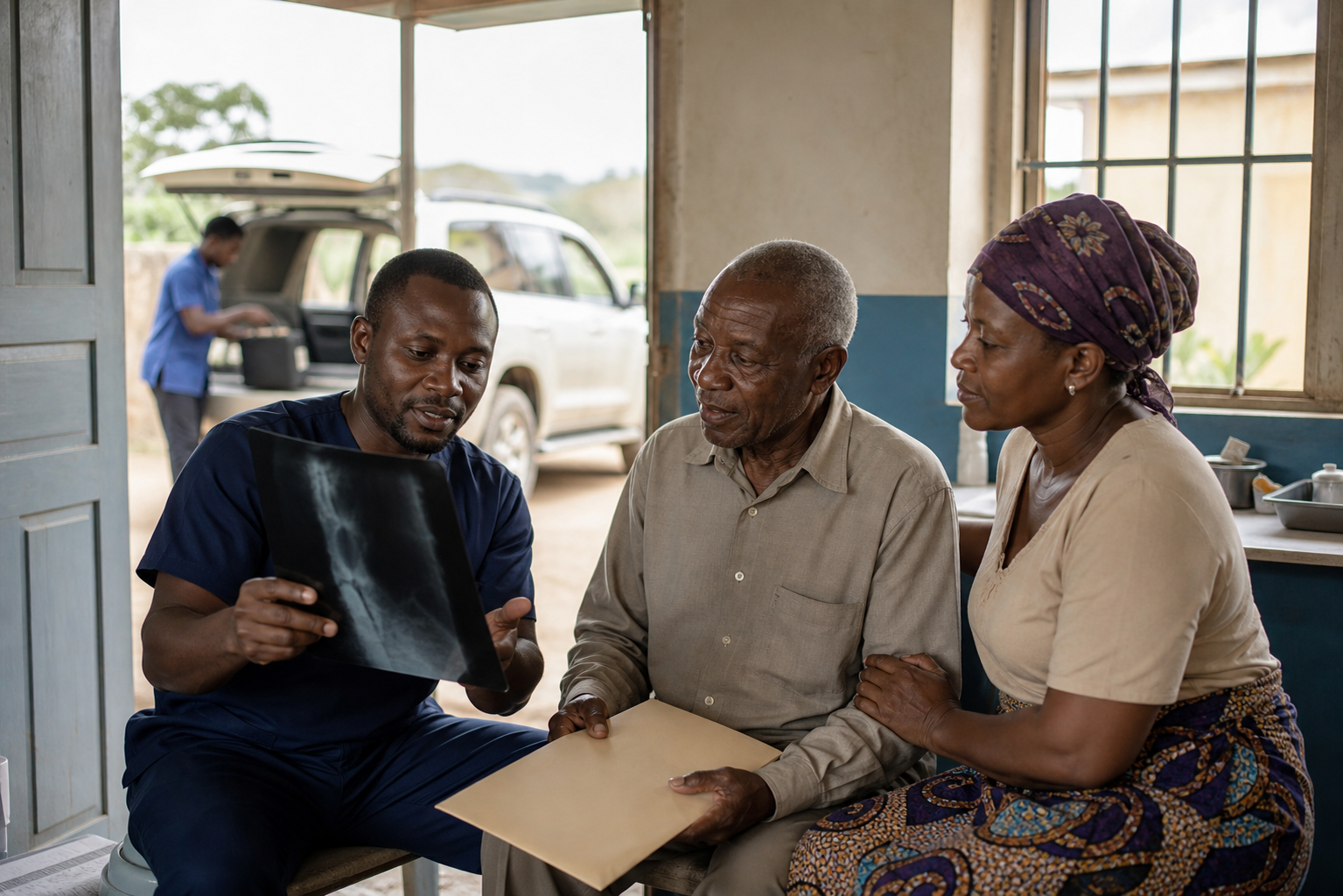
The easiest number to produce is the number of people contacted. It is also one of the easiest to misread. A consultation count may include repeat visits, brief interactions, or people whose identified needs went no further. It demonstrates activity, not necessarily continuity or improved access.
Ask for a measurement cascade in which each stage answers a different question:
| Stage | Useful measures | What you can conclude |
|---|---|---|
| Reach | Villages covered, scheduled outreach sessions, unique patients and total consultations | Whether the service appeared consistently and whom it reached |
| Screening | Eligible population, people screened, and results successfully recorded | Whether the claimed coverage has a clear denominator |
| Connection | Completed telemedicine consultations and referrals issued | Whether identified needs entered a clinical pathway |
| Completion | Referrals confirmed as completed and follow-up contacts recorded | Whether patients reached the next level of care |
| Experience | Patient-reported satisfaction, complaints, and complaints resolved | Whether access was respectful and trustworthy |
Definitions matter as much as totals. Require the program to distinguish unique patients from visits, referrals issued from referrals completed, and attempted telemedicine connections from successful clinical consultations. Screening coverage should show both the numerator and the eligible population used as its denominator. Otherwise, a rising total can conceal repeated contact with the easiest-to-reach households.
A basic digital register or health management information system can make this pathway visible, but software cannot rescue unclear responsibilities. Decide first who enters each field, who checks missing records, who corrects errors, and who may see identifiable patient information. Only then should the program choose its tool.
Financial controls should follow the same logic. Milestone-linked disbursements, standardised procurement, independent audits, community feedback, and periodic third-party evaluation provide different forms of assurance. Tie milestones to evidence that the care pathway functions: trained and supervised teams, predictable service dates, working referral records, functioning equipment, and documented follow-up. Do not release money merely because a publicity event occurred.
For corporate funders, the legal and financial team should document how the expenditure fits the Companies Act, 2013 and the healthcare focus within Schedule VII, including preventive healthcare. This is an area for qualified compliance review, not an assumption that a charitable purpose automatically settles every reporting or governance requirement.
Make dignity, privacy, and community ownership operational
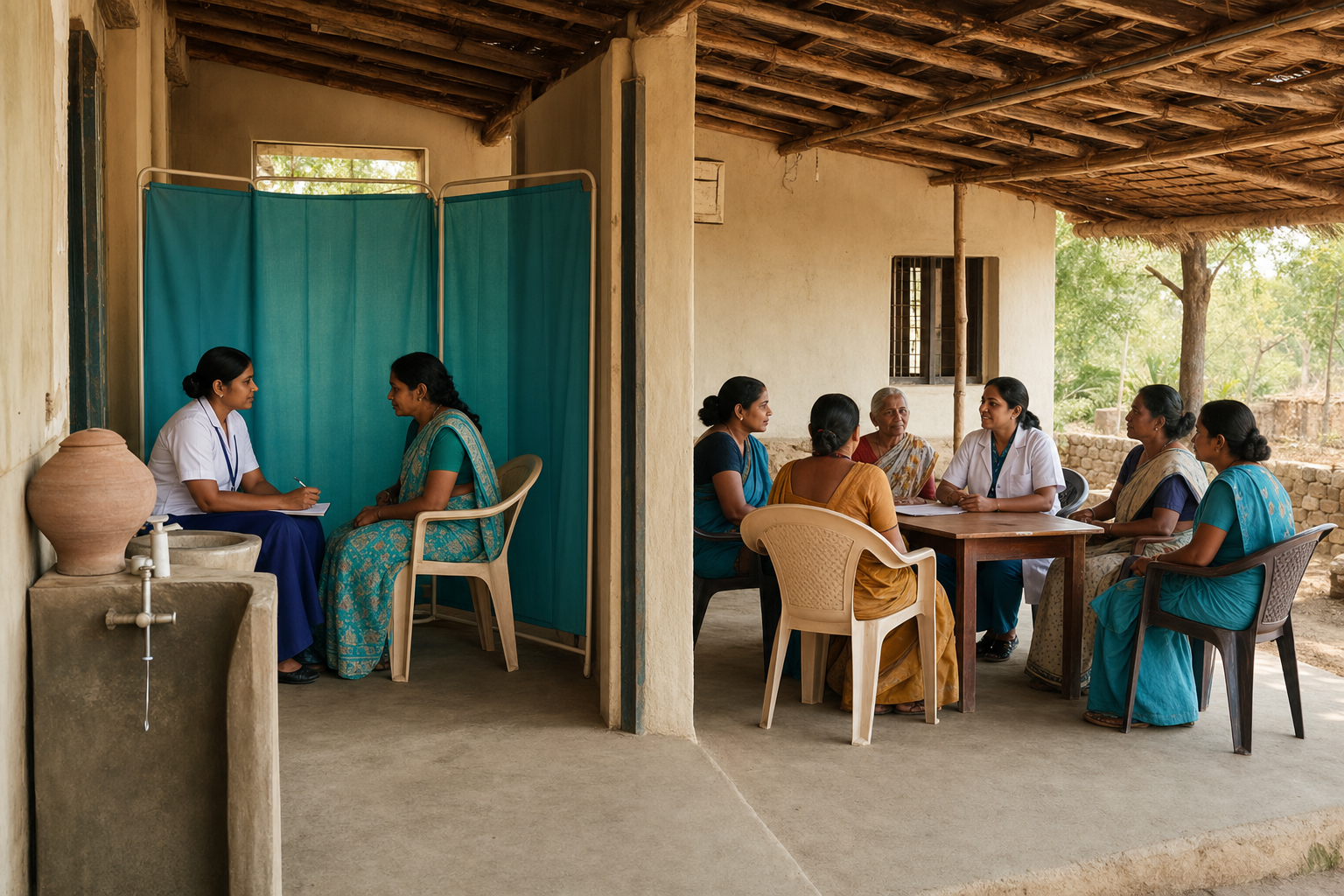
Trust is clinical infrastructure. A villager who does not understand why information is being collected, a woman who cannot speak privately with a suitable provider, or a family that fears public exposure may avoid the service even when the vehicle arrives on time.
Look for operational safeguards rather than a generic promise of confidentiality:
- Consent and health instructions are available in a language the patient understands.
- The program collects only information needed for care, follow-up, safety, or required reporting.
- Access to identifiable records is limited to people with a legitimate role.
- Staff know how information may be shared with a referral facility and when fresh consent is required.
- Service timings, staffing, and examination arrangements account for gender and privacy needs.
- Photography, testimonials, or religious visibility are not made conditions of receiving care.
- Patients have a usable way to ask questions, correct records, complain, and receive a response.
The organisation’s legal team should determine its applicable obligations under the Digital Personal Data Protection Act, 2023 and other relevant Indian requirements. Ethical practice should go further than a compliance checklist: people should understand what happens to their information and should not have to surrender dignity in exchange for charity.
Community ownership also needs a structure. Panchayat representatives, local health personnel, women’s groups, caregivers, and patients can help identify unsuitable timings, inaccessible locations, broken referrals, and linguistic barriers. A feedback forum is useful only if someone records the issue, assigns responsibility, sets a response date, and reports what changed.
This is where the Dharmic meaning of seva becomes demanding rather than decorative. Hindu, Buddhist, Jain, and Sikh traditions are distinct, but each gives moral weight to compassion, non-harm, and service. In rural healthcare, ahimsa includes preventing avoidable harm from careless screening, lost referrals, exposed patient data, or treatment beyond a worker’s competence. Good intention begins the duty; disciplined follow-through completes it.
Key takeaways for your next funding decision
- Fund a complete patient pathway: outreach, screening, clinical review, referral, confirmation, and follow-up.
- Treat mobile units as extensions of a care network, not self-contained replacements for qualified facilities.
- Budget explicitly for training, supervision, coordination, data quality, and repeat contact.
- Choose services only when competent delivery and a credible referral destination both exist.
- Track unique patients, successful consultations, referral completion, follow-up, and patient experience; do not rely on footfall alone.
- Link disbursements to operational evidence and back them with procurement controls, audits, community feedback, and independent evaluation.
- Make consent, privacy, linguistic access, gender sensitivity, and professional boundaries visible in the program design.
If a rural health proposal is in front of you now, ask for three items before approving it: a one-page patient-pathway diagram, a measurement sheet with clearly defined denominators, and a governance calendar naming who reviews referrals, finances, safety, privacy, and community complaints. Those documents will not guarantee success, but their absence tells you that the program is not yet ready to turn generosity into dependable care.