
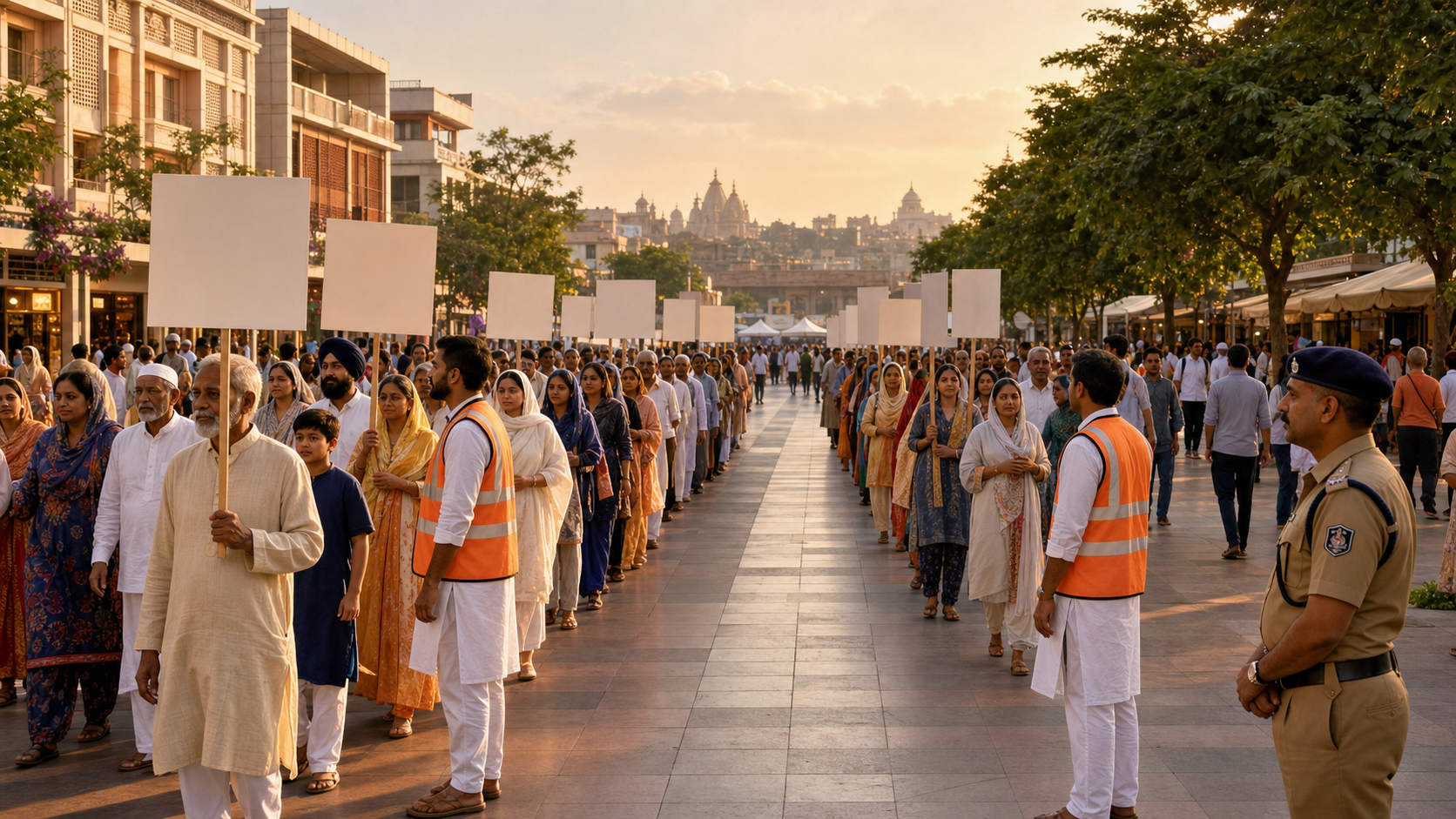
When a revered teacher, text, temple, or ruler is insulted, your first instinct may be to demand a ban, an arrest, or an immediate prohibition. That reaction can express genuine injury. It can also weaken your case if the grievance is vague, the evidence is incomplete, or the protest itself disrupts the people whose support you need.
You can defend Dharma without treating every disagreement as incitement. The practical task is to identify the actual harm, prove what can be proved, choose a proportionate remedy, and organize any demonstration so that nobody can mistake disciplined civic action for intimidation.
Name the harm before you demand the remedy
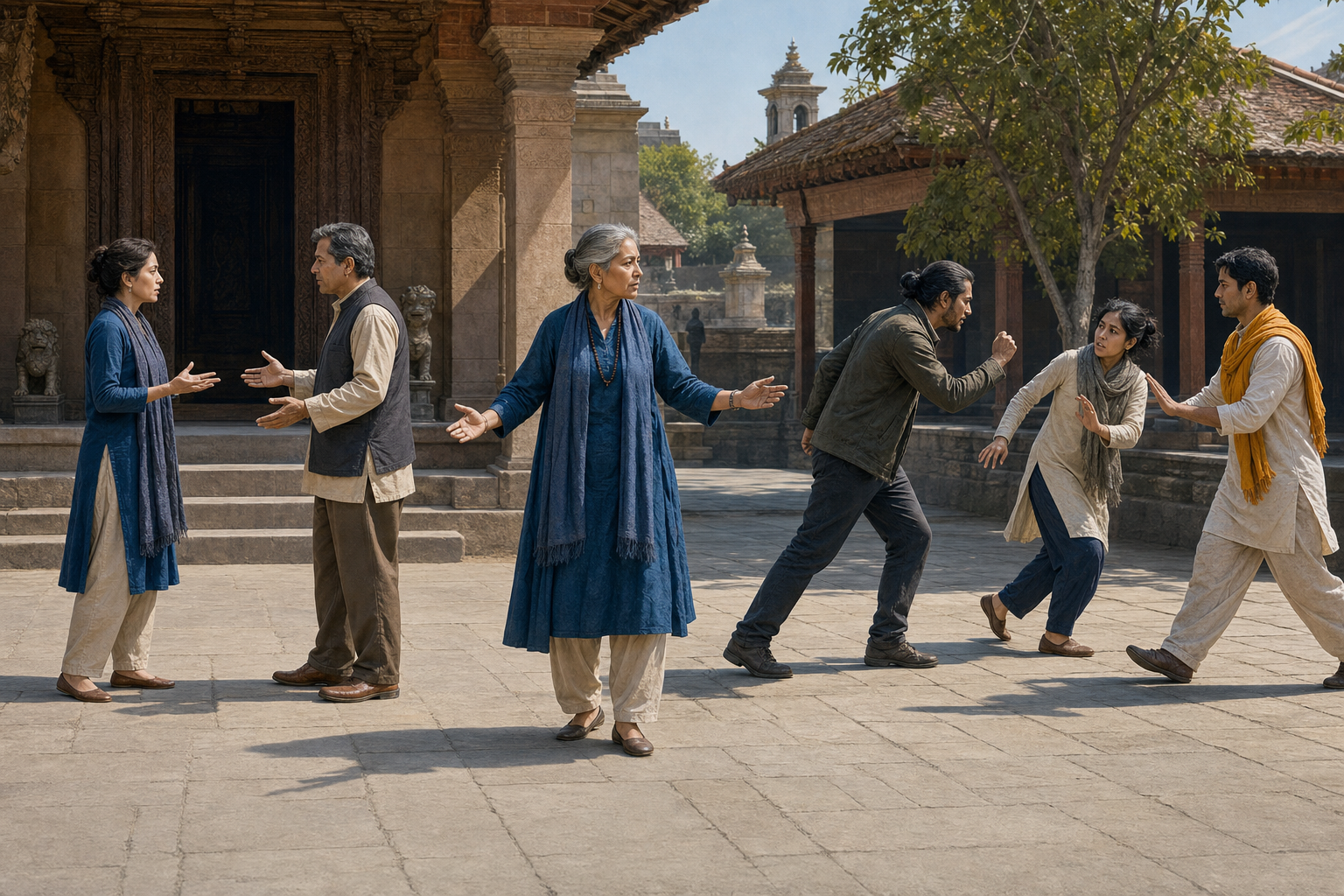
Religiously charged disputes escalate when several different complaints are compressed into one phrase such as hurt sentiments. That phrase may describe the community’s experience, but it does not tell an administrator, court, publisher, or undecided citizen what happened. Start by classifying the grievance.
| Possible harm | What you need to establish | Sensible first response |
|---|---|---|
| Historical disagreement | Two interpretations draw different conclusions from the record | Publish a documented rebuttal or arrange a structured debate |
| Factual error | A date, quotation, translation, event, or attribution can be tested and shown to be wrong | Request a correction, erratum, or contextual note |
| Religious insult | The complete words, images, context, intended audience, and evidence relevant to intent | Seek an explanation, apology, correction, or legal review according to the seriousness of the conduct |
| Possible incitement or promotion of enmity | More than offense: specific language and circumstances indicating a concrete risk of unlawful hostility or disorder | Preserve the evidence and consult qualified counsel before asking for coercive action |
| Public-space disruption | The place, time, expected footfall, blocked routes, choke points, emergency access, and duration | Request a narrow traffic, crowd, and safety plan rather than a restriction on belief or identity |
This distinction matters because cultural injury and legal prohibition are not the same question. For many families, Chhatrapati Shivaji Maharaj is encountered through lessons, fort visits, community memory, and a living ideal of principled rule. That attachment helps explain why a disputed portrayal can cause deep anger, but the strength of the attachment does not by itself settle the historical or constitutional issue.
Write your grievance in a single testable sentence: We object to this exact act or claim, for these stated reasons, and we seek this defined remedy. If you cannot complete that sentence without relying on slogans, you are not ready to call a protest. Clarify the case first.
Turn outrage into an evidence file
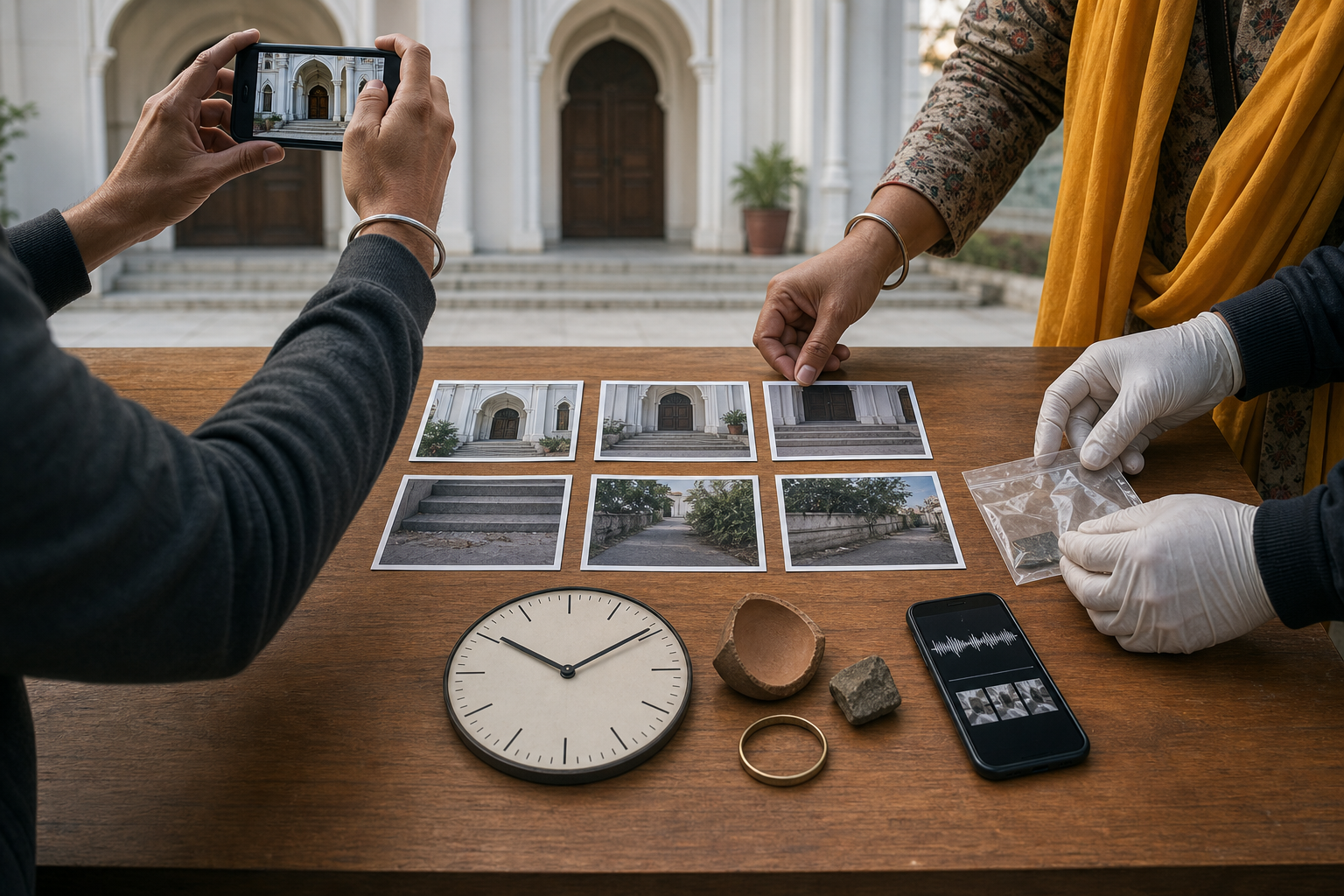
A cropped image, a forwarded message, or a paraphrase from an ally is not a reliable foundation for public accusation. Before mobilizing people, assemble a file that a skeptical reader can inspect without having to trust your organization.
- Preserve the complete material. Record the title, author or speaker, edition, page, language, translation, date, time stamp, and surrounding passage. Keep the unedited image or recording where applicable.
- State the contested proposition neutrally. Do not replace it with a more extreme claim that is easier to denounce.
- Separate factual assertions from interpretation. A mistranslated term can be corrected directly. A disagreement about a ruler’s motives requires an argument, not merely a correction notice.
- Build a traceable historical record. Claims about Shivaji’s life and statecraft, for example, may require comparison across Marathi bakhar literature, farmans, Persian and Portuguese chronicles, inscriptions, land grants, revenue records, and early colonial reports. Record the language, genre, date, purpose, and limits of each item rather than treating every record as equally reliable.
- Audit translations. Place the original wording beside the disputed translation, identify the translator or edition, and explain why your rendering better fits the grammar and context.
- Document the alleged harm accurately. Distinguish anger, reputational injury, a threatened disturbance, and an actual call to unlawful action. Do not inflate one into another.
- Attach the proposed remedy. Specify the correction, annotation, event condition, route change, review process, or legal question you want considered.
The archive does not mechanically deliver one uncontested interpretation. A credible argument shows its chain of reasoning: which records support the claim, which records complicate it, why one reading is preferred, and what remains uncertain. If two readings survive that examination, the honest response is to argue for the stronger reading rather than accuse every dissenter of malice.
This is also where Dharmic disciplines become practical rather than decorative. Jain anekantavada warns against confusing a partial view with the whole. The Hindu ethic of respect across paths, Sikh traditions of sangat and vichar, and the Buddhist avoidance of destructive extremes all make room for firm disagreement governed by humility and reason. These traditions are not interchangeable, but each can help an organizer impose a useful rule: represent an opponent’s claim accurately before answering it.
Plan a protest that protects people and your cause
Peaceful assembly is protected by Article 19(1)(b), while Article 19(3) permits reasonable restrictions in the interests of public order. Article 25 likewise protects religious freedom subject to public order, morality, and health. The governing balance is neither unrestricted occupation nor automatic prohibition: Himat Lal K. Shah v. Commissioner of Police (1973) rejected unsupported blanket exclusion, while Amit Sahni v. Commissioner of Police (2020) addressed the impermissibility of indefinitely occupying public ways.
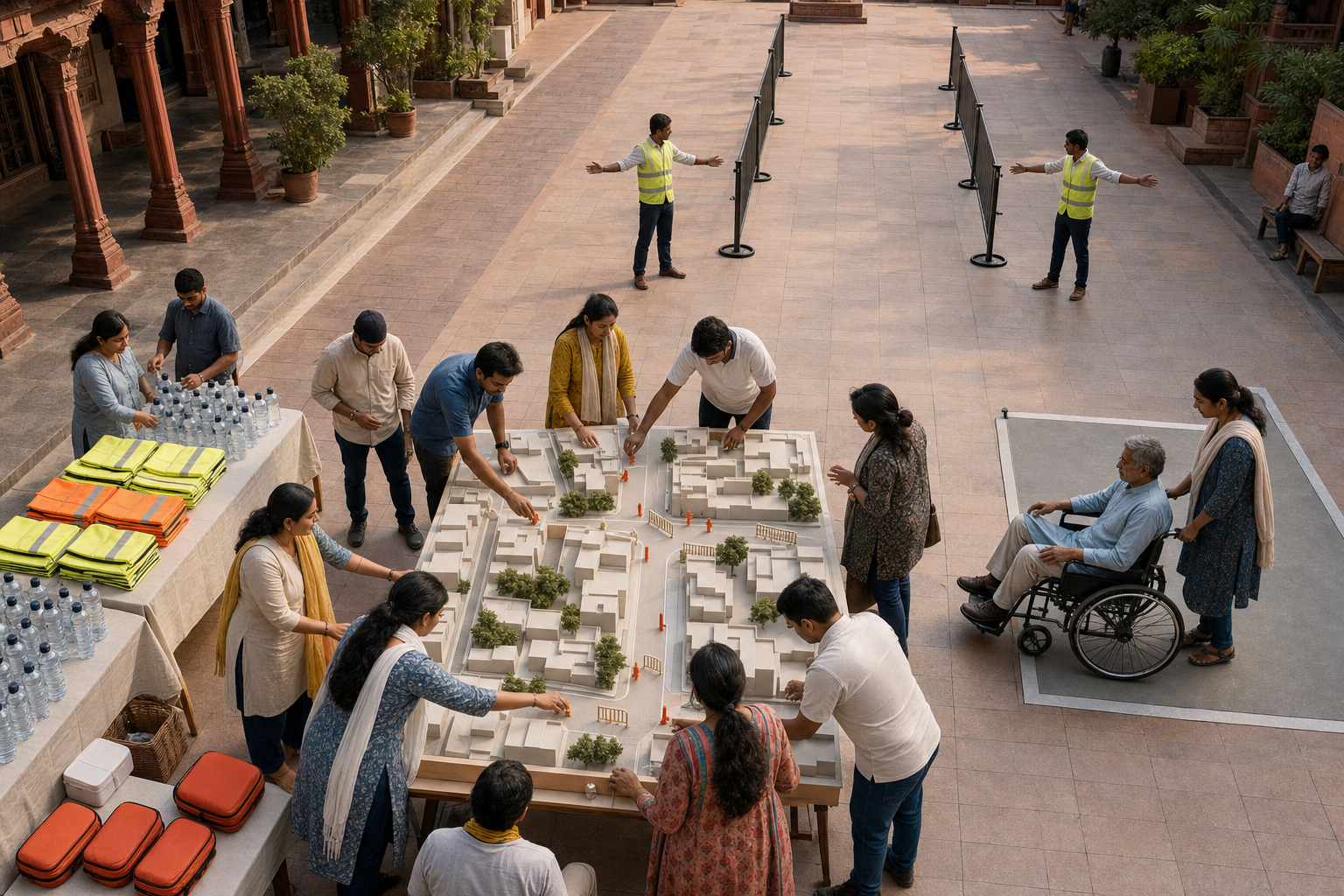
If you are organizing a demonstration, settle the operational details before publishing the call:
- Name an accountable organizer, a police or municipal liaison, and a small group of identifiable volunteer marshals. Marshals guide participants and report problems; they are not a private enforcement force.
- Put the location, assembly time, route, speaking period, and dispersal time in writing. Make sure the plan preserves access for residents, shops, commuters, temples, hospitals, and emergency vehicles.
- Set a capacity from the usable area, not from the number of people you hope will attend. For high-footfall gatherings, a planning benchmark is to keep density below three people per square metre; use any lower limit required by the venue, fire plan, or local authority.
- Map entry and exit flows, choke points, queue areas, and a clear emergency corridor for ambulances and fire services. Where the site permits it, one-way pedestrian loops reduce opposing flows.
- Prepare first-aid and hydration points. Tell marshals how to pause entry, open an exit, and contact emergency services if density or agitation rises.
- Publish accurate advisories in the languages participants and neighbors use. In a Maharashtra setting, that may include Marathi, Hindi, and English. Use one verified channel for route changes and one designated team to correct rumors.
- Agree on sound, vendor, sanitation, parking, and waste arrangements. Check current local requirements and the applicable timing and decibel limits under the Noise Pollution (Regulation and Control) Rules, 2000.
Your code of conduct should prohibit threats, dehumanizing slogans, harassment, property damage, weapons, and attempts to force bystanders or shopkeepers to join. It should also instruct participants not to circulate unverified claims during the event. Non-violence is not passive branding; it is a set of decisions made before tempers rise.
If officials issue a prohibitory order, ask for the written text. Check the defined zone, time window, restricted activities, reasons, exemptions, and review mechanism. A lawful public-order measure should be specific, reasoned, time-limited, and applied evenly. If the order appears excessive, seek clarification or a legal challenge rather than testing it through a physical confrontation.
Choose the least restrictive remedy that can work

Freedom of expression under Article 19(1)(a) protects criticism, interpretation, and rebuttal, subject to the grounds for reasonable restriction in Article 19(2). In disputes over religion and history, mere offense or disagreement has generally not been treated as enough to suppress circulation. A coercive restriction requires a much stronger showing, such as legally relevant intent, incitement, or a proximate connection to public disorder.
That threshold is not an instruction to tolerate deliberate falsehood. It is an instruction to match the remedy to the proved conduct. Use a response ladder:
- Request a precise factual correction. Quote the contested wording and supply the evidence for the replacement.
- Ask for an explanation, erratum, translation note, or contextual statement when the problem may be ambiguity or careless framing.
- Propose an annotated edition that identifies disputed claims and points readers toward competing evidence.
- Commission a documented rebuttal, translation audit, or response monograph. Make the evidence accessible so readers can test both positions.
- Convene an independent panel of qualified historians or relevant scholars. Publish its terms of reference, conflicts of interest, materials considered, and areas of disagreement.
- Hold a moderated public discussion with equal speaking rules, advance disclosure of evidence, and a ban on personal threats.
- Seek formal legal restriction only when counsel can connect the material and surrounding facts to the exact current statutory and constitutional threshold.
A ban is not a synonym for condemnation. Strategically, an unsupported ban demand can move attention away from the alleged error and toward the attempt to suppress it. A rigorous rebuttal keeps the disputed claim at the center and lets the public see which side can withstand scrutiny.
Do not use a speech restriction to solve a crowd-management problem. If the danger is blocked roads, unmanaged density, noise, or emergency access, ask for time, place, route, capacity, and safety conditions. Conversely, a traffic order cannot decide whether a historical interpretation is true. Keeping those questions separate prevents administrative convenience from becoming intellectual censorship.
If your organization is considering a criminal complaint, publication forfeiture, or a court petition, have a qualified lawyer identify the exact law currently in force, the required evidence, the proper forum, and the proportional remedy. Copying a provision or accusation from an earlier controversy can misstate the law and damage an otherwise serious case.
Key takeaways for a disciplined Dharmic response
- Define whether the dispute concerns interpretation, factual error, insult, possible incitement, or use of public space.
- Preserve the complete context before sharing clips, screenshots, translations, or accusations.
- Make historical claims reproducible: identify the records, translations, reasoning, contrary evidence, and remaining uncertainty.
- Match the remedy to the harm. Use correction and rebuttal for errors or interpretations; use logistics for spatial risks; reserve coercive legal demands for cases that meet the applicable threshold.
- Give every protest a written capacity, route, emergency corridor, liaison, code of conduct, and dispersal time.
- Require non-violence in conduct as well as language. A protest for Dharma loses moral force when intimidation becomes its method.
- Ask officials for narrow, reasoned, time-limited, and even-handed public-order measures.
Before announcing your next demonstration, put a one-page charter in every organizer’s hands: the exact grievance, the evidence, the remedy sought, the site plan, the responsible liaison, the dispersal time, and the non-violence rule. If those fields cannot yet be completed, pause and do the evidentiary work. If they can, you will be prepared to defend a sacred legacy without surrendering the civic freedoms through which truth can prevail.
References
- DharmaRenaissance Blog – Kolhapur Protests over Shivaji’s Legacy: Calls to Ban Shivaji Kon Hota? Spark Legal Debate
- DharmaRenaissance Blog – Saras Baug Protest Ahead of Bakri Eid: Smart Crowd Controls to Protect Peace in Pune