
You see the appeal after the gathering is over: a short video, an angry caption, and hundreds of people asking why nobody showed up. You agree, share it, and move on. That sequence is precisely what has to change.
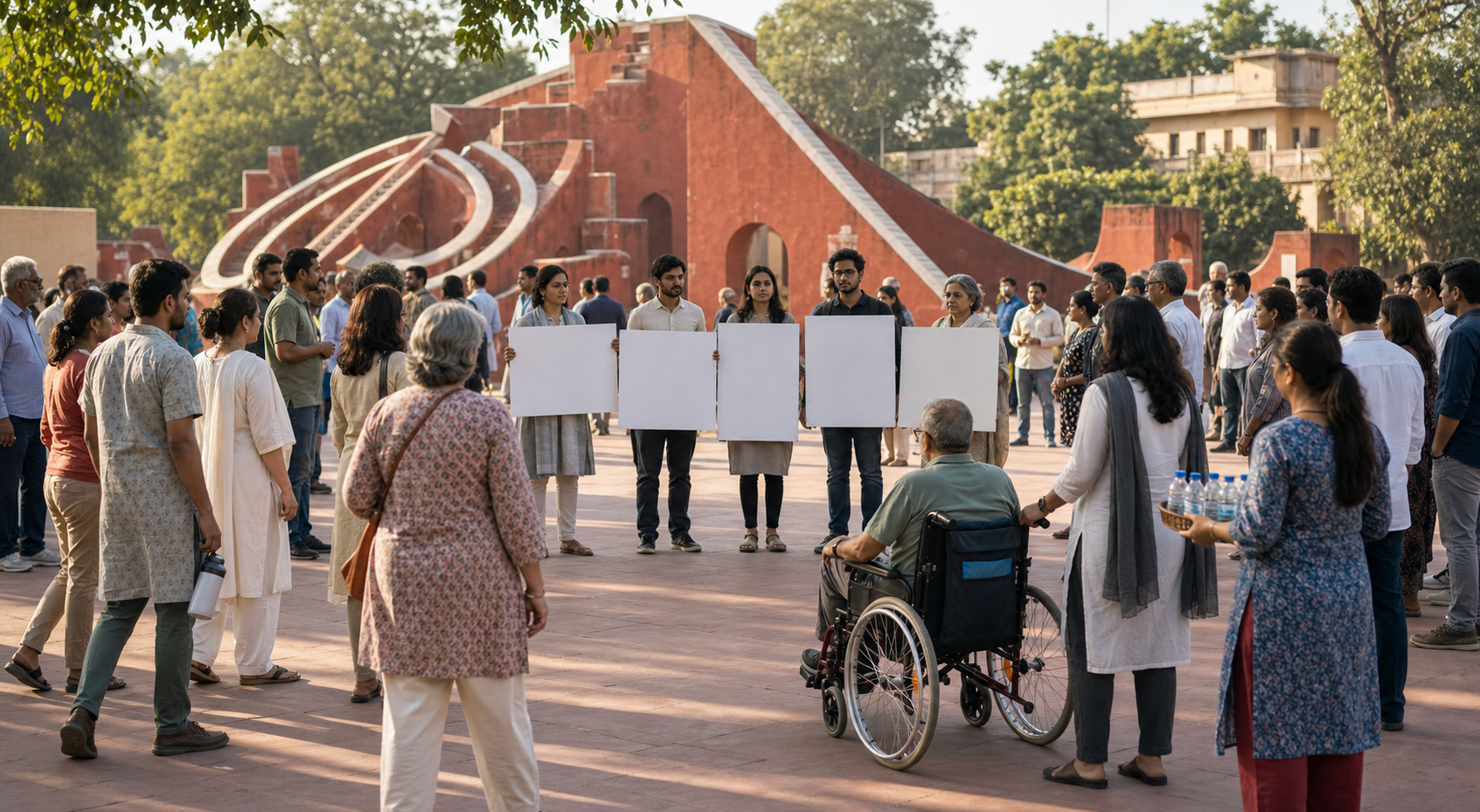
The immediate complaint is stark: when Kashmiri Hindus protested for their human rights at Jantar Mantar, the large public presence supporters believed the cause merited was missing. If you want to help, the useful question is not whom to condemn afterward. It is how to become a reliable participant before, during, and after the next call for solidarity.
Start with the protesters’ exact ask
“Support Kashmiri Hindus” expresses a moral position, but it does not yet tell you what a particular protest is trying to achieve. The gathering may be seeking recognition, an official response, public attention, institutional accountability, or action on a defined grievance. Do not substitute your preferred agenda for the organizers’ stated one.
Before forwarding a protest notice, find four pieces of information:
- Who is organizing it: Look for a named organization, authorized representative, or organizer-controlled communication channel.
- Where and when people should assemble: Confirm the venue, meeting point, schedule, and any current participation instructions.
- What the protest is asking for: Reduce the central demand to one accurate sentence using the organizers’ own language.
- What supporters are being asked to do: Attendance, outreach, documentation, letters to public representatives, and follow-up work are different commitments.
If one of these elements is missing, ask the organizers. Do not fill the gap with speculation, an old image, or a slogan borrowed from another dispute. A call without a clear demand may circulate widely while producing no usable action.
You can defend Kashmiri Hindus’ right to be heard without endorsing every statement made by every person associated with a gathering. Keep the core human-rights concern distinct from party loyalties, social-media feuds, and unrelated arguments. That distinction makes broader solidarity possible without making it dishonest.
Make your presence useful, not merely visible

Online attention and public participation do different jobs. A share can alert someone to an event. It cannot stand in a public space, listen to testimony, help an elderly attendee find the meeting point, or demonstrate that the issue has a constituency beyond the people directly affected.
Physical turnout is not proof that every claim made at a protest is true, and a small gathering does not make a grievance false. Turnout does, however, affect whether a cause looks socially isolated or publicly consequential. That is why attendance matters when it is safe, lawful, and feasible for you.
- Invite people directly. A general broadcast lets everyone assume somebody else will attend. Send the verified details to people you actually know and ask whether they can join you.
- Arrange the handoff from interest to attendance. Agree on a meeting point, coordinate travel, and make sure everyone has the organizer’s current notice rather than a cropped screenshot.
- Use the protest’s central demand. If you carry a placard or publish a caption, make it reinforce the stated purpose instead of introducing a separate ideological argument.
- Respect consent. Ask before recording close-up testimony or identifying a participant. A person’s presence at a public gathering does not automatically make every detail of that person’s life yours to distribute.
- Follow current venue instructions. Protest arrangements and restrictions can change. Check the organizers’ latest communication, respect designated areas, and prioritize safety and lawful conduct if crowd conditions change.
If distance, disability, work, caregiving, or safety prevents you from attending, choose a defined remote role. Circulate the verified notice to a local temple committee, cultural association, student group, or professional network. Prepare a factual summary. Ask a public representative for a written response to the specific demand. Help organizers preserve links and contact details. Remote solidarity becomes useful when another person can point to the task you completed.
Build a chain of action around the gathering
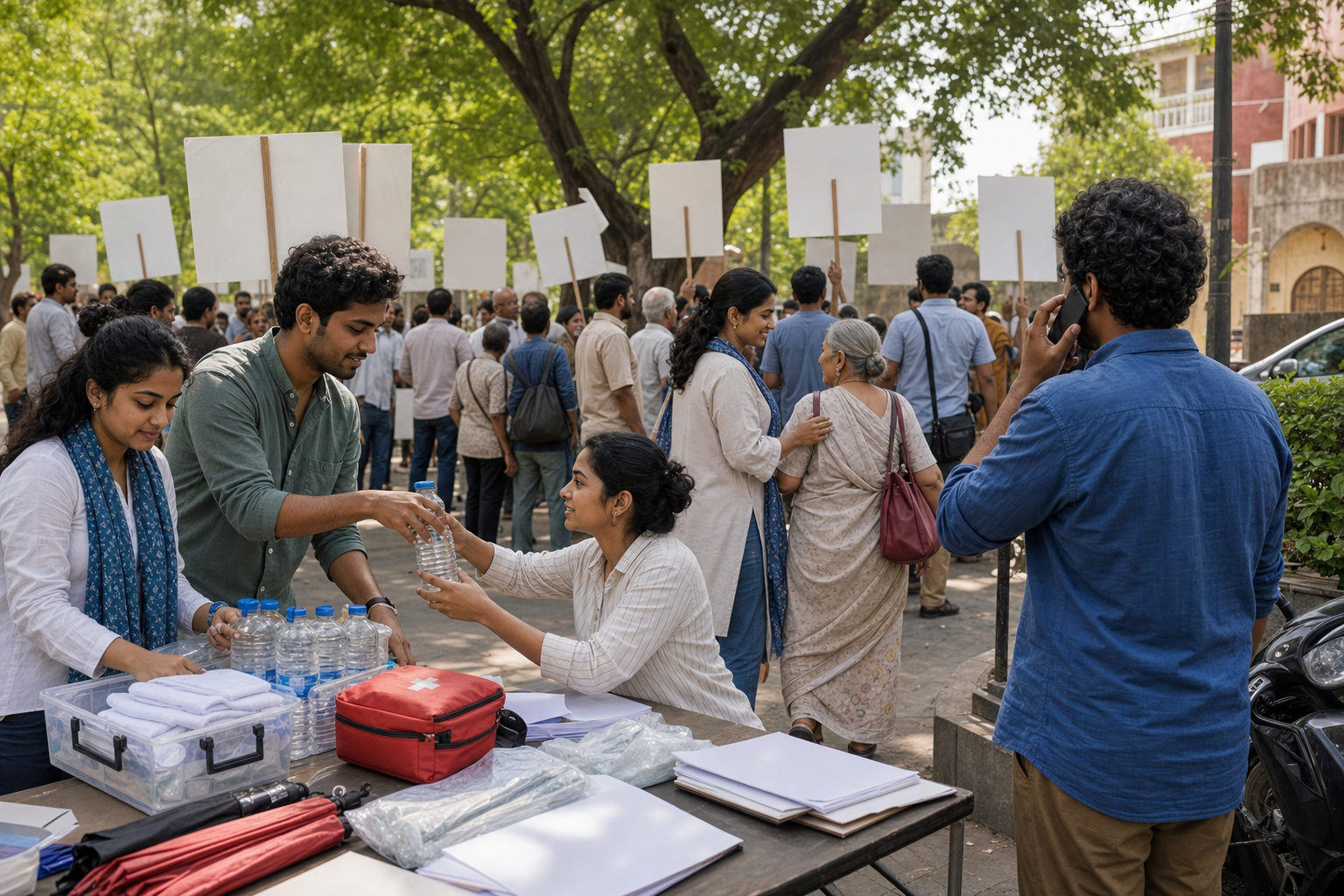
A protest should not begin when the first placard is raised or end when the last participant leaves. Treat it as a sequence with work on both sides of the public event.
Before people assemble
- Create one shareable notice containing the organizer, exact demand, location, schedule, contact channel, and requested action.
- Replace vague promises with confirmed responsibilities: attendee outreach, travel coordination, on-site assistance, documentation, or follow-up.
- Ask participating temples and associations to name a contact person. An organizational endorsement without anyone responsible for mobilization often remains only a logo.
- Correct inaccurate dates, recycled images, and exaggerated claims inside your own network before they spread beyond it.
While the protest is under way
- Listen before interpreting. Record the exact demand and the names and roles of speakers whose statements you intend to share.
- Photograph signs, the speaking area, and the gathering only where doing so respects organizers’ instructions and participants’ consent.
- Share context with any image or clip: identify the event, place, purpose, and requested next step. A dramatic fragment without context may travel farther while communicating less.
- Help keep the gathering centered on Kashmiri Hindu voices. Allies should increase their reach, not compete to become the principal attraction.
After people go home
- Publish a concise factual account while names, demands, and follow-up details are still clear.
- Send the central demand and verified documentation to relevant civic organizations, editors, and public representatives without embellishment.
- Record any response, refusal, or requested next step. Accountability requires a trail that others can continue.
- Keep the attendee and volunteer network available for the next action. Rebuilding the contact chain from nothing is how every gathering becomes an isolated event.
The strongest measure of solidarity is not the emotional intensity of the day. Ask whether more people can now state the demand accurately, whether affected voices reached a wider public, whether institutions received a precise request, and whether a functioning network remains afterward.
Protect the cause from rhetoric that drives people away

Frustration with poor turnout is understandable. Contempt is not a mobilization plan. Calling every absent Hindu a coward may reward people already inside an angry online circle, but it gives the uncertain, uninformed, or newly interested person no honorable path into action.
Keep these habits out of solidarity work:
- Dehumanizing names for other protesters, communities, journalists, or potential supporters.
- Claims that all Hindus, all young people, all media, or every political opponent behaves in one way.
- Inflated attendance claims, misleading camera angles, old footage, or images detached from their original setting.
- Unrelated partisan slogans that bury the Kashmiri Hindu demand under a broader loyalty test.
- Abuse directed at people who ask for evidence, clarification, or a practical way to help.
A pro-Hindu position does not grow stronger when truthfulness and dignity are discarded. A recognizably Dharmic response should show satya in what we circulate, seva in the work we accept, and restraint in how we treat people. That standard is not passivity. It is what keeps righteous concern from becoming careless speech.
Public solidarity should also remain open to any citizen prepared to defend dignity and rights in good faith. Supporting Kashmiri Hindus need not require a person to adopt every religious, cultural, or political conclusion held by every other supporter. A clear demand creates room for principled cooperation; an identity test shrinks it.
Key takeaways
- Verify the organizer, location, schedule, central demand, and requested action before forwarding a protest notice.
- Convert broad online approval into direct invitations, travel coordination, attendance, documentation, and institutional follow-up.
- Use the organizers’ stated demand instead of attaching unrelated slogans or partisan disputes.
- Protect participants’ consent and share images or testimony with enough context to prevent distortion.
- Judge solidarity by the network and accountability trail left after the gathering, not only by momentary online attention.
- Reject humiliation, exaggeration, and communal abuse; they make Kashmiri Hindu voices easier to dismiss rather than harder to ignore.
Set one rule for yourself before the next appeal appears: do not stop at the outraged repost. Check whether an organized action is being requested, choose a role you can actually complete, invite someone directly, and remain available for the follow-through. Kashmiri Hindu protesters need more than spectators in a comment section. They need citizens whose presence, accuracy, and persistence can be relied upon.