
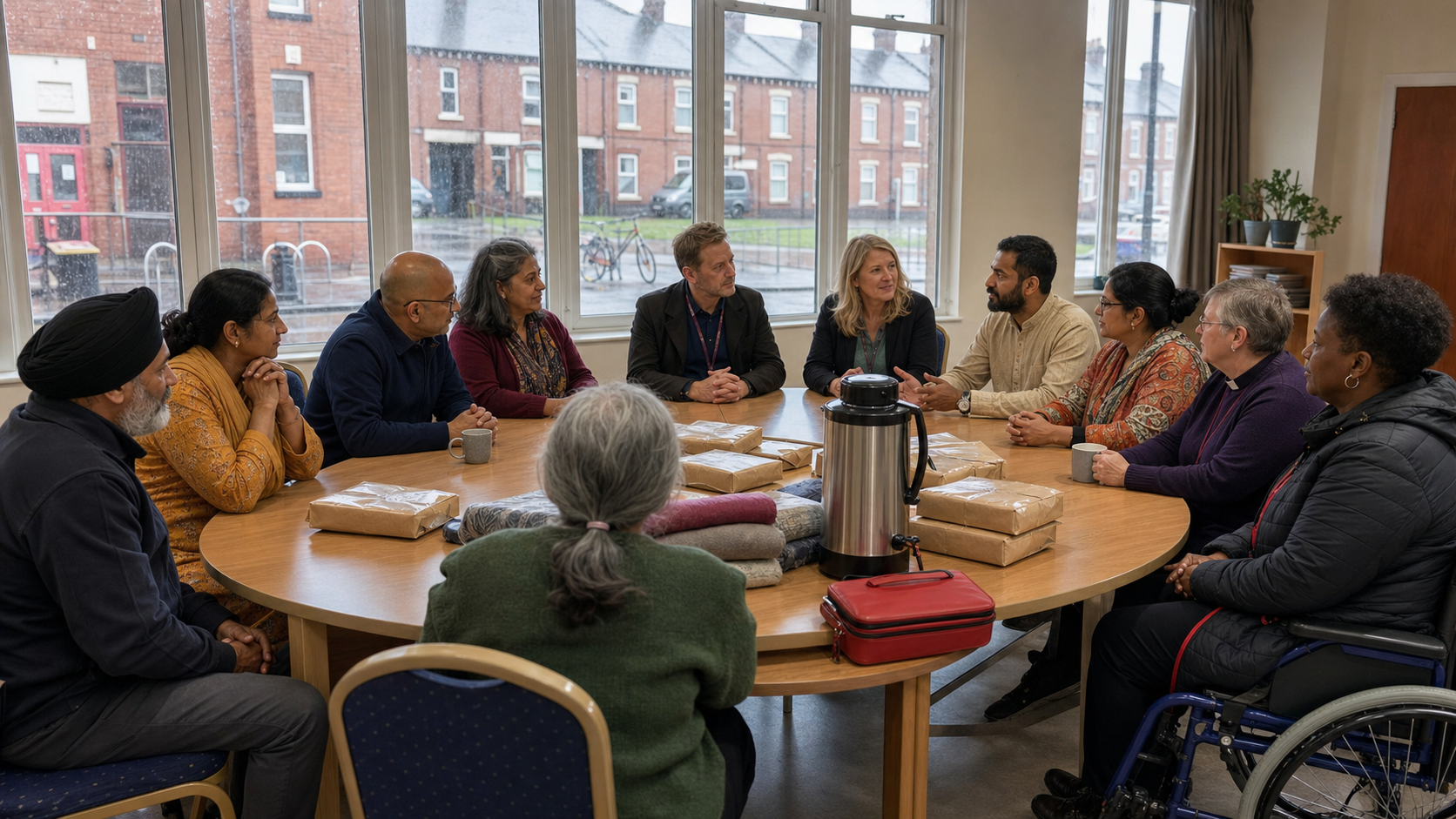
If you help lead a mandir, gurdwara, vihara, derasar, ashram, sangha, or dharmic charity in Britain, your difficult question is probably not whether seva matters. It is how to serve the wider public without turning a living tradition into a generic volunteering brand, and how to work with councils, schools, hospitals, charities, and interfaith bodies without surrendering your own voice.
The recognition of Bhaktivedanta Manor volunteers at a King’s Garden Party and a multi-faith convening at Lambeth Palace illustrate two doors into British civic life: dependable service and structured relationships. Neither requires theological dilution. Both require an institution that can explain what it stands for, what it offers its neighbours, and how it will remain accountable.
Key takeaways
- Translate dharmic principles into a clear public promise, but do not erase the tradition that motivates the work.
- Choose a defined need, a reachable group, a responsible programme lead, and evidence that can show whether the service helped.
- Make governance, safeguarding, financial accountability, complaints, and succession visible before seeking a prominent civic role.
- Enter partnerships as an equal contributor pursuing a shared outcome, not as ceremonial religious representation.
- Measure civic service and spiritual health together. Growth in attendance is not success if sadhana, teacher formation, or ethical discipline is weakening.
Begin with a civic covenant, not a publicity campaign
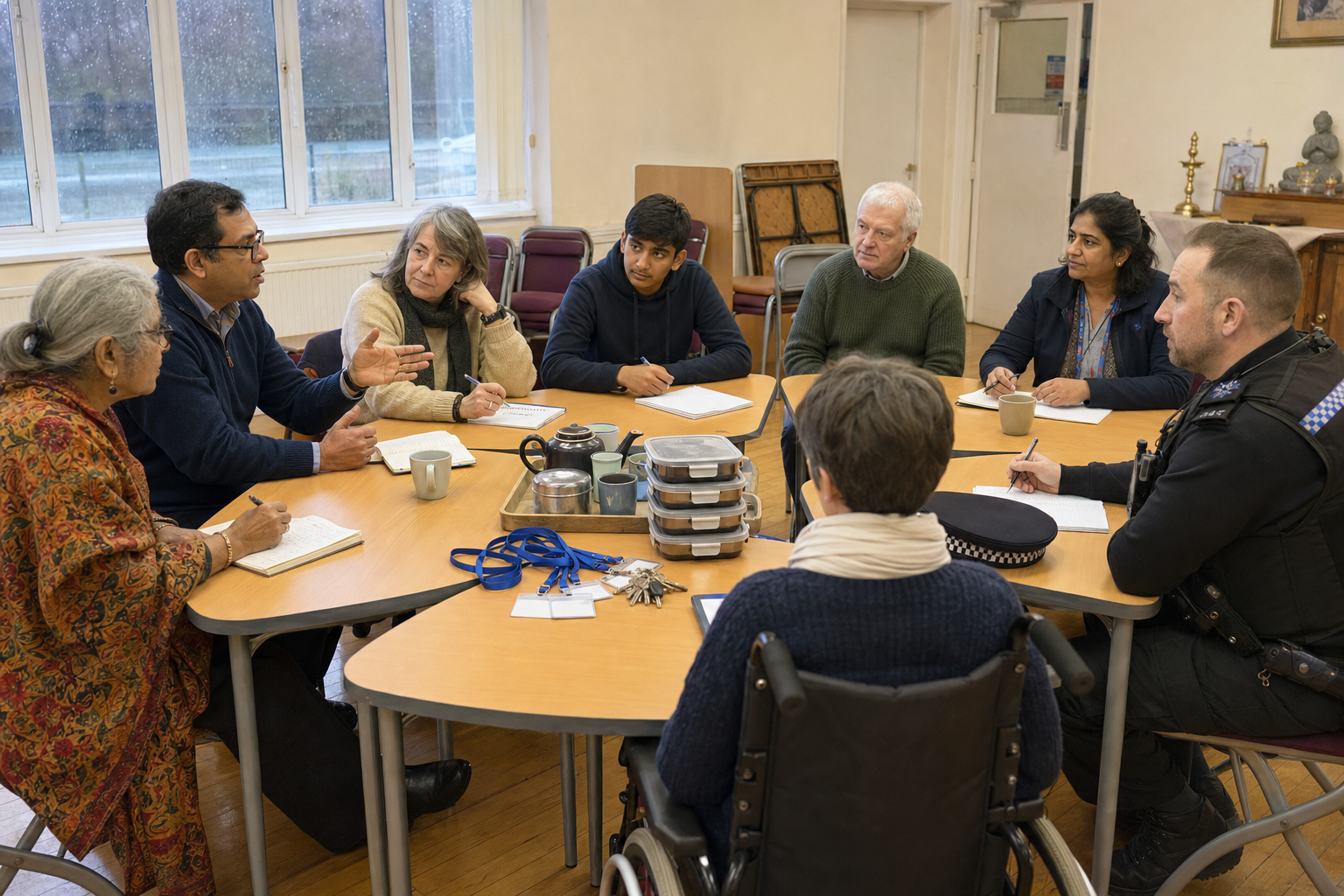
A British dharmic institution becomes useful to civic partners when it can answer four questions plainly: What conviction moves us? Which public need are we addressing? What can people reliably expect from us? What boundaries protect our spiritual and ethical integrity?
That explanation should work in both dharmic and civic language. Nishkama karma can be described as action undertaken without personal reward. Sikh seva can be presented as humble service rooted in equality. Buddhist metta and karuna become disciplined friendliness and compassion in public practice. Jain ahimsa and dana support non-harm and generous care. This is translation, not concealment. The shared vocabulary of seva, ahimsa, dana, karuna, and responsibility is strongest when each community also explains its distinct lineage and practice.
Turn a value into an operating promise
Draft your civic covenant by completing these statements:
- Because our tradition teaches __________, we accept a duty to __________.
- The people or place we intend to serve are __________.
- They can expect us to provide __________ under these stated conditions: __________.
- Participation will not depend on conversion, worship, donation, membership, or agreement with our theology.
- We will judge the work by __________, and people can raise a concern through __________.
- We will not compromise __________, because it is essential to our lineage, safety, or spiritual purpose.
A community kitchen, for example, may be inspired by langar, prasada, dana, or seva while remaining open to people who do not participate in worship. A meditation or kirtan programme can state its religious roots without being advertised as clinical treatment. A school visit can teach Hindu, Buddhist, Jain, or Sikh beliefs accurately without asking pupils to affirm them. The public offer is inclusive; the institution’s identity remains truthful.
Know the two ways translation can fail
The first failure is vagueness. Words such as unity, harmony, awareness, and empowerment sound agreeable but do not tell a council officer, head teacher, beneficiary, or volunteer what will happen. Replace them with an activity, a group, an access route, and an intended change. Instead of promising to promote wellbeing, say that trained facilitators will run a community-based meditation group, explain its limits, and maintain a referral route for people requiring professional care.
The second failure is self-erasure. Some institutions remove every dharmic term in the hope of appearing neutral. That leaves partners unable to understand why volunteers stay committed, why food or conduct follows particular rules, and why certain practices cannot be casually modified. Keep the original term, give a short plain-English explanation, and show how it shapes conduct. You are making Dharma legible, not apologising for it.
Make the institution safe to trust before asking to be heard
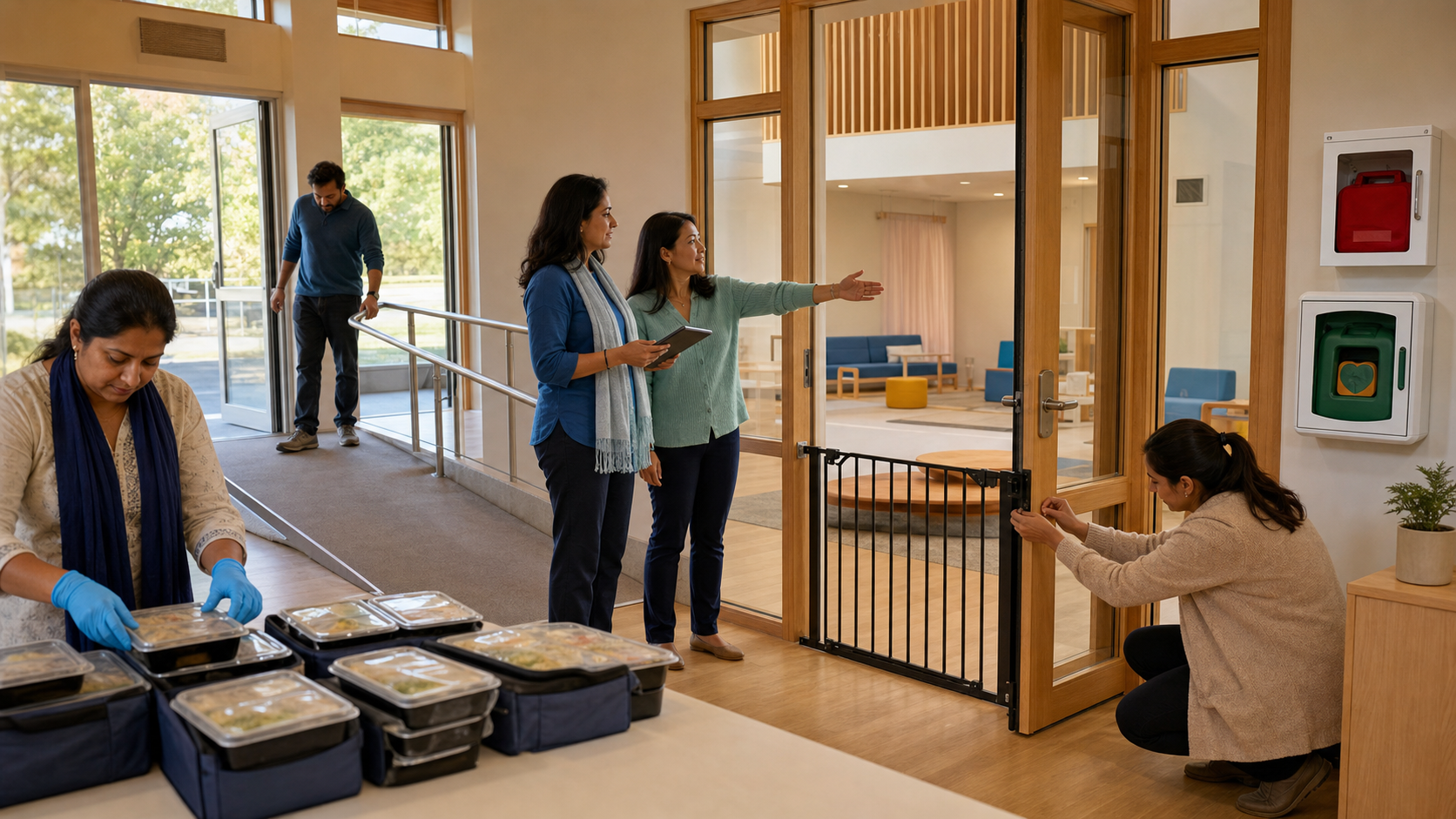
A compelling speaker or generous festival cannot substitute for institutional readiness. Before another organisation can refer children, families, patients, pupils, or vulnerable residents to you, it needs to know who makes decisions, who supervises the work, where money goes, and what happens when something goes wrong.
Dharmic governance need not imitate a commercial company. It should, however, embody the restraint, truthfulness, distributed responsibility, and protection of the vulnerable that the institution teaches. Representative councils, transparent finances, teacher formation, succession planning, and independent avenues for resolving conflict give institutional form to those duties.