
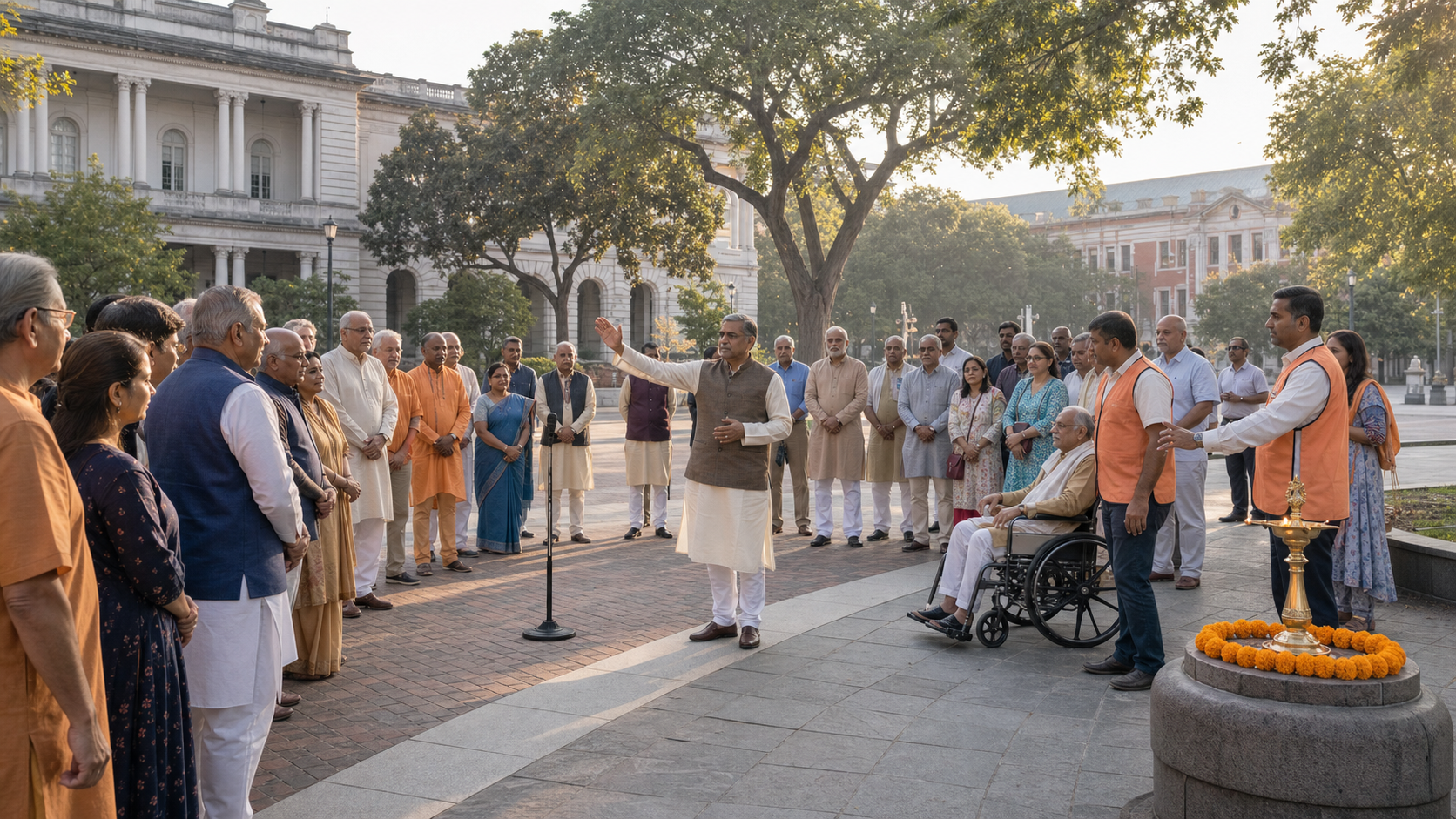
Someone announces a lecture that you believe mocks a Hindu Saint. A clipped video circulates with an inflammatory claim about a Guru. A social-media account targets worshippers rather than debating their beliefs. You want to respond, but an angry forward, an exaggerated allegation, or a vague demand for arrest could amplify the insult and weaken a legitimate grievance.
Your aim should be precise: defend religious dignity, prevent disorder, and preserve the freedom to examine ideas. You can do all three if you classify the conduct carefully, preserve the complete evidence, request a proportionate remedy, and keep any protest disciplined from beginning to end.
Start with the conduct, not the label
The legal threshold and the ethical threshold are not the same. Speech can be ignorant, needlessly insulting, or factually poor without necessarily becoming a criminal offence. Conversely, a speaker cannot turn threats, targeted vilification, or deliberate provocation into protected inquiry merely by calling it rationalism, comedy, or scholarship.
India’s constitutional balance protects expression through Article 19(1)(a) while permitting limited restrictions under Article 19(2), including restrictions connected with public order, decency, and morality. The practical consequence is important: anticipated offence alone is not the same as concrete evidence of imminent disorder, and free speech is not an exemption from every lawful consequence.
| What happened | What you should notice | Proportionate first response |
|---|---|---|
| A practice, historical interpretation, or empirical claim was questioned | Whether evidence was offered and believers were treated as people capable of reason | Answer the claim with evidence, request a correction if a factual error is identifiable, or arrange a scholarly response |
| The language was coarse or mocking | Whether the target was an idea, a public claim, a sacred figure, or worshippers as a group | Request an apology, contextual clarification, moderated reply, or public counterspeech |
| There appears to be repeated, targeted denigration | The full context, pattern, exact words, intended audience, and evidence of deliberate intent | Preserve the complete record and obtain qualified legal review before alleging an offence |
| There is a threat, call for hostility, or credible danger of imminent violence | Specific language, identified targets, capability, timing, and any immediate safety risk | Prioritise safety and notify the appropriate authorities promptly rather than confronting the person |
Ask four questions before publicly describing something as anti-Hindu or anti-Dharmic:
- What exact words or images are objectionable?
- Is the speaker disputing a claim, ridiculing a sacred object, attacking a revered person, or directing hostility at believers?
- What does the complete recording or thread show immediately before and after the disputed passage?
- What remedy would address the actual harm: correction, apology, right of reply, event conditions, platform review, police review, or urgent protection?
Do not collapse these different situations into one accusation. If every disagreement is described as hatred, officials and the wider public may discount the complaint that contains genuine evidence of malicious conduct. Precision makes the serious case harder to dismiss.
The civilizational importance of a revered figure raises the cultural stakes, but it does not remove the need to distinguish vigorous scholarship from deliberate and targeted denigration. You can defend the dignity of Samarth Ramdas Swami or any other Saint without claiming that every historical question is forbidden. Reverence is strongest when it can identify the difference between inquiry and abuse.
Build an evidence record that can survive scrutiny

A complaint built from a cropped screenshot is easy to challenge. A complaint built from the original material, a clear chronology, and a narrowly stated objection gives an organiser, platform, lawyer, or public authority something it can assess.
- Record the original URL, account or channel name, displayed publication time, platform, and the time you accessed it. Do not rely only on a forwarded copy.
- Preserve the complete material lawfully. For a video or lecture, note the relevant timestamps and retain enough of the surrounding discussion to show context. For a thread, capture the sequence rather than one isolated message.
- Transcribe the exact disputed words. Mark unclear audio as unclear instead of guessing. Keep the original-language wording alongside any translation.
- Separate fact from interpretation. One column of your notes should say what was spoken, displayed, or done; another can explain why you believe it is false, insulting, malicious, or dangerous.
- Identify the relevant target accurately. Name the practice, text, deity, Saint, institution, or group actually addressed. Do not accuse an employer, family, religious community, or political organisation merely because of an unverified association.
- Preserve correspondence with the speaker, organiser, venue, platform, or authorities. A calm request and the response to it may help establish whether correction was possible and whether the conduct continued after notice.
- Keep witness names and contact details privately and with consent. Do not publish telephone numbers, home addresses, family details, or other personal information.
Do not improve the evidence by editing it. Adding captions that were not present, joining separate clips without disclosure, or circulating an uncertain translation as a verbatim statement creates a new dispute about your conduct. Keep an untouched copy and label any excerpt, transcript, or translation you prepare.
There is also an amplification trap. Reposting an offensive clip to every group can give it a much larger audience than it originally had. Share the complete evidence only with people who need it for verification, advice, reporting, or a decision. If public explanation is necessary, quote only the portion needed to identify the objection and link to context where appropriate.
If the material contains a specific threat or indicates immediate danger, stop treating it as a debate. Move to safety and contact the appropriate emergency or police service. Do not arrange a private confrontation or ask supporters to locate the person.
Match the remedy to the harm you can demonstrate
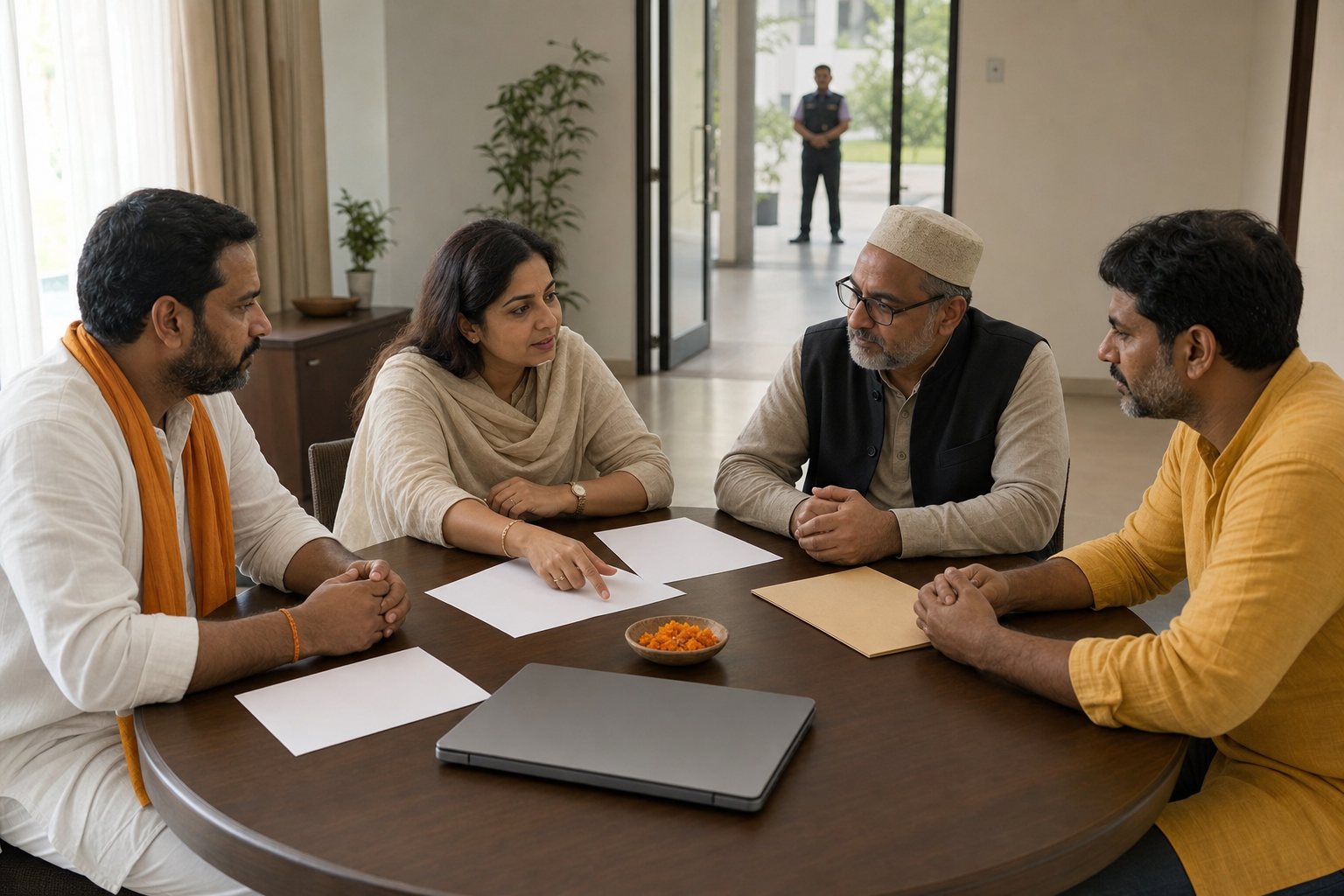
Cancellation is sometimes demanded because it feels decisive. It is also the remedy most likely to raise a serious free-speech objection when the evidence shows anticipated offence rather than an imminent, unmanageable threat. Start with the least restrictive measure capable of addressing the harm, then escalate if the facts justify it.
- Request a correction or clarification. Identify the exact statement, provide the contrary evidence, and specify the correction you seek. Avoid demanding a general confession of hostility.
- Ask for a right of reply. A companion lecture, written response, or scholar-led discussion can correct misinformation without giving any speaker immunity from challenge.
- Propose event safeguards. Useful conditions include an opening statement defining the scope, a code of respectful conduct, a moderator, a structured question period, representation from an informed Dharmic scholar, an accessible grievance channel, and an accurate archive of the proceedings.
- Use the platform’s reporting process honestly. Submit the original URL, relevant timestamps, complete context, and the rule you believe was violated. Do not organise false reports under unrelated categories.
- Submit a focused memorandum or complaint. Where the evidence may meet a legal threshold, give the competent authority facts it can verify rather than a bundle of slogans and forwarded messages.
- Seek cancellation or an urgent legal restraint only for a supported reason. Explain why narrower conditions, security, counterspeech, or a designated protest area cannot manage the specific risk.
A useful written grievance has a simple structure:
- Your name, contact information, and authority to speak for any organisation named.
- The event, account, recording, or publication being challenged.
- The exact words or conduct at issue, with URLs, timestamps, and full-context material.
- The distinction between verified facts and your inference about intent or likely harm.
- The concrete remedy requested and why a less restrictive remedy would or would not work.
- A commitment that your organisation will use peaceful, lawful means and cooperate with reasonable safety arrangements.
Put the legal labels last. Criminal codes and procedures can change, and the correct provision can depend on the date, jurisdiction, intent, context, and conduct. Copying section numbers from an old forwarded message may distract from a valid grievance. If you seek prosecution, compulsory removal, or an order restraining an event, ask a qualified Indian lawyer to map the verified facts to the law in force. A memorandum is a request for assessment, not proof that an offence occurred.
State the outcome you want in one sentence. For example: request correction of a specified false claim; provide a moderated reply at the same event; enforce a viewpoint-neutral conduct rule; create a safe protest area; investigate a documented threat. A decision-maker can act on a defined request. It cannot act responsibly on a demand to do something about disrespect.
Plan a protest that protects people and the message

A lawful protest is not a lesser response. It publicly records dissent while denying opponents an easy way to replace the original dispute with images of intimidation or disorder. Its credibility depends on preparation before supporters assemble.
- Confirm local requirements. Ask the relevant authority about permissions, location, route, timing, sound, crowd limits, traffic, and any venue-specific conditions. Requirements can vary, so do not treat a previous event as automatic permission for this one.
- Name one accountable coordinator. Give authorities and the venue a reliable liaison. That person should know the written plan, the requested remedy, and who can end the protest if safety deteriorates.
- Issue a short conduct code in advance. Prohibit threats, slurs, harassment, property damage, doxxing, forced entry, and objects that could be used as weapons. Make clear that disagreement with these limits means not participating under the group’s name.
- Protect access and safety. Keep entrances, emergency routes, and ordinary pedestrian movement open unless an authorised arrangement expressly provides otherwise. Do not surround individuals or vehicles.
- Brief identifiable volunteers. Their job is to relay instructions, maintain agreed boundaries, calm supporters, and call the coordinator when a problem begins. They are not an enforcement squad.
- Use signs that state the case. Name the exact correction, apology, right of reply, investigation, or safety condition being sought. Abuse directed at a speaker’s family, caste, religion, appearance, or private life weakens the Dharmic claim to principled conduct.
- Choose a spokesperson who knows the record. The spokesperson should be able to distinguish verified words from allegations, explain the requested remedy, and affirm the protest’s nonviolent rules without improvising criminal accusations.
- Document responsibly. Record official instructions, agreed boundaries, serious incidents, and the overall conduct of the gathering. Do not use cameras to chase, shame, or reveal the private details of bystanders.
- Set stop conditions. Suspend or end the gathering if violence begins, a credible threat emerges, emergency access is lost, or the coordinator can no longer maintain the agreed safety plan.
Prepare for provocation. If a heckler shouts an insult, participants should not touch, surround, or pursue that person. The coordinator can repeat one line: We are here for our stated remedy, and we will not participate in abuse. Report threats to the designated liaison and let the evidence speak afterward.
Follow lawful on-site directions even when you intend to challenge a decision later. Record the disputed direction accurately, obtain legal advice, and use the proper review process. A confrontation at the barricade rarely resolves a constitutional question; it usually changes which conduct the public remembers.
Dharmic restraint is practical here. Ahimsa governs the means, truthfulness governs the allegations, and courage prevents silence in the face of genuine malice. Hindu, Buddhist, Jain, and Sikh traditions are not one uniform doctrine, but their emphases on disciplined conduct, right intention, self-restraint, and responsible action all reject the idea that devotion requires uncontrolled anger. You defend sacred dignity more convincingly when your method displays the values whose dignity you are defending.
Key takeaways for your next response
- Offence, factual error, mockery, targeted vilification, and an imminent threat are different problems. Identify which one the evidence supports.
- Preserve the original material and full context before circulating excerpts or making a public allegation.
- Ask first for the least restrictive remedy capable of correcting the harm: clarification, reply, moderation, event safeguards, platform review, or a focused official complaint.
- Treat cancellation as a last resort requiring a specific explanation of why narrower safeguards cannot manage the demonstrated risk.
- Check local protest requirements, appoint an accountable coordinator, prohibit intimidation, protect access, and establish clear stop conditions.
- Obtain qualified legal advice before seeking prosecution, compulsory takedown, or an order that restricts an event.
If you are responding to a controversy now, do three things before issuing a public call: save the complete material, write one sentence naming the remedy you seek, and appoint one person to communicate on behalf of the group. That discipline turns hurt into a credible case, and a credible case gives both Dharma and lawful dissent their strongest protection.
References
- DharmaRenaissance Blog — Halt Sought for Shyam Manav’s ‘Buva Tethe Baya’: A Measured Call to Protect Faith and Free Speech
- DharmaRenaissance Blog — Satara Hindu groups seek decisive legal action to protect legacy of Rashtraguru Samarth Ramdas