

If you are trying to schedule a wedding, Griha Pravesh, child’s samskara, property transaction, or business opening in late May or early June 2026, mark the calendar before paying a non-refundable deposit. In the Indian calendar, Adhik Jyeshta Maasa runs from 17 May through 15 June 2026 in IST. Major elective beginnings are generally deferred during this interval.
That does not make the month empty, cursed, or spiritually inauspicious. It changes what kind of auspiciousness you seek. Use the month for existing duties, worship, restraint, study, and seva; then choose a local, event-specific muhurta for the postponed beginning. Do not assume that 16 June is automatically suitable simply because Adhika Maasa has ended.
Key takeaways for your 2026 calendar
- Planning boundary: Treat 17 May through 15 June 2026 as the Adhik Jyeshta interval in IST, but confirm the exact local start and end through a Panchang calculated for the city where the observance will occur.
- Usually defer: Vivaha, full Griha Pravesh, Upanayana, Mundan, Namakarana, Annaprashana, Karnavedha, major business launches, public inaugurations, and other elective new beginnings.
- Continue: Daily puja, Sandhya, temple worship, japa, study, seva, and obligatory or occasion-bound duties such as applicable Amavasya tarpanam and an ongoing monthly masika shraddha.
- After 15 June: Check Guru and Shukra Moodami, the five limbs of the local Panchang, the strength of the Moon and lagna, and participant-specific suitability. The end of Adhika Maasa removes one restriction; it does not create a complete muhurta.
- If delay would cause harm: Protect health, pregnancy, child welfare, lawful obligations, and essential housing first. Ask a trusted acharya or purohita how to separate the unavoidable act from the later ceremonial celebration.
- Use the pause: Choose a sustainable sankalpa involving japa, parayana, vrata, dana, or seva rather than filling the interval with anxiety about prohibitions.
Adhika Maasa changes the kind of auspiciousness to seek

The Hindu lunisolar calendar periodically needs an additional lunar month to remain aligned with the solar year. The practical rule is precise: when no Sankranti, or solar ingress, occurs between two consecutive Amavasyas, that lunar month becomes an Adhika Maasa. In 2026, the additional month is Adhik Jyeshta.
This astronomical adjustment explains the calendar, but the dharmic distinction explains how to live through it. Nitya duties are regular obligations. Naimittika duties arise because a particular occasion has occurred. Kamya karmas are elective actions undertaken for a desired worldly result. Adhika Maasa preserves nitya and naimittika dharma while generally placing celebratory, desire-driven beginnings on hold.
This is why calling the entire month “inauspicious” is misleading. In Vaishnava traditions it is honoured as Purushottama Maasa and treated as an unusually valuable period for bhakti, purification, and self-discipline. The caution applies mainly to launching a new outward cycle, not to worshipping Bhagavan, fulfilling an existing duty, helping another person, or correcting your own habits.
| Your plan | Usual treatment during Adhika Maasa | Practical move |
|---|---|---|
| Daily puja, Sandhya, japa, temple worship, or established sadhana | Continue | Keep the existing discipline intact; Adhika Maasa is a reason to deepen it, not interrupt it. |
| Amavasya tarpanam or an applicable monthly masika shraddha | Continue according to tradition | Confirm the local tithi and follow the family’s established procedure. |
| Vivaha, Upanayana, Mundan, Namakarana, Annaprashana, or Karnavedha | Normally defer | Ask for a suitable muhurta after the Adhika interval. If age, health, or another genuine constraint applies, seek case-specific guidance early. |
| Griha Pravesh | Normally defer the full rite | If occupancy cannot wait, ask whether a simple Ganesha or Satyanarayana puja may accompany the move, with the full Griha Pravesh and Vastu Shanti later. |
| New business, showroom, factory, or public launch | Normally defer the inaugural or revenue-bearing beginning | Use the month for due diligence, training, compliance, preparation, and testing. |
| Major contract or property registration | Defer where reasonably possible | Do not miss a binding legal deadline merely to follow a general calendar rule. Obtain the relevant legal or financial advice, then ask a priest how the ritual observance should be handled. |
| Routine worship or an obligatory yagna | Continue as enjoined | Distinguish an existing obligation from a special-purpose, celebratory yagna, which is more commonly postponed. |
| Lavish leisure, conspicuous consumption, or an opulent social event | Temper or defer | Redirect some of the saved time or money toward dana, annadana, study, or community service. |
The distinction rests on the purpose of the act, not merely its label. Preparing a business plan is not the same as making the first ceremonial sale. Moving because you must vacate a residence is not the same as selecting a festive Griha Pravesh date at leisure. The question to ask is: “Am I continuing a duty, responding to a necessity, or deliberately inaugurating a new desired cycle?”
How to choose a muhurta after 15 June
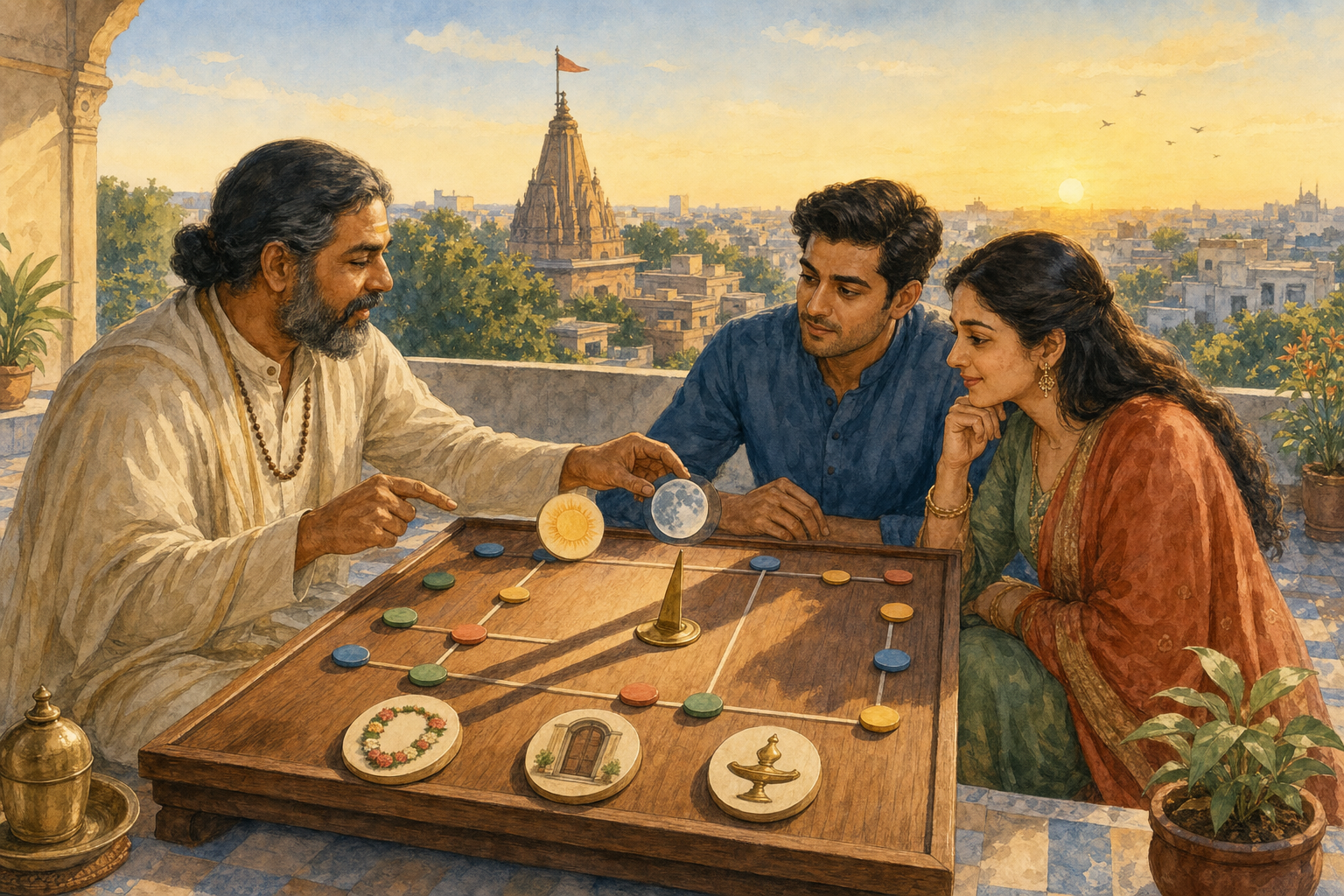
A common planning mistake is to treat the end of Adhika Maasa as if a single switch turns every following day auspicious. It does not. Think of 16 June as the first possible date to investigate, not a date already approved.
- Define the exact act being timed. Tell the purohita whether you need the wedding ceremony, entry into a house, a child’s initiation, a business registration, a public opening, or the first revenue-bearing transaction. Different acts depend on different ritual and astrological considerations.
- Fix the event location before checking the Panchang. Tithi and other calendar boundaries depend on local time, longitude, latitude, and sunrise. An India-based calendar screenshot is not sufficient for a ceremony in another country.
- Confirm the local Adhika Maasa endpoint. The 15 June date is an IST planning boundary. Ask for the actual endpoint used by your regional Panchang and parampara rather than converting the date mechanically between time zones.
- Check Guru and Shukra Moodami separately. Adhika Maasa and planetary combustion are different filters. Guru Moodami is especially relevant to learning, teachers, children, and initiations, while Shukra Moodami affects ceremonies associated with relationships, agreements, prosperity, and celebration. Their Asta and Udaya times must be taken from a local Panchang.
- Evaluate the five Panchang limbs. A complete selection considers tithi, vara, nakshatra, yoga, and karana. A date that looks attractive because of one famous tithi can still be unsuitable once the other limbs are considered.
- Examine the Moon, lagna, and event-specific chart. Traditional muhurta practice seeks a strong, unafflicted Moon, a fortified lagna, and supportive benefic influences. The houses that matter also change with the event; a generic list of “good dates” cannot replace this step.
- Check the principal participants. Tarabala and birth-nakshatra suitability may matter for the couple, child, expectant mother, householder, or business principal. A time can be broadly auspicious yet unsuitable for a particular participant.
- Identify the act that must occur inside the window. Ask the priest what ritual moment the chosen muhurta governs. Then build travel, preparation, guests, and administrative work around that moment rather than trying to squeeze the entire event into a short clock interval.
Regional almanacs can differ slightly without either household abandoning dharma. Drik and older computational approaches, local latitude and longitude, and sunrise-bound tithi observance can produce different end-times. Follow the Panchang and parampara your family or temple consistently trusts. Cherry-picking whichever almanac produces the most convenient answer defeats the purpose of consultation.
Abhijit Muhurta should not be treated as an automatic override. Some traditions use it where sanctioned, but a favourable interval does not erase Adhika Maasa, Moodami, an unsuitable Moon, or an event-specific prohibition. Likewise, a strong lagna may mitigate a difficulty without fully replacing the prudent option of waiting until the relevant restriction has ended.
What to do when the date genuinely cannot move

Dharmic timing is meant to bring order and care to life. It should not be used to endanger a mother or child, ignore medical advice, create homelessness, breach a lawful obligation, or expose a family to avoidable financial loss. When the date cannot move, separate necessity from celebration.
- Essential house occupancy: Move when you must. Keep the entry simple and ask your purohita whether a limited Ganesha or Satyanarayana puja is appropriate. Schedule the complete Griha Pravesh and Vastu Shanti for a confirmed later muhurta.
- Marriage constrained by legal or unavoidable logistics: Ask whether the necessary civil or minimal rite can occur first and the full dharmic celebration can follow after Adhika Maasa. This is a matter for the couple, family tradition, officiating priest, and any relevant legal professional; a generic calendar rule cannot decide the legal consequences for you.
- Pregnancy and Seemantham: The safe medical window and the mother’s comfort take priority. Because pregnancy is time-bound, several traditions allow a carefully constructed muhurta when postponement is not sensible. A priest can refine the ritual timing, but cannot replace the advice of the clinician responsible for the mother’s care.
- Age-sensitive childhood samskaras: If a medical or developmental concern affects timing, protect the child first. Ask the family’s acharya which elements may be completed now and which celebratory elements may be deferred.
- Business, contract, or property deadline: Distinguish preparation, mandatory documentation, legal completion, public inauguration, and the first revenue-bearing act. Some milestones may be sequenced, but do not breach a contract or make an irreversible financial decision solely from a general religious calendar. Use qualified legal or financial advice for those consequences and priestly guidance for the muhurta.
A remedial observance is not a magical eraser and cannot guarantee an outcome. Where a relevant Moodami or unavoidable timing problem remains, traditional supportive measures can include Surya aradhana, Guru or Shukra stotra, suitable dana, and worship connected with the rite. Let an acharya choose what fits the situation. The remedy honours the sankalpa; it does not convert every prohibited time into an ideal one.
When asking for an exception, give the priest the actual constraint. “The date is convenient” and “delay would compromise welfare or a binding obligation” are not the same case. Clear facts allow tradition to respond with proportion rather than fear.
Turn the waiting period into a workable Purushottama Maasa
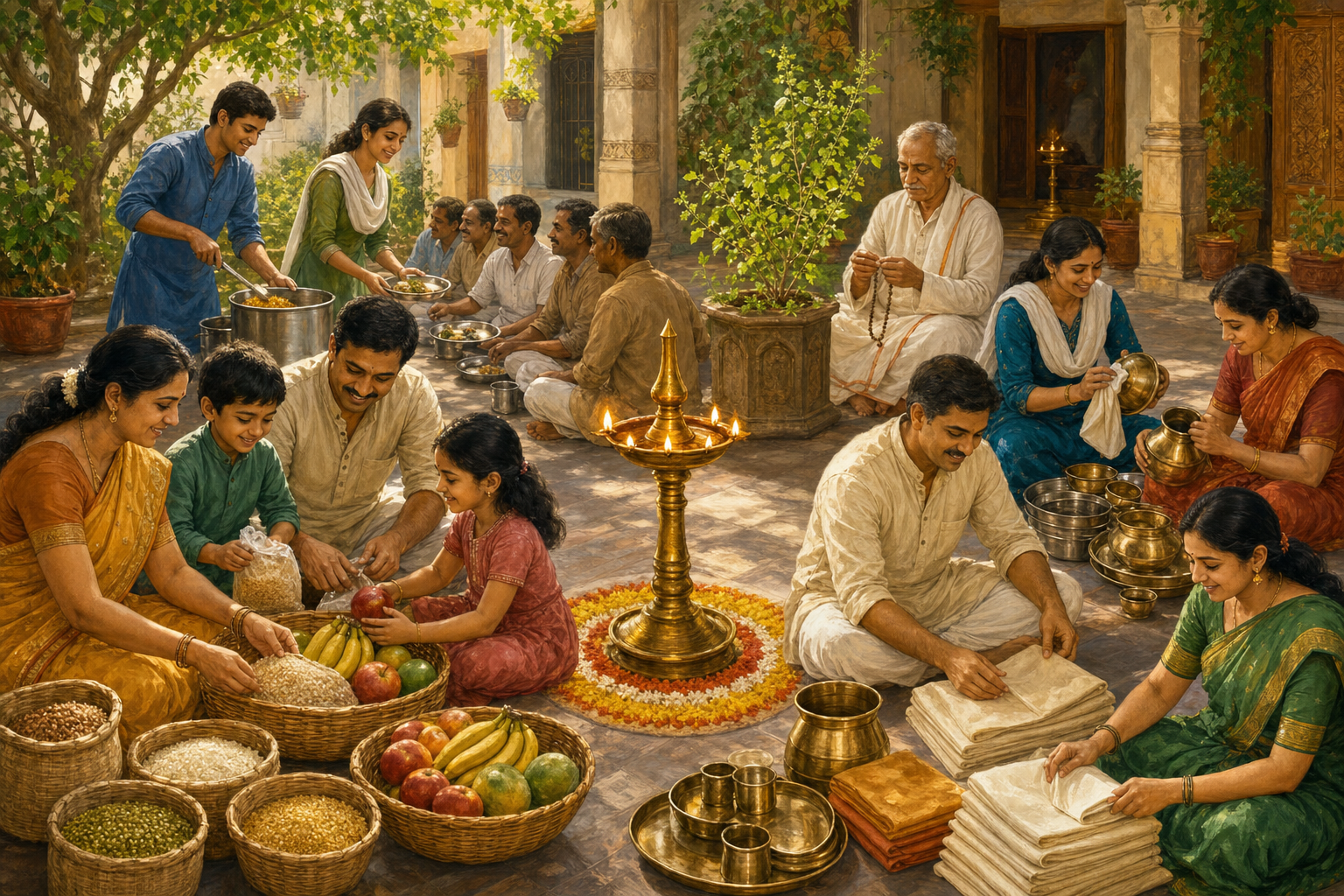
Once the major ceremony is deferred, put something definite in its place. Otherwise the month becomes a vague list of prohibitions. A useful Adhika Maasa sankalpa should be modest enough to keep every day and meaningful enough to change how you use the interval.
- Protect your nitya practice first. Keep daily puja, Sandhya-vandana where applicable, temple worship, and any mantra received through your parampara. Do not adopt an elaborate new routine that causes an established duty to collapse.
- Select one central recitation. Vishnu Sahasranama, Bhagavad Gita, Srimad Bhagavata Purana, and Purushottama Mahatmya are widely chosen. Divide the chosen text across the month according to your capacity instead of rushing through it for a numerical finish.
- Use a stable mantra sankalpa. Om Namo Bhagavate Vasudevaya, the Hare Krishna maha-mantra, or another mantra received in your lineage may anchor the month. Choose a repeatable daily commitment without borrowing a count you cannot sustain.
- Observe the Adhika Ekadashis carefully. In many Vaishnava traditions the waxing Ekadashi is called Padmini Ekadashi, with Padma also appearing in some usage, and the waning observance is Parama Ekadashi. Obtain the local fasting and parana times from a reliable city-specific Panchang, and adapt fasting to your health rather than imitating another person’s austerity.
- Convert restraint into dana. Money not spent on an opulent gathering or leisure plan can support annadana, gau-seva, students, elders, or community welfare. Decide the commitment in advance so that dana becomes part of the sankalpa rather than an afterthought.
- Prepare postponed beginnings quietly. Complete inspections, reading, budgeting, training, drafting, and compliance work. This makes the later auspicious beginning deliberate rather than hurried.
If your household uses a formal Sanskrit sankalpa, the 2026 wording may include Parabhava Nama Samvatsare, Uttarayane, Adhika Jyeshta Mase, followed by the correct paksha, tithi, nakshatra, yoga, karana, place, purpose, and lineage-specific elements. Do not copy those changing details from a generic template. Have them supplied from the local Panchang and pronounced according to your tradition.
Before committing to a post-Adhika date, send your purohita the event type, city, time zone, intended participants, relevant birth details if your tradition uses them, and your available date range. Ask for several workable windows and confirm which ceremonial act must fall within each one. That single preparation step is more reliable than treating 16 June as a universal green light.
References
- HinduPad — Adhika Maasa 2026 (Adhik Jyeshta): What to Avoid, What to Embrace, and Why It Matters
- HinduPad — Guru–Shukra Moodami Decoded: Key Do’s and Don’ts for Yagna, Aksharabhyasam, Seemantham, and Business
- HinduPad — Adhika Jyeshta Masam 2026: Definitive Telugu Panchangam Guide to Purushottam Maas