
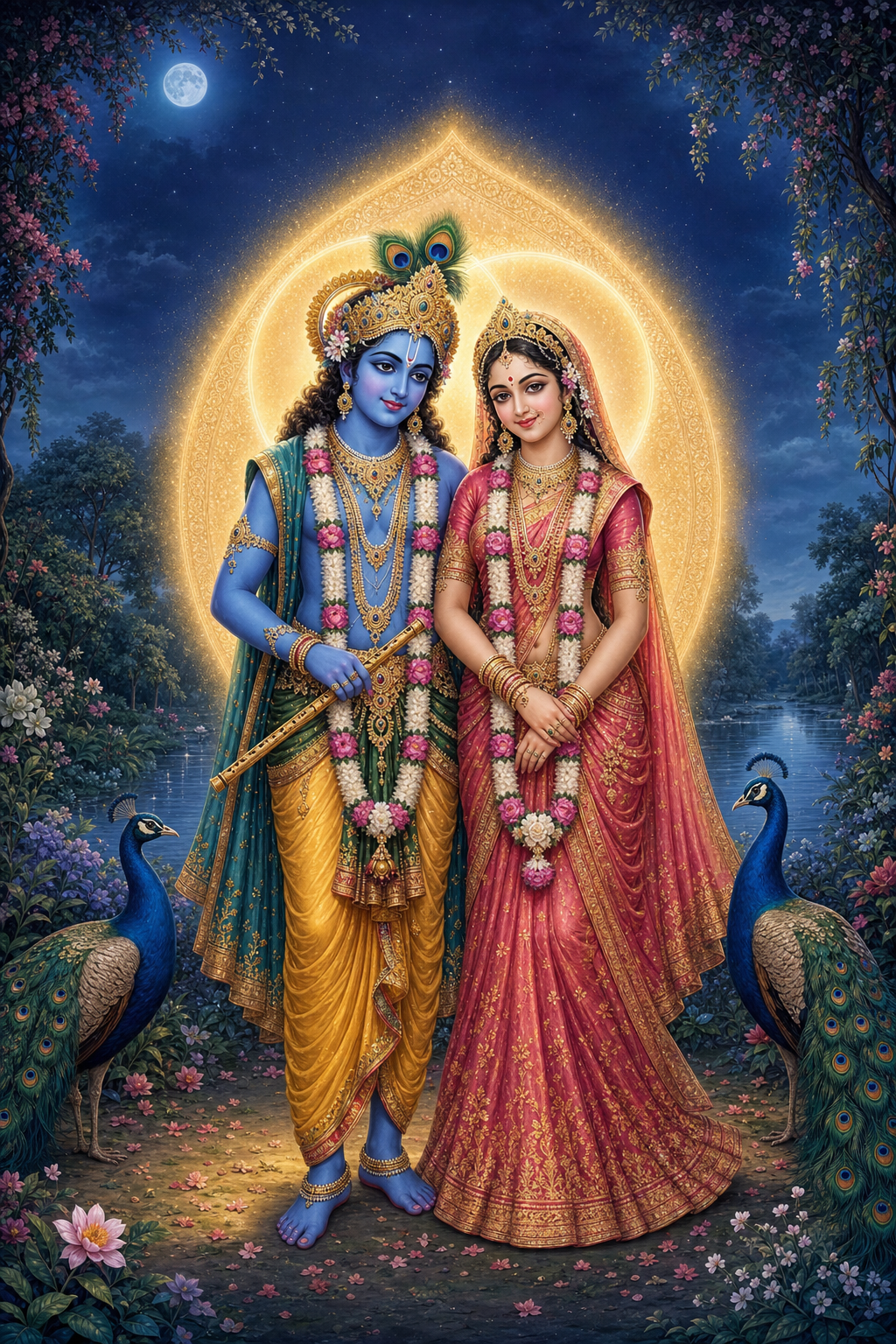
You may understand why devotees honor Radha and still wonder why the Nimbarka Sampradaya places her beside Krishna at the center of theology. Is Radha an exemplary devotee, Krishna’s companion, or an indispensable part of the path to liberation?
Within this tradition, you cannot answer that question by explaining Krishna first and adding Radha afterward. Radha-Krishna is the starting point. Once you see that, the language of divine union, grace, devotion, and liberation begins to fit together.
The first correction: Radha is not an addition to Krishna
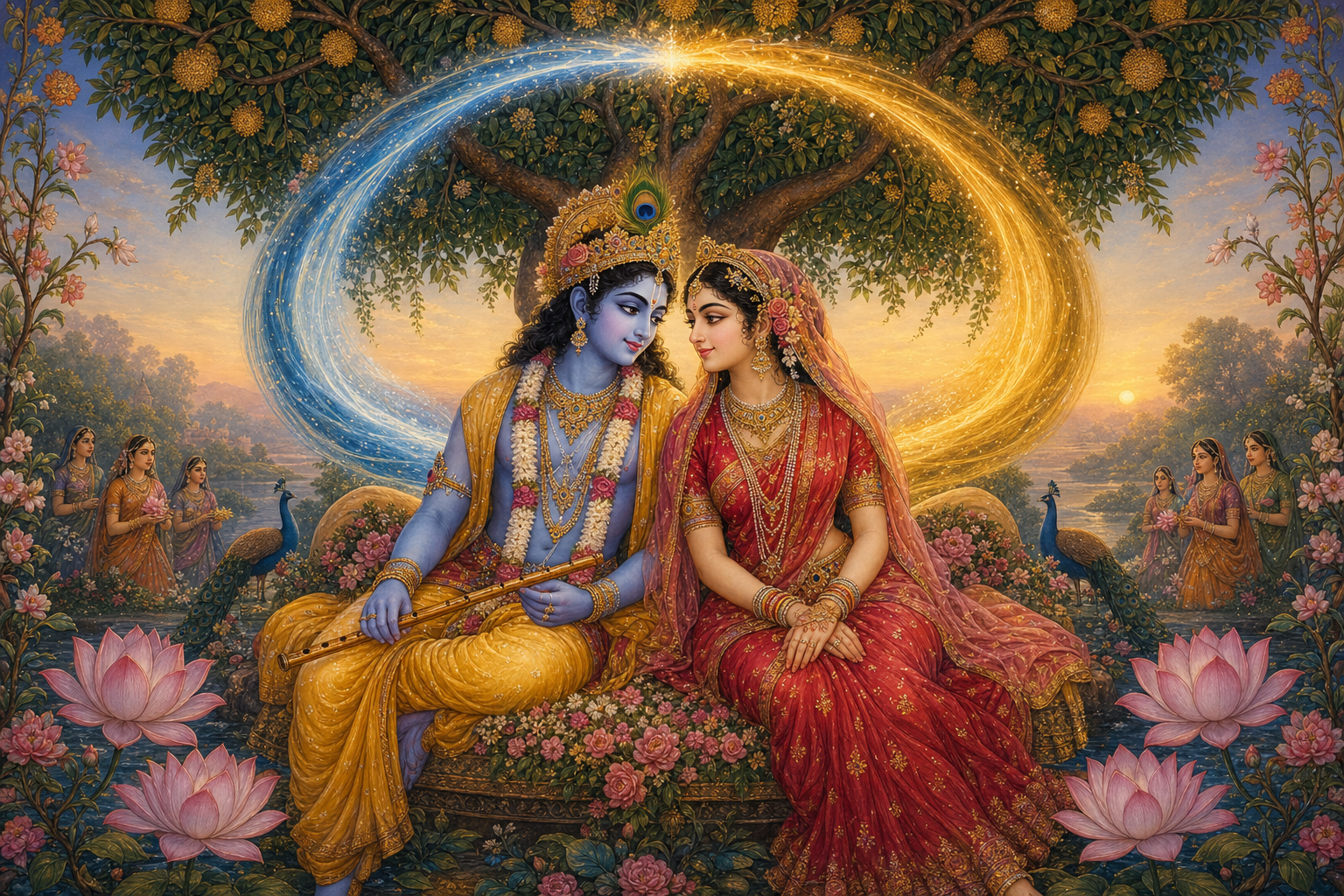
The sampradaya established by the saint-philosopher Nimbarkacharya belongs among the earliest Vaishnava devotional lineages to make Radha and Krishna together the center of spiritual life. Claims about exact historical priority may remain open, but the theological priority is unambiguous: the tradition begins with the divine pair.
That starting point matters. If you remove Radha and leave every other part of the explanation unchanged, you have not produced a shorter account of Nimbarka theology. You have changed its center. Radha is not decorative language placed around an otherwise complete Krishna theology.
Three familiar readings therefore miss what this sampradaya is asking you to see. Radha is not merely a sentimental appendix to Krishna’s story. She is not simply a human admirer standing outside the divine reality she loves. Nor does her prominence create a competition in which honor given to Radha must be taken away from Krishna.
The phrase “Radha-Krishna” names a relationship that belongs at the heart of the sacred, not only in the emotions of a devotee. Their union is eternal. It is therefore not a temporary episode that becomes theologically unnecessary once you turn from sacred narrative to philosophy.
This gives you a simple test when reading an explanation of the tradition: ask whether Radha changes the account of who is worshipped, how the devotee approaches the divine, and what liberation means. If she can be deleted without affecting any of those answers, the explanation has not yet reached the Nimbarka center.
Radha as the gateway to liberation is not divine gatekeeping
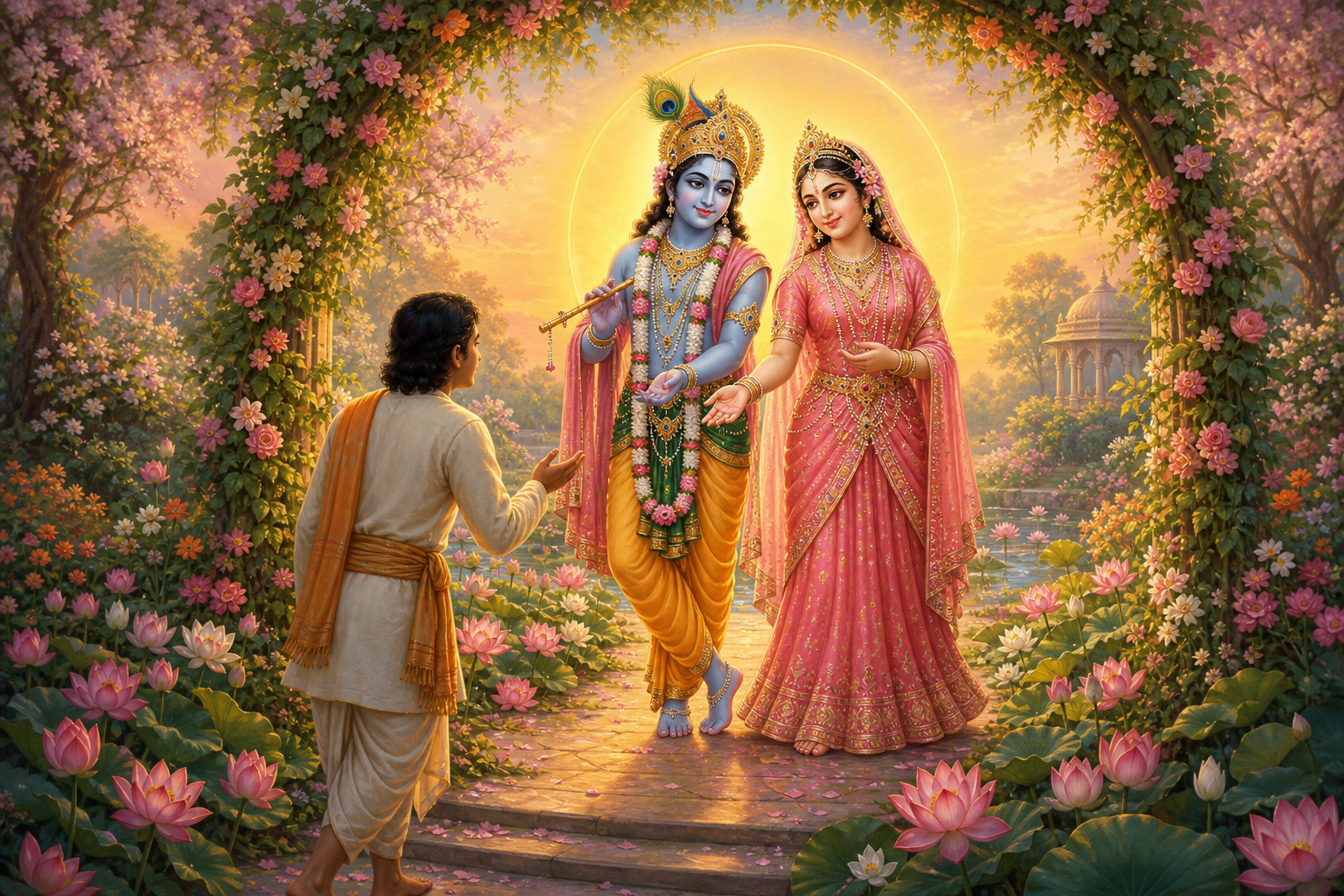
Calling Radha the gateway to liberation can sound as though she stands between the devotee and a reluctant Krishna. That is the wrong picture. A gateway in this theology is not a barricade or an administrative checkpoint. It identifies the form that approach to Krishna takes.
Bhakti is more than holding a correct proposition about God. It involves a rightly directed relationship. By placing Radha at the devotee’s approach to Krishna, the Nimbarka tradition teaches you not to seek the divine as an isolated object to be possessed by knowledge or effort. You approach through devotion already ordered toward the eternal pair.
Radha’s place can be clarified by ruling out three misleading conclusions:
- She is not Krishna’s competitor. The tradition does not ask you to decide which member of the pair deserves your devotion. Their union is precisely why devotion to Radha does not displace devotion to Krishna.
- She is not a workaround for an inaccessible deity. Approaching through Radha expresses the relational shape of divine grace; it does not imply that Krishna has ceased to be divine or compassionate.
- She is not merely an instructional symbol. You may learn devotion from Radha, but reducing her to a moral example leaves out her central place in the reality being worshipped.
This distinction changes how you hear the word “through.” It does not mean passing beyond Radha and leaving her behind. It means that Radha’s relation to Krishna gives the devotee a path of approach. The gateway belongs to the destination because the eternal pair, not an isolated Krishna abstracted from that relationship, is the devotional center.
When you encounter a prayer or teaching directed first toward Radha, do not immediately interpret it as indirect or secondary worship. Ask what the sequence is teaching about access, dependence, and grace. In the Nimbarka setting, turning toward Radha can be the most direct way of locating yourself within devotion to Radha-Krishna.
The eternal pair changes how you understand liberation
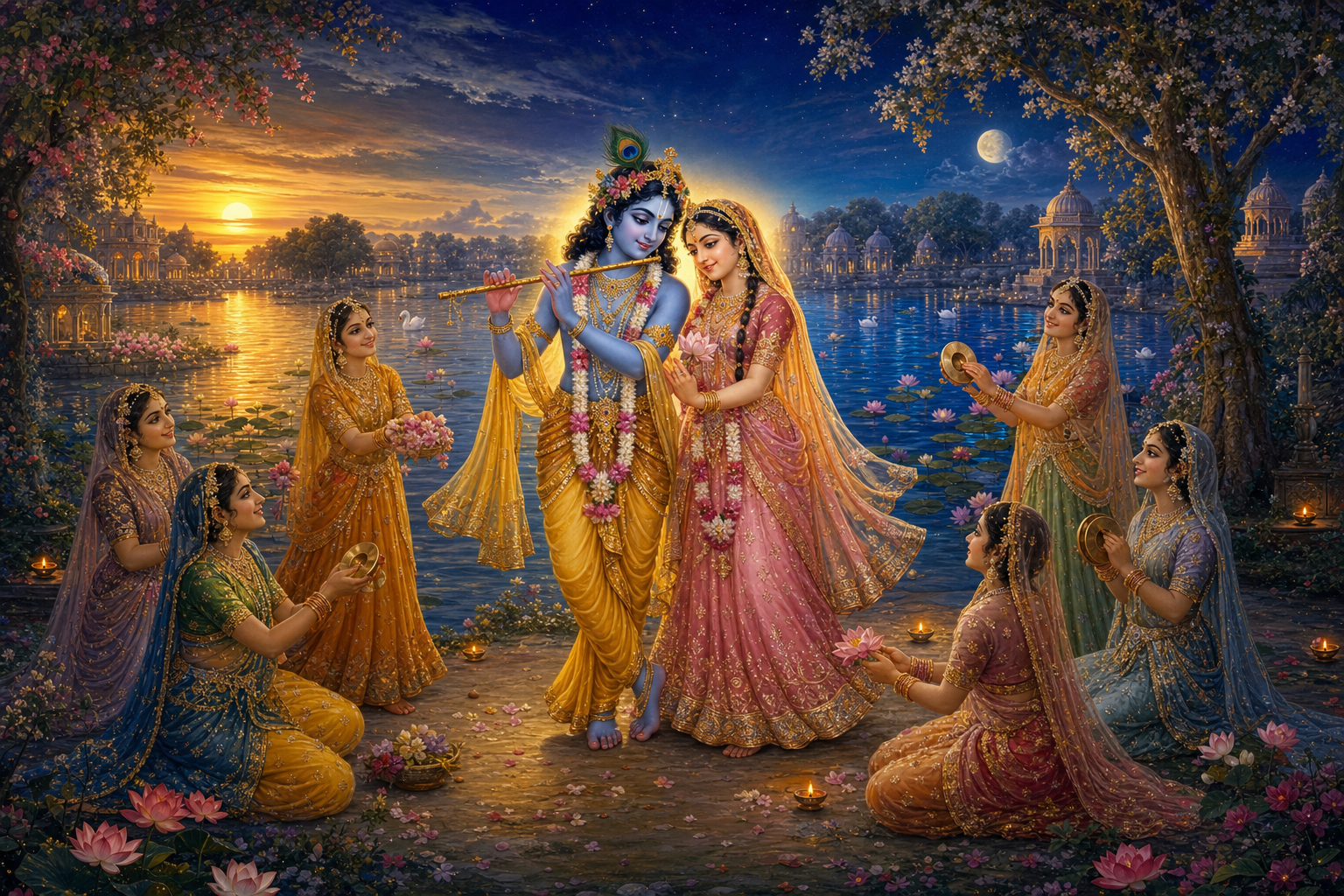
Moksha is often discussed by concentrating on what ends: bondage, ignorance, misdirected desire, and repeated suffering. Those questions matter, but they can make liberation sound like an empty condition defined only by what is absent. Radha-Krishna theology redirects your attention from escape alone to the divine reality toward which the devotee is moving.
The word “eternal” carries much of the theological weight. If the union of Radha and Krishna is eternal, their relationship cannot be treated as temporary scaffolding used to produce devotion and then discarded when liberation is reached. The relation at the center of worship tells you something about the positive meaning of the goal.
This does not require you to reduce liberation to an emotion or to confuse spiritual freedom with ordinary romantic attachment. The theological claim moves in the other direction: earthly language of love is being used to orient the devotee toward a relation that is not created by human feeling. Radha-Krishna’s union is presented as eternally real; the devotee learns to direct love toward that reality.
The practical consequence is important. Do not divide the path into an emotional beginning and an impersonal destination, as though devotion were only a device for beginners. That division makes Radha central during practice but irrelevant to its fulfillment. It cannot explain why the divine pair stands at the theological center rather than merely at the entrance to religious life.
A more faithful reading keeps freedom and relation together. Liberation releases the devotee from what distorts divine relationship; it does not make the eternal relation between Radha and Krishna meaningless. The goal is understood from the divine pair toward whom devotion is directed, not from an abstract definition imposed before Radha-Krishna enters the discussion.
How to approach Nimbarka devotion without flattening it
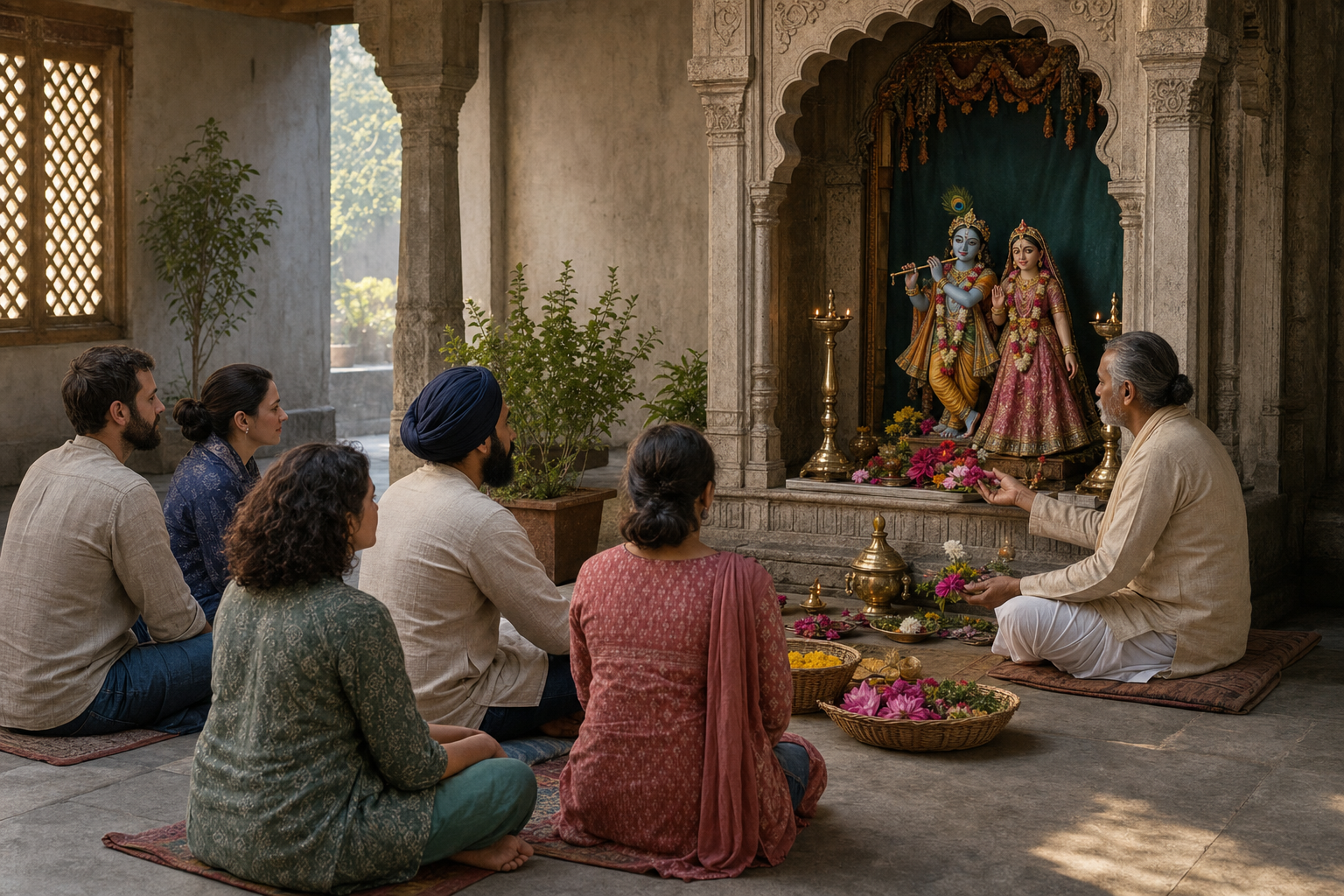
You do not need to master every philosophical term before you can read this tradition intelligently. Begin with a disciplined set of questions. They will help you distinguish its own theological grammar from assumptions brought in from elsewhere.
- Keep the two names together. Begin with Radha-Krishna as the devotional center instead of constructing a solitary Krishna theology and asking where Radha might fit.
- Take “eternal union” as a theological claim. Do not treat it as ornamental poetry. Ask what becomes impossible to explain if the union is reduced to a passing event or human sentiment.
- Read “gateway” relationally. Radha’s place concerns how the devotee approaches liberation through grace and devotion. Do not turn the image into a picture of one deity blocking access to another.
- Test every summary by trying to remove Radha. If the account of worship, approach, and liberation remains identical after her removal, it is too generic to represent the Nimbarka position.
- Let formal practice come from the lineage. You can begin by addressing Radha and Krishna together in reflection and prayer. If you seek a lineage-specific mantra, initiation, or liturgical discipline, learn its exact form from a qualified teacher within the sampradaya rather than assembling one from fragments.
This approach also protects you from a subtler error: treating Radha’s importance as nothing more than a claim about status. Her centrality is not simply a higher position on a list of sacred figures. It changes the structure of devotion. The relevant question is not only “How exalted is Radha?” but “What does approaching Krishna through Radha teach the devotee to become?”
The answer begins with receptivity. A path centered on Radha does not encourage the spiritual ego to seize liberation as a personal achievement. It teaches the aspirant to enter a relationship already defined by devotion. That is why the gateway image is spiritually demanding: it asks you to surrender the assumption that the divine must be approached entirely on your own terms.
Key takeaways
- Nimbarka theology begins with Radha and Krishna together; Radha is not added to a complete, isolated Krishna theology.
- The eternal union of Radha-Krishna belongs to the theological center, not merely to devotional poetry or sacred narrative.
- Radha as the gateway to liberation means a relational mode of approaching Krishna, not competition with him or obstruction of access.
- An account that makes Radha removable without changing worship, grace, or liberation has missed the tradition’s distinctive claim.
- For personal study, keep the divine pair together; for lineage-specific mantras and disciplines, rely on qualified instruction within the sampradaya.
The next time you encounter Radha-Krishna in an image, name, prayer, or teaching, resist the impulse to translate the pair into “Krishna, plus his devotee.” Pause over the hyphen. In the Nimbarka Sampradaya, that relation is where theological understanding begins and where the devotee learns how to approach liberation.