

If you have been told that your Sun sits in the fourth house, you are probably asking a practical question: does this indicate trouble at home, difficulty with your mother, or instability around property? It can point to those concerns, but it can also describe a principled household, devotion to family, and the ability to protect what gives life its foundation.
The difference lies in the condition of the Sun, the rest of the horoscope, and your conduct inside the home. Lal Kitab does not make ritual a substitute for character. For this placement, the most meaningful remedy is to join a consistent solar practice with truthful speech, fulfilled promises, responsible care, and less need to dominate domestic life.
What the fourth-house Sun is actually describing

The fourth house, or sukha bhava, concerns your home, mother and caregivers, emotional security, land, vehicles, and the inner experience of contentment. The Sun signifies the self, vitality, father, authority, dignity, and the power to act from conviction. Bringing these two fields together places solar authority inside the most private part of life.
This is not automatically harmful. The placement can give you strong feelings about family responsibility, inherited tradition, property, and homeland. You may want the household to stand for something. When that impulse is mature, you lead by creating stability, protecting elders, maintaining standards, and accepting responsibility when something goes wrong. A supported Sun can correspond with a warm and principled home, continuity of ritual and study, care for elders, and gains associated with property.
The tension arises because the fourth house carries lunar qualities: receptivity, emotional safety, memory, and nurture. Solar authority can illuminate those qualities, but it can also overpower them. You may believe that providing, deciding, or correcting is enough while other family members experience your approach as inflexible. The central question is therefore not whether you have authority at home. It is whether your authority creates security for the people who live with you.
The Sun receives its directional strength, or digbala, in the tenth house rather than the fourth. In the fourth, its force is turned toward domestic and inward matters. This can produce deep conviction and loyalty, but it can also make peace at home depend too heavily on whether everyone accepts one person’s direction.
More difficult expressions become likelier when the Sun is weakened or affected by Saturn, Rahu, Ketu, or a harsh Mars influence. Adverse dignity, sign placement, lordship, and shadbala also matter. Possible manifestations include domestic restlessness, strained relations with the mother or caregivers, repeated trouble involving land or vehicles, and ethically questionable choices made under pressure. These are conditional expressions rather than an unavoidable verdict.
Judge the placement by patterns, not by one alarming prediction
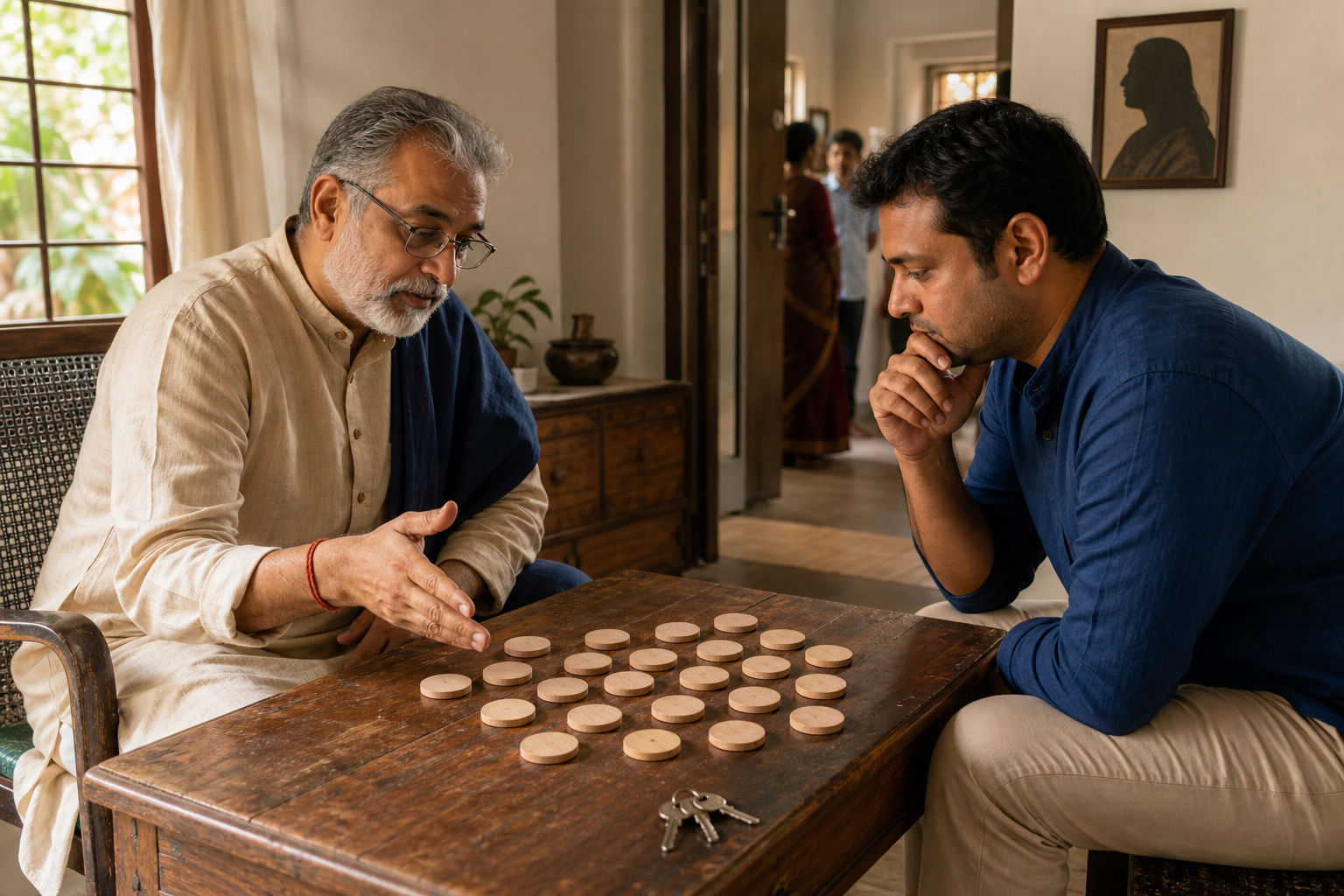
A single placement cannot tell you whether the Sun is functioning constructively. Before beginning a remedy, identify what is actually happening. This prevents you from treating a prediction that has not manifested while overlooking the behavior that is already disturbing your home.
| Fourth-house field | Constructive solar expression | Expression under strain | What to notice |
|---|---|---|---|
| Home | Order, protection, warmth, and dependable leadership | Control, harshness, pride, or constant domestic tension | Do people feel safer after you make a decision, or merely overruled? |
| Mother and caregivers | Respect, practical support, and responsibility for their welfare | Distance, arguments, neglect, or demands for obedience | Are you listening to an actual need before deciding what help should look like? |
| Land and property | Careful stewardship and possible gains when the chart supports them | Disputes, unstable decisions, neglected maintenance, or repeated obstacles | Are pride and urgency replacing documentation, inspection, or patient negotiation? |
| Vehicles | Responsible ownership and timely care | Disruptions, conflict, or avoidable neglect | Are safety and maintenance being handled practically rather than astrologically? |
| Inner peace | Conviction, disciplined worship, and a stable sense of belonging | Restlessness, defensiveness, or inability to relax at home | Can you remain steady when another family member disagrees? |
| Authority | Truthfulness, accountability, and service | Broken promises, opportunism, or domination under stress | Does your conduct match the standards you expect from everyone else? |
Use three checks before you label the placement benefic or afflicted:
- Name the visible pattern. Write down the specific issue: arguments during morning routines, tension with a caregiver, a delayed property matter, neglected vehicle maintenance, or a general lack of peace.
- Separate symbolic meaning from practical cause. A vehicle defect still needs a mechanic. A property disagreement may need accurate records and qualified legal advice. A health concern involving your mother needs medical attention, not a planetary explanation.
- Check the whole horoscope before choosing a strengthening remedy. Jupiter’s support, the Sun’s dignity, functional lordship, and the condition of Saturn, Rahu, Ketu, and Mars can change the reading substantially.
This distinction matters most when someone recommends a gemstone. A ritual that encourages discipline is relatively easy to stop or adjust. A costly stone selected from one placement alone may amplify a solar influence that did not need strengthening.
A focused 43-day practice for the fourth-house Sun
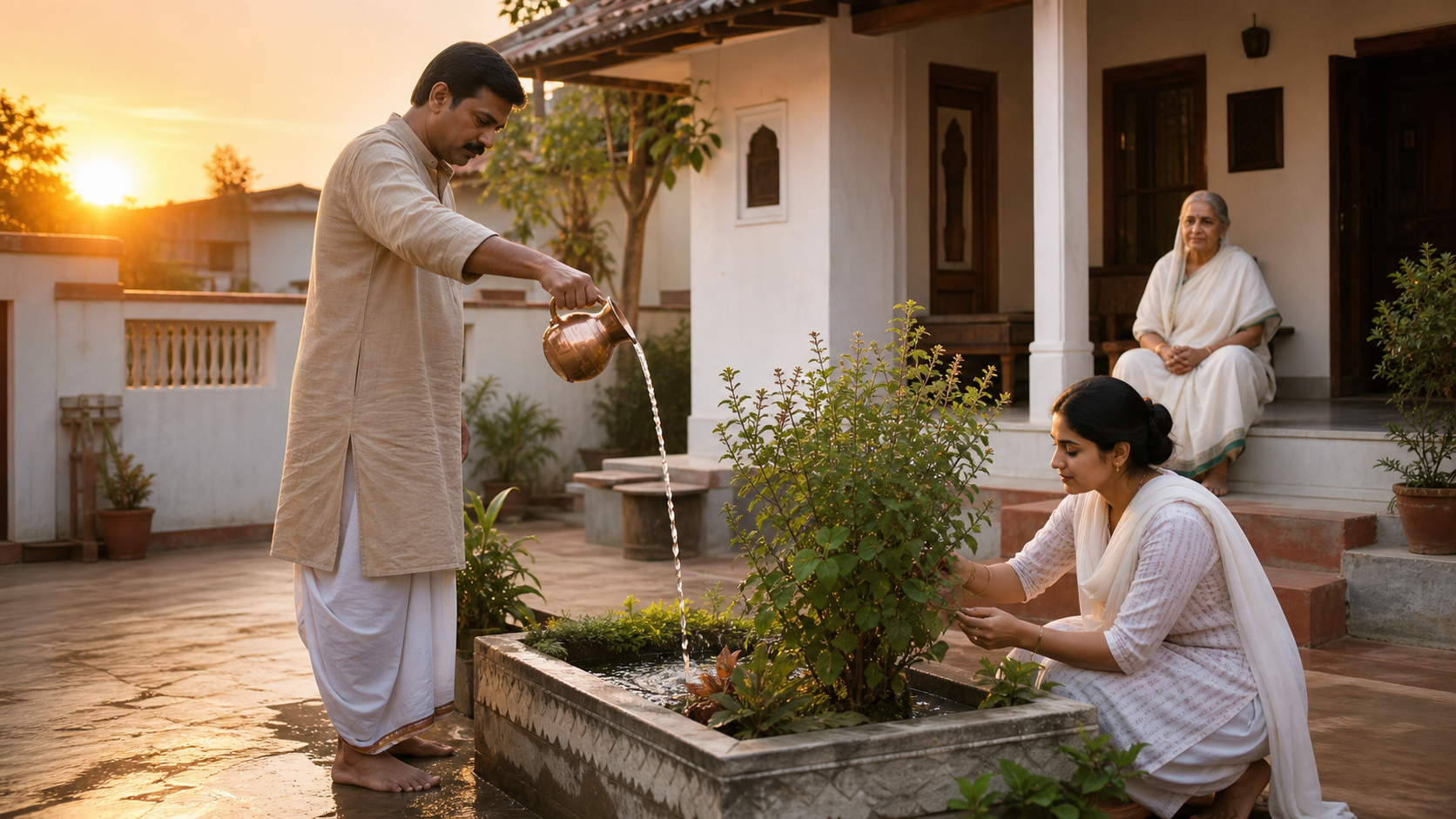
Lal Kitab remedies work best as a coherent discipline, not as a crowded collection of objects, chants, donations, and fasts. Select one principal practice, continue it for 43 days, and connect it to a clear change in conduct. Sunrise arghya is the most direct core practice for this placement. A mantra, Sunday observance, home-space adjustment, or weekly seva can support it without becoming a substitute for it.
The daily sunrise core
- Rise early enough to approach the practice without rushing. Bathe or wash, wear clean clothes, and face the rising Sun.
- Fill a copper vessel with clean water. A red flower or a small pinch of kumkum may be added, but neither is essential to the discipline.
- Offer the water as arghya with a steady mind. Let the act mark a transition from personal pride to responsible service.
- Chant Om Ghrini Surya Adityaya Namah at an even pace. The Gayatri Mantra may also be used where it belongs naturally within your practice.
- If it is appropriate for your health, follow with Surya Namaskar at a comfortable pace. Do not force postures or use yoga as a substitute for care of pain, dizziness, or another medical concern.
- End with a short sankalpa tied to fourth-house conduct: truthful speech at home, one promise you will keep, care for your mother or an elder, or restraint from shouting and contempt.
Keep the eastern part of your home clean, open, and well lit where possible. Let morning light enter instead of allowing that area to become a storehouse for unused possessions. A ghee lamp may be lit in the east at sunrise or sunset if it can be attended safely. A Surya yantra or small copper Sun plaque can be placed in the puja space after appropriate consecration, but an object should remain secondary to daily practice and ethical restraint.
A Sunday extension when more support is needed
A fuller Sunday observance can include bathing, lighting a ghee lamp facing east, offering arghya, chanting Om Ghrini Surya Adityaya Namah 108 times, reading a portion of Aditya Hridayam, and distributing a jaggery-based sweet as prasad. Close with a sankalpa for peace in the home and the welfare of your mother, caregivers, and elders.
A gentle Raviwar vrata may consist of simple sattvic food and one principal meal before sunset, with intoxicants and heavy tamasic food avoided. Fasting is not a test of spiritual worth. If fasting is medically unsuitable, keep the Sunday discipline through simple food, prayer, charity, and restraint instead.
Sunday dana may include wheat, jaggery, or red cloth. More important than accumulating donated items is directing solar authority toward care. Supporting mothers and caregivers, helping children’s education, or assisting displaced families turns leadership into protection. Choose one channel you can sustain and serve without seeking control or recognition.
What to track during the 43 days
Write a short baseline on the first day, then review the same indicators once each week. Do not change the indicators midway merely because a different result would be more flattering.
- How many mornings began with shouting, accusation, or visible tension?
- Did you keep the family promises you made?
- Did your mother or another caregiver receive the help they actually requested?
- Were property and vehicle responsibilities handled on time?
- Did you pause before using authority in a disagreement?
- Did the home become more orderly without becoming more rigid?
Calmer mornings, kinder speech, more cooperation with caregivers, and fewer neglected property or vehicle tasks are reasonable signs to notice. Treat them as evidence of changed habits and household rhythm, not as proof that every future difficulty has disappeared. The purpose of the log is to see whether worship and conduct are moving together.
Match the remedy to the problem you can actually see
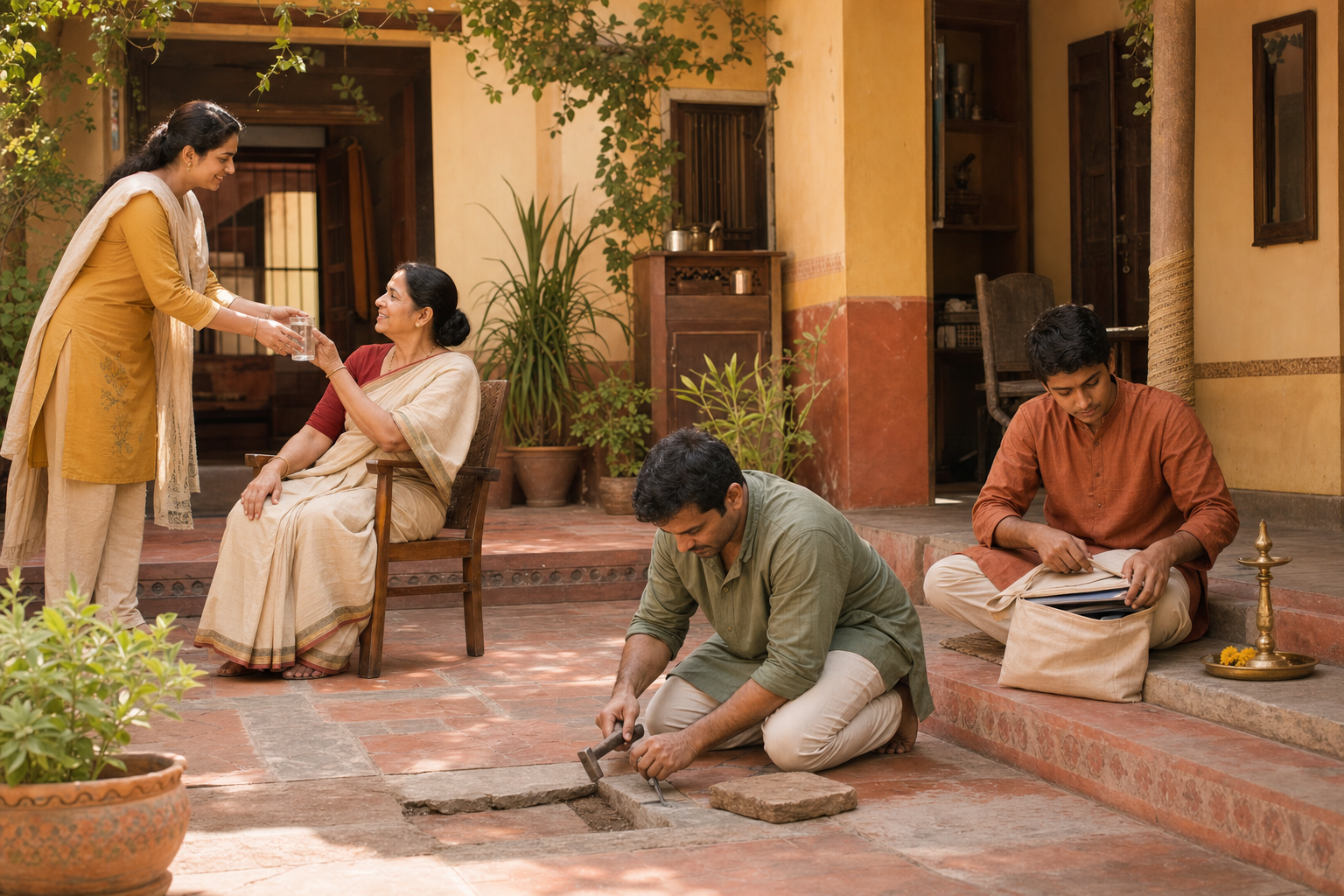
When the main issue is your mother or a caregiver
Begin with respect in action. Ask what support is needed rather than assuming that taking charge is the same as caring. Keep one concrete commitment each week: transport to an appointment, help with a household task, time for an uninterrupted conversation, or financial support that is already within your means. Pair that commitment with sunrise arghya and a vow against harsh speech.
Do not tell a mother or caregiver that illness, distress, or disagreement exists because your Sun is afflicted. That turns a spiritual practice into blame. Medical symptoms require qualified healthcare, and persistent family conflict may require a competent counselor or mediator. The remedy belongs to your conduct; it does not make another person’s experience your astrological evidence.
When property or vehicles are the source of anxiety
Use the solar discipline to reduce impulsiveness, then complete the ordinary work. Keep title records, agreements, insurance papers, payment dates, inspections, and maintenance schedules in order. Do not sign a property agreement merely because an auspicious day has arrived, and do not delay a safety repair while waiting for a remedy to take effect. Astrology may help you examine pride, haste, or attachment; it cannot verify ownership, structural condition, legal exposure, or mechanical safety.
If negotiations have become a contest of status, make one change: decide your factual requirements before the next conversation and refuse to add demands merely to win. A fourth-house Sun functions more constructively when authority protects the household’s long-term stability.
When the home feels tense despite material stability
A clean east-facing space, a lamp, and morning chant can establish a calmer rhythm, but the decisive work may be conversational. Stop correcting family members in front of others. Do not use money, age, ritual knowledge, or sacrifice as proof that your view must prevail. If you break a promise, acknowledge it directly and repair it without adding a justification.
This is where Lal Kitab’s behavioral emphasis is especially sharp. Truthfulness, restraint, generosity, and promises fulfilled inside the home are not optional moral decorations around the remedy. They are the corrective response to pride, acquisitiveness, and opportunistic behavior associated with a severely strained Sun.
When Saturn or Rahu strongly afflicts the Sun
When a competent chart reading identifies a serious Saturn or Rahu affliction, keep the response narrow: daily sunrise arghya, one Sunday vrata if health permits, and one continuing form of seva for mothers, caregivers, or children. This three-part combination joins solar worship, restraint, and service without creating an unmanageable ritual schedule.
Do not add several planetary remedies on the same day merely because the chart contains several difficult factors. Contradictory practices and constant switching make it impossible to observe what is changing. They can also turn sadhana into anxiety. Consistency with a few related actions is more useful than ritual accumulation.
A Dharmic household does not have to erase its own lineage to work with the underlying intent. Hindu practitioners may use arghya, mantra, Aditya Hridayam, and Surya Namaskar. Buddhist or Jain family members may keep dawn contemplation and maitri or metta practice. Sikh family members may center the discipline on simran and seva. These practices are not interchangeable in theology, but they can coexist around shared commitments to light, truthful conduct, compassion, and service.
Key takeaways: what to do and what to avoid
- Do not read Sun in the fourth house as an automatic prediction of harm. Its results depend on dignity, lordship, aspects, planetary affliction, and your conduct.
- Identify a visible household pattern before choosing a remedy. Treat the problem you have, not every outcome listed for the placement.
- Use one principal practice for 43 days. Sunrise arghya is the clearest core; ethical discipline and sustainable seva give it practical meaning.
- Measure change through speech, promises, caregiving, domestic order, and responsible attention to property and vehicles.
- Do not use astrology to blame your mother, avoid medical care, postpone repairs, or replace legal and financial due diligence.
- Do not wear a ruby simply because the Sun occupies the fourth house. A strengthening remedy requires a whole-chart judgment.
Ruby, or manik, is traditionally associated with the Sun. A frequently used prescription is a stone of 5 to 7 carats set in gold and worn on the ring finger on a Sunday morning during the waxing Moon after Surya puja. That specificity does not make the recommendation universal. A gemstone can amplify both the useful and difficult expressions of the Sun, especially when Saturn or Rahu is involved. Consult a qualified Jyotishi who has assessed the full horoscope before spending money or wearing one.
Begin with the remedy that costs almost nothing and reveals the most: disciplined sunrise practice, honest speech, and one promise kept at home. Tonight, write down the single fourth-house pattern you want to change. Tomorrow morning, start the 43-day practice and let your family encounter the remedy through your behavior before they hear about it through your words.