
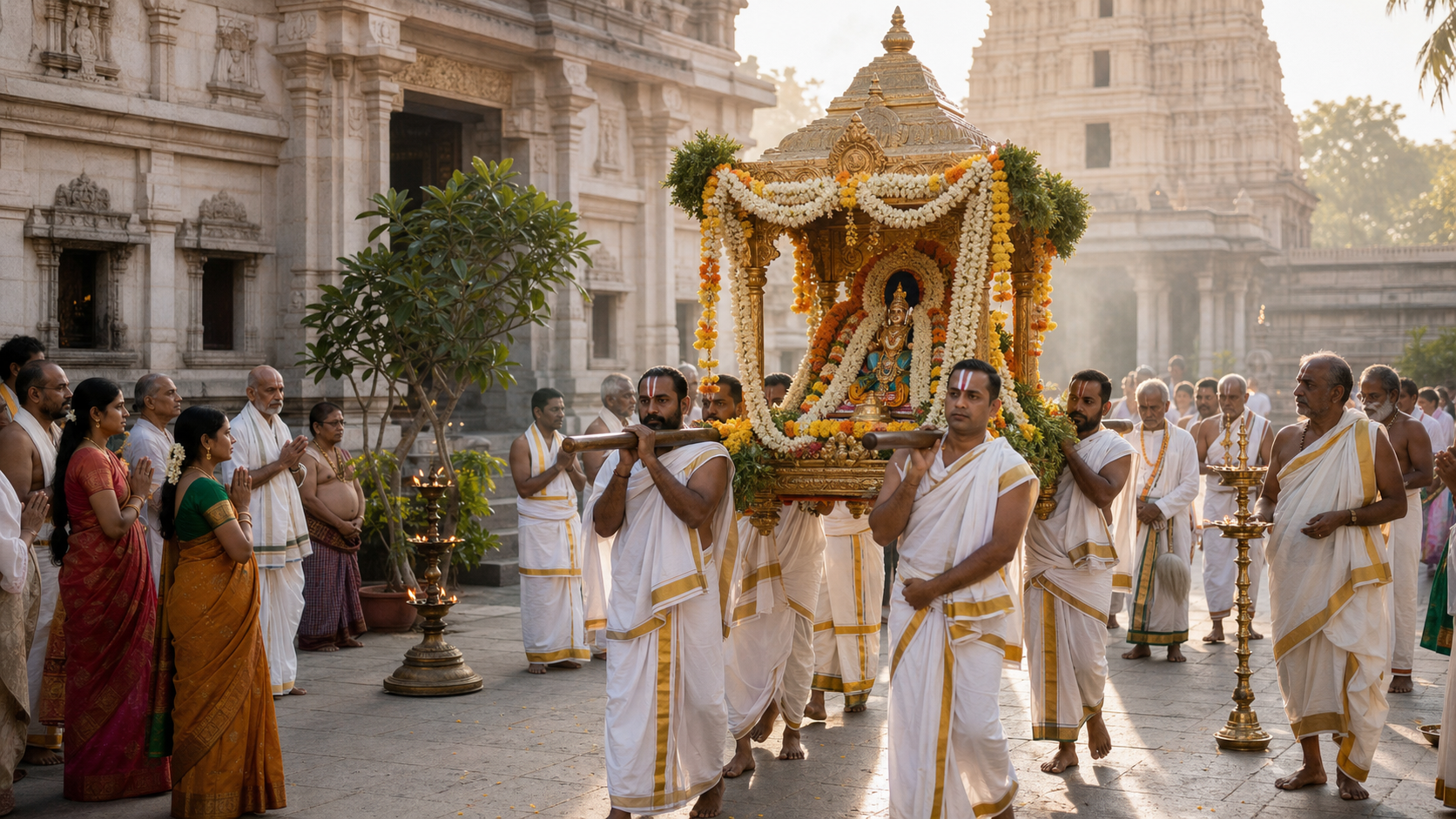
The dates in your search results are no longer a current booking window. The announced 2026 Brahmotsavam at the Sri Venkateswara Swamy Temple in Kurukshetra was set for 25 June through 3 July 2026, following two preparatory rites earlier in June.
If you are documenting that festival cycle or using it to prepare for a later visit, the most useful distinction is between the stable ritual arc and the day-wise programme. You can understand the former now. The latter, including the exact dates of major vahana sevas, must come from the temple’s edition-specific announcement.
The three dates that define the 2026 observance
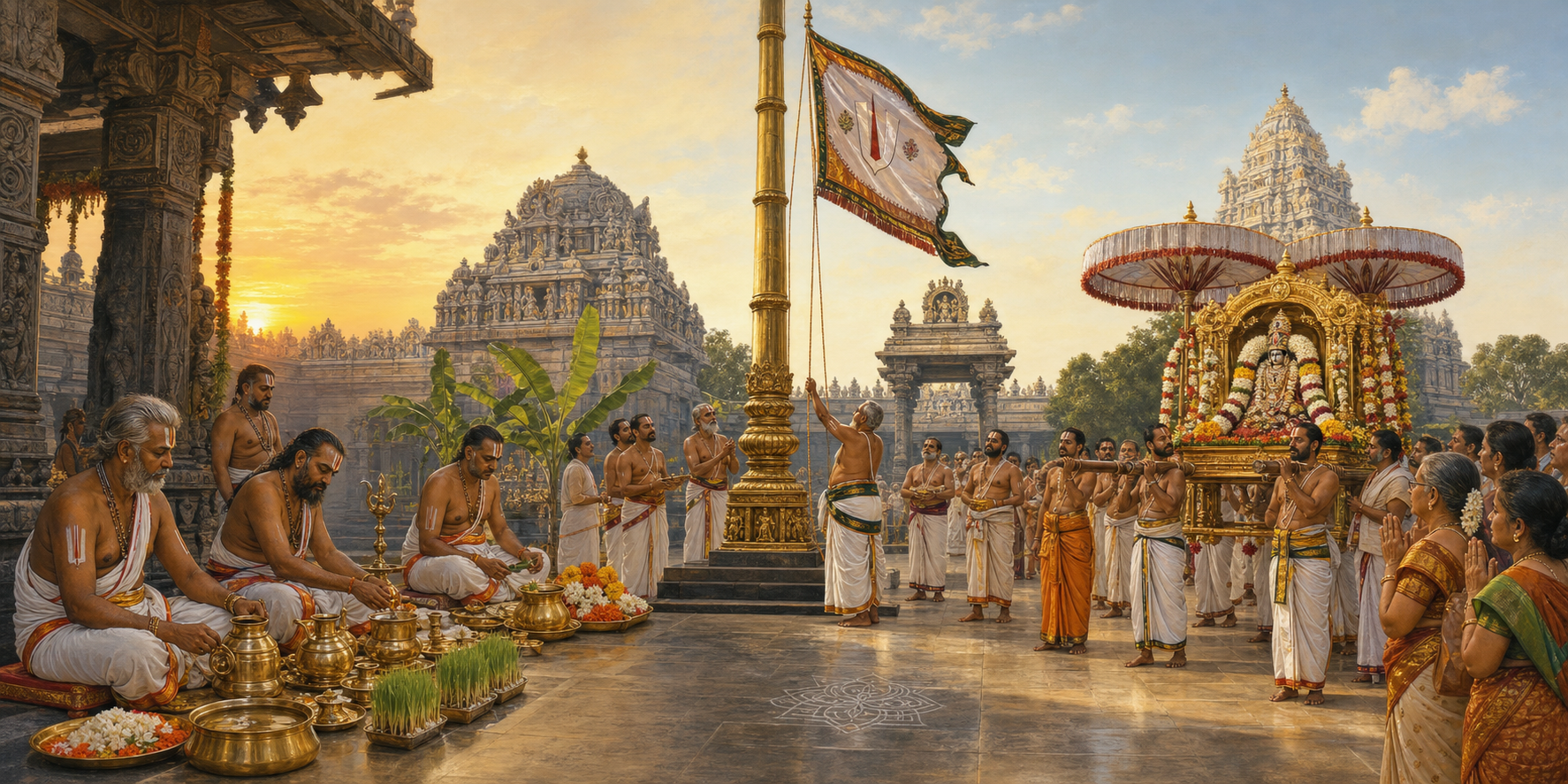
Brahmotsavam does not begin simply when the first large procession appears. The temple is prepared, the festival intention is ritually planted, and only then does the nine-day public celebration unfold. That sequence matters if you want to understand what you are seeing rather than treating every ceremony as an interchangeable attraction.
| Date | Rite or period | What it means for your planning |
|---|---|---|
| 19 June 2026 | Koil Alwar Thirumanjanam | The temple’s comprehensive pre-festival cleansing and aromatic sanctification. |
| 24 June 2026 | Ankurarpanam | The seed-sowing rite and sankalpa that mark the subtle beginning of the festival. |
| 25 June-3 July 2026 | Nine-day Brahmotsavam | The principal period of worship, homas, alankarams and public vahana sevas. |
Koil Alwar Thirumanjanam prepares the sacred space
On 19 June, Koil Alwar Thirumanjanam was scheduled to prepare the sanctum, prakara and festival mandapas. The rite joins physical order to ritual purity: the place that will receive elaborate adornments, offerings and crowds must first be cleaned and readied with care. For a devotee, the practical lesson is immediate. Arrive with the same spirit by reducing your baggage, settling unfinished distractions and treating cleanliness as part of worship rather than merely a temple rule.
Ankurarpanam plants the festival’s intention
The Ankurarpanam scheduled for 24 June used consecrated seeds to signify an auspicious beginning, fertility and the gradual unfolding of dharmic action. It preceded the first main public procession. If you follow the festival as sadhana, choose your own sankalpa before entering the busiest period: one practice to maintain, one form of seva to offer, or one habit of speech to restrain. A specific intention is more useful than a vague wish to feel spiritual.
The nine-day programme was scheduled from 25 June to 3 July, but its exact vahana order was expected closer to the festival. Do not assign Garuda Seva, Rathotsavam or the concluding bath to a particular date merely because another TTD celebration followed that order. Traditional structure helps you interpret the programme; it does not replace the programme.
Choose darshan by ritual meaning, not crowd reputation
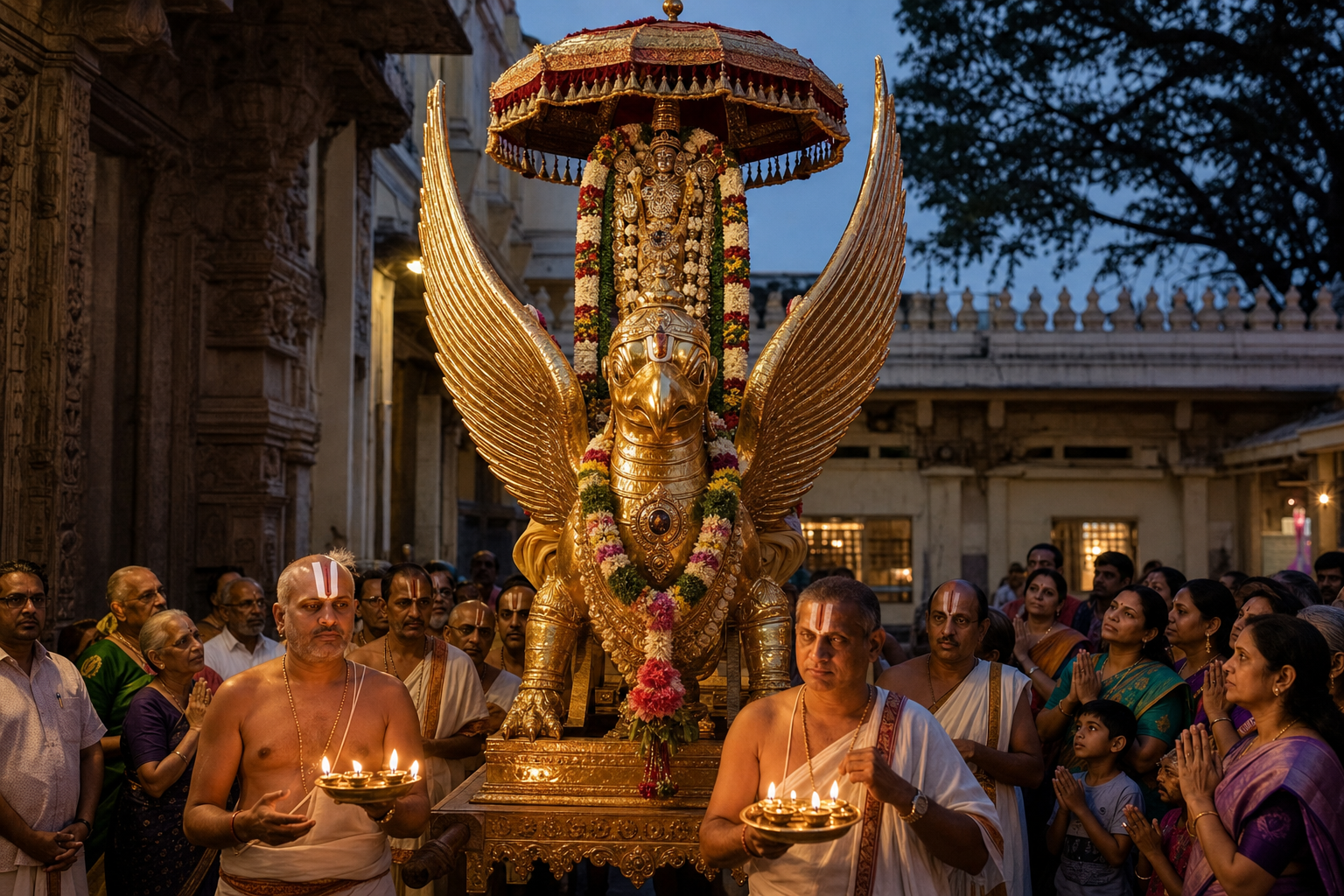
A common planning mistake is to chase only the procession expected to draw the largest crowd. Garuda Seva is often the most anticipated Brahmotsavam darshan, but a quieter vahana may speak more directly to your sankalpa. Read the symbolism first, then choose the seva you are prepared to attend with patience.
- Dwajarohanam formally opens the festival by raising Garuda’s emblem on the dhwajasthambha. It proclaims a sacred period and invites the devatas into the consecrated festival space.
- Sesha evokes infinity and the sustaining ground of Vishnu. Attend with attention to steadiness rather than spectacle.
- Hamsa represents purity and discernment. It is a fitting focus when your sankalpa concerns clarity of thought or conduct.
- Simha expresses courage and sovereign strength, while Gaja carries associations of royal power.
- Hanumantha places devotion, service and disciplined loyalty at the centre of darshan.
- Surya Prabha and Chandra Prabha present complementary forms of radiance: solar energy and lunar serenity.
- Garuda embodies unwavering bhakti and protection. Because Garuda Seva is commonly a peak public moment, anyone attending it should expect heavier demand and avoid building a tightly timed travel connection around the procession.
Rathotsavam, when included in the confirmed schedule, carries the deity into the civic sphere on the chariot. The collective act of drawing the ratha makes a moral idea physical: dharma is sustained through shared effort, not private sentiment alone. Chakrasnanam or Teerthavari commonly forms the concluding movement, with the sacred bath of the Sudarshana Chakra marking purification and liturgical completion.
Do not let the moving deity become the only thing you notice. Daily homas place ghee, grains and herbs into agni; archana directs worship through sacred names; and alankaram interprets theology through flowers, textiles, colours and ornaments. Vedic recitation, sankeertana, bhajan and cultural performance shape the sound of the kshetra. Pick one layer for deliberate attention. Trying to photograph, decode and follow everything at once usually leaves you present for none of it.
Build an itinerary around energy, distance and weather
Kurukshetra is Dharmakshetra, not just the location of a TTD temple. Brahma Sarovar, Sannihit Sarovar and Jyotisar place Sri Venkateswara bhakti within the larger moral geography of the Mahabharata. That makes a combined pilgrimage worthwhile, but it does not make an overloaded itinerary wise.
Choose the trip shape before choosing a hotel
- For one principal darshan, wait for the confirmed day-wise programme and select one anchor seva. Keep the rest of that day free from fixed sightseeing commitments.
- For a short two-day pilgrimage, pair one morning worship period with one evening procession. Use the interval for rest, prasadam, a satvik meal and no more than one additional sacred site.
- For a longer stay, distribute Brahma Sarovar, Sannihit Sarovar and Jyotisar across separate rest windows. A tirtha visit made in haste between queues defeats the contemplative purpose of going there.
- For a full festival observance, establish a repeatable daily rhythm. Alternate public darshan with japa, seva and rest so that fatigue does not steadily erode your conduct.
Kurukshetra Junction, identified by the station code KKDE, lies on major rail corridors. By road, National Highway 44 connects Kurukshetra with Delhi at approximately 160 kilometres and Chandigarh at approximately 95 kilometres. Delhi and Chandigarh are also the nearby airport options identified for the pilgrimage. Those distances are planning anchors, not journey-time promises; road conditions, local traffic and festival movement can change how long the final approach takes.
Accommodation options include dharamshalas, guest houses and mid-range hotels. For the 2026 dates, advance booking was especially important between 25 June and 3 July. Proximity to the temple had a practical value beyond convenience: it reduced the transport burden between early worship, midday rest and evening processions. If you are planning a future edition, compare walking distance and access conditions before comparing room extras.
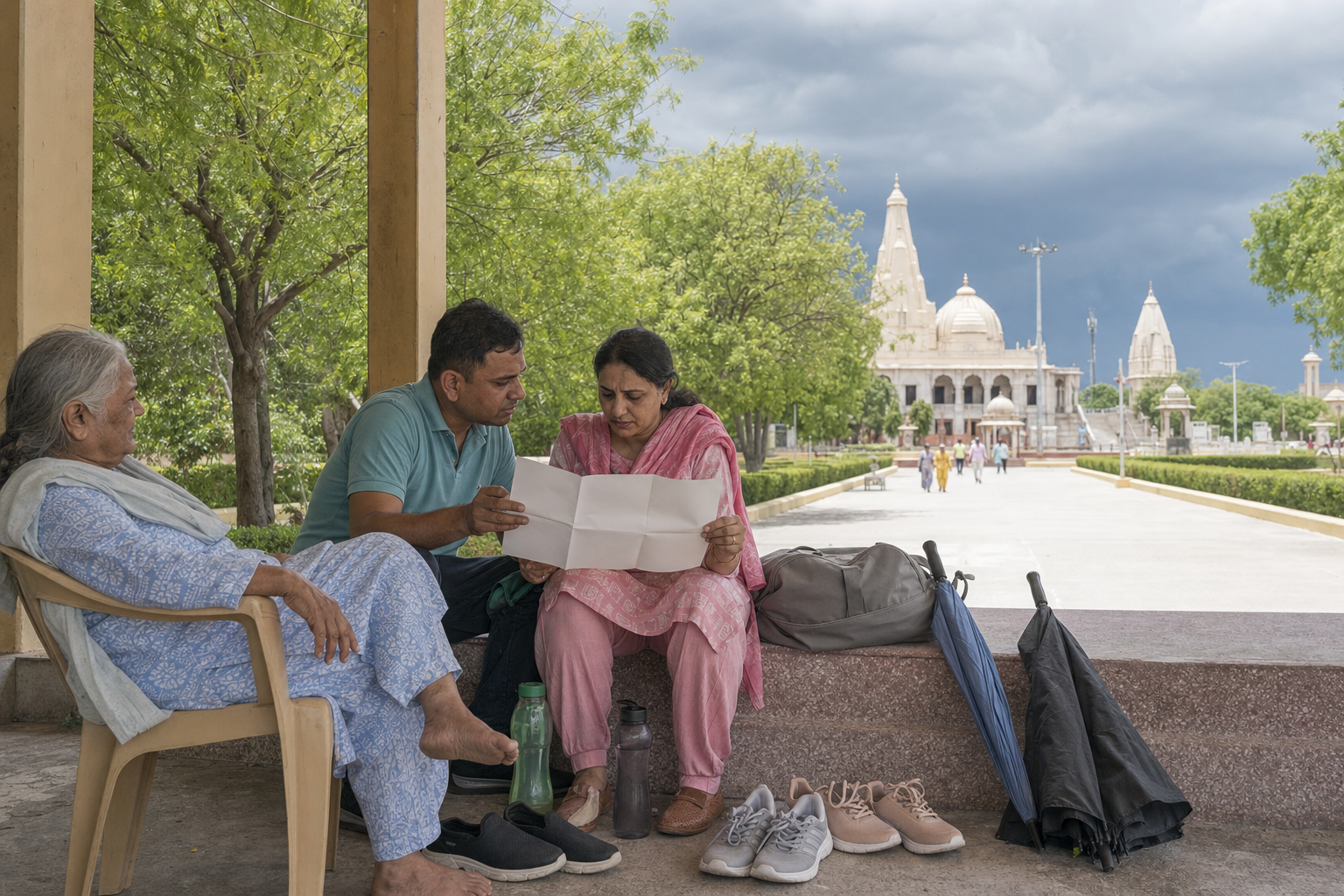
Late June can bring the North Indian monsoon, intermittent rain and humidity. Carry light rain protection, comfortable footwear, water and basic first aid. A reusable bottle is preferable where security and refill arrangements allow it. Keep the bottle easy to inspect, and follow temple directions rather than assuming it can enter every controlled area.
Protect the devotional atmosphere in a large crowd
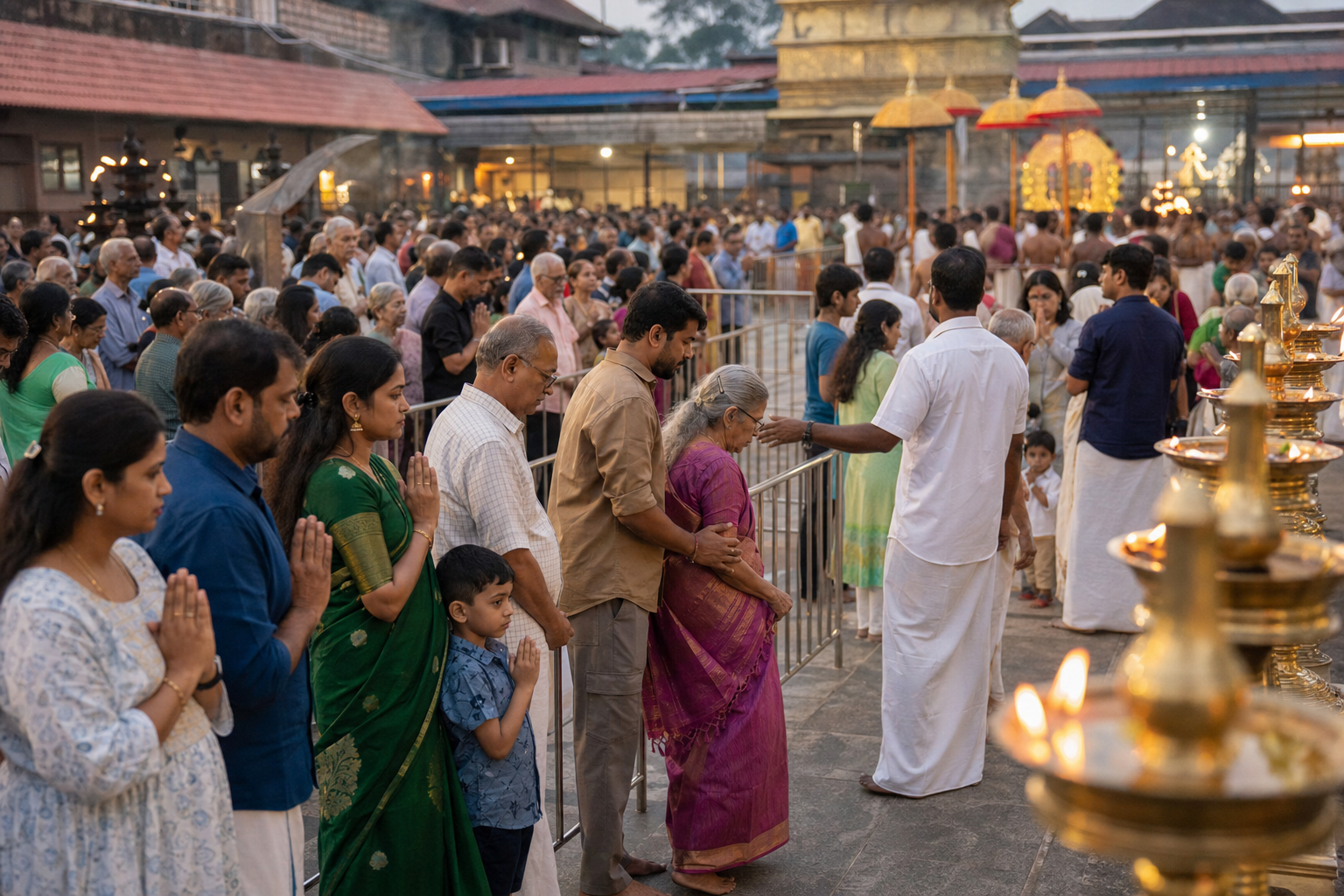
Good darshan preparation is partly logistical and partly ethical. Modest clothing should cover shoulders and knees. Leave footwear at the designated counter, take minimal baggage, remain quiet in queues and follow security instructions. Photography is ordinarily restricted inside the sanctum, so put the phone away before you reach the point where staff must correct you.
Barricaded routes and separate entry and exit flows may be used during crowded periods. Assistance or priority arrangements for elders and differently abled devotees may be available, but they should be confirmed rather than assumed. Volunteers can move a queue safely only when devotees accept instructions promptly. Holding a place for a large group or stopping in a moving lane creates a problem for everyone behind you.
Plan separately for children and elders
- Give children a wristband or card carrying a guardian’s contact details. Choose one unmistakable meeting point before joining the queue, and repeat it aloud with them.
- Do not rely on every family member having a working phone in a dense crowd or during rain. Decide who stays with each child if the group is divided by an entry lane.
- Use the interval between morning and evening sevas for rest. Children often engage better when you explain one vahana symbol in advance instead of asking them to endure a long procession without context.
- For elders, look for shade and seating near the permitted viewing route. Break the approach into shorter walking segments and avoid combining a long procession with several tirtha visits on the same day.
- Ask about accessibility arrangements before entering the main queue. Availability may vary, and discovering the correct access point after a long walk wastes the energy you were trying to preserve.
Carry the same care into the physical environment. Avoid single-use plastic, place waste only in designated receptacles and give flowers or organic offerings through temple-approved channels. Seva, dana, satvik food and ethical conduct provide a shared dharmic language for respectful visitors across Hindu, Buddhist, Jain and Sikh traditions. You do not need to imitate a rite you do not understand; silence, restraint, service and reverence are already meaningful forms of participation.
Public splendour also needs an inward counterpart. Gentle japa, attentive breathing, Vishnu-sahasranama or a short passage from the Bhagavata Purana can keep your attention from being captured entirely by crowd movement. Choose one practice you can continue without obstructing anyone. The measure is not how much you perform, but whether your practice makes you more patient and useful in the shared space.
Kurukshetra Brahmotsavams 2026 FAQ
When was the Kurukshetra Brahmotsavam scheduled in 2026?
The main nine-day celebration was scheduled from 25 June to 3 July 2026. Koil Alwar Thirumanjanam preceded it on 19 June, and Ankurarpanam was scheduled for 24 June.
What is the difference between Koil Alwar Thirumanjanam and Ankurarpanam?
Koil Alwar Thirumanjanam cleanses and ritually prepares the temple. Ankurarpanam consecrates and sows seeds, establishing the festival sankalpa and symbolising the growth of a dharmic beginning. One prepares the sacred environment; the other plants the intention that will unfold through the celebration.
Was the exact Garuda Seva or Rathotsavam date confirmed?
The available 2026 framework did not provide a complete day-wise vahana timetable. Garuda Seva is traditionally a major procession, while Rathotsavam takes place when scheduled, but neither should be assigned to a date without an edition-specific temple programme. If you are creating a historical record, locate the official archived schedule before labelling either day.
What does Brahmotsavam mean for a devotee?
Tradition remembers Brahma as conducting the primordial celebration for Vishnu. In practice, Brahmotsavam joins consecration, homa, adornment, procession, sacred sound, service and community participation. For you, its meaning becomes concrete through sankalpa: decide what quality you will practise while receiving darshan, then let your behaviour in the queue test that decision.
For any future Kurukshetra observance, begin with a one-page pilgrimage plan containing five things: your confirmed anchor seva, travel route, rest window, family meeting point and rain arrangement. Add one personal sankalpa. That is enough structure to let the festival remain a pilgrimage rather than becoming a contest against the clock.