
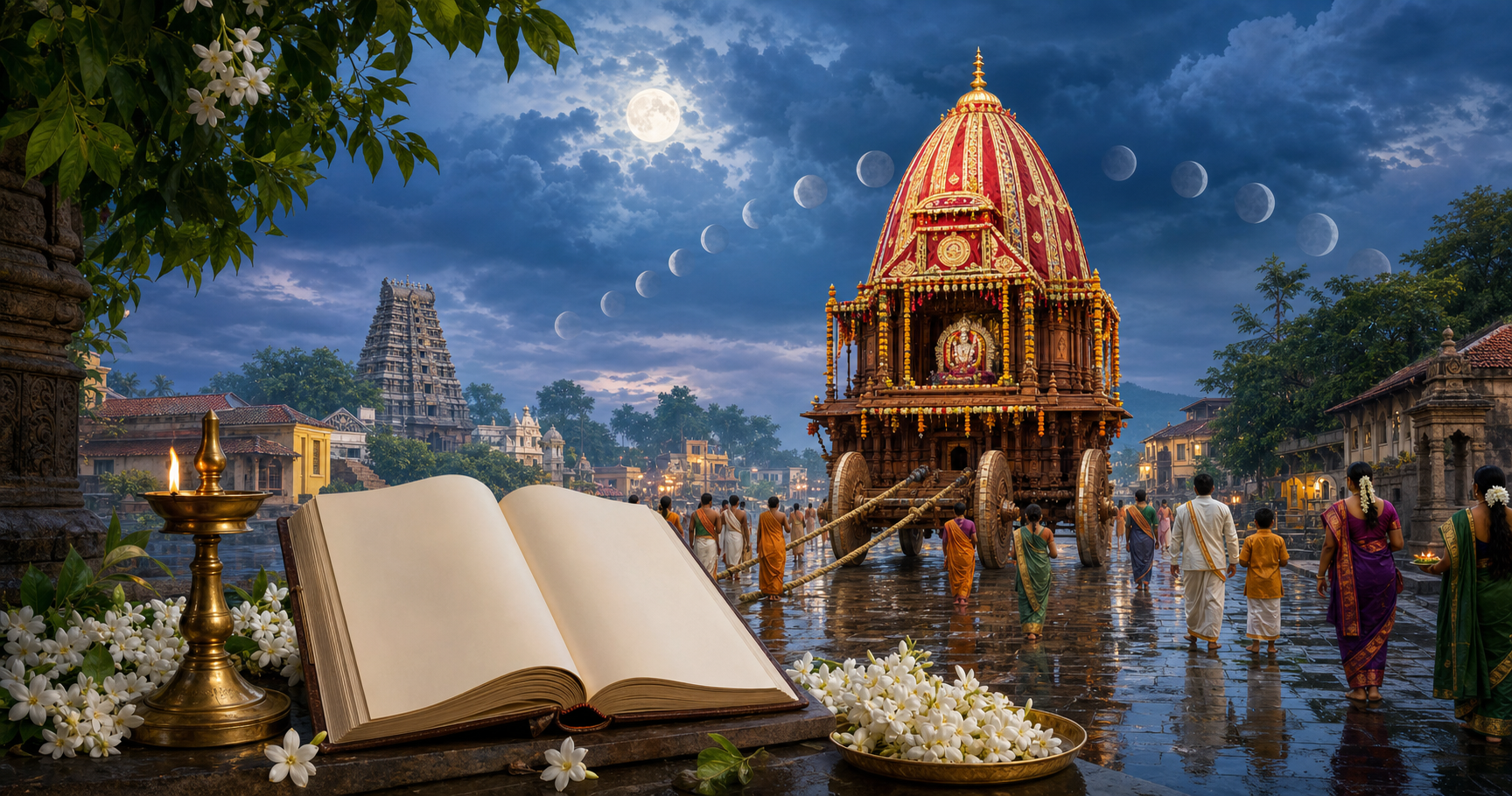
You probably want dates you can copy into a family, temple, or personal practice calendar. The firm North Indian answer is that Ashadha 2026 runs from June 30 through July 29 in the Purnimanta system, using Indian Standard Time.
Do not treat that range as a universal festival schedule. Ratha Yatra, Devshayani Ekadashi, Guru Purnima, and Ashadha Amavasya are determined by tithi, local sunrise, region, and sampradaya. Mark the fixed month boundaries first, then confirm the observance date for your city.
Dates you can safely mark now
The following calendar separates what is fixed in the North Indian Purnimanta reckoning from what still requires a location-specific panchang. This distinction matters because Ashadha is a lunar month, not a block of Gregorian dates that applies identically everywhere.
| Calendar entry | Ashadha 2026 date or rule | What you should do |
|---|---|---|
| Ashadha begins | June 30 in the North Indian Purnimanta calendar, IST | Use this as the opening date if your family follows a Hindi or other North Indian Purnimanta panchang. |
| Jagannath Ratha Yatra | Ashadha Shukla Dwitiya | Follow the published date of the Puri or local Jagannath temple whose celebration you will attend. Do not substitute a generic Gregorian date. |
| Devshayani Ekadashi | Ashadha Shukla Ekadashi | Confirm both the fasting date and Dwadashi parana window for your city and tradition. |
| Guru Purnima | July 29 in the North Indian Purnimanta reckoning, subject to local confirmation | Plan guru puja, study, dana, or lineage observances, but recheck the date if you live outside India. |
| Ashadha Amavasya | Determined through the applicable Amanta calendar and local tithi | Use your regional panchang before arranging pitru-tarpana or related family rites. |
| Ashadha ends | July 29 in the North Indian Purnimanta calendar, IST | Remember that Purnima closes the month in this system. |
The unusual timing in 2026 is connected with Adhik Jyeshtha, an intercalary lunar month inserted to keep the lunar calendar aligned with the solar and seasonal cycle. That adjustment is why Ashadha arrives later than someone relying on last year’s Gregorian dates might expect. Reusing an old annual calendar is therefore an easy way to schedule the wrong day.
Why your two calendars may show different Ashadha dates

Purnimanta and Amanta calendars describe the lunar cycle with the same tithis but place the month boundary at different points. A Purnimanta month ends at Purnima. It begins immediately after the preceding full moon, so its Krishna Paksha comes before the Shukla Paksha that concludes the month. This is common in North Indian calendars.
An Amanta month ends at Amavasya and begins after the new moon. It is widely used in peninsular India, including Telugu and Kannada traditions in Andhra Pradesh and Karnataka. Ashada masam therefore overlaps much of the June 30-July 29 window without necessarily sharing both civil-date boundaries.
- If you follow a Hindi calendar in North India, begin with the Purnimanta span of June 30-July 29.
- If your household follows a Telugu or Kannada panchangam, use its Amanta Ashada masam boundaries instead of forcing the North Indian range onto your observance.
- If you belong to a particular temple or sampradaya, use its calendar for communal participation and its stated vrata rules for personal observance.
- If you live outside India, calculate for your actual city. Simply converting an IST clock time does not replace a local panchang because sunrise and the tithi present at sunrise both matter.
The month name itself is connected with the full Moon’s proximity to the Purva Ashadha or Uttara Ashadha nakshatra region. The astronomical cycle is shared even when regional calendars label the beginning and end differently. When two calendars disagree on the month name around a boundary, first compare their Amanta or Purnimanta convention; do not assume that one has made an error.
The sunrise rule that prevents most date mistakes
A tithi is based on the changing angular separation of the Sun and Moon. Each tithi represents twelve degrees of separation, but it does not begin neatly at midnight or last exactly one civil day. A festival tithi can start in the afternoon, evening, or night and continue through the following sunrise.
June 24 offers a useful 2026 example. Shukla Dashami continues until 8:09 PM IST, after which Ekadashi begins. Even though the tithi changes on the evening of June 24, the Ekadashi fast is expected on June 25 for most locations in India because Ekadashi is present at sunrise. That Ekadashi should not be confused with Devshayani Ekadashi: it occurs before the North Indian Ashadha month opens on June 30.
Use the same discipline whenever you copy an observance from a general calendar. Record the tithi name as well as the civil date. Then check whether the required tithi prevails at local sunrise and whether your tradition applies an additional rule.
Ekadashi needs special care. Smarta and Vaishnava calendars can occasionally assign different civil days when the sunrise is mixed with the preceding tithi. Vaishnava calculations may reject a viddha sunrise, while a general household calendar may list the Smarta date. If your family follows a Vaishnava lineage, look specifically for its Ekadashi entry rather than assuming that every listing means the same vrata day.
Parana is also part of the vrata, not an optional footnote. It is normally performed on Dwadashi after sunrise and after Hari Vasara, the first quarter of Dwadashi, has passed. The end of Dwadashi creates the other limit, so the correct breaking window must be calculated locally. Put the parana window in your calendar at the same time as the fasting date.
How to observe the major Ashadha occasions
Ratha Yatra: follow the temple that hosts your yatra
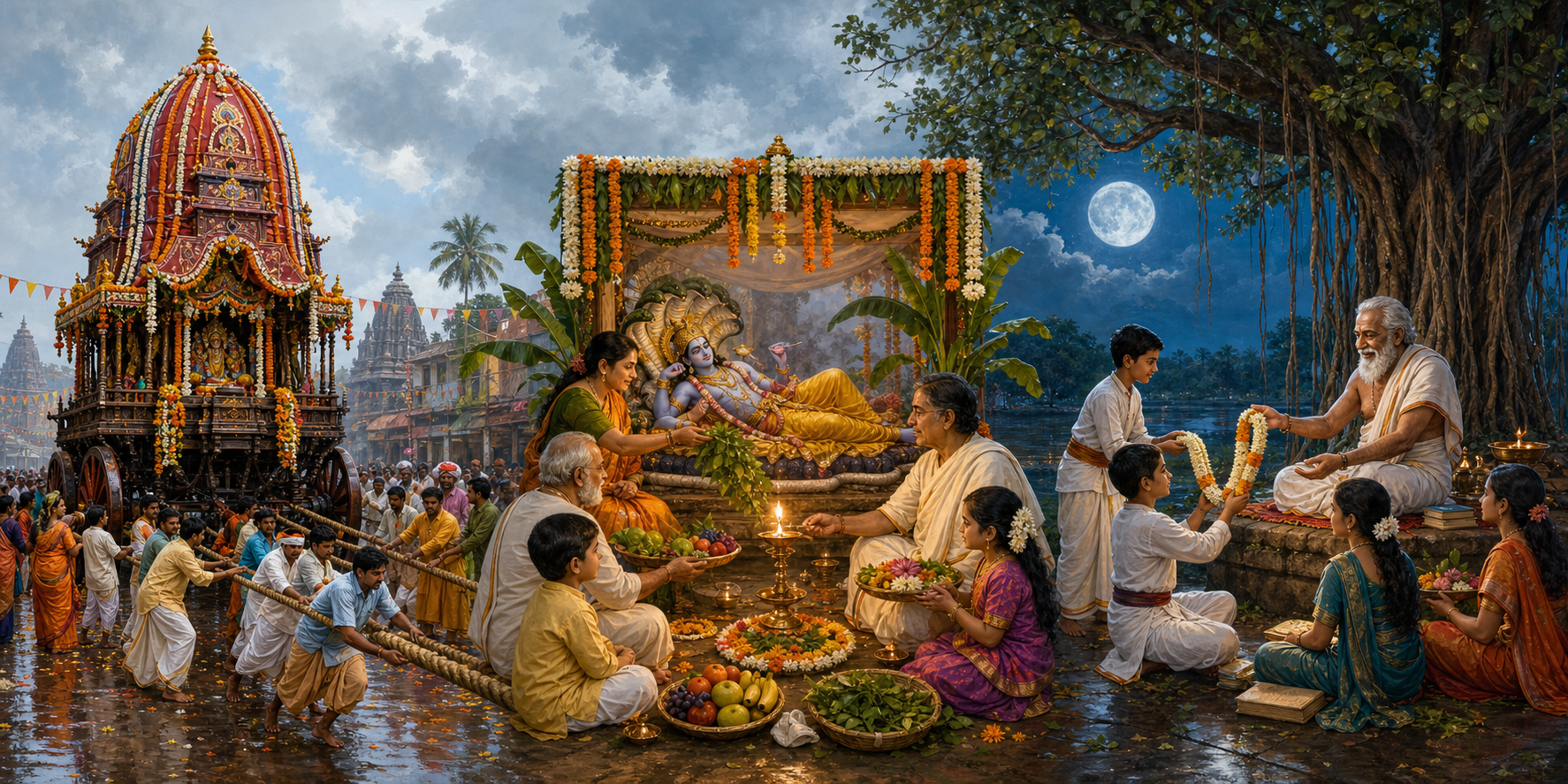
Jagannath Ratha Yatra is observed on Ashadha Shukla Dwitiya. The great public celebration is centered on Shree Jagannath Temple in Puri, while Jagannath temples and devotional communities around the world hold their own processions.
If you intend to participate physically, the host temple’s announced schedule is the practical authority for assembly, procession, darshan, and seva. Keep the lunar identity, Shukla Dwitiya, in your personal calendar as a check against copied dates. A diaspora procession may also be arranged around local logistics, so distinguish the temple event time from the tithi governing your household worship.
Devshayani Ekadashi: begin Chaturmas with a workable vow
Devshayani Ekadashi, also called Harishayani Ekadashi, falls on Ashadha Shukla Ekadashi and begins Chaturmas. Many households use the season for deeper japa, svadhyaya, dana, and seva. Weddings, griha-pravesh ceremonies, and some other auspicious undertakings are often deferred, but this is a community- and sampradaya-specific discipline rather than a universal ban.
Prepare on Dashami by simplifying food and reducing unnecessary stimulation. On Ekadashi, choose a form of restraint you can complete responsibly, such as a simple sattvic or phalahara observance where that is customary. Strict fasting is not a test of spiritual worth. People with medical conditions, older adults, and pregnant people should adapt the vrata and should not let fasting compromise health. Complete the observance through properly timed Dwadashi parana.
Guru Purnima: make gratitude concrete
Guru Purnima falls on Ashadha Purnima, which closes the Purnimanta month on July 29 in the North Indian IST calendar. Hindu observance may honor a living guru, the teaching lineage, or Sri Veda Vyasa. Your preparation can be direct: clean the place of study, select a teaching to revisit, arrange guru puja according to your lineage, and offer service or dakshina without turning the day into a display.
The full-moon period also carries meaning across the wider dharmic family. Buddhist Asalha Puja remembers the Buddha’s first discourse at Sarnath and the turning of the Dharmachakra. Jain monsoon disciplines emphasize ahimsa, aparigraha, and svadhyaya around this season. Sikh practice has its own calendar and should not be collapsed into a Hindu vrata, yet simran, seva, paath, and reverence for the Guru offer an intelligible point of dharmic kinship.
Ashadha Amavasya: verify family and regional practice
Ashadha Amavasya is used for ancestral remembrance and pitru-tarpana in many regions. Its placement is especially easy to misunderstand when a North Indian Purnimanta listing is compared with an Amanta panchang. If your family performs ancestral rites, confirm the applicable Amavasya with the panchang and priest or acharya you ordinarily follow. Do not infer its civil date solely from the June 30-July 29 Purnimanta range.
Build a calendar that supports practice, not just dates
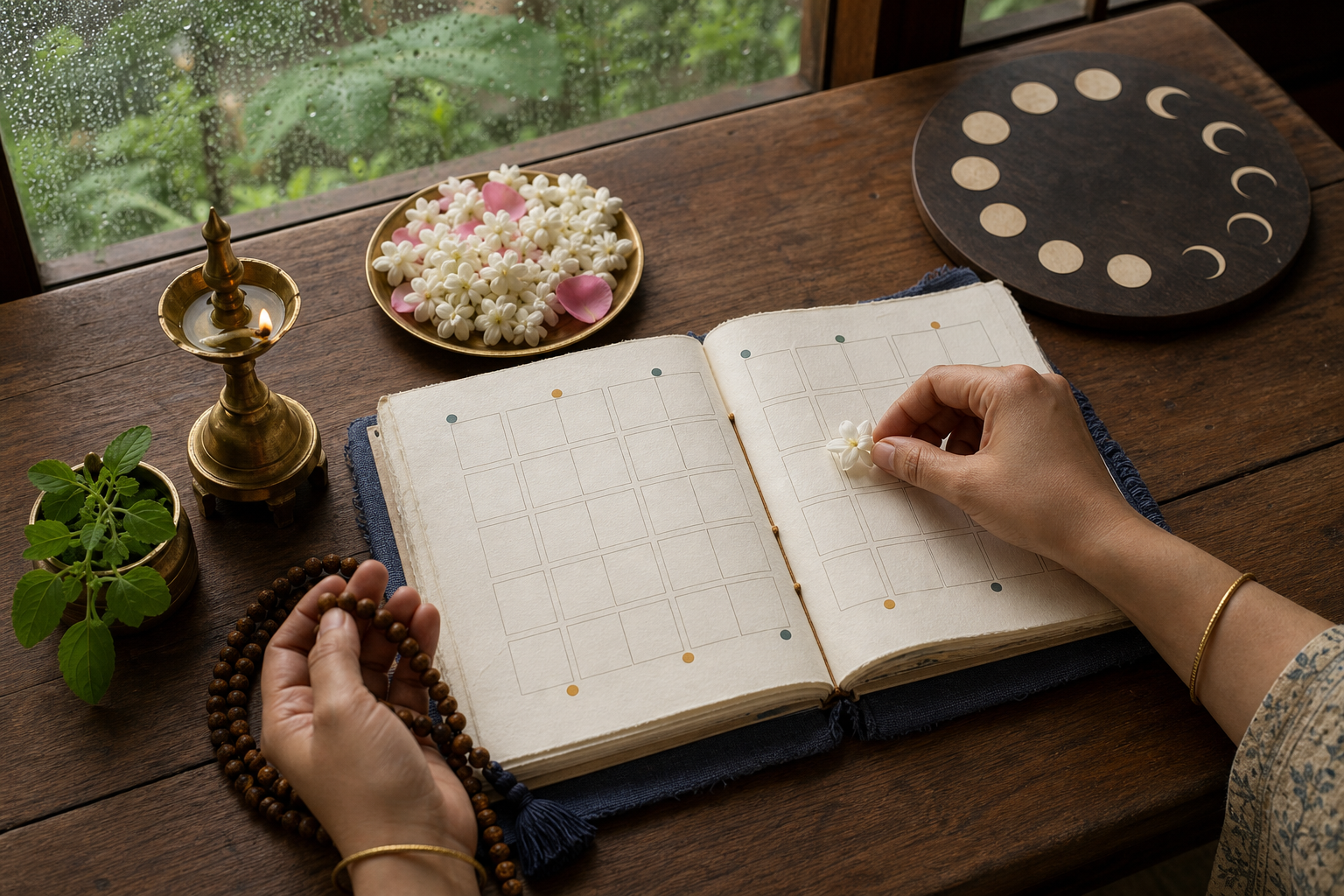
A useful Ashadha calendar records preparation and completion as well as the main observance. That prevents an Ekadashi fast from appearing without parana, a temple yatra from appearing without travel information, or Guru Purnima from arriving before you have chosen how to honor the lineage.
- Choose one city-specific panchang that matches your regional calendar and sampradaya. Write its location and convention at the top of your calendar.
- Enter June 30 and July 29 as the Purnimanta boundaries only if that is the system you follow.
- Add Ratha Yatra under Ashadha Shukla Dwitiya, Devshayani under Shukla Ekadashi, and Guru Purnima under Purnima. Replace any provisional civil date after checking your local listing.
- For Devshayani Ekadashi, create entries for Dashami preparation, the vrata, and the local Dwadashi parana window.
- Keep temple logistics separate from household tithi observance when the community event is scheduled for practical reasons.
- Choose a modest Chaturmas sankalpa you can sustain, such as regular japa, study, reduced consumption, or recurring seva. Consistency is more useful than an elaborate vow abandoned after the opening days.
Ashadha arrives with the monsoon and naturally turns attention toward restraint, study, and service. If your community faces seasonal hardship, dana and practical assistance can make the month’s inward disciplines visible in the world. The common thread is not identical ritual across Hindu, Buddhist, Jain, and Sikh communities; it is disciplined remembrance expressed through compassion and responsibility.
Key takeaways
- North Indian Purnimanta Ashadha runs from June 30 through July 29, 2026, in IST.
- Guru Purnima falls on Ashadha Purnima and closes that Purnimanta span on July 29, subject to local verification.
- Ratha Yatra is fixed by Ashadha Shukla Dwitiya; use the schedule of the temple whose celebration you will attend.
- Devshayani Ekadashi is fixed by Ashadha Shukla Ekadashi, but Smarta and Vaishnava date rules can differ. Record the local parana window too.
- Amanta calendars used in Andhra Pradesh and Karnataka do not necessarily share the North Indian month boundaries.
- A civil date copied from India can be wrong abroad. Use a city-specific panchang rather than applying IST dates unchanged.
Start by marking the June 30-July 29 North Indian frame if it applies to you. Before committing to travel, fasting, ancestral rites, or a temple program, verify the relevant tithi for your city and lineage. That one check turns a generic Ashadha calendar into a calendar you can actually observe.
References
- DharmaRenaissance Blog – June 24, 2026 Panchang: Dashami to Ekadashi, Shubh Muhurat, Rahu Kaal, Nakshatra and Rashi
- DharmaRenaissance Blog – Comprehensive Guide to Ashadha 2026: Exact Dates, Key Festivals, Tithis, and Regional Nuances