Uncertainty becomes especially difficult when an answer carries emotional weight: a medical result, a change in a loved one’s condition, a professional decision, or evidence that an important effort has been noticed. In such periods, the unanswered question can occupy more attention than the life continuing around it.
Dharmic practice does not promise control over these outcomes. Its practical contribution is a way to distinguish responsible action from grasping, calm the body without denying danger, and continue living before reassurance arrives.
Why an unfinished future can consume the present
The source article describes waiting as more than a passage of time. The mind interprets silence, predicts rejection or loss, and repeatedly checks for information that might relieve the tension. It connects this pattern with intolerance of uncertainty, reporting that greater intolerance is associated with worry, compulsive checking, and catastrophic forecasting. It also says uncertainty can engage threat-related and self-referential mental activity, encouraging rehearsal of futures that have not occurred.
This creates a reinforcing loop. An unknown outcome produces discomfort; checking briefly promises relief; the absence of a decisive answer renews the discomfort; and attention returns to the same question. The behavior can look like information gathering even when it has ceased to produce useful information.
A Dharmic reading shifts attention from the unanswered event to the relationship being formed with it. In the Buddhist vocabulary used by the source, dukkha is intensified by tanha, the craving for certainty, resolution, or permanence. The issue is not that a person cares about the result. It is that the mind begins to treat possession of the result as a condition for peace, dignity, or meaningful action.
Different traditions converge on action without possession
The traditions discussed in the source retain distinct languages and practices, yet they illuminate complementary parts of the same problem. Buddhism identifies craving, aversion, lethargy, restlessness, worry, and doubt among the hindrances that can shape experience. During uncertainty, these may appear as repeated checking, resentment toward silence, withdrawal from ordinary activity, mental agitation, or doubt about personal worth.
Hindu thought adds the dynamics of raga-dvesha, attachment and aversion, as well as the changing influence of the gunas. Karma Yoga supplies the practical counterweight: effort remains necessary, but the result is not treated as a possession owed to the person who acts. This separates committed participation from attempted control.
Jain aparigraha extends non-possessiveness to outcomes and expectations. Sikh simran anchors attention in remembrance when external circumstances remain unsettled. The source also places Buddhist mindfulness and clear comprehension, Vedantic discernment and trust, and these Jain and Sikh practices within a broader cultivation of steadiness amid change.
The shared principle is therefore more precise than passive acceptance. Each approach preserves a place for discernment, duty, care, and appropriate action while challenging the belief that inner stability must wait for external certainty. Non-attachment concerns the manner of acting, not the abandonment of action.
A practice sequence for the period before an answer
The source combines Dharmic concepts with behavioral and physiological techniques. Arranged as a sequence, these practices address the uncertainty loop at several levels rather than expecting insight alone to stop it.
- Identify what is actually known. State the available fact without adding a forecast. An unanswered message is an unanswered message; it is not yet proof of rejection, disregard, or failure. Naming the interpretation separately makes it easier to examine.
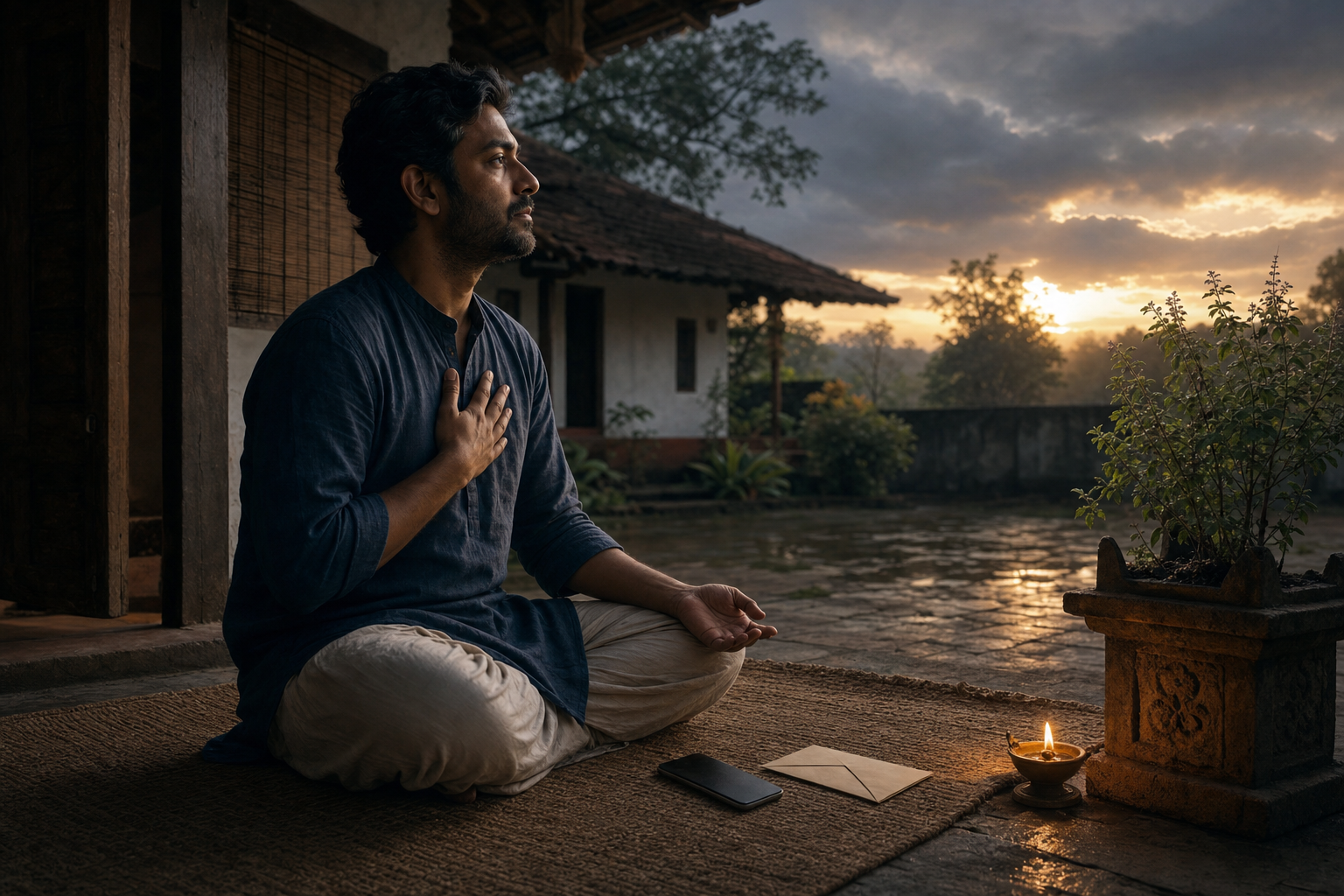
- Interrupt automatic checking. The source recommends scheduled communication windows, fewer non-essential notifications, and greater physical distance from the phone. It also proposes an implementation intention: when the urge to check appears, pause for several slow breaths and return to the present task.
- Settle the body before debating the story. The article reports that slow diaphragmatic breathing with a somewhat longer exhalation can support parasympathetic regulation. Its example is a brief period of nasal breathing using a four-second inhalation and a six-second exhalation. The point is functional: a less activated body can evaluate an uncertain situation more clearly.
- Give attention a concrete home. Breath awareness, brief noting, open monitoring, bodily sensation, or ordinary sound can break the momentum of rumination. The source also describes inner sound through the lens of Nada Yoga. This is presented as an attentional relationship with sound, not as a claim that meditation resolves the condition producing it.
- Test the feared prediction. Write down the predicted outcome, consider its probability, identify plausible alternatives, and choose one constructive action available now. This preserves effort while loosening the assumption that the most frightening possibility is already a fact.
- Return to value-based work. A present duty, an act of care, or a form of seva redirects energy from obtaining reassurance toward making a contribution. In Karma Yoga terms, the next right action matters even while its eventual fruit remains unknown.
An urge log can make the sequence observable. The source suggests recording the trigger, bodily sensation, time, and chosen response. The record is not a moral scorecard. It reveals patterns and turns each urge into an opportunity to practise a different response.
Key takeaways
- Uncertainty and suffering are related but not identical; grasping, catastrophic interpretation, and repetitive checking can add distress to an unresolved situation.
- Dharmic non-attachment does not require indifference. It joins responsible effort with less possessiveness toward results.
- Body regulation, attention training, environmental boundaries, and cognitive examination work on different parts of the same loop.
- Remembrance, compassion, service, and wise community prevent equanimity from becoming a purely private exercise.
Steadiness is relational as well as individual
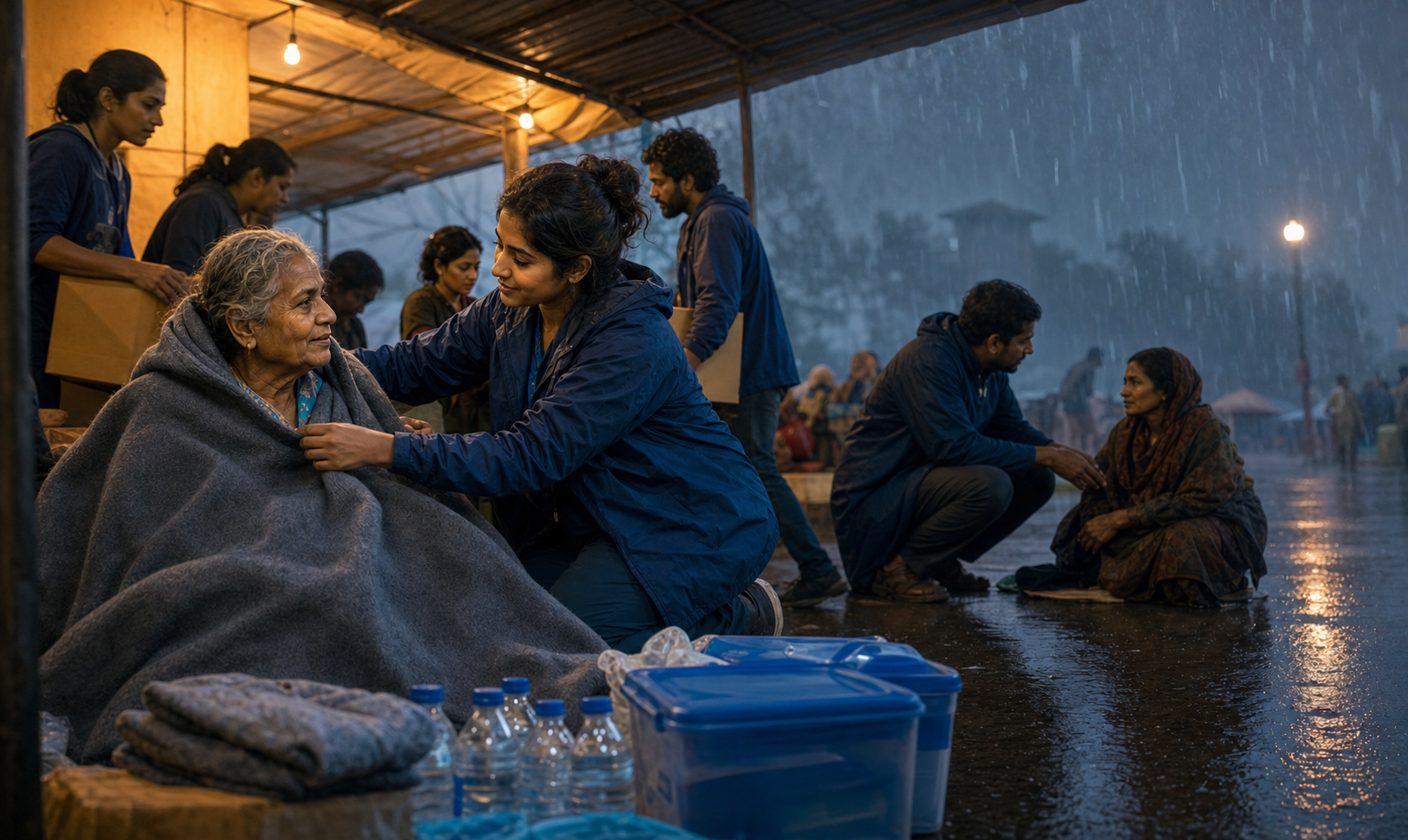
Uncertainty often narrows attention until the individual and the awaited result seem to be the whole field of experience. The source counters this narrowing with metta, or loving-kindness; seva, or selfless service; and communities oriented toward practice. It names Buddhist sangha, Sikh sangat, temple satsang, and Jain study circles as possible forms of companionship.
These communal dimensions matter because an unresolved situation may involve caregiving, anticipatory grief, isolation, or fear about one’s continuing value. A regulated breath can create immediate space, but relationship and contribution answer a different need: they locate meaning outside the arrival of a particular message or decision.
Practising with uncertainty therefore means neither predicting a favorable ending nor rehearsing the worst one. It means preparing the body, clarifying the mind, fulfilling the action that belongs to the present, and allowing the future to remain unfinished. The next period of waiting can then become training in participation rather than a suspension of life.