

An allegation involving a small devotional necklace has opened a much larger administrative question: how should an entrance-exam centre protect test integrity without treating religious observance as presumptively suspicious?
According to Struggle for Hindu Existence, a girl appearing for NEET-UG 2026 in Surat was allegedly asked to remove a Tulsi mala at an examination centre, after which the NTA ordered a probe. The report presents an allegation, not a settled finding, so the incident cannot by itself establish a wider pattern. It can, however, serve as a useful test of whether screening rules are clear, proportionate and respectful.
What the Surat report establishes – and what it does not
The reported particulars are limited: the examination was identified as NEET-UG 2026, the location as Surat, the object as a Tulsi mala, and the candidate as a girl who was allegedly asked to remove it. The source also reported that the NTA ordered a probe.
The publication’s headline emphasised that the incident occurred in BJP-ruled Gujarat. That political emphasis belongs to the source’s framing; it does not establish who devised the relevant screening rule, who communicated it, or who was operationally responsible at the centre.
The supplied report does not settle whether removal was required, merely requested, or ultimately enforced. Nor does it provide the applicable written instructions, the staff member’s explanation, the candidate’s complete account, or the examination centre’s response. The reported probe is therefore important precisely because essential facts remain unresolved.
Why a devotional item becomes a policy test
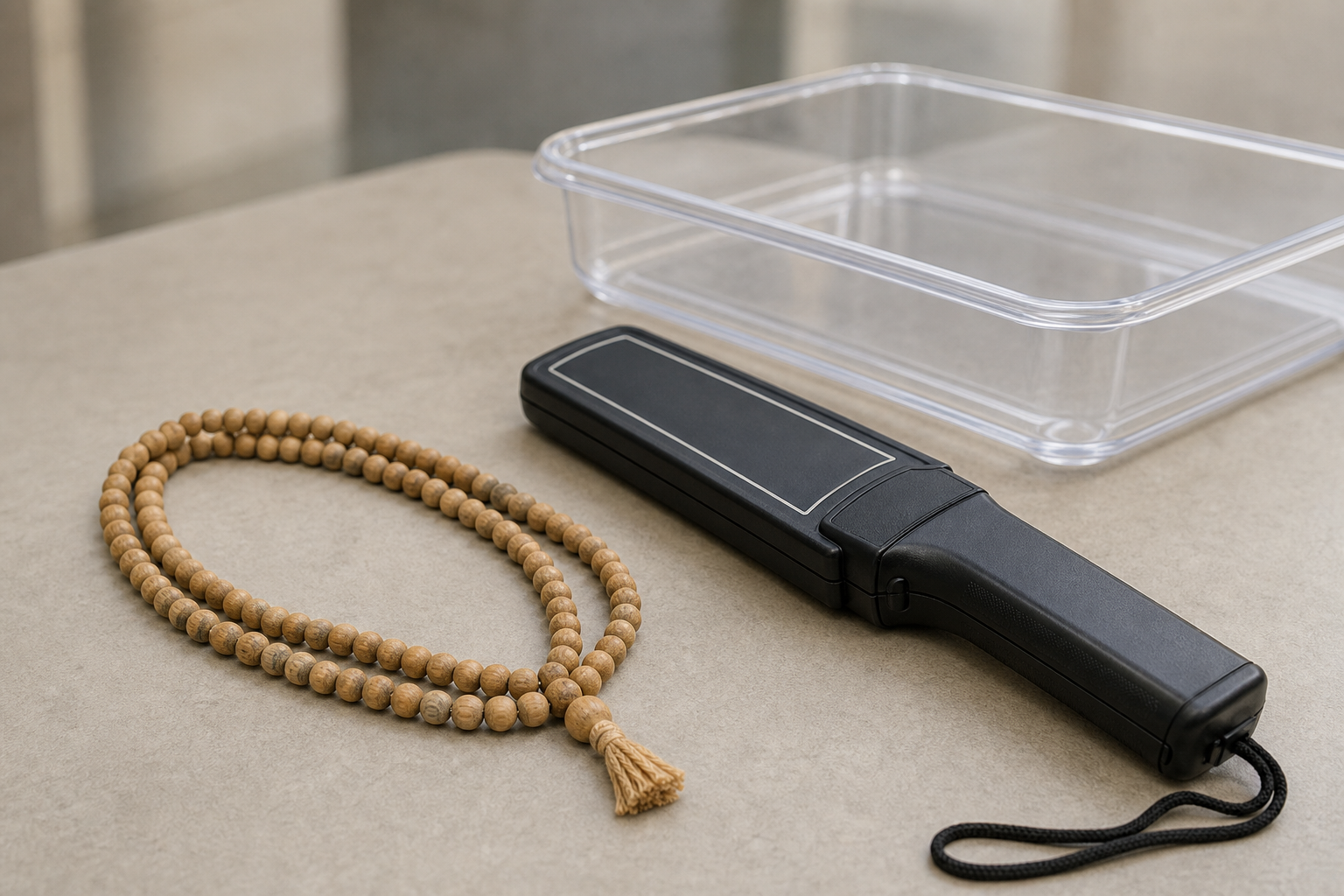
A Tulsi mala is associated with Hindu devotional practice and may carry meaning that an ordinary accessory does not. Asking a candidate to remove it can therefore affect religious conscience and personal dignity, even when the physical object appears minor to an observer.
Entrance-exam screening has a legitimate purpose: preventing unauthorised aids, concealed communication devices and other threats to a fair test. Yet that purpose does not answer every question about implementation. The relevant issue is whether a restriction is stated in advance, connected to an identifiable security concern, consistently applied and no more intrusive than necessary.
Neither an unconditional prohibition nor an undefined exemption provides a satisfactory standard. A blanket ban may unnecessarily burden genuine observance, while vague exceptions leave candidates and front-line staff to negotiate sensitive questions under severe time pressure. A credible policy should distinguish between an item that presents a demonstrable risk and one that can be cleared through visual or other minimally intrusive inspection.
What a credible probe needs to determine
The first task is factual. Investigators should establish what was said, whether the candidate was required to remove the mala, whether staff cited a written rule, whether an alternative inspection was offered, and whether the exchange affected her entry or examination experience.
The second task is institutional. A probe should separate policy design from local implementation: what the official instructions required, what candidates received before the examination, what training centre personnel were given, and whether comparable wearable items were handled consistently.
The third task is remedial. If the applicable rule was unclear, the response should correct the guidance rather than leave the matter as an isolated controversy. If staff departed from a clear rule, the response should address implementation and supervision. If a specific security basis existed, it should be explained without disclosing operational details that could undermine future examinations.
Key takeaways
- The Surat account remains an allegation under reported investigation, not a confirmed account of misconduct.
- A single reported incident does not demonstrate a nationwide practice, but it exposes a policy question relevant to centrally administered examinations.
- Religious significance does not eliminate legitimate screening, and security concerns do not justify unexplained or automatically intrusive treatment.
- Clear written rules, consistent enforcement, respectful inspection and an immediate escalation route can protect both examination integrity and candidates’ dignity.
A workable standard for future examinations

Candidate instructions should identify relevant categories of wearable objects in plain language and explain how religious items will be screened. The default should be that a devotional item remains in place unless a specific concern requires further inspection. Where additional screening is necessary, staff should explain the rule, use the least intrusive effective method, protect privacy and provide access to a supervisor before exclusion becomes a possibility.
Consistency matters as much as wording. Training should give examination personnel a common procedure rather than leaving decisions to personal assumptions about a faith or object. A brief record of exceptional interventions would also allow administrators to identify recurring confusion and improve later instructions.
The NTA’s reported probe offers an opportunity to move beyond a dispute over one mala and articulate a standard candidates can understand before reaching the gate. Transparent findings and clearer procedures would make future screening more predictable, defensible and humane.