

Two reports from Pudukkottai in Tamil Nadu and Peterborough in Britain place Hindu places of worship at the centre of property conflicts. Read together, they show why a temple-land dispute cannot be understood through ownership alone: administrative control, continued religious use, community access and cultural identity may all be contested at once.
The reports concern different jurisdictions and do not corroborate each other’s allegations. Their value in combination is comparative: one begins with a petition alleging encroachment and attempted renaming, while the other concerns a council’s reported decision to sell a temple site and a challenge before the High Court.
Two disputes with different legal starting points
In the Lingamalai matter, Hindu Post’s account of reporting credited to The Commune says Hindu Munnani petitioned the Pudukkottai District Collector. The organisation alleged sustained encroachment around a Shiva temple in Malampatti village, Viralimalai taluk, as well as an effort to rename Lingamalai as Saveriyar Malai. These remain allegations reported from a petition, not findings presented as having been established by a court or public inquiry.
The same account describes the temple as approximately 400 years old and says historical accounts attribute it to King Azhagiya Manavala Devan. It also reports Hindu Munnani’s position that the temple has approximately 300 acres of land under Forest Department control in the temple’s name. That formulation raises several distinct questions: what the records identify as temple property, what authority supports departmental control, where the relevant boundaries lie and what conduct is being characterised as encroachment.
The Peterborough dispute starts elsewhere. A Hindu Post excerpt credited to Panchjanya reports that Peterborough City Council decided to sell the site of a Hindu temple to the United Kingdom Islamic Mission. According to that report, the proposed use is for Masjid Khadijah and an Islamic centre, while Bharat Hindu Samaj has taken the dispute to the High Court.
Bharat Hindu Samaj reportedly says the premises have functioned as a temple since 1986 and constitute the only Hindu temple within a 35-mile radius. The report connects its establishment with Hindu families who fled Uganda after Idi Amin expelled people of Asian origin in 1972. Those details explain the site’s community and migration history, but the supplied excerpt does not set out the property’s title documents, the terms under which the organisation occupied it, the sale terms or the arguments filed in court.
Ownership, control, use and identity must be separated
Recorded interest is not the same as present control
A property can be recorded for one institutional purpose while being managed or controlled by another body. It can also contain separately occupied parcels or disputed boundaries. Consequently, the Lingamalai report’s references to land standing in the temple’s name, Forest Department control and alleged encroachment should not be collapsed into a single claim. Each concerns a different relationship to the land and requires its own documentary support.
The distinction works differently in Peterborough. Longstanding worship at a site can demonstrate religious use and reliance without, by itself, revealing whether the worshipping body owns the freehold, holds a lease, occupies under another arrangement or possesses enforceable rights concerning a sale. Conversely, a public body’s claimed ability to sell property does not resolve whether it followed the applicable process or properly addressed existing rights. The source excerpt does not provide enough documentation to decide those issues.
Cultural injury and legal invalidity are related but distinct
The reported attempt to change Lingamalai’s name concerns public memory and the religious identity associated with the hill. The proposed change of use in Peterborough concerns the potential loss of a functioning worship space whose supporters describe it as geographically irreplaceable. Both can produce a profound sense of cultural displacement. Yet the seriousness of that impact does not automatically establish a particular legal remedy; nor does a formally authorised property decision exhaust the question of community consequence.
Credible analysis therefore has to hold two inquiries together without confusing them. The legal inquiry asks who has which rights, what decisions were made and whether the proper authority and process were used. The cultural inquiry asks what would be lost if a temple landscape were renamed, encroached upon or transferred to a different use.
The evidence must match the question being disputed
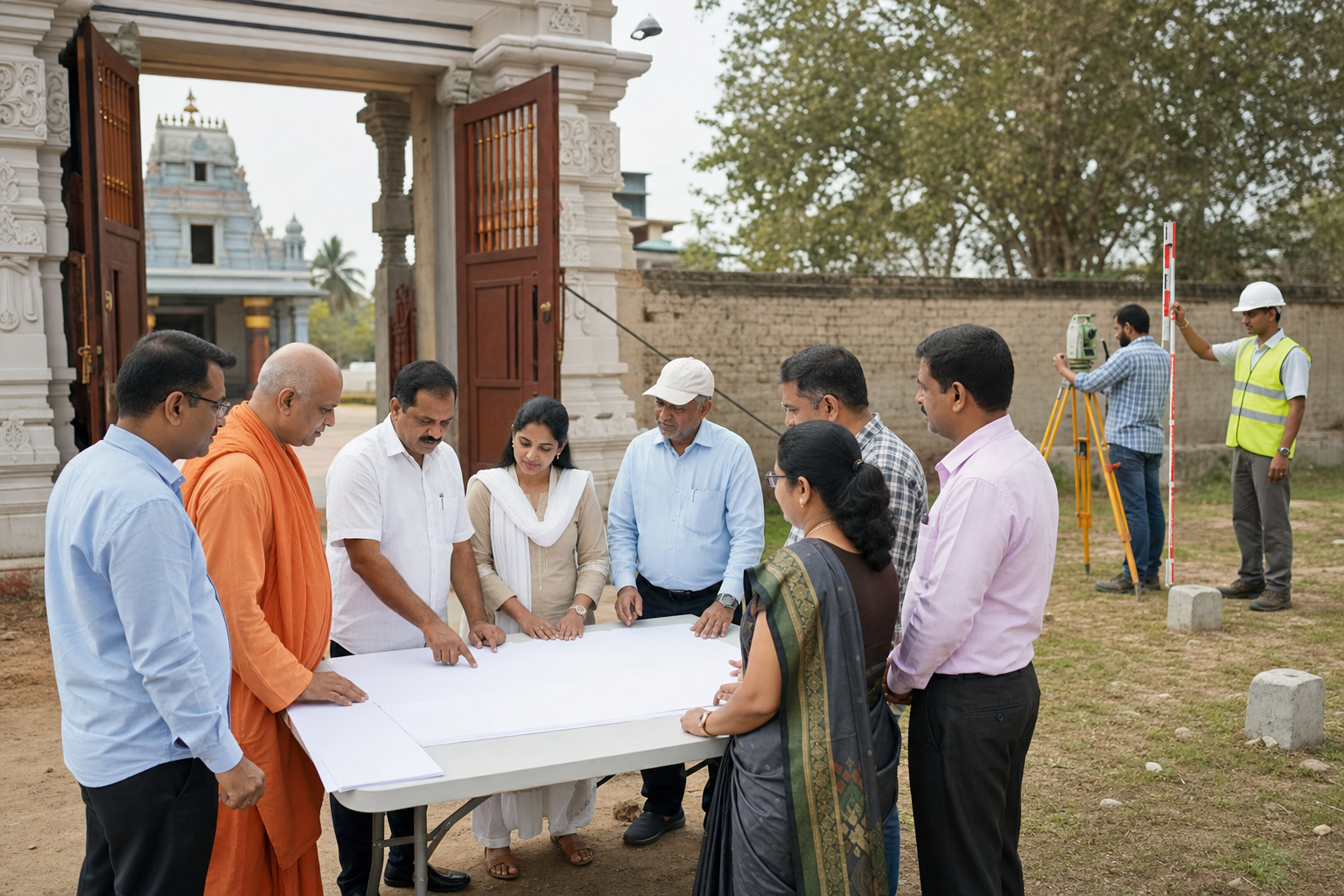
For Lingamalai, a document-based assessment would need to connect temple and land records with survey maps, parcel boundaries and the legal basis of Forest Department control. An allegation of encroachment would become assessable only when the affected parcels, occupants and claimed unauthorised acts were identified. The naming issue would separately require historical and official records showing how the hill has been described and whether any competent body has initiated or approved a change.
For Peterborough, the central record would include the property’s title, the basis of Bharat Hindu Samaj’s occupation, the council decision and sale process, and the parties’ pleadings and orders in the High Court. The reported history since 1986 and the claim that no other Hindu temple exists within 35 miles are relevant to community impact. They are not substitutes for the documents needed to evaluate ownership, decision-making authority or the remedy sought.
This evidentiary discipline matters because advocacy reports often enter public discussion before the underlying record is available. A petition establishes that a complaint has been made; it does not establish every allegation in the complaint. A court challenge establishes that a decision is contested; it does not reveal the eventual ruling. Preserving those distinctions protects both the affected community’s case and the accuracy of public reporting.
Key takeaways
- The Lingamalai report concerns alleged encroachment, administrative control and an alleged renaming effort; the Peterborough report concerns a proposed property transfer, change of use and High Court challenge.
- Temple ownership, government control, physical possession, religious use and cultural identity are separate questions, even when they concern the same site.
- Community history and scarcity can explain the consequences of losing a temple, but documentary records are still necessary to assess legal rights and official authority.
- Petitions and court challenges should be reported as procedural steps rather than treated as proof of the underlying claims or predictions of the outcome.
What the next public record needs to clarify
A meaningful official response in the Lingamalai matter would clarify the recorded land interest, the authority and limits of departmental control, the location of any alleged encroachments and the official position on the hill’s name. In Peterborough, council records and High Court filings could clarify the parties’ respective interests, how the sale decision was reached, what objections have legal force and what relief Bharat Hindu Samaj is requesting.
As these records emerge, the most durable approach will be to test each institutional decision against evidence while documenting the cultural consequences in full. That standard can keep temple-property debates focused on verifiable rights, accountable procedure and the continuity of living places of worship.


References
- Hindu Post – 400-Year-Old Lingamalai Temple Lands In Pudukottai Encroached, Attempts To Rename As ‘Saveriyar Malai’ Alleges Hindu Munnani; Petition Filed, citing The Commune, July 14, 2026.
- Hindu Post – ब्रिटेन में हिंदुओं के साथ ऐसा अन्याय क्यों? मस्जिद के लिए बेच दी मंदिर की जमीन; 5 बिंदुओं में समझिये पूरा मामला, citing Panchjanya, July 16, 2026.