An Indian mobile medical team, a Venezuelan disaster zone, and the sound of Ram Siya Ram at a treatment site have been presented together as a story of relief, faith, and international solidarity. Its significance becomes clearer when the reported medical work is separated from uncertain casualty figures and from the meanings attached to the devotional setting.
The available source set contains one public article rather than several independent reports. The synthesis below therefore connects the medical, humanitarian, spiritual, and diplomatic dimensions within that account without treating its internally cited claims as separate corroboration.
Key takeaways
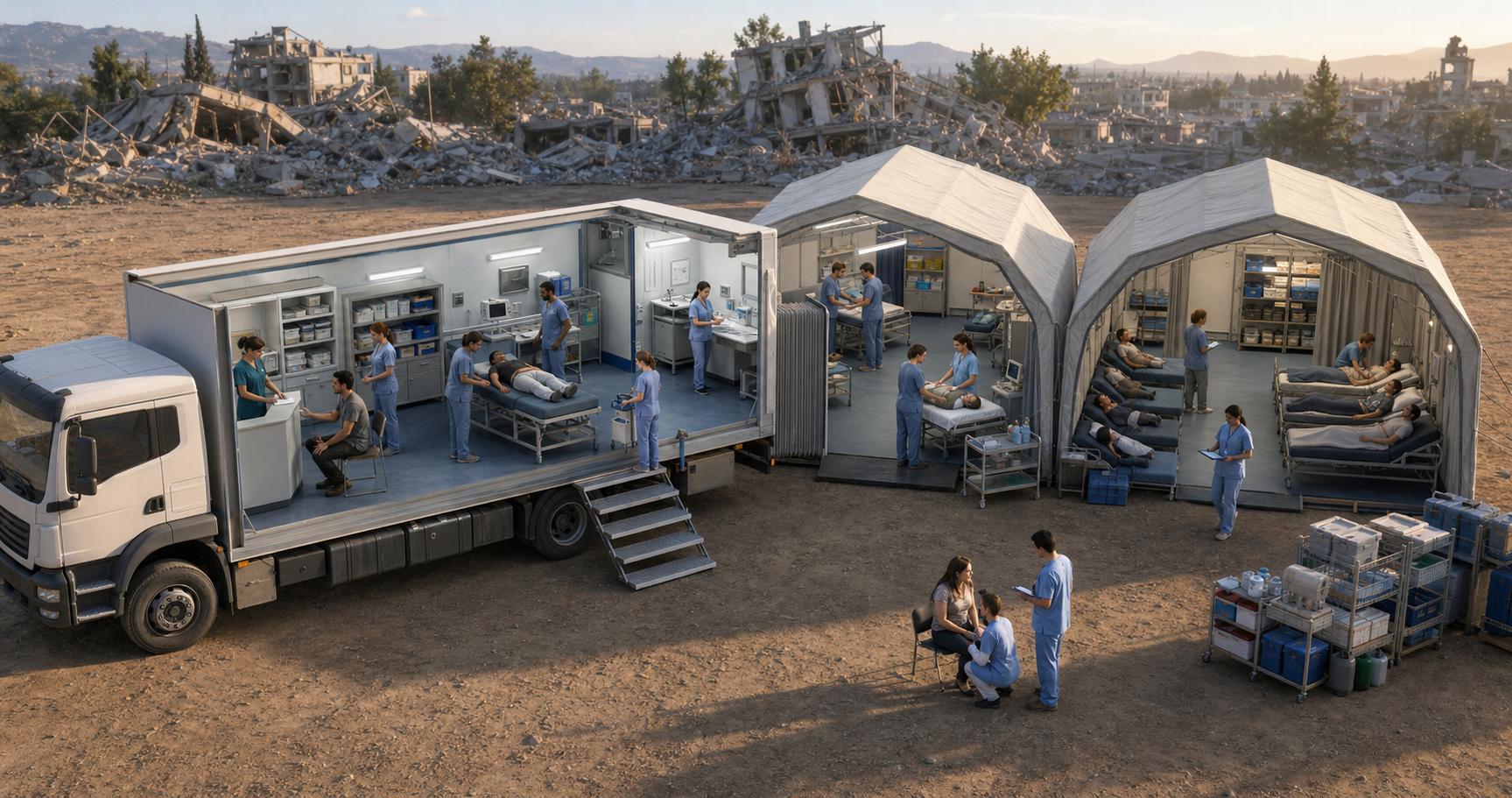
- The supplied article reported that Indian medical teams established a mobile hospital in Caracas and treated people affected in and around La Guaira.
- Its casualty and missing-person figures came from different preliminary accounts and should not be combined or presented as a settled total.
- Medical seva acquires practical meaning through competent, impartial care, coordination, and continuity after emergency teams leave.
- Ram Siya Ram can explain the caregivers’ spiritual frame, but it does not by itself establish how every patient experienced the mission or how effective the treatment was.
The reported picture and the limits of the record
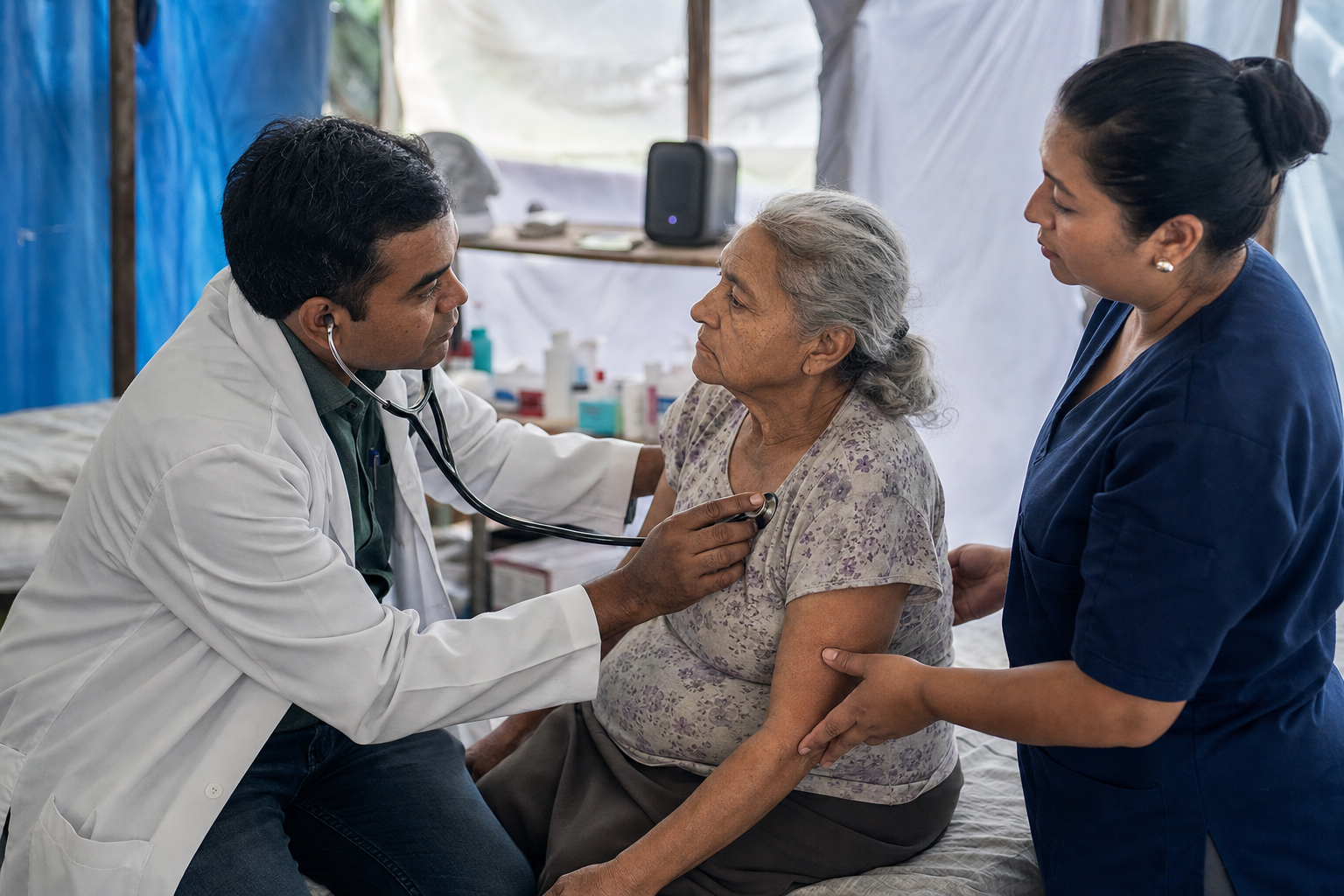
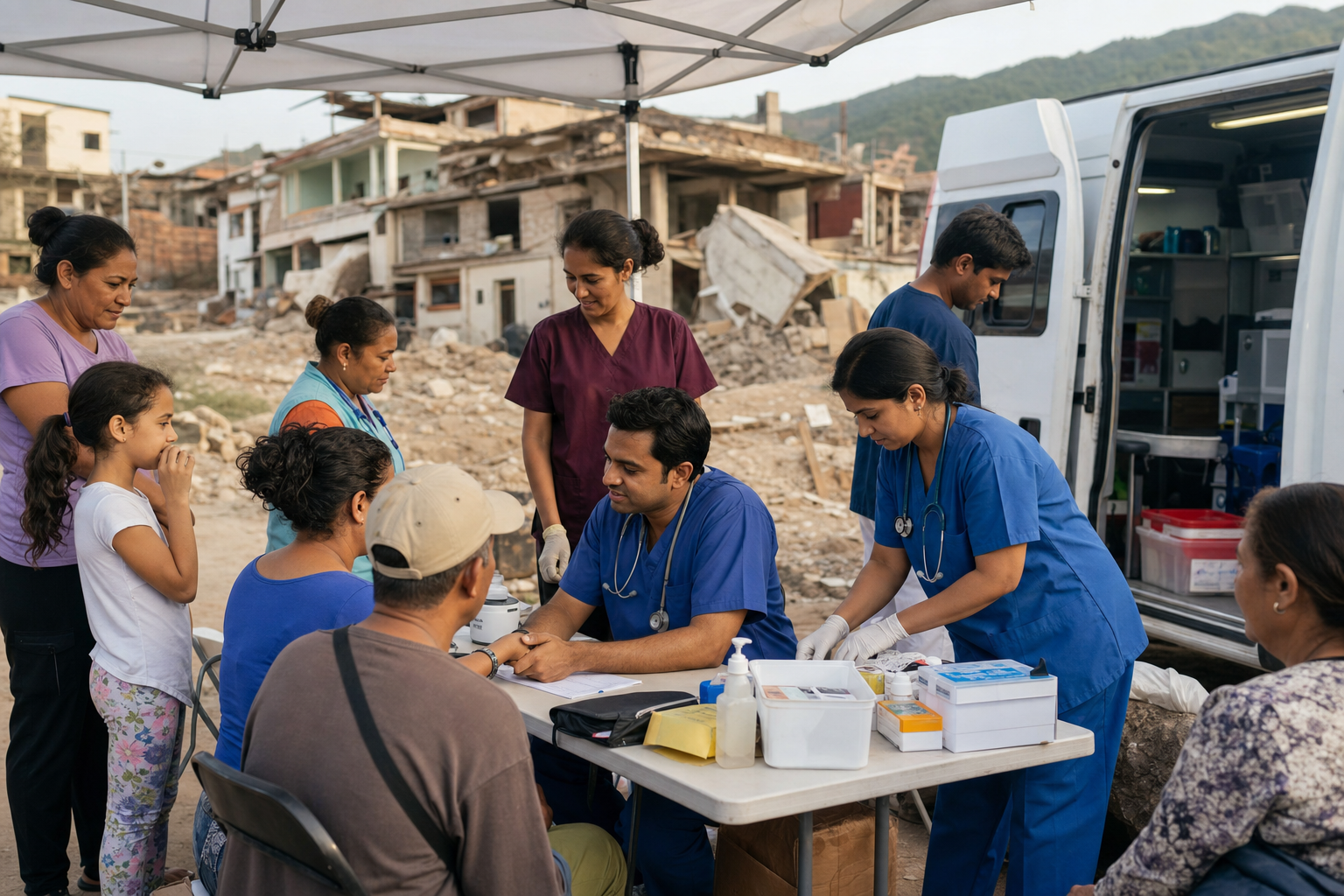
The DharmaRenaissance Blog account described twin earthquakes reported on June 24, 2026, followed by an Indian medical deployment in Caracas. It said the mobile facility treated survivors from the affected region, including people injured around La Guaira, and depicted doctors and relief personnel providing clinical and wheelchair assistance.
The scale of the disaster remains less certain within the same account. One passage cited early reports of 1,719 deaths and more than 5,000 injuries. Another relayed a message associated with the Sri Sathya Sai International Organization Venezuela which said media reports as of June 27 described more than 1,400 deaths and nearly 70,000 people unaccounted for. That message also referred to magnitudes of 7.2 and 7.5. These are source-reported numbers, not independently verified measurements or a reconciled official tally.
The distinctions matter. A missing-person count is not a death count, and figures issued at different stages of a rescue operation may rely on different geographic coverage, definitions, and reporting channels. Damaged communications, displacement, duplicate names, and delayed hospital records commonly complicate early disaster accounting. Responsible interpretation therefore preserves each figure’s attribution and timing rather than selecting the largest number or adding unlike categories together.
The article also recounted a survivor’s appreciation that treatment had eased her pain after the earthquake. The testimony gives the mission a human dimension, but one anecdote cannot establish overall reach or clinical performance. The supplied material does not provide patient totals, treatment outcomes, deployment logs, or an independent after-action assessment. That absence does not invalidate the reported service; it defines what can and cannot yet be concluded from the record.
Why a mobile hospital can change survival prospects
A mobile hospital is especially useful when permanent facilities are damaged, inaccessible, or overwhelmed. In general disaster practice, such a unit can bring triage, trauma stabilization, wound care, infection prevention, essential medicines, and referral coordination closer to affected communities. It can also help preserve local hospital capacity for patients requiring surgery or intensive care.
Earthquake response does not end with injuries caused during the initial collapse. Fractures, crush injuries, lacerations, dehydration, exposure, and acute psychological distress may be followed by interrupted treatment for existing illnesses, unsafe water, crowded shelters, and deteriorating sanitation. The source’s emphasis on a mobile facility is therefore more consequential than the visibility of the deployment alone: a functioning field service can become a bridge between rescue, emergency medicine, and the restoration of ordinary healthcare.
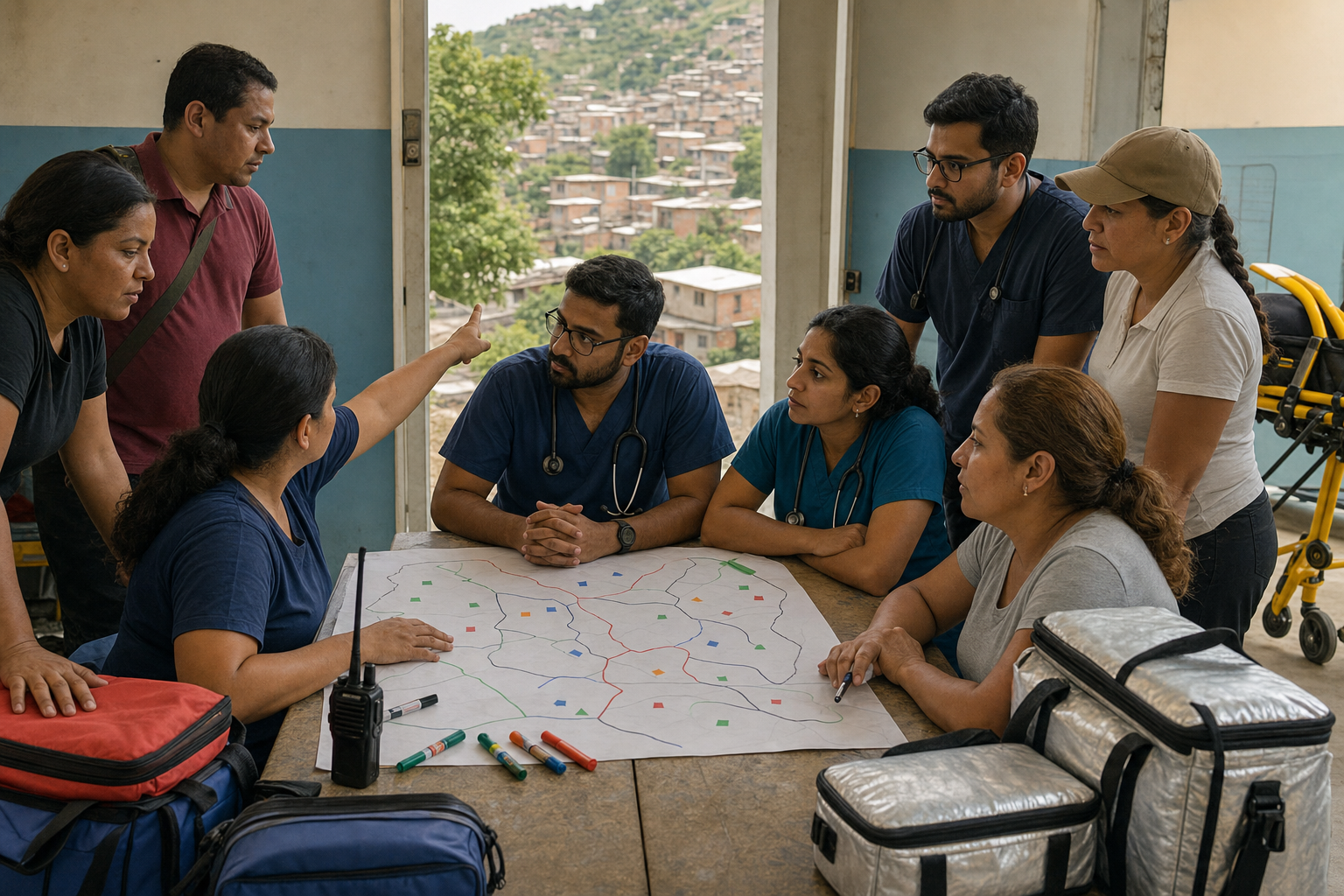
Mobility, however, is only one part of effectiveness. A useful assessment would examine whether patients were triaged consistently, essential supplies remained available, interpreters or local staff supported communication, referrals reached appropriate hospitals, and medical records followed patients through the system. Coordination with Venezuelan health authorities and community organizations would also determine whether the outside team filled genuine gaps rather than duplicating work already underway.
Seva is measured at the bedside, not by the soundtrack
The most distinctive element in the source was Ram Siya Ram playing as Indian doctors treated Venezuelan survivors. The article interpreted the devotional sound through the Hindu ideal of seva: disciplined service undertaken with humility and recognition of a shared humanity. It also situated that ethic beside such Indic principles as ahimsa, karuna, and dana.
That interpretation is meaningful when it explains what motivates caregivers. It becomes more difficult if a provider’s devotional atmosphere is assumed to represent every patient’s emotional response. In a plural disaster setting, the ethical test is whether care remains voluntary, respectful, clinically appropriate, and available without religious distinction. Sacred music may sustain volunteers or create calm for some listeners, but its value should not be confused with evidence of medical outcomes or universal patient approval.
The article connected the scene to a wider relationship involving Sri Sathya Sai Baba and relayed reports that the Sri Sathya Sai International Organization Venezuela was assisting with food, supplies, rescue support, and cleanup. Such locally rooted volunteer networks can complement an international medical mission through neighborhood knowledge, language, and continuing presence. Their contribution is strongest when responsibilities are clear and activities are coordinated with professional emergency services.
Seen this way, seva is not primarily the public display of a religious identity. It is the conversion of moral commitment into repeatable duties: reducing pain, protecting dignity, observing clinical limits, and remaining accountable to the people receiving help. The devotional element supplies a vocabulary of motivation; conduct supplies the proof.
From a compelling image to an accountable partnership
The source also presented the Indian mission as an expression of medical professionalism and national soft power. Humanitarian work can indeed influence how a country is perceived, but reputation is a consequence rather than the proper endpoint of relief. The relevant measure is whether deployed expertise answers local priorities and leaves useful capacity behind.
That standard shifts attention from imagery to accountability. Credible relief requires transparent reporting about services delivered, coordination with local institutions, equitable access for vulnerable groups, and a safe handover when foreign teams withdraw. Public communication should also distinguish verified operational information from preliminary casualty estimates and emotionally resonant social-media material.
The reported convergence of Indian doctors, Venezuelan volunteers, and a dharmic language of service offers a constructive model only if solidarity continues beyond the emergency spectacle. As rescue gives way to recovery, the most valuable legacy would be sustained clinical cooperation, honest documentation, and support shaped by the priorities of affected communities.