
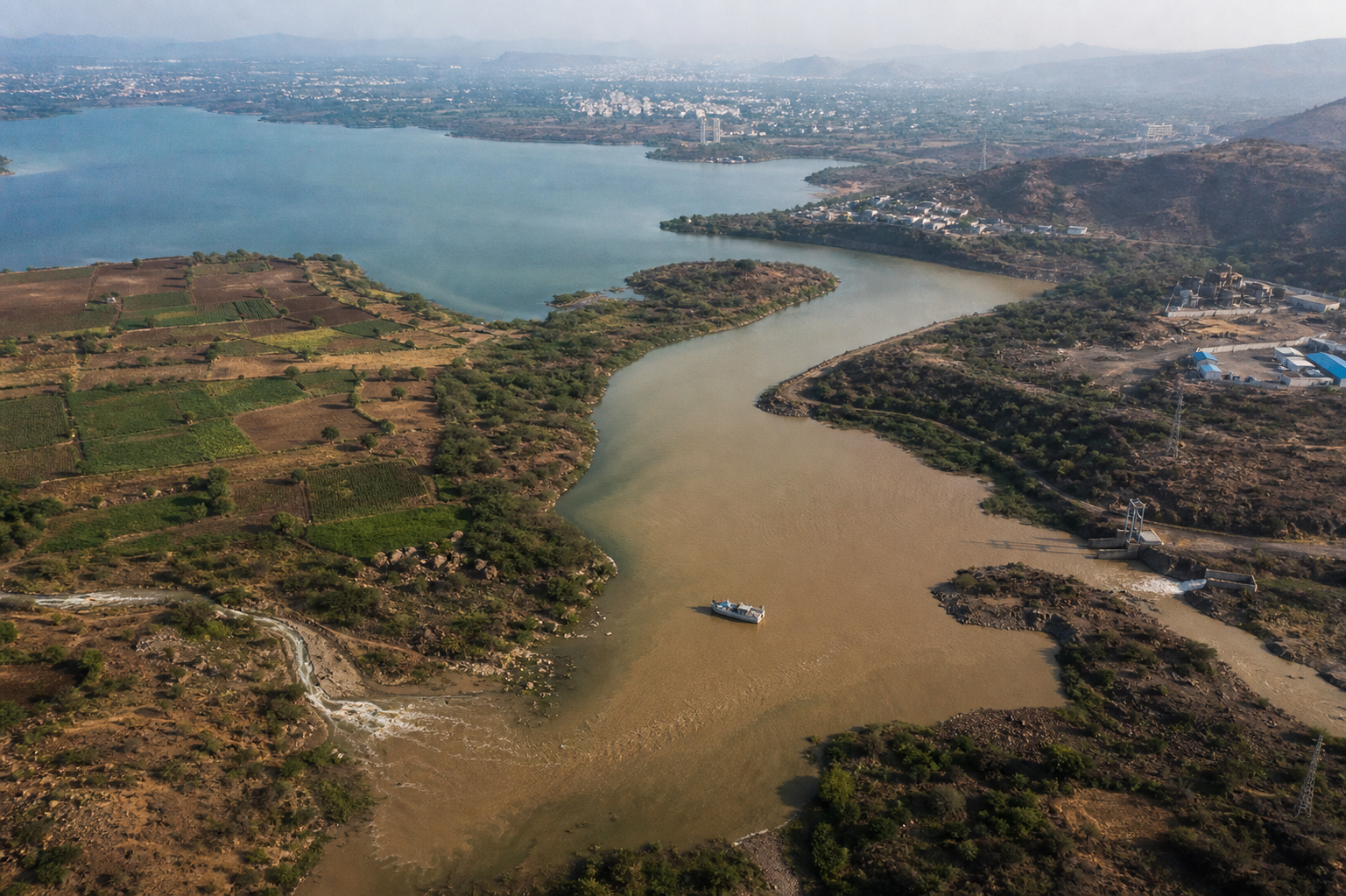
The Ujani-Bhima pollution controversy concerns more than visibly degraded water. It raises a harder question: can public institutions convert allegations of contamination into verified findings, effective remediation and consequences for non-compliance? The supplied DharmaRenaissance Blog article reports Surajya Abhiyan’s allegation that severe pollution affects the Ujani reservoir and Bhima river, and that responsible departments remained ineffective despite judicial directions and human-rights scrutiny.
Only one member article was supplied for this synthesis, so its allegations cannot be presented as independently corroborated by multiple publications. A responsible assessment must instead distinguish reported claims from established context, identify the evidence still needed and define what meaningful public accountability would require.
What the supplied report places on the record
The article describes Ujani as a multipurpose reservoir on the Bhima, a major tributary of the Krishna. It associates the water system with irrigation, drinking and industrial supply, hydroelectric generation and fisheries. This background explains why deterioration would not remain an isolated environmental problem: the consequences could travel through households, farms, fishing livelihoods, public water systems and downstream communities.
The central allegation is administrative. According to the article’s account of Surajya Abhiyan’s complaint, relevant departments failed to act effectively even after Supreme Court directions and repeated National Human Rights Commission reminders. The supplied material does not reproduce the directions, identify their dates and respondents, provide action-taken filings or show whether every authority named in the complaint had the same legal duties. Those omissions do not disprove the allegation, but they prevent an independent conclusion about non-compliance.
The campaign description "flowing poison" should likewise be understood as an advocacy characterization, not as a substitute for laboratory findings. The article names untreated sewage, industrial effluent, chemical residues, agricultural runoff and solid waste as possible pollution pathways, but the supplied excerpt does not establish which sources are present, where they enter the system or how much each contributes. No time-stamped sampling table, location map or facility-by-facility discharge record accompanies the excerpt.
Why pollution control becomes a governance test
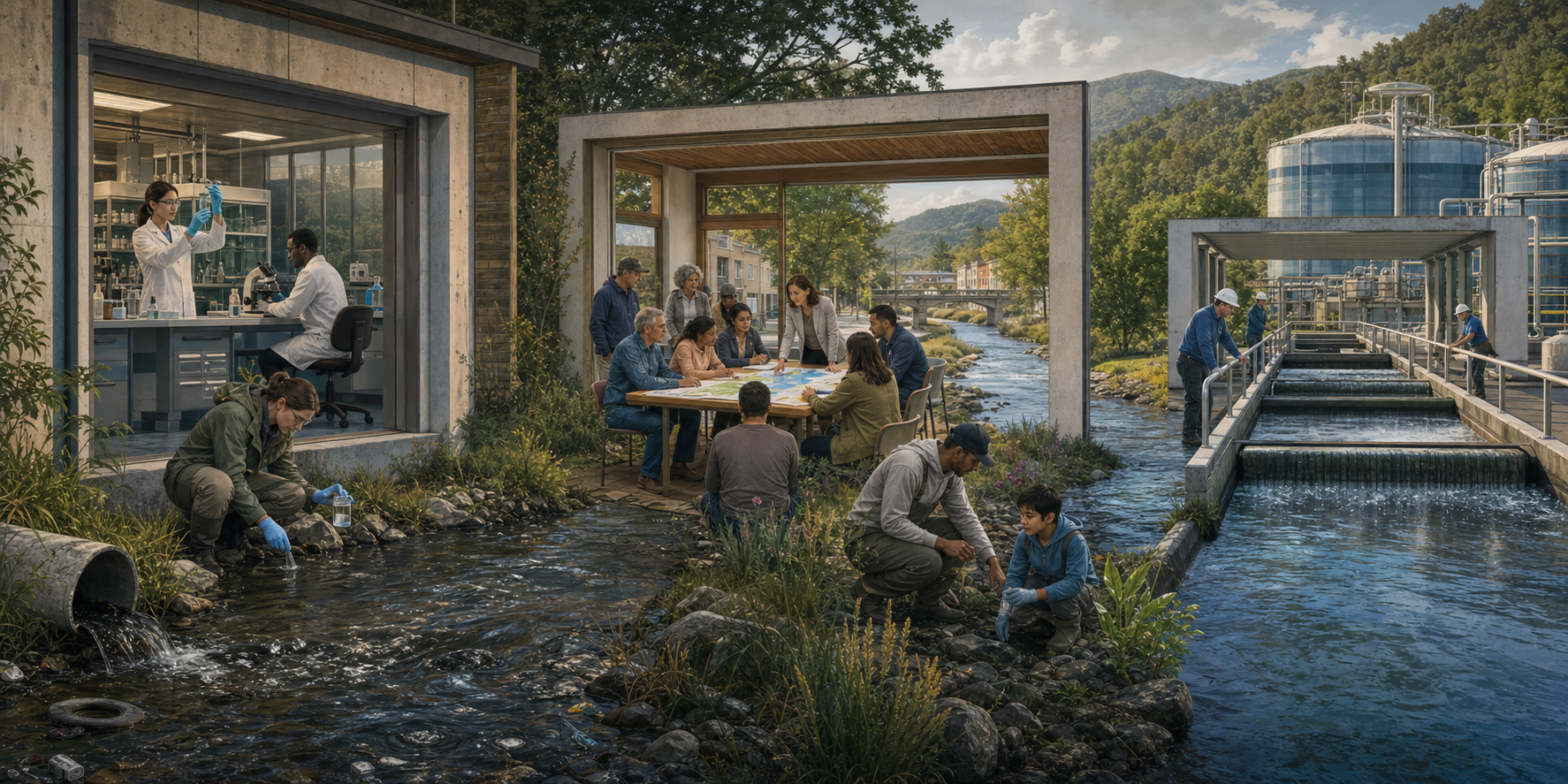
River pollution normally reflects a chain of decisions rather than one failed pipe. The article points to inadequate sewage networks, treatment-plant performance, illegal connections, poor solid-waste handling, weak industrial monitoring, seasonal flow stress and fragmented departmental responsibility. This framing matters because removing floating waste or issuing an isolated notice cannot correct contamination that continues to enter the system elsewhere.
The legal context also changes the nature of the problem. As noted in the supplied article, the Central Pollution Control Board’s water-pollution resource describes the Water (Prevention and Control of Pollution) Act, 1974 as a framework for preventing and controlling pollution and maintaining or restoring the wholesomeness of water. Pollution control is therefore presented as a statutory function involving monitoring, discharge regulation, inspection, sampling and corrective action, not a discretionary cleanliness campaign.
The reported references to the Supreme Court and the National Human Rights Commission create a separate accountability question. Verification would require a public compliance trail identifying each direction or reminder, the authority responsible, the deadline, the action claimed and evidence that the action occurred. Without that chain, citizens cannot distinguish a completed remedy from a notice issued, a budget announced or a treatment asset installed but not consistently operated.
The human-rights dimension is similarly concrete. The article links polluted water with life, dignity, health and livelihood, while the National Human Rights Commission is cited as the institution concerned with the protection of rights to life, liberty, equality and dignity. A rights-based approach asks not only whether average water quality improves, but also who remains exposed, who must purchase alternatives and whether downstream or economically vulnerable communities bear a disproportionate burden.
The evidence needed to make accountability testable
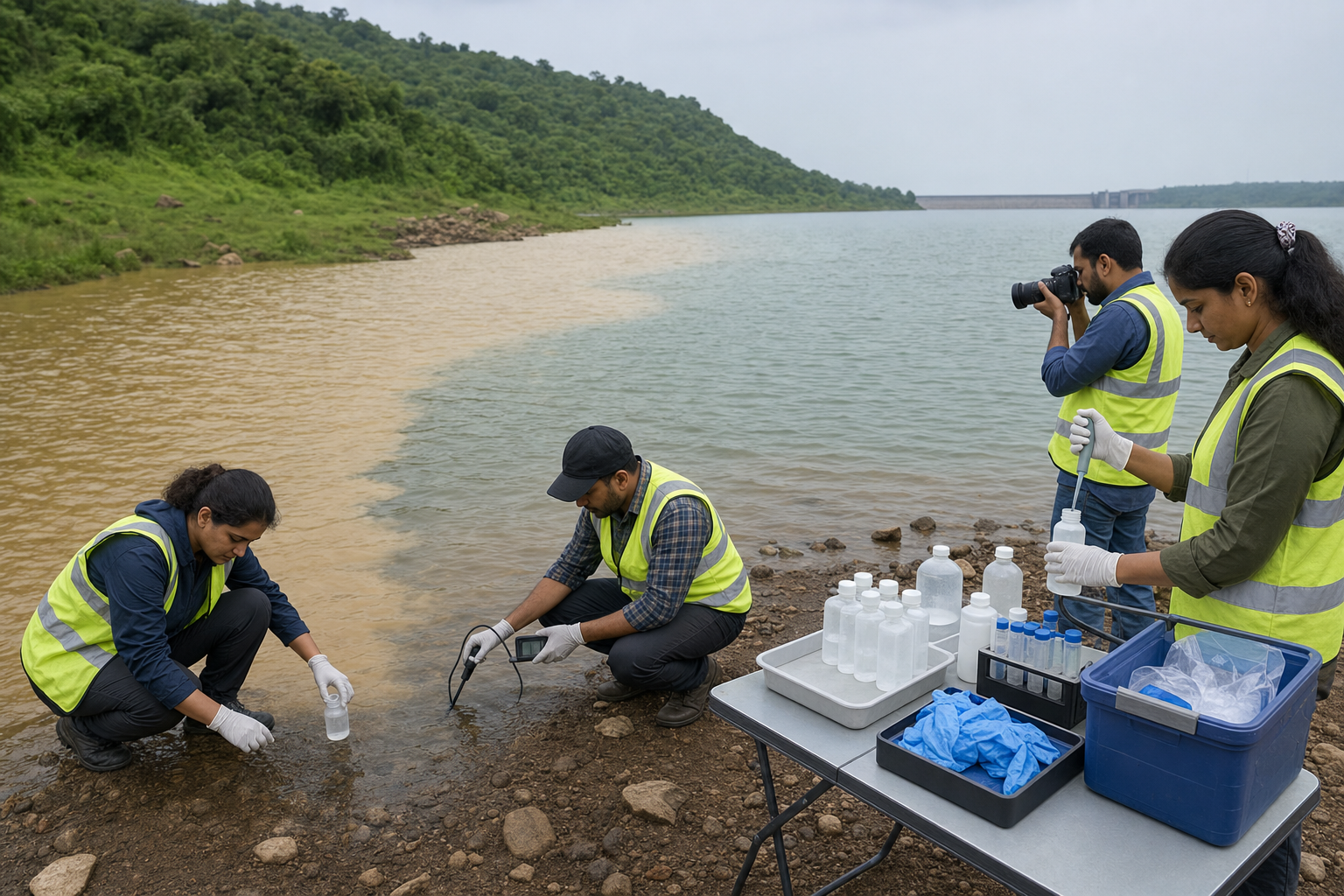
A credible response should connect every public claim to evidence that can be checked over time. The following framework does not assert that the records already exist; it identifies what authorities would need to publish for the controversy to move from accusation and assurance to verifiable performance.
| Public question | Evidence required | What disclosure should make clear |
|---|---|---|
| Where and when is the water impaired? | Time-stamped results from identified upstream, inflow, reservoir and downstream sampling points | Sampling frequency, season, laboratory method and trends rather than isolated readings |
| What is entering the system? | A mapped inventory of drains, sewage outlets, industrial discharges, runoff pathways and solid-waste locations | Known, suspected and unverified sources kept clearly separate |
| Are treatment systems working? | Installed and operating capacity, actual inflow, downtime, bypass events and inlet-outlet test results | The difference between infrastructure existing on paper and treatment being delivered |
| Are regulators enforcing the rules? | Inspection findings, consent status, notices, penalties, corrective deadlines and subsequent compliance checks | Whether violations resulted in durable correction rather than repeated paperwork |
| Were judicial and commission directions followed? | Copies of directions, named respondents, deadlines, action-taken reports and supporting records | Which obligations are complete, delayed, disputed or still pending |
The article specifically calls for intelligible publication of indicators such as biochemical oxygen demand, chemical oxygen demand, dissolved oxygen, faecal coliform, pH, turbidity, ammonia, nutrients and relevant heavy metals. Results would need context: a number without its location, date, method and applicable benchmark can create an appearance of transparency without allowing meaningful scrutiny.
Responsibility must be equally visible. Municipal bodies, pollution-control authorities, irrigation and water-resource agencies, treatment operators and regulated industries may hold different parts of the solution. A shared public register should show who owns each intervention, its deadline, funding status, present condition and evidence of completion. This would reduce the familiar risk of every agency acknowledging the problem while treating the remedy as another agency’s task.
Key takeaways
- The supplied article reports serious pollution and institutional non-compliance allegations, but it does not provide enough primary documentation to verify them independently.
- Ujani’s reported roles in water supply, irrigation, fisheries, power and regional water management make the alleged pollution a cross-sector public-interest issue.
- Accountability requires traceable sampling, a source inventory, treatment-performance records, enforcement outcomes and a direction-by-direction compliance register.
- Public dashboards and official assurances are useful only when their underlying data, methods, deadlines and responsible authorities are open to scrutiny.
From cultural reverence to enforceable stewardship
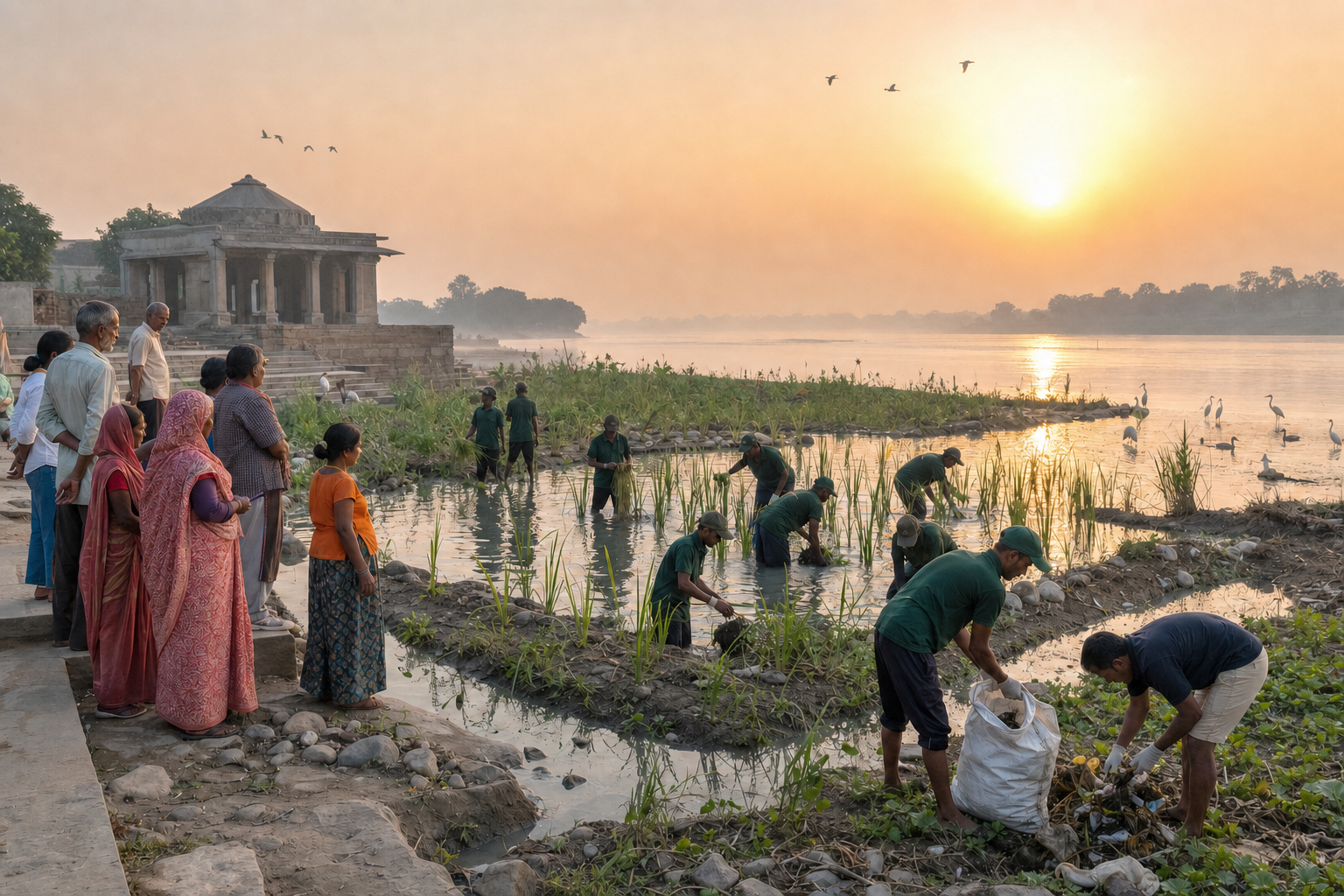
The supplied article also presents the Bhima and Ujani system as part of a social and civilisational landscape encompassing agriculture, pilgrimage, temples, local memory and community life. It connects river protection with Dharmic ideas of restraint, non-harm, stewardship and responsibility to future generations. That perspective can widen public participation, but cultural reverence cannot establish contamination levels or prove regulatory compliance.
The more durable approach is to join ethical concern with scientific testing, statutory enforcement and transparent administration. Farmers, fishing communities, households, pilgrims and downstream residents need access to the same understandable evidence, while authorities need deadlines tied to named responsibilities. Public participation can then focus on specific failures and measurable remedies instead of competing claims about whether a crisis exists.
The next credible milestone is a public baseline: documented water quality, mapped pollution sources, treatment performance and an auditable record of every relevant direction and response. Once that foundation is published and updated, citizens and oversight institutions can judge whether the Ujani-Bhima system is actually recovering rather than relying on rhetoric from either campaigners or administrators.
References
- DharmaRenaissance Blog — Ujani and Bhima Pollution Crisis: Alarming Lessons in Governance and Public Health
- Central Pollution Control Board — Water Pollution
- National Human Rights Commission — Official website
- Wikipedia — Ujjani Dam