

Modern pressure can make a passing mood feel like an identity, turn responsibility into a contest for control, and reduce spiritual learning to disconnected information. The Bhāgavatam readings considered here offer a more integrated response: cultivate inner steadiness while remaining fully engaged with duties, relationships, and community.
Read together, the four source articles trace a practical progression. A person first learns to distinguish consciousness from mental turbulence, then redirects action through devotion, receives guidance with discernment, and treats family and leadership as fields of dharma. The resulting ideal is neither withdrawal from ordinary life nor uncritical immersion in it, but responsible participation without false ownership.
Begin with the witness, not the changing mental weather

The article on Śrīmad-Bhāgavatam 3.27.1 places the verse within Lord Kapila’s teaching to Devahūti. Its central image is the sun reflected on water: movement in the water disturbs the reflection without disturbing the sun itself. The article applies this distinction to embodied experience. The body changes, the mind reacts, and social circumstances exert pressure, but these movements do not constitute the complete identity of the conscious self.
This is not an invitation to deny pain, fatigue, grief, or emotional agitation. An experience can be real without becoming a final definition of the person experiencing it. That distinction creates room between an impulse and the action that follows. Instead of concluding that anger, anxiety, ambition, or lethargy is the self, a practitioner can recognize it as a condition passing through the field of body and mind.
The source explains that this field operates through the three guṇas: sattva is associated with clarity and harmony, rajas with activity and desire, and tamas with inertia and obscuration. For modern life, these categories are most useful as mirrors for examining states and habits, not as permanent labels applied to people. They help identify what is influencing attention before that influence hardens into conduct.
The same article interprets three terms as essential to freedom: avikāra, continuity beneath material change; akartṛtva, freedom from the claim of being the sole doer and proprietor; and nirguṇatva, release from the binding rule of the modes. None supplies an excuse for irresponsibility. The teaching refines responsibility by separating sincere duty from the ego’s demand to possess the action, its result, and the recognition attached to it.
Convert inner distance into disciplined service
Witnessing mental movement is only a beginning. The article on 3.27.1 explicitly cautions that freedom from the guṇas is not achieved by declaring oneself independent of them. It associates spiritual freedom with devotional service, remembrance of Bhagavān, ethical discipline, sacred sound, scriptural study, and the company of sādhus.
The account of the Bhaktivedanta Manor class tradition shows what that discipline can look like in community. It describes study, kīrtan, chanting, prasādam, worship, service, and ethical living as related practices rather than isolated religious activities. It also presents repetition as refinement: hearing a familiar passage again can deepen understanding as the listener’s attention and character change.
Together, the two articles challenge both intellectual and emotional shortcuts. Philosophy without practice can leave habits untouched, while inspiration without a stable discipline can disappear when circumstances become difficult. A repeatable rhythm of hearing, remembrance, service, and examination of motive gives insight somewhere to take root.
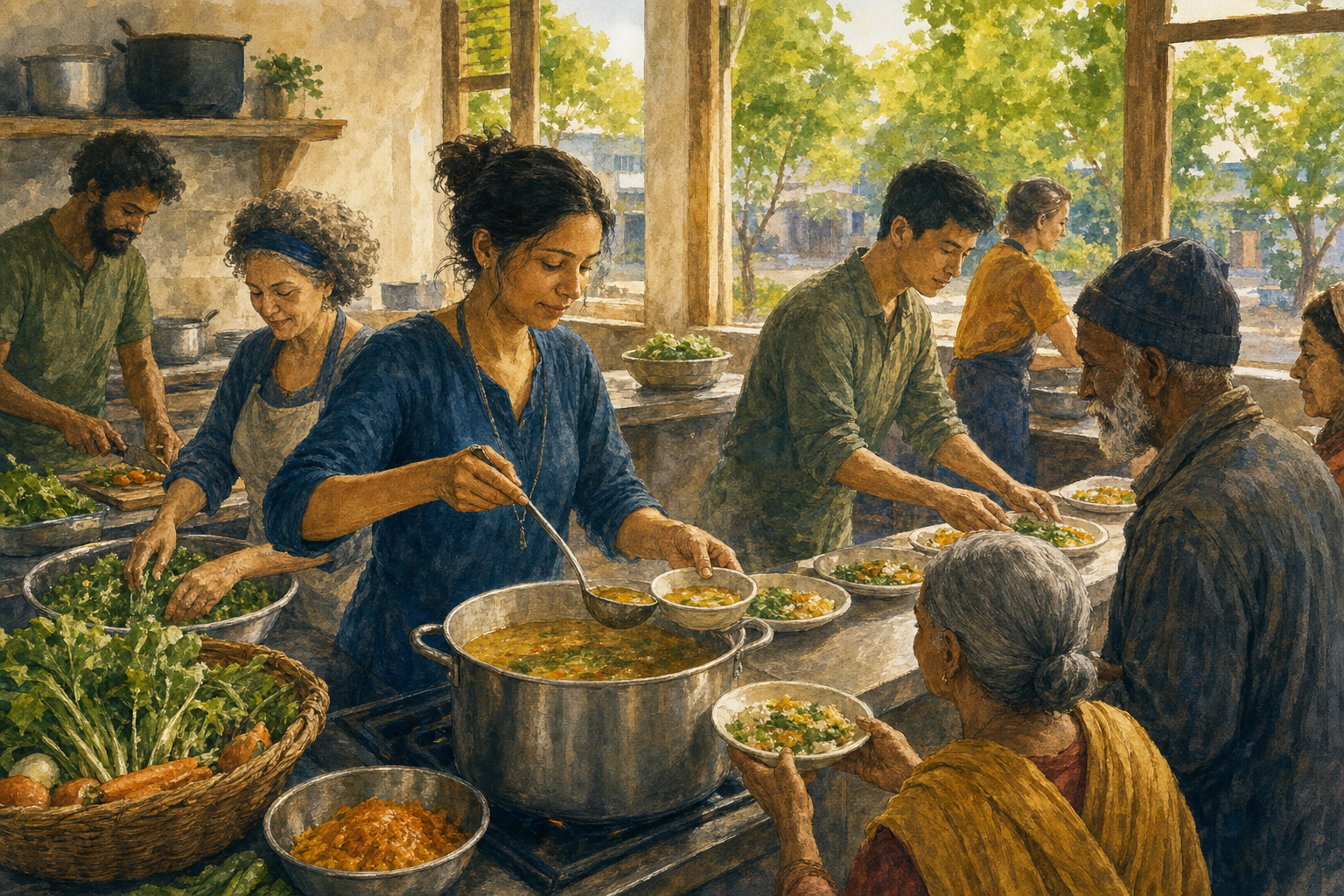
This framework also changes the meaning of renunciation. According to the 3.27.1 article, activities such as earning, teaching, parenting, cooking, studying, and governing can become spiritually purifying when aligned with dharma and offered as seva. The decisive question is not simply whether an activity appears religious, but whether it is performed with humility, ethical care, and a purpose beyond self-possession. Inner detachment should therefore make action more responsible, not less engaged.
Seek guidance without abandoning discernment
Personal discipline does not eliminate the need for correction. The discussion of Śrīmad-Bhāgavatam 11.3.21, framed through a discourse by Bhakti Dhira Damodara Swami Maharaj, interprets the disciple as a jijñāsuḥ, a genuine inquirer seeking śreya uttamam, the highest good rather than temporary advantage. In this reading, humility and intelligence belong together.
The article identifies a demanding standard for the guru. A teacher should be deeply grounded in revealed knowledge, realized in the Supreme Reality, and sheltered in an inner peace visible as steadiness, detachment, and freedom from domination by ego. Scriptural learning guards against ungrounded sentiment, while realization guards against scholarship becoming merely ornamental. Authority rests on their conjunction with character and service.
This standard also sets limits on surrender. The source states that surrender does not mean discarding moral responsibility or following charisma. A seeker examines whether a teacher’s instruction is aligned with śāstra, whether conduct supports the teaching, and whether the relationship directs attention toward Krishna, devotion, and ethical transformation rather than toward exploitation or personality alone.
The Manor article adds the value of communal learning. A class places hearing, questions, shared practice, and accountability within one setting; the teacher transmits a way of seeing rather than merely supplying facts. Both articles identify a modern gap between abundant spiritual content and sustained formation. A quotation, recording, or short clip may awaken interest, but neither source treats fragmented consumption as a substitute for disciplined inquiry, tested guidance, and lived practice.
Treat household and public duties as schools of consciousness

The reading of Śrīmad-Bhāgavatam 3.21.1 shifts the discussion from individual practice to continuity across generations. It describes Vidura asking Maitreya about the respected lineage of Svāyambhuva Manu and interprets the inquiry as more than genealogy. The lineage is presented as worthy because of the quality of consciousness, duty, and sacred knowledge associated with the people it produced, not because ancestry alone confers spiritual merit.
On this account, household life is neither automatically sacred nor inherently opposed to liberation. Family becomes a field of dharma when desire is regulated by responsibility, relationships are shaped by service, and children are formed through truthful speech, compassion, restraint, reverence, and spiritual education. The source’s emphasis is qualitative and moral, explicitly distancing this ideal from hereditary pride or contempt for others.
This complements the teaching on freedom from false proprietorship. A parent, professional, teacher, or organizer may act decisively while remembering that stewardship is different from ownership. The 3.21.1 article extends that principle to governance, describing legitimate rulers as trustees responsible for protection, moral order, and access to spiritual knowledge. The 3.27.1 article applies the same underlying reorientation to ordinary work performed as service.
The synthesis produces a useful test for consequential choices: what kind of consciousness will this action rehearse and transmit? A decision may meet an immediate preference yet strengthen possessiveness, agitation, or neglect. Another may require restraint while cultivating clarity, care, and responsibility. The Bhāgavatam framework asks not only what an action obtains, but what sort of person, household, or institution it helps form.
Key takeaways for daily practice
- When the mind is disturbed, acknowledge the condition without treating it as the whole self; the space between witness and reaction makes a deliberate response possible.
- Before acting, distinguish responsible duty from the desire to control the result, possess the credit, or make status the purpose.
- Support insight with a repeatable devotional rhythm of hearing, remembrance, ethical conduct, and service rather than depending on fluctuating inspiration.
- Approach spiritual guidance as an active inquirer, assessing scriptural grounding, realization, peaceful character, and orientation toward the seeker’s highest welfare.
- Treat work, family, education, and leadership as formative environments in which habits and values are transmitted to other people.
- Measure spiritual learning by changes in motive, conduct, steadiness, and service, not merely by the amount of religious information accumulated.
A reader can begin by placing one recurring responsibility under this discipline: observe the inner condition, clarify the duty, seek sound guidance where needed, and perform the action as service. Repeated in ordinary settings, that process allows Bhāgavatam study to become a durable way of living rather than a separate compartment of life.
References
- DharmaRenaissance Blog — Srimad Bhagavatam 3.27.1: Powerful Insight on Freedom from the Modes
- DharmaRenaissance Blog — Bhaktivedanta Manor Class: Powerful Lessons in Bhakti, Dharma and Inner Renewal
- DharmaRenaissance Blog — Powerful Lessons from Śrīmad-Bhāgavatam 11.3.21 on Guru, Truth, and Inner Freedom
- DharmaRenaissance Blog — SB 3.21.1: Powerful Lessons on Sacred Lineage, Family Duty, and Dharma