
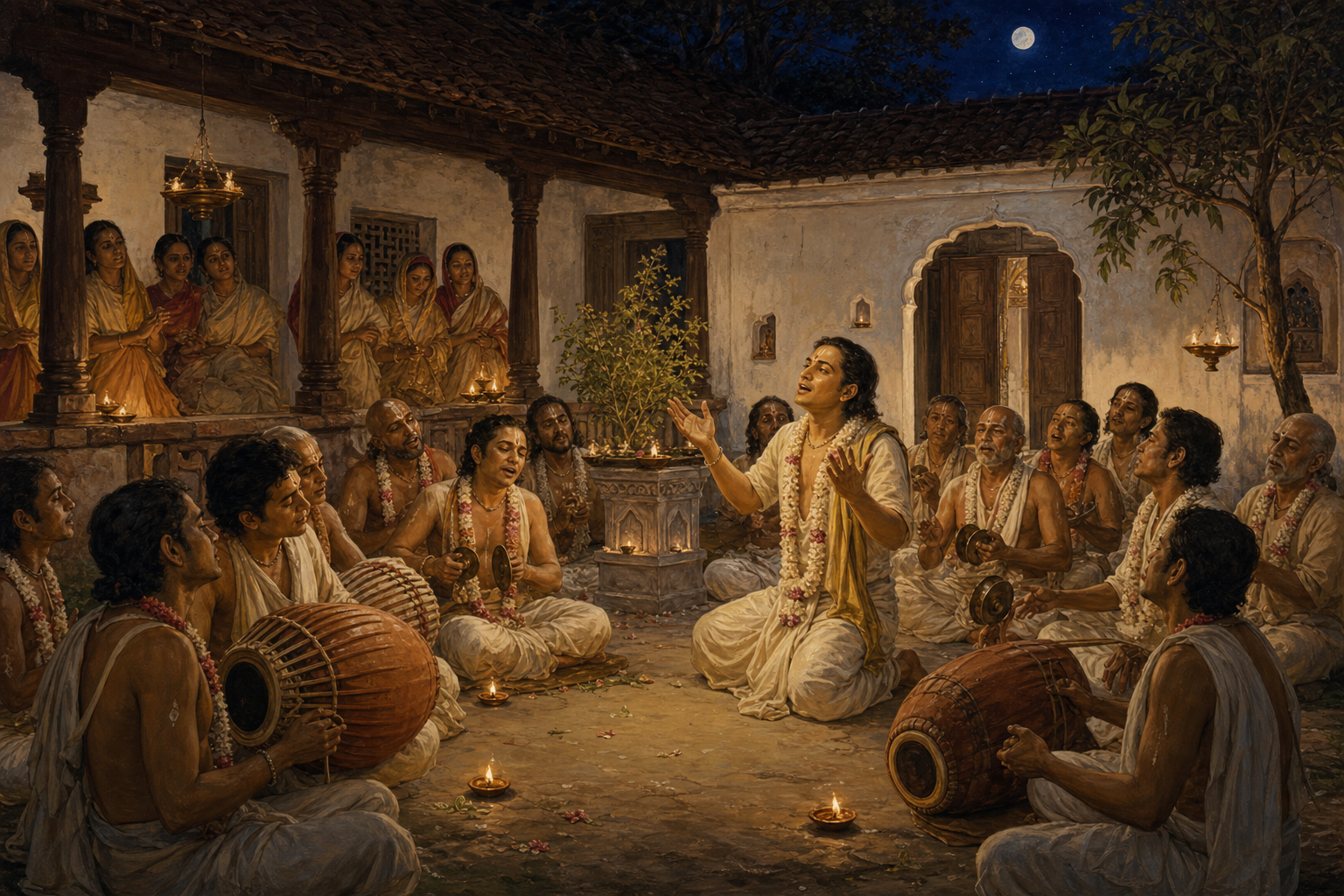
Srivasa Pandit’s importance becomes clearest when sankirtana is viewed as more than devotional music. His story shows how congregational remembrance can depend upon a theology of participation, a disciplined household, scriptural reflection and forms of care that rarely attract public attention.
The available DharmaRenaissance account presents his sacred disappearance as an occasion to consider those connections. Rather than concentrating on the circumstances of his passing, it portrays Srivasa as the devotee whose home and relationships helped turn divine remembrance into a shared way of life.
The Panca-tattva places the devotee within divine action
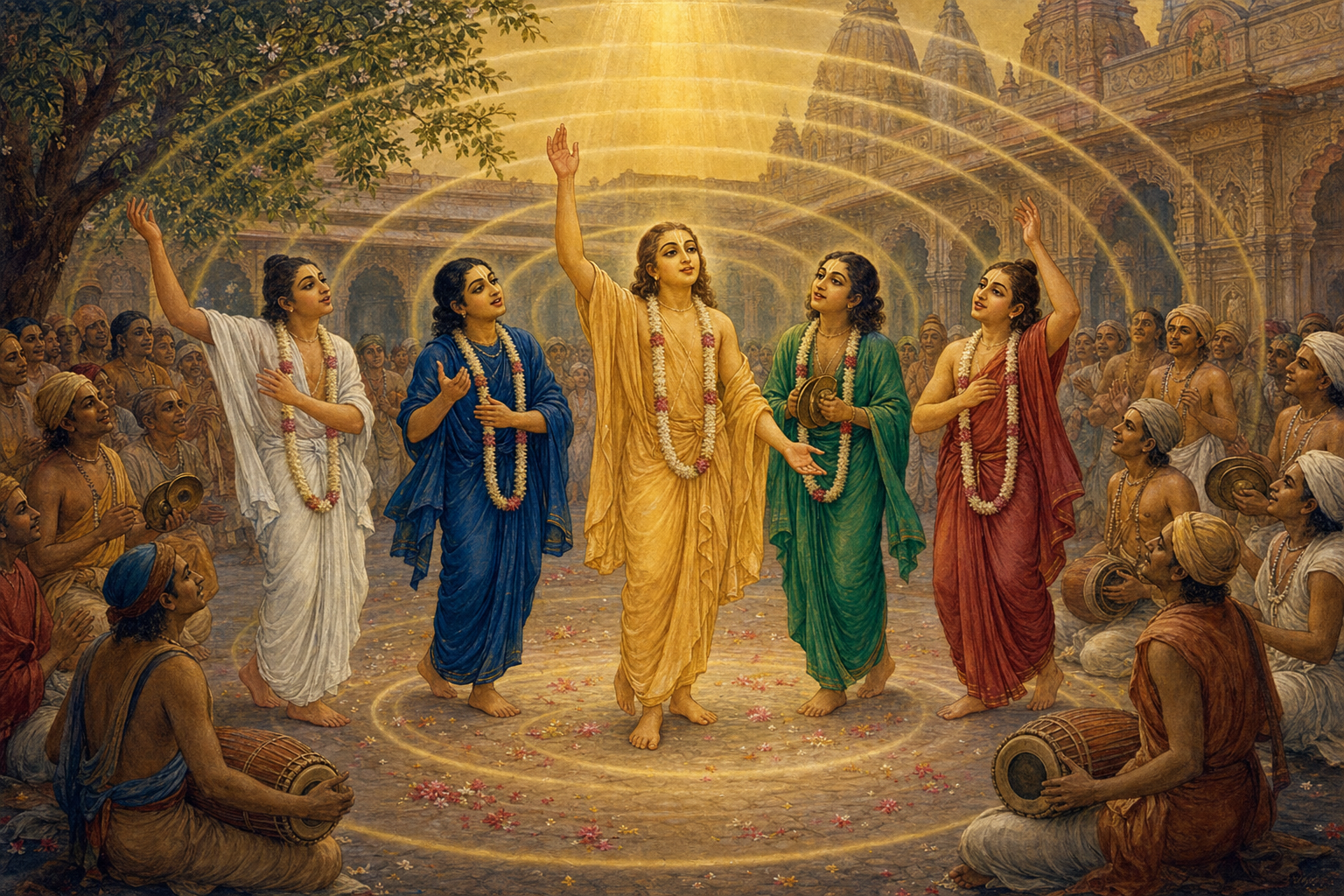
DharmaRenaissance identifies Srivasa as one of the five members of the Panca-tattva, alongside Sri Krishna Chaitanya, Prabhu Nityananda, Sri Advaita and Gadadhara. Within the theological interpretation given by the source, Srivasa represents the devoted jiva: the living being whose individuality reaches fulfillment through loving service rather than self-assertion.
This role gives sankirtana a meaning that extends beyond performance. If the devotee belongs within the sacred configuration itself, participation is not a peripheral response to grace. It is one of the ways grace becomes audible, communal and transmissible. The source reinforces this point through the traditional image of devotees led by Srivasa as smaller limbs of Lord Chaitanya. The image suggests an organic community in which distinct persons contribute voices, homes, hands and relationships to a shared devotional purpose.
The article also reports Gaudiya Vaishnava identifications of Srivasa with Narada Muni and with the tatastha jiva, the conscious being capable of turning toward service or forgetfulness. These are theological claims within the tradition, not independent biographical findings. Read together, however, they connect Srivasa with the communication of bhakti through sacred sound and with a central question of spiritual freedom: what happens when personal agency is directed toward remembrance and service?
A household becomes the infrastructure of sankirtana
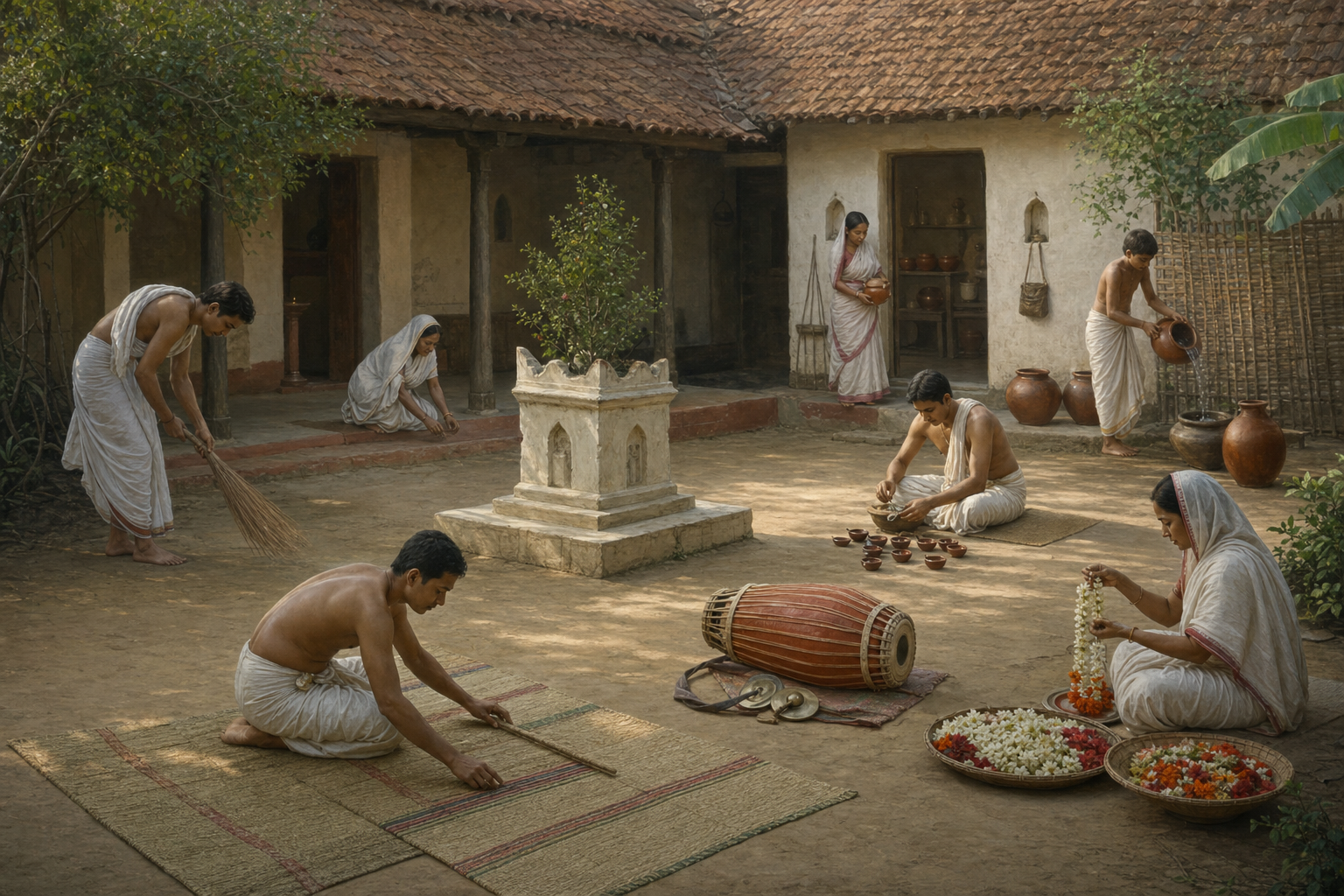
The source locates Srivasa’s devotional life in Navadvipa and describes his residence, remembered as Srivasa Angan, as a home transformed into a sanctuary and assembly place. It reports that Srivasa and his brothers Sri Rama, Sri Nidhi and Sripati cultivated worship of Krishna, chanting and regular bathing in the Ganga before the wider public flowering of Chaitanya’s sankirtana movement.
That sequence matters. The celebrated gatherings did not appear as isolated spectacles; in the source’s presentation, they grew from an existing rhythm of household practice. Worship, sacred bathing, remembrance and fellowship formed a devotional ecology in which repeated actions prepared people and place for congregational experience. The home became spiritually significant because ordinary domestic space was offered consistently, not because domestic life had been abandoned.
DharmaRenaissance describes nightly kirtans associated with Sri Gauranga Mahaprabhu and his devotees at Srivasa Angan. In general terms, sankirtana refers to collective glorification or chanting of divine names. Srivasa’s example adds a practical dimension to that definition: collective devotion needs hosts, trusted relationships, continuity and a setting capable of holding intense spiritual attention. Hospitality is therefore not merely support for sankirtana; it is part of the practice’s enabling structure.
Scripture, sacred sound and humility belong together
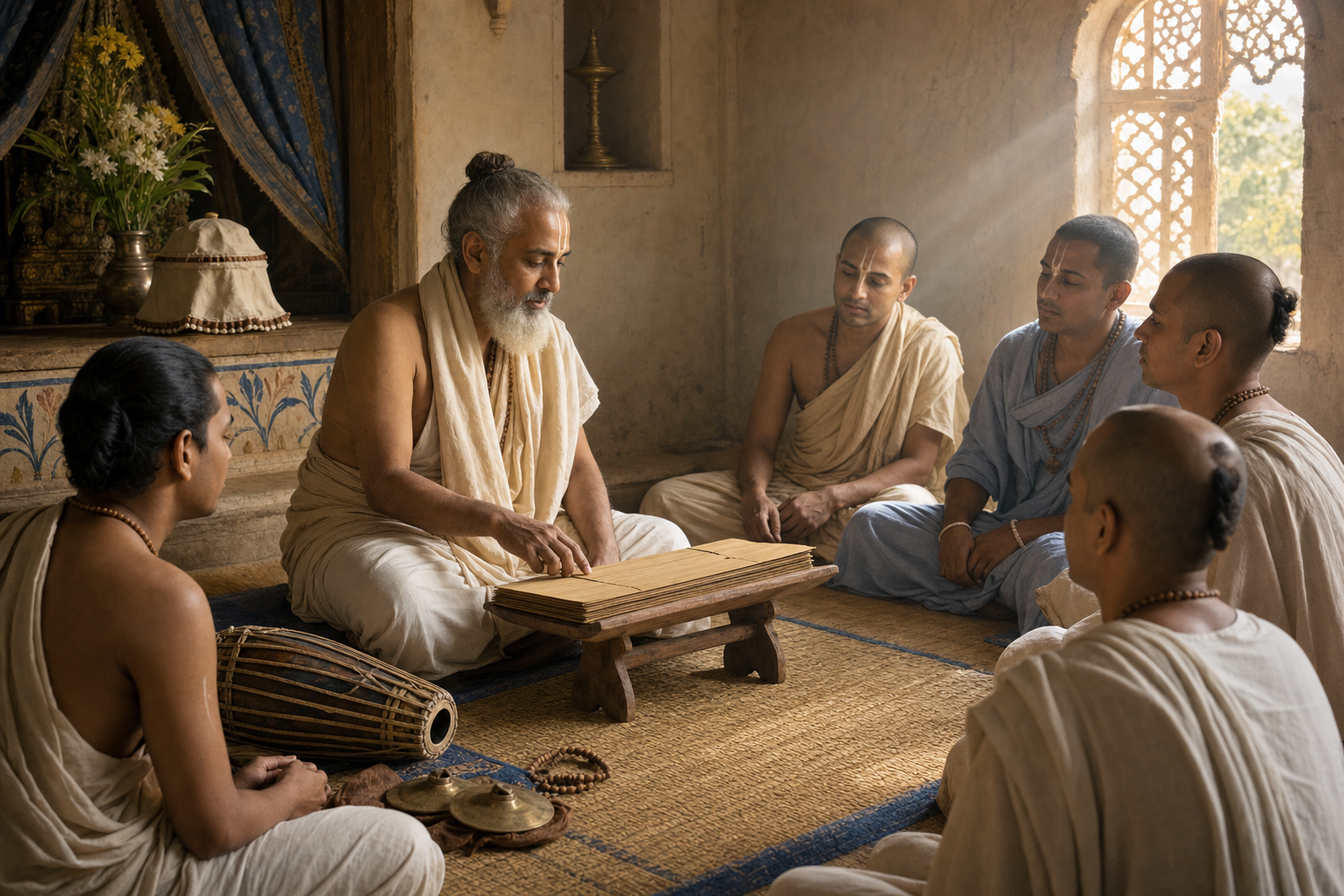
The account reports that Srivasa joined devotees around Sri Advaita Acharya to study the Bhagavatam and pray for the Lord’s descent. It presents their prayer as a response to a spiritual climate in Nadia marked by pride, status-conscious learning, dry logic and indifference to devotion. Importantly, the criticism is not directed against learning itself. The source distinguishes genuine inquiry from knowledge separated from humility, remembrance and concern for others.
This distinction prevents a false choice between study and song. In Srivasa’s circle as depicted by the article, scripture is studied prayerfully, while its devotional orientation is embodied through chanting and community. Text, voice and conduct test one another: study gives sankirtana theological depth; sankirtana keeps study connected to remembrance; humility helps prevent either practice from becoming a vehicle for prestige.
The resulting model is neither anti-intellectual nor satisfied with intellectual mastery alone. It asks whether learning makes devotion more attentive, relationships more compassionate and service less self-centered. Srivasa’s significance lies partly in holding these dimensions together within a lived setting rather than treating them as separate religious specializations.
Malini Devi reveals the devotional work behind the gathering
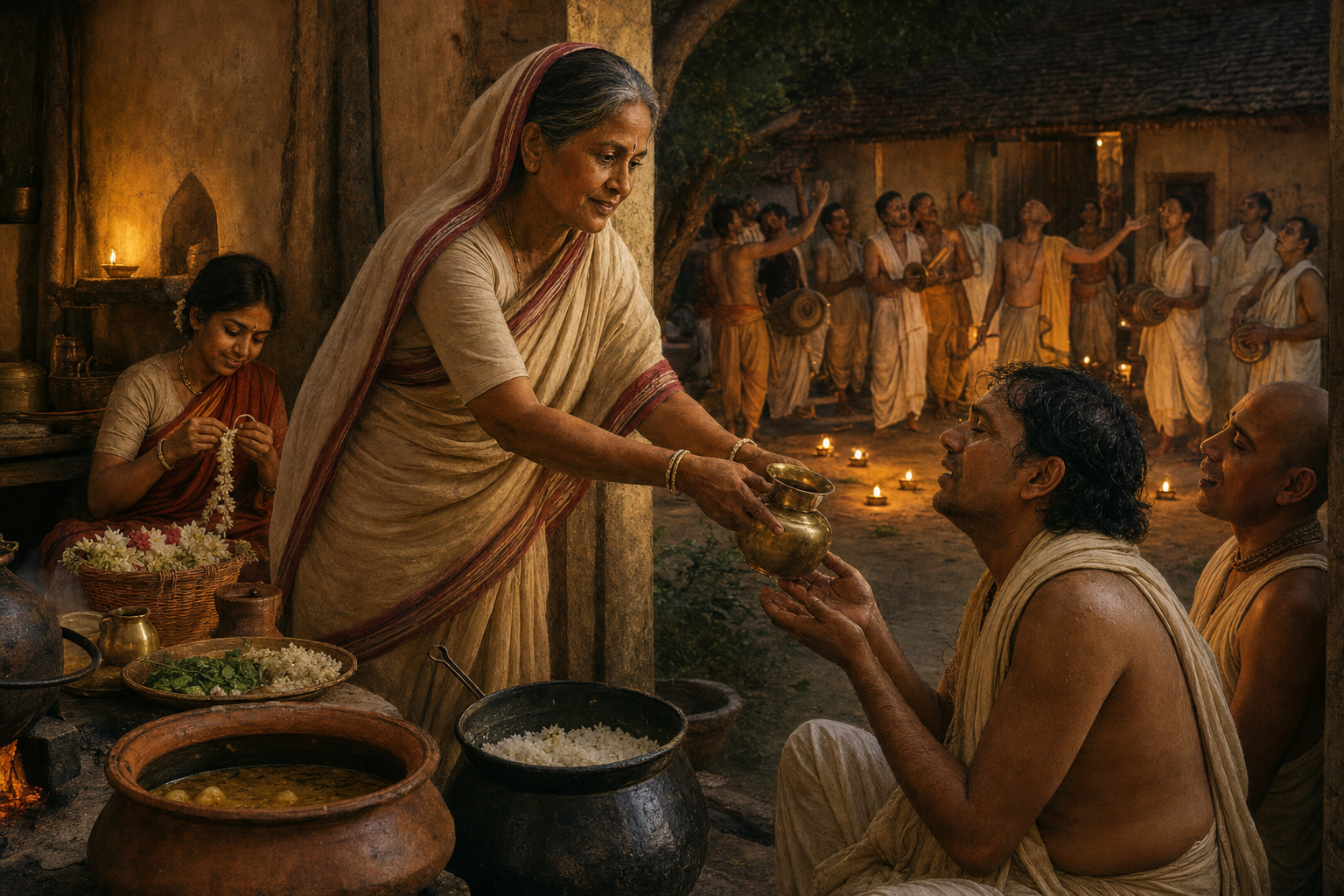
A complete account of Srivasa Angan must include Malini Devi. DharmaRenaissance reports that Srivasa’s wife was close to Sachi Devi, served Nimai with maternal affection and was regarded, together with Srivasa, in the intimate position of a second mother and father. This places family-like care beside theology and ecstatic song rather than outside them.
Her presence changes how the sacred household is understood. A gathering is sustained not only by the most visible singer or teacher but also by welcome, attentiveness, friendship and dependable service. The source uses Malini Devi’s example to draw attention to the frequently quiet labor through which households preserve devotional culture. Such care is not an ornamental background to bhakti; it gives communal devotion durability and emotional depth.
The relationship also broadens the emotional vocabulary of worship. The source describes vatsalya bhava, the mood of parental affection, within the household’s relationship with Nimai. Sankirtana devotion can therefore coexist with intimacy, tenderness and responsibility. Reverence does not exhaust the community’s relationship with the divine.
Key takeaways for contemporary sankirtana communities
- Participation has theological weight: Srivasa’s place in the Panca-tattva presents the devotee as an active bearer of divine service, not a passive audience member.
- Public devotion grows from sustained practice: the source connects the kirtan gatherings with an established household rhythm of worship, chanting and sacred observance.
- Hospitality is spiritual infrastructure: Srivasa Angan demonstrates how an offered home can become a durable setting for shared remembrance.
- Learning remains accountable to humility: Bhagavatam study and sankirtana are presented as mutually reinforcing disciplines rather than competing paths.
- Care sustains sacred sound: Malini Devi’s maternal affection and service show that visible worship depends upon relationships and often-unseen labor.
Future observances of Srivasa Pandit’s disappearance can draw strength from this integrated vision. Honoring his legacy means cultivating communities in which sacred sound is supported by study, humility, hospitality and care, allowing the household heart of sankirtana to remain alive in changing circumstances.