

A teaching hall in Kochi and a storefront on Manhattan’s Lower East Side seem to belong to different worlds. Yet the two source accounts show how intimate spiritual practice can acquire international permanence when teachers, participants, places, legal structures and public institutions begin reinforcing one another.
The comparison also reveals that there is no single model of Hindu institutional growth. Yoga gained a recurring platform through civil-society advocacy, Indian diplomacy and a United Nations resolution, while the Gaudiya Vaishnava mission described in the ISKCON anniversary account developed through an incorporated religious society. Examining both paths clarifies what makes a tradition portable without making it rootless.
Key takeaways
- Global growth usually begins with a practice that newcomers can encounter directly, such as yoga instruction, scriptural discussion or congregational chanting.
- Portable practices endure when they are supported by stable places, published teachings, declared purposes, legal identities and recurring public occasions.
- Adaptation is strongest when local communities have room to participate while the tradition’s Indian origins and philosophical context remain visible.
- Influential teachers can initiate or sustain a mission, but lasting institutions depend on participants, administrators, benefactors, governments and other partners.
- Institutional size alone cannot measure success; continuity, integrity, accessibility, service and responsible transmission matter as well.
Two routes from personal teaching to public permanence

The profile of Yogi Dileep presents a networked route to global recognition. It traces his work from community classes in Kerala to teaching in New York and participation in United Nations-related settings. The account connects his inclusive outlook to an interfaith family, learning from several teachers and institutions, and experience across different sacred environments. It also names figures such as D.R. Karthikeyan and Dr. H.R. Nagendra within the wider advocacy network. Its central caution is important: Yogi Dileep’s contribution belongs to a coalition and should not be converted into a claim that one person created the International Day of Yoga.
The ISKCON anniversary report describes a more explicitly organizational route. According to that account, Srila Prabhupada travelled from India to the United States aboard the Jaladuta in 1965, carrying limited resources and copies of his English translation and commentary on the Srimad Bhagavatam. After difficult early months, regular teaching, chanting and discussion at 26 Second Avenue helped form a community. ISKCON’s legal incorporation in New York on July 13, 1966 gave that emerging community an identity through which it could hold property, publish, organize programmes and define its purposes.
These pathways should not be collapsed into one story. The International Day of Yoga is a multilateral observance built around voluntary participation in a widely shared discipline; ISKCON is a religious society grounded in a particular Vaishnava theology, devotional lineage and set of texts. Their shared lesson lies at another level: personal instruction becomes institutionally durable when repeated practice is joined to structures that can outlast the original encounter.
The infrastructure that allows a tradition to travel

Portable practices create an accessible threshold
The yoga profile argues that safe, observable practices can give hesitant participants an entry point before extensive philosophical explanation. Changes in breathing, mobility or attention can be encountered without demanding an immediate change of religious identity. This approach is presented as especially useful in interfaith settings, where instruction can remain invitational and freedom of conscience must be preserved.
The ISKCON account identifies sankirtana, or congregational chanting, as similarly portable in material terms: it does not require elaborate equipment or restricted access. Its meaning, however, remains openly devotional and connected to the teachings of Sri Caitanya. Yoga instruction and kirtan therefore illustrate two kinds of accessibility. One can be introduced through broadly shared experiences of body and attention; the other invites participation through sound and community while retaining an explicit theological object.
Places turn repetition into communal memory
Neither source treats physical space as incidental. The Yogi Dileep profile opens at Yogabhavan in Kochi, where a residence and regular teaching hall connect international advocacy to disciplined local practice. The ISKCON report moves from the modest storefront at 26 Second Avenue to Bhaktivedanta Manor, where the 60th-anniversary programme used theatre, photography, public history, devotional art and hospitality to connect the founding generation with a contemporary community.
A building becomes an institutionally meaningful place through recurring use. Classes, worship, study, music, meals, festivals and service accumulate memory and relationships. Such places provide continuity when charismatic founders are absent, while commemorations help later participants understand why the institution exists rather than encountering it only as inherited property.
Documents and procedures extend a practice beyond local relationships
The two reports give unusual attention to procedural acts. ISKCON’s incorporation did not create Krishna consciousness or the Gaudiya Vaishnava tradition; the anniversary account instead treats it as a durable framework for teaching, publishing, worship and communal life. Its Seven Purposes connect systematic spiritual education, study of the Bhagavad Gita and Srimad Bhagavatam, the individual’s relationship with Krishna, sankirtana, sacred places and a simpler, more natural way of life. Stated purposes allow later generations to judge an organization by more than its visibility or assets.
In the yoga account, the decisive procedure occurred through diplomacy. The profile reports that Prime Minister Narendra Modi proposed an International Yoga Day in his address to the United Nations General Assembly on September 27, 2014. India subsequently sponsored the draft that became Resolution 69/131, adopted without a vote on December 11, 2014. The resolution proclaimed June 21 as the International Day of Yoga and invited governments, United Nations bodies, regional organizations, civil society and individuals to observe it according to national priorities. The first observance followed on June 21, 2015.
The profile notes two reported figures for support: the United Nations observance page is said to list 175 Member States, while Indian accounts from the period commonly cited 177 nations. Rather than concealing that discrepancy, the source identifies adoption without a vote as the clearest institutional fact. The episode demonstrates a different use of formal structure: legal incorporation gives a religious community continuing organizational capacity, whereas a multilateral resolution gives a practice recurring public recognition without creating a church, prescribing doctrine or compelling belief.
Translation works when accessibility does not erase origin
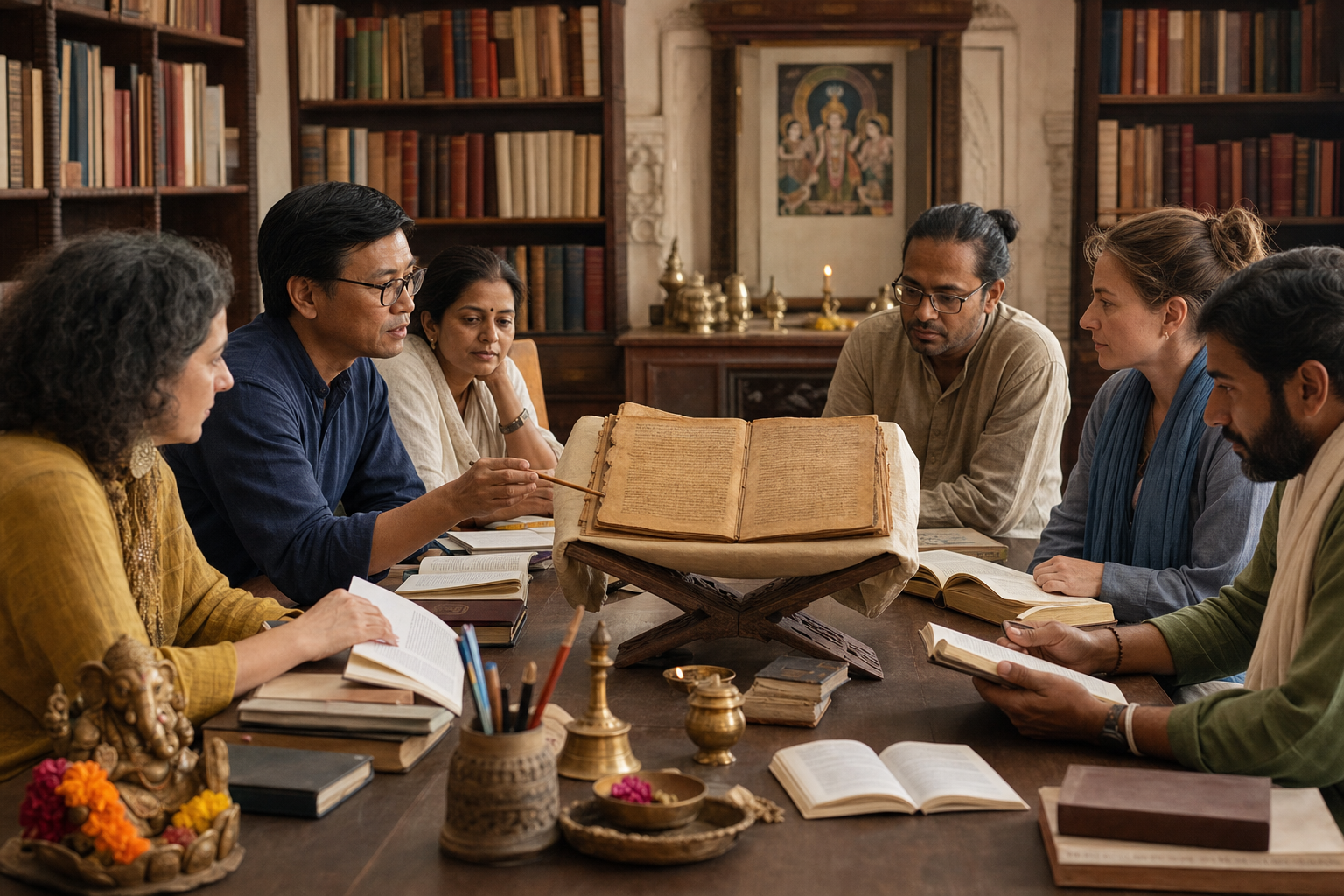
Global transmission requires translation in more than the linguistic sense. Srila Prabhupada’s English translation and commentary helped make Vaishnava texts available to an English-speaking audience, while lectures, shared meals, chanting and daily practice placed ideas inside a lived community. The anniversary account presents the society’s educational and publishing purposes as part of devotion itself, not as promotional activity detached from scripture.
The yoga pathway translated a civilizational discipline into the language of wellbeing, human harmony and international cooperation. According to the profile, Modi’s United Nations address described yoga as an integration of mind and body, thought and action, wellbeing and harmony with nature rather than as exercise alone. The resulting observance recognized yoga’s Indian source while allowing societies to adapt participation to local languages, abilities and institutions.
That balance is delicate. If a practice is presented only through insider terminology, potential participants may never find an intelligible entrance. If it is detached completely from philosophy, lineage and source civilization, accessibility can become amnesia or commodification. The two accounts suggest a more sustainable pattern: preserve a recognizable core, explain it in locally intelligible forms, and allow participation to deepen through experience, study and relationship rather than pressure.
The next test is stewardship rather than scale
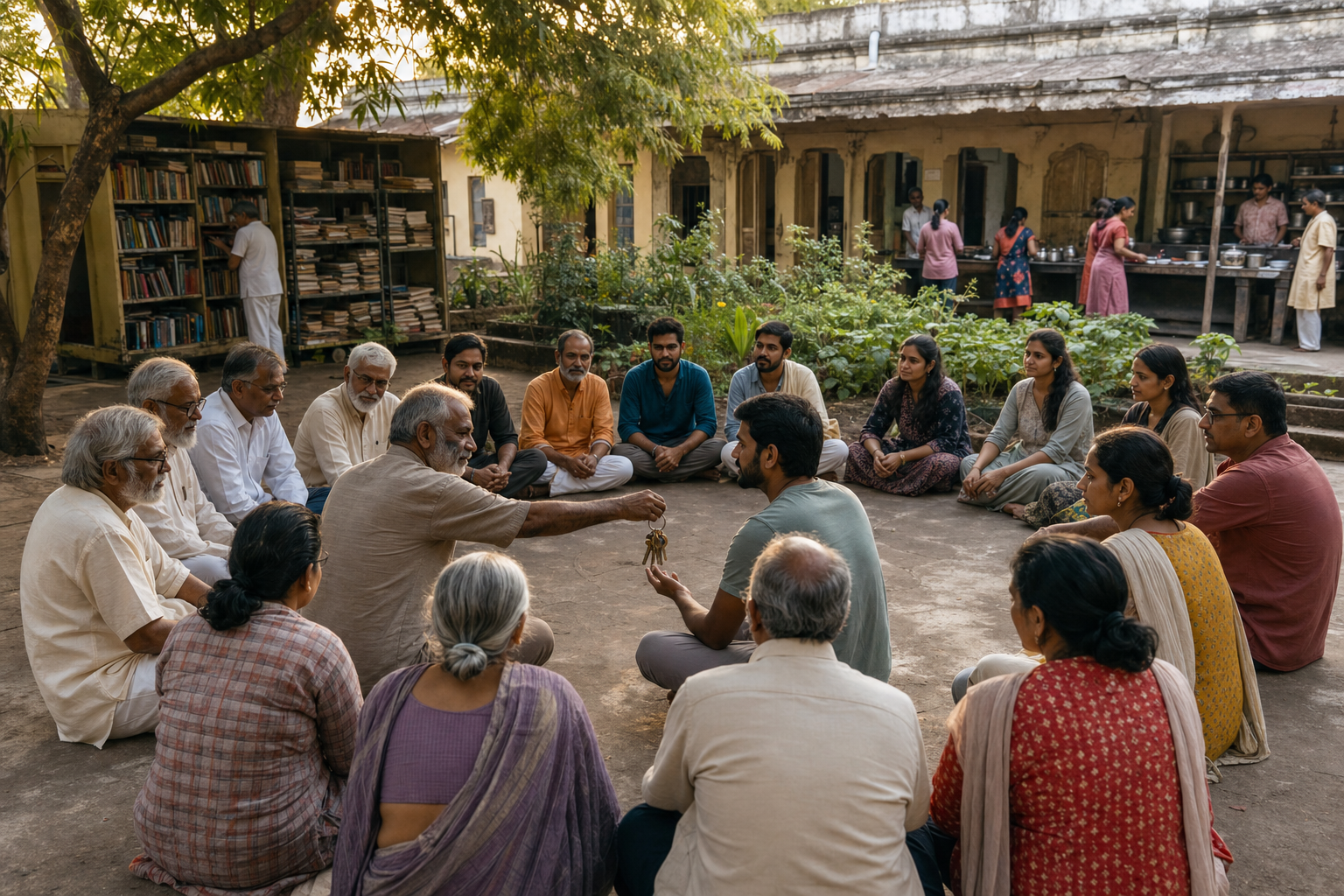
Founder narratives can inspire commitment, but they can also distort institutional history if collective work disappears behind a single heroic figure. The yoga profile explicitly resists sole-authorship claims about an achievement involving practitioners, voluntary organizations, diplomats, governments and United Nations procedures. The ISKCON account likewise shows early followers turning teaching in small rooms into a functioning association through cooking, administration, public chanting and other forms of cooperation.
Responsible growth therefore requires institutions to keep several relationships in view: founder and community, universal invitation and particular teaching, inherited purpose and local adaptation, public recognition and freedom of conscience. Legal status or diplomatic visibility can secure a platform, but neither automatically guarantees faithful teaching, ethical conduct or meaningful service. Those depend on the habits cultivated within the structure.
The next phase of global Hindu institution-building will be shaped by how well organizations transmit responsibility alongside practice. Institutions that make their sources legible, educate successors, welcome sincere participation and remain answerable to their declared purposes will be better placed to carry living traditions across generations rather than merely expanding their reach.
References
- HinduPost – Inside Yogi Dileep’s Inspiring Yoga Journey from Kerala to the United Nations
- Dandavats – ISKCON at 60: Bhaktivedanta Manor’s Inspiring Celebration of a Global Legacy