
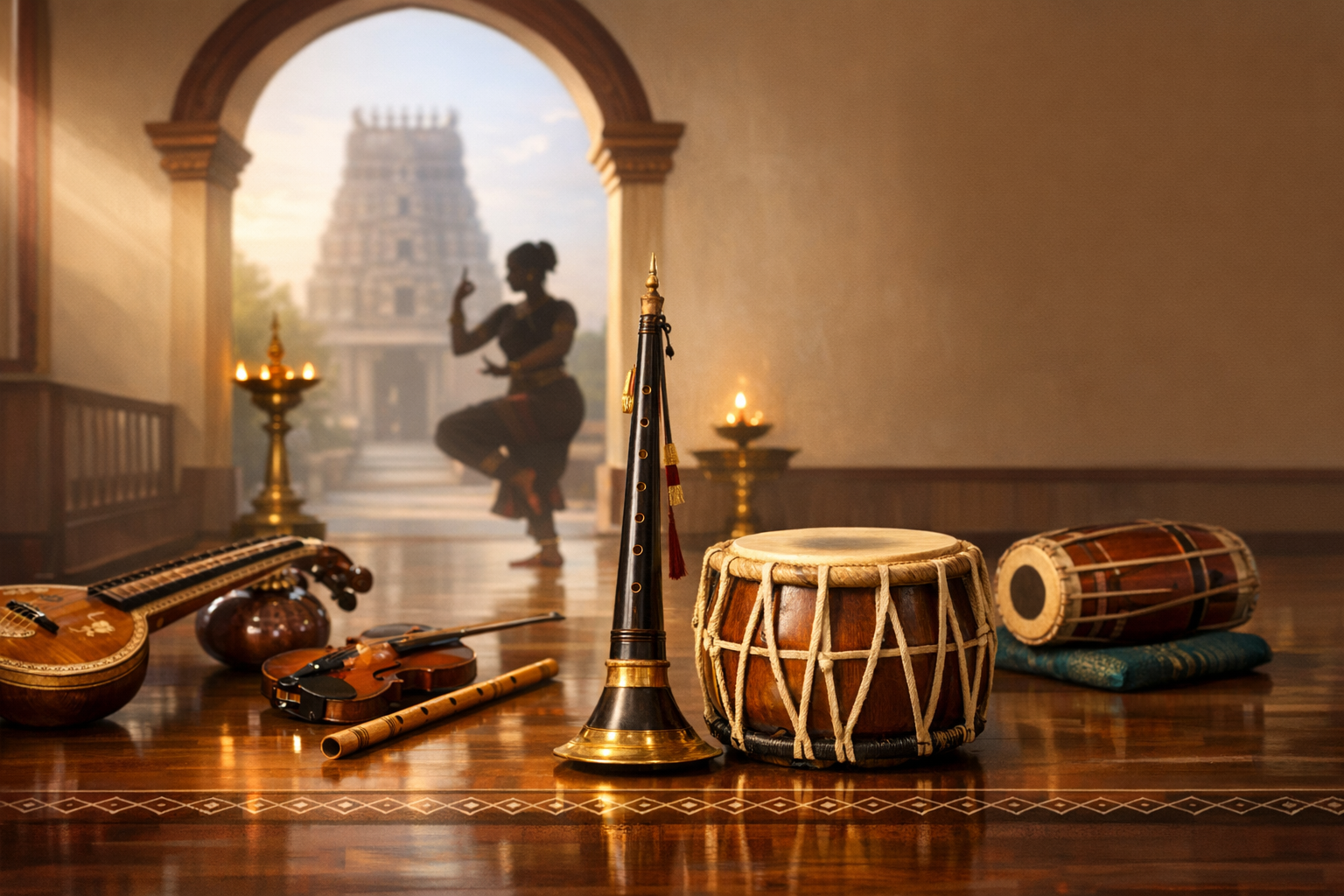
Applications are invited for admissions into various regular and part-time courses for the academic year 2026–27 at Sri Venkateswara Music and Dance College and SV Nadaswaram & Dolu School in Tirupati, institutions managed by Tirumala Tirupati Devasthanams (TTD). The call covers foundational, intermediate, and advanced training tracks designed to nurture classical performance skills alongside rigorous theoretical understanding.
These TTD colleges occupy a distinctive place in India’s cultural landscape. Rooted in the custodianship of temple arts, they uphold a living continuum of learning that serves both stage and sanctum. Their mission aligns with a broader dharmic ethos, welcoming learners who value the shared aesthetic and ethical principles cherished across Hinduism, Buddhism, Jainism, and Sikhismprinciples such as discipline, non-violence, service, and reverence for knowledge.
Sri Venkateswara Music and Dance College offers structured pathways in Carnatic vocal and instrumental music, as well as classical Indian dance. Regular courses provide immersive, day-schedule pedagogy, while part-time offerings allow working professionals, school/college students, and life-long learners to build competencies at a sustainable pace. Instruction typically integrates individual lessons, small-group practice, ensemble work, and theory seminars in musicology and dance studies to ensure well-rounded growth.
SV Nadaswaram & Dolu School specializes in the temple-performance traditions of South India. The Nadaswarama conical-bore, double-reed aerophone renowned for its powerful, auspicious timbredemands refined embouchure, breath control, and raga precision for outdoor and processional contexts. Dolu (a double-headed barrel drum) training emphasizes tala architecture, tone production, stamina, and dynamic balance in ensemble settings. Together, these streams cultivate the repertoire, technique, and ceremonial command required for temple festivals, processions, and community celebrations.
This admission cycle will particularly interest candidates seeking formative training in Carnatic music (vocal and instrumental such as Veena, Violin, Flute, Mridangam, Nadaswaram) and classical dance (notably Bharatanatyam and Kuchipudi), as well as those pursuing temple-arts pathways in Nadaswaram & Dolu. Artists with informal or guru-led backgrounds looking for recognized certification and academic scaffolding will also find relevant options across the regular and part-time formats.
The admission process, as is customary in performing arts education, commonly includes an application screening, a practical audition, and a basic theory assessment or interview, depending on program level. Applicants can expect evaluation on intonation, rhythm accuracy, repertoire readiness, and interpretive sensitivity; dance applicants are typically assessed on adavus, abhinaya, stage presence, and laya alignment. Final selection criteria, weightages, intake capacities, and any age or prior-training norms are specified in the official TTD notification and prospectus for 2026–27.
Prospective candidates are advised to prepare standard documentation in advance: recent photographs; identity and address proof; educational certificates and mark sheets (as applicable); any performance or training certificates; and community/disability documents where relevant under statutory norms. Where permitted, a brief performance portfolio (recordings or repertoire list) can help panels understand artistic trajectory and readiness.
Academic training across these programs balances technique and theory. Music curricula generally traverse sruti and swara frameworks, raga–tala architecture, varnams and kritis, improvisatory practices (alapana, neraval, kalpana swara), manodharma development, and concert craft. Dance curricula typically integrate adavus, nritta–nritya–natya progression, core items (for example alaripu, jatiswaram, varnam), abhinaya grammar, repertoire design, and nattuvangam. For temple-arts specialization, students gain command over ceremonial repertoire (e.g., mangala patterns, mallari idioms for Nadaswaram; advanced sollukattus and tani avartanam thinking for percussion), alongside instrument care and sound projection in open-air settings.
The pedagogy is anchored in the time-tested guru–shishya parampara while benefiting from contemporary classroom structure. Daily or weekly practice schedules, supervised drills, repertoire logging, and periodic reviews (stage labs, juried performances, or viva voce) help students internalize technique and aesthetics. Library and audio resourceswhere availablesupport comparative listening and notational literacy; ensemble sessions cultivate collaborative musicianship and stage discipline.
Learning often extends into the wider TTD ecosystem, where exposure to temple contexts, festival calendars, and community engagements can shape artistic maturity. While participation opportunities vary by year and program, the proximity to institutional festivals and cultural initiatives familiarizes students with the responsibilities and decorum of sacred performance spaces.
Graduates and trainees from these TTD colleges pursue diverse paths: temple-arts service (Nadaswaram/Dolu ensembles), concert performance, accompaniment, choreography, teaching in schools and gurukulas, arts administration, and community outreach. The competencies builtaural sensitivity, rhythmic precision, repertoire command, and stage readinesstranslate into viable, culturally grounded careers and service to society.
Applicants benefit from a deliberate preparation plan: study the 2026–27 prospectus carefully; choose a primary stream and, if relevant, a secondary support skill (e.g., nattuvangam or rhythmic studies); seek guidance from a current or former guru; rehearse two to three representative items that showcase range and control; and refresh core theory (raga lakshana basics, tala structures, and, for dance, abhinaya fundamentals). For Nadaswaram & Dolu aspirants, focused work on breath/stamina cycles, tonal clarity, and canonical ceremonial patterns is especially helpful.
Policy details such as fee schedules, reservation norms (as applicable), attendance requirements, progression rules between certificate/diploma/advanced tracks, and any hostel or facility information are communicated in the official TTD notification and prospectus. Candidates are encouraged to review all clauses meticulously to align expectations with academic obligations and institutional discipline.
As these colleges steward artistic traditions central to South India’s sacred and cultural life, their teaching vision emphasizes unity in diversity across dharmic lineages. Learners from Hindu, Buddhist, Jain, and Sikh familiesand from all communitiesare welcomed into a pedagogy that esteems shared values of compassion, self-mastery, and service. In an era of rapid change, such training strengthens cultural continuity while enabling contemporary expression with integrity.
For authoritative informationapplication form availability, submission procedures, important dates, audition schedules, and contact pointscandidates should consult the official TTD admission notification and prospectus for 2026–27. This notice serves as an academic overview to help applicants prepare thoughtfully; the governing terms remain those issued by TTD.
Inspired by this post on Hindu Pad.
