
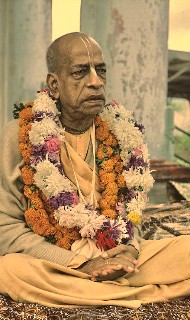
Was Srila Prabhupada intimidated by electronics? An episode recounted by Gargamuni Das offers a clear and compelling answer: he was not. In a quiet room far from the din of the modern marketplace, a simple Dictaphone became the setting for a memorable exchange that bridged tradition and technology within the Hare Krishna movement (ISKCON).
Expecting hesitation from someone perceived as coming from a village background in Vrindavan, Gargamuni Das arrived with the device and an instruction manual in hand. The assumption was reasonable by everyday standards: a spiritual teacher immersed in timeless wisdom might not be familiar with the mechanics of a recording machine. With care and respect, an offer was made to demonstrate the controls step by step.
Srila Prabhupada’s response quietly overturned every presumption. He declined the tutorial with a simple, confident assurance“No, that’s OK, I know.” Without opening the book, he pressed the correct buttons, tested the microphone, and operated the Dictaphone fluently. The surprise in the room was palpable, and the lesson, unmistakable.
This brief exchange carries enduring significance. It challenges the stereotype that guardians of spiritual tradition resist modern tools, showing instead how discernment and adaptability can coexist. In practical terms, Srila Prabhupada’s ease with electronics reflects leadership qualities foundational to ISKCON’s global outreachclear communication, swift learning, and an instinct for employing technology in service of teaching and preservation.
The moment also highlights a broader dharmic insight shared across Hinduism, Buddhism, Jainism, and Sikhism: means evolve while ends remain constant. When guided by purpose and ethics, devices such as a Dictaphone become instruments for sevaamplifying kirtan, documenting teachings, and safeguarding living wisdom for future generations. This spirit of integration unites dharmic traditions, affirming that openness to useful tools strengthens, rather than dilutes, spiritual integrity.
For contemporary readers, the scene invites a reexamination of everyday assumptionsabout elders and technology, about tradition and progress, and about what true confidence looks like. It suggests a practical ethic: approach new tools with humility and curiosity; let intention govern adoption; and remember that clarity of purposenot noveltydetermines the value of any device. Srila Prabhupada’s poise before a small recorder thus becomes a larger meditation on learning, leadership, and the timeless relevance of dharma in a modern, electronic world.
Inspired by this post on Dandavats.
