
-
Krishna’s Powerful Mirror: Why Duryodhana Found No Good Person and Yudhishthira No Bad One
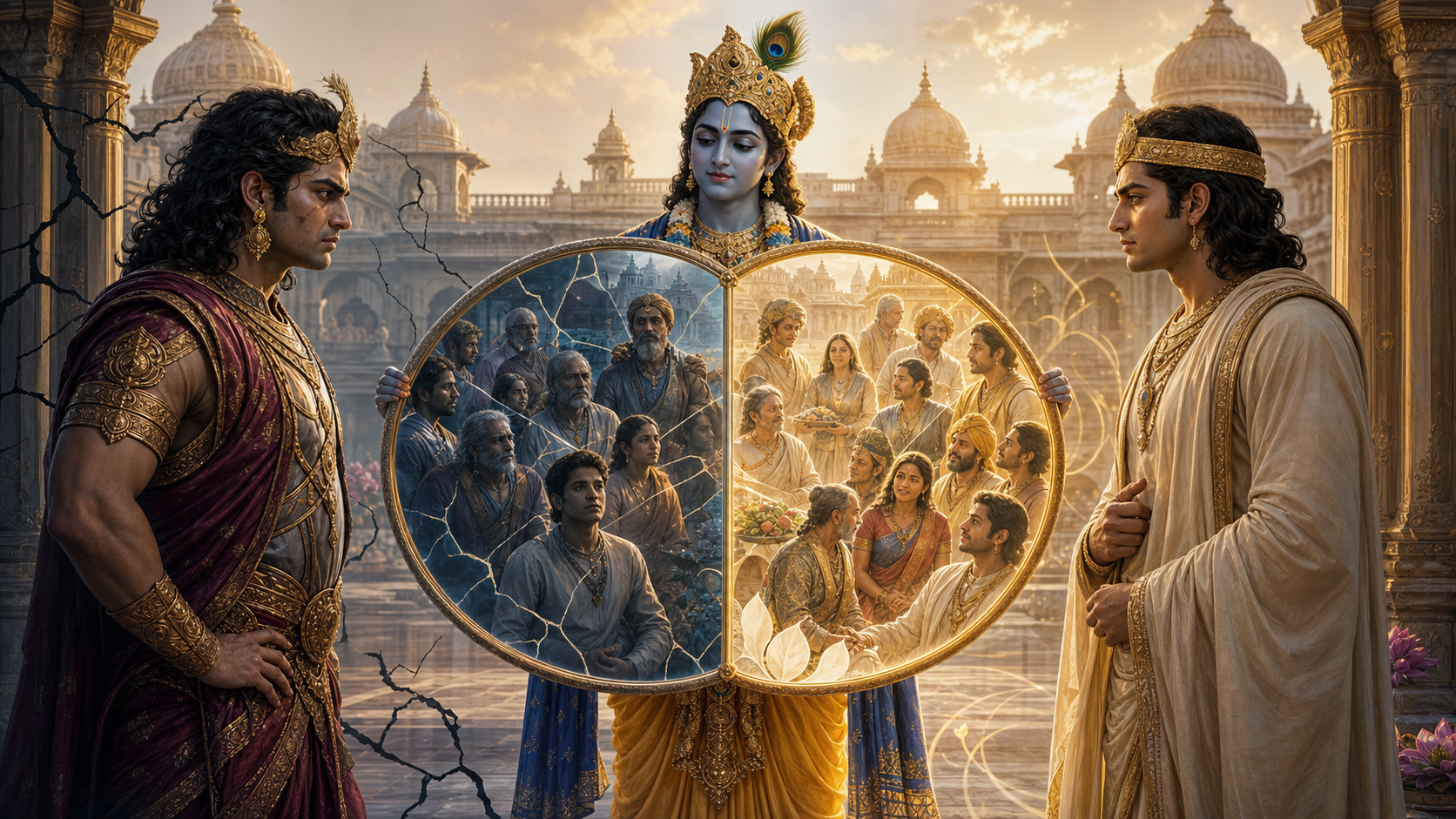
This Mahabharata folktale explains why Duryodhana could not find a genuinely good person while Yudhishthira could not identify anyone as wholly bad. Krishna’s practical lesson reveals how expectations, habits, and emotional dispositions shape what an observer notices in other people. The narrative is examined through dharma, viveka, confirmation bias, charitable interpretation, and the ethics of…
-
Beyond Gossip: Choosing Compassionate Speech to Heal Shame, Build Trust, and Find Peace

Gossip can feel like relief when shame and insecurity spike, yet it often intensifies guilt and erodes trust. This reflection traces a turning point after job loss and the shock of being casually discussed, revealing how gossip masquerades as narrative control when life feels uncontrollable. Drawing on research and dharmic ethics of Right Speech, it…
-
Protecting Energy Without Guilt: Science-Backed Boundaries for Dharmic Compassion

Protecting energy is not selfish; it is a compassionate response to finite human capacity. Drawing on burnout science, allostatic load, and polyvagal-informed insights, this article explains why social withdrawal often reflects physiological triage rather than indifference. It reframes boundaries as conditions for sustainable compassion, aligning evidence with dharmic principles such as prana, ahimsa, metta, aparigraha,…